

Cod, Pacific or Alaskan, frozen, wild caught
Whole food · Finfish and Shellfish Products
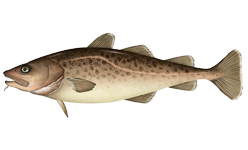
Photo: Wikipedia
Pacific or Alaskan cod, frozen and wild-caught, is a lean, mild white fish prized for its delicate, flaky texture and clean, sweet flavor. With an impressive 14.2 grams of protein and virtually no fat or carbs per 100g, it's a powerhouse of pure, low-calorie nutrition. Its frozen state locks in freshness, making it a reliable and accessible staple for quick, healthy meals.
Calorie split: 93% protein · 3% carbs · 3% fat
↓ Full nutrition💚 Why it's loved
People love it for its incredibly versatile, mild flavor that acts as a blank canvas for countless seasonings and cooking methods, from simple baking to rich curries. Its firm, flaky texture holds up well in stews, chowders, and fish tacos, making it a family-friendly favorite across many cultures.
⚠️ Watch-outs & how to enjoy it better
Some find its mildness bland or its frozen texture slightly watery if overcooked. To counteract this, ensure it's fully thawed and patted dry before cooking to prevent steaming; pair it with bold flavors like lemon, garlic, herbs, or a savory sauce to enhance its taste. Those with fish allergies should obviously avoid it, and while low in mercury, it's still wise for pregnant women to follow general seafood consumption guidelines.
Key benefits
- Excellent source of high-quality, complete protein for muscle maintenance.
- Extremely low in fat and calories, supporting weight management goals.
- Rich in essential minerals like phosphorus and selenium.
- Provides a good source of vitamin B12 for nerve function and energy.
- Wild-caught sourcing often means lower environmental impact than farmed alternatives.
🍽️ Popular dishes
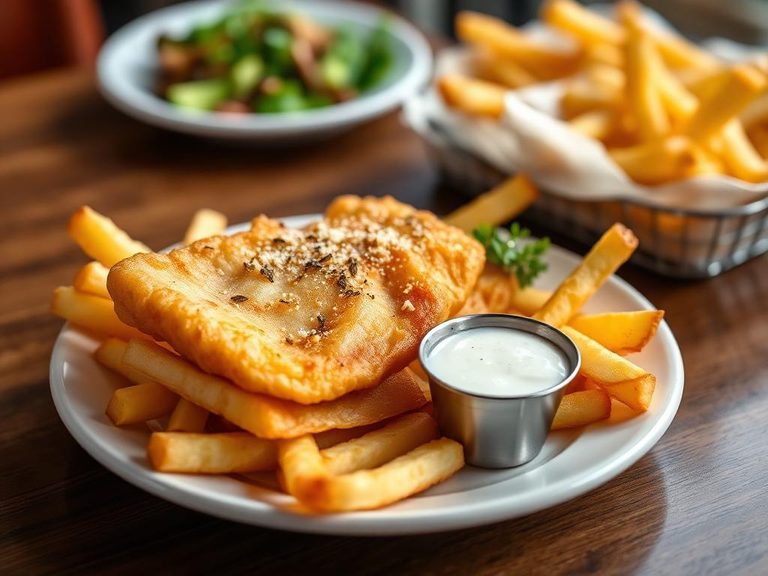 Fish and Chips (the classic British staple)
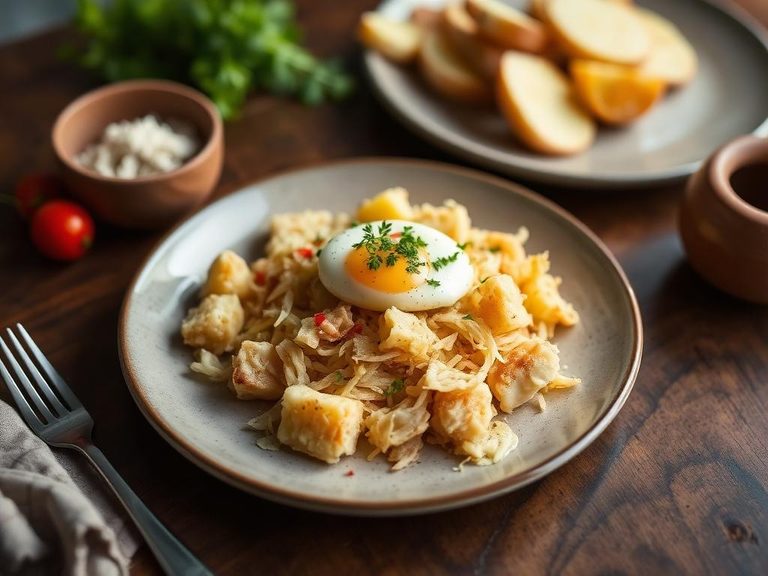 Bacalhau à Brás (a Portuguese dish with eggs and potatoes)
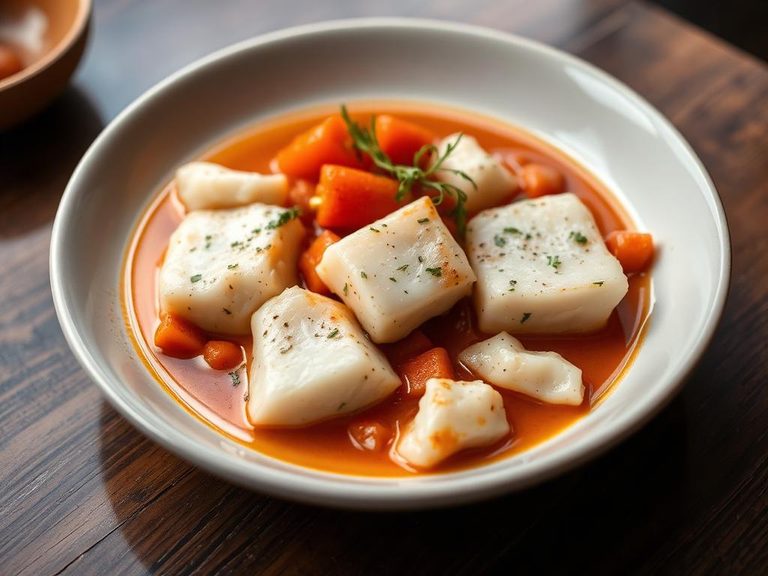 Bacalao a la Vizcaína (a Spanish salt cod stew)
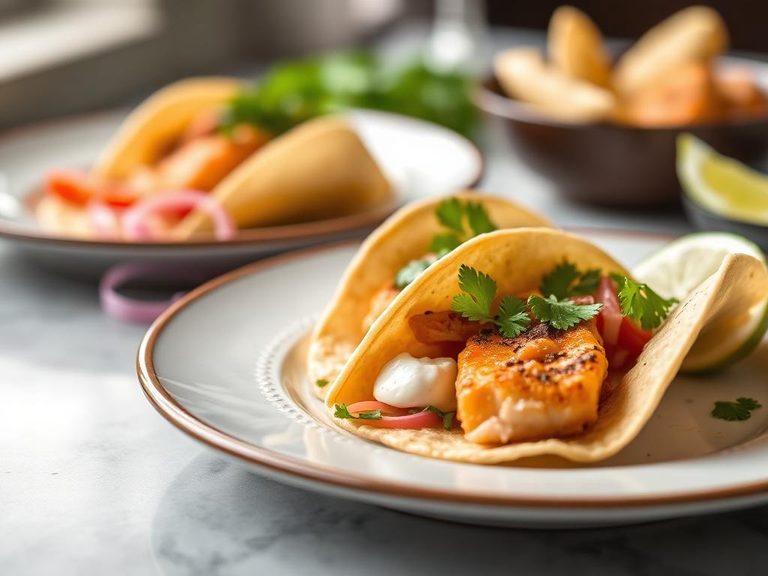 Fish Tacos (especially in Baja California, Mexico)
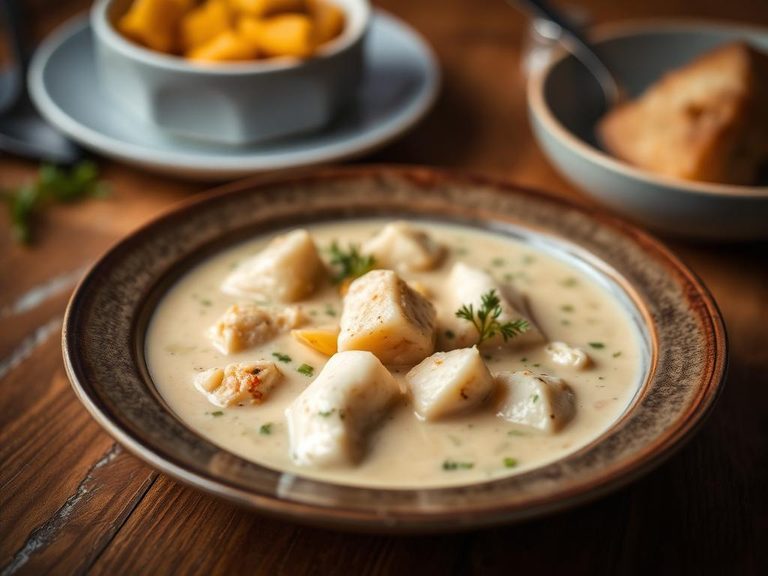 Cod Chowder (a creamy New England soup)
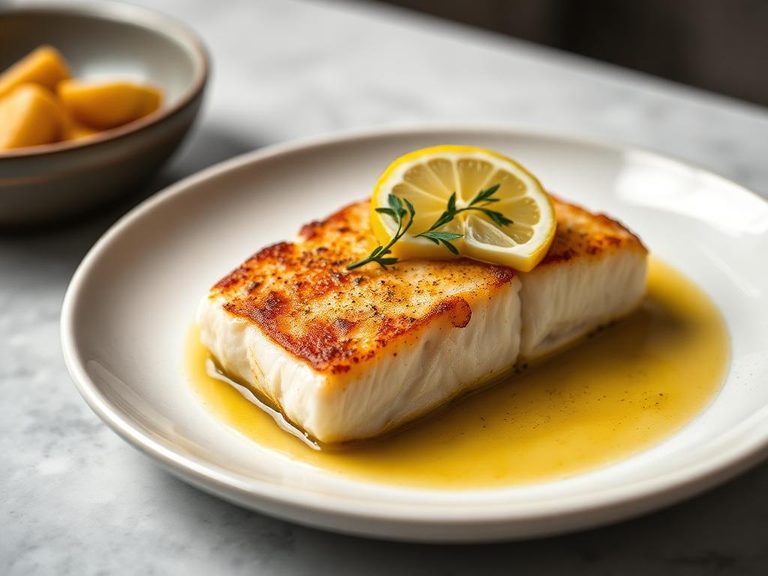 Pan-Seared Cod with Lemon Butter (a simple, elegant preparation)
🌍 Where it's eaten
💡 Did you know?
The famous British dish 'fish and chips' was originally made with cod, and during World War II, it was one of the few foods not rationed in the UK, considered essential for morale.
Full nutrition (USDA data · scales with serving)
| Water | 83.5 g |
| Energy (Atwater General Factors) | 60.8 kcal |
| Nitrogen | 2.3 g |
| Protein | 14.2 g |
| Total lipid (fat) | 0.22 g |
| Ash | 1.5 g |
| Carbohydrate, by difference | 0.52 g |
| Calcium, Ca | 9.0 mg |
| Iron, Fe | 0.00 mg |
| Magnesium, Mg | 17.9 mg |
| Phosphorus, P | 279 mg |
| Potassium, K | 192 mg |
| Sodium, Na | 354 mg |
| Zinc, Zn | 0.27 mg |
| Copper, Cu | 0.01 mg |
| Manganese, Mn | 0.00 mg |
| Selenium, Se | 22.3 ug |
| Vitamin B-12 | 0.59 ug |
Fat & fatty acid profile (per 100g)
Estimated from Fish, cod, Atlantic, cooked, dry heat — USDA does not publish this profile for Cod.
| Fatty acids, total saturated | 0.17 g |
| SFA 4:0 | 0.00 g |
| SFA 6:0 | 0.00 g |
| SFA 8:0 | 0.00 g |
| SFA 10:0 | 0.00 g |
| SFA 12:0 | 0.00 g |
| SFA 14:0 | 0.01 g |
| SFA 16:0 | 0.12 g |
| SFA 18:0 | 0.04 g |
| Fatty acids, total monounsaturated | 0.12 g |
| MUFA 16:1 | 0.02 g |
| MUFA 18:1 | 0.08 g |
| MUFA 20:1 | 0.02 g |
| MUFA 22:1 | 0.00 g |
| Fatty acids, total polyunsaturated | 0.29 g |
| PUFA 18:2 | 0.01 g |
| PUFA 18:3 | 0.00 g |
| PUFA 18:4 | 0.00 g |
| PUFA 20:4 | 0.03 g |
| PUFA 20:5 n-3 (EPA) | 0.00 g |
| PUFA 22:5 n-3 (DPA) | 0.01 g |
| PUFA 22:6 n-3 (DHA) | 0.15 g |
| Cholesterol | 55.0 mg |
Amino acid profile (per 100g)
Estimated from Fish, cod, Atlantic, cooked, dry heat — USDA does not publish this profile for Cod.
| Tryptophan | 0.26 g |
| Threonine | 1.0 g |
| Isoleucine | 1.1 g |
| Leucine | 1.9 g |
| Lysine | 2.1 g |
| Methionine | 0.68 g |
| Cystine | 0.24 g |
| Phenylalanine | 0.89 g |
| Tyrosine | 0.77 g |
| Valine | 1.2 g |
| Arginine | 1.4 g |
| Histidine | 0.67 g |
| Alanine | 1.4 g |
| Aspartic acid | 2.3 g |
| Glutamic acid | 3.4 g |
| Glycine | 1.1 g |
| Proline | 0.81 g |
| Serine | 0.93 g |
FAQ
How do I properly thaw frozen cod?
For best results, thaw it overnight in the refrigerator. For a quick thaw, place the sealed fish in a bowl of cold water, changing the water every 30 minutes. Never thaw at room temperature.
Is frozen cod as nutritious as fresh?
Yes, often more so. Flash-freezing shortly after catch locks in nutrients and freshness, sometimes making it nutritionally superior to 'fresh' fish that has been transported over long distances.
What's the best way to cook frozen cod without it becoming watery?
Thaw and pat it completely dry with paper towels before cooking. Use high-heat methods like pan-searing or baking at 400°F (200°C) to create a nice crust, which helps retain moisture inside.
Can I eat the skin of cod?
Yes, the skin is edible and can be delicious when crisped up. It's a good source of healthy fats and collagen, but ensure it's thoroughly cooked.
Nutrient density (calculated · NRF9.3)
Nutrient Rich Foods index: beneficial nutrients (protein, fiber, vitamins, minerals) minus saturated fat, added sugar & sodium, per 100 kcal.
NRF9.3 index — Fulgoni, Keast & Drewnowski, 2009. Computed from USDA nutrients.
Weight-loss friendliness (composite index)
Energy density 0.61 kcal/g · 93% calories from protein · 0.0 g fiber · 0.0 g sugar per 100 g.
Composite of energy density (Rolls et al., 1999), protein & fiber satiety, minus sugar. A calculated heuristic — ranks satiety-per-calorie, not a clinical measure.
Dietary load (calculated from USDA values)
Potential renal acid load. Positive = acid-forming, negative = alkaline-forming.
Sodium-to-potassium ratio: 1.84 (lower is better — aim for ≤ 1)
Sodium:potassium per WHO potassium guidance. Computed from USDA nutrients.