

Chickpeas (garbanzo beans, bengal gram), canned, sodium added, drained and rinsed
Whole food · Legumes and Legume Products
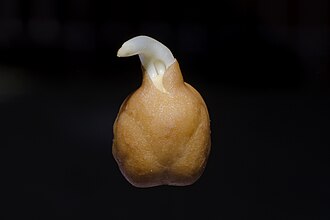
Photo: Wikipedia
Canned chickpeas are a pantry staple, offering a firm, slightly nutty bite with a creamy interior that's ready in seconds after a quick rinse. Each 100g serving delivers a solid 7g of plant-based protein and about 20g of complex carbohydrates, making it a satisfying, energy-dense food. The rinsing process significantly reduces added sodium, transforming them into a convenient, low-fat, and versatile ingredient for countless meals.
Calorie split: 20% protein · 59% carbs · 20% fat
↓ Full nutrition💚 Why it's loved
People love them for their incredible versatility and satisfying, meaty texture that holds up in everything from salads to curries. Their mild, nutty flavor acts as a perfect canvas for bold spices, and they are a beloved, affordable protein source in many cultures.
⚠️ Watch-outs & how to enjoy it better
Canned varieties can be high in sodium, which may concern those monitoring blood pressure, and their carbohydrate content can affect blood sugar if not paired wisely. To counteract this, always rinse them thoroughly under running water to remove excess salt, and serve them with a source of fat (like olive oil or avocado) or protein to slow digestion and stabilize blood sugar response.
Key benefits
- Excellent source of plant-based protein for muscle maintenance and satiety.
- Rich in complex carbohydrates for sustained energy release.
- Provides essential minerals like folate, iron, and phosphorus.
- Highly versatile, requiring no cooking and fitting into salads, soups, and spreads.
- Convenient and shelf-stable, reducing food waste and prep time.
🍽️ Popular dishes
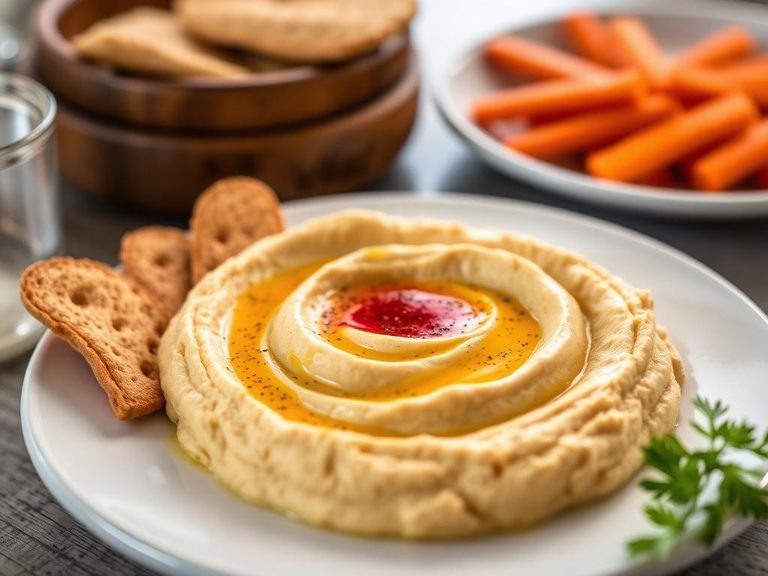
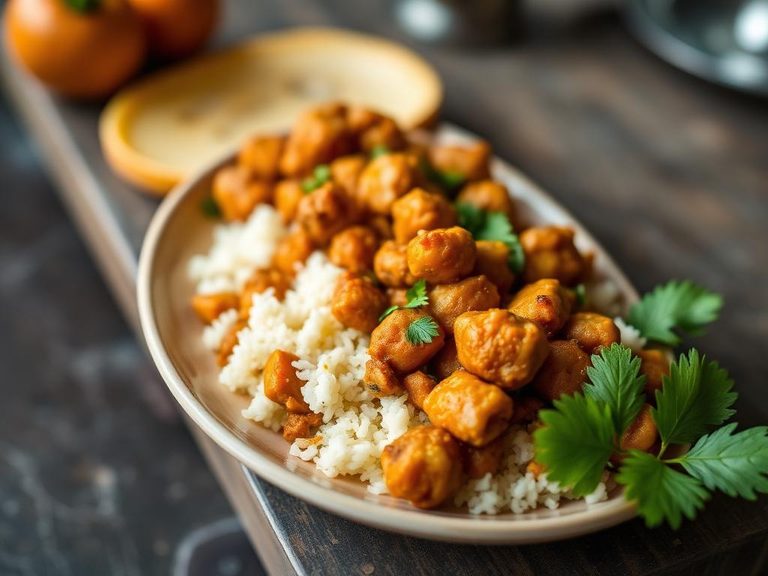
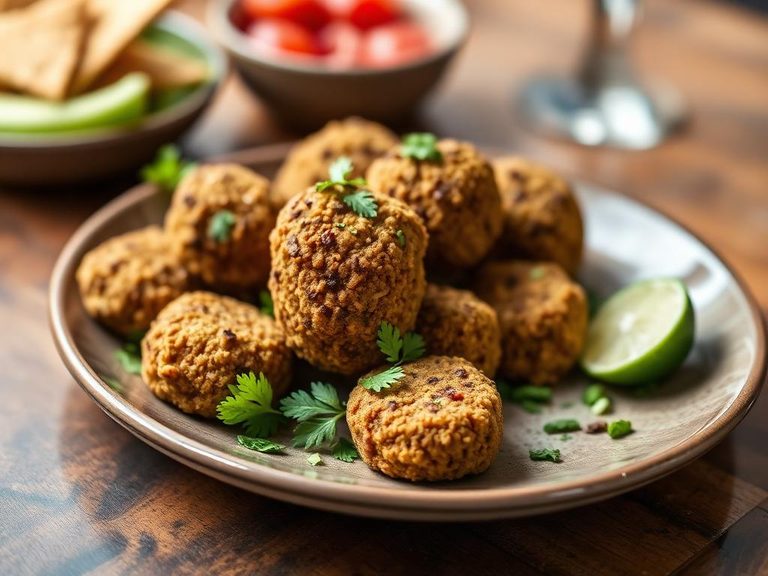


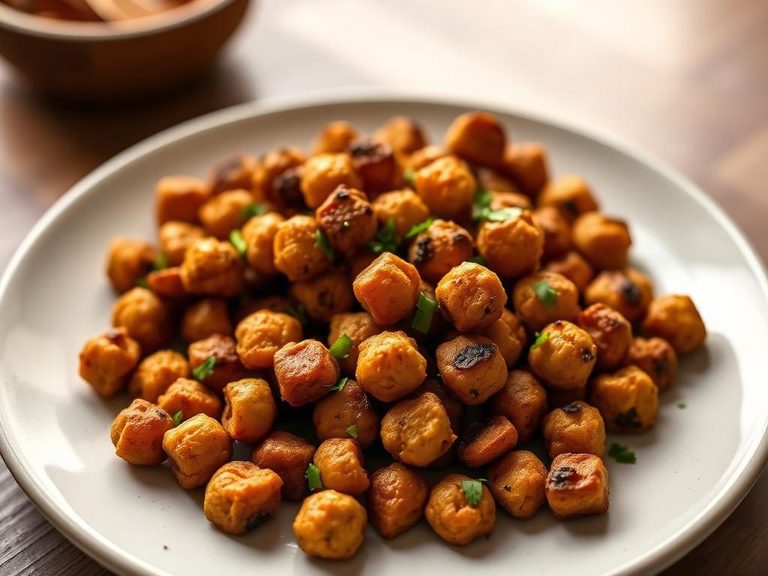
🌍 Where it's eaten
💡 Did you know?
The liquid from canned chickpeas, known as aquafaba, can be whipped into a stable foam that mimics egg whites, making it a revolutionary vegan ingredient for meringues and mousses.
Full nutrition (USDA data · scales with serving)
| Water | 68.6 g |
| Energy (Atwater General Factors) | 137 kcal |
| Energy (Atwater Specific Factors) | 133 kcal |
| Nitrogen | 1.1 g |
| Protein | 7.0 g |
| Total lipid (fat) | 3.1 g |
| Ash | 0.97 g |
| Carbohydrate, by difference | 20.3 g |
| Total dietary fiber (AOAC 2011.25) | 5.9 g |
| Starch | 12.8 g |
| Resistant starch | 2.0 g |
| Calcium, Ca | 40.5 mg |
| Iron, Fe | 1.0 mg |
| Magnesium, Mg | 28.4 mg |
| Phosphorus, P | 86.5 mg |
| Potassium, K | 137 mg |
| Sodium, Na | 202 mg |
| Zinc, Zn | 0.72 mg |
| Copper, Cu | 0.27 mg |
| Manganese, Mn | 0.74 mg |
Fat & fatty acid profile (per 100g)
Estimated from Chickpeas (garbanzo beans, bengal gram), mature seeds, raw — USDA does not publish this profile for Chickpeas (garbanzo beans.
| Fatty acids, total saturated | 0.60 g |
| SFA 4:0 | 0.00 g |
| SFA 6:0 | 0.00 g |
| SFA 8:0 | 0.00 g |
| SFA 10:0 | 0.00 g |
| SFA 12:0 | 0.00 g |
| SFA 14:0 | 0.01 g |
| SFA 16:0 | 0.51 g |
| SFA 18:0 | 0.09 g |
| Fatty acids, total monounsaturated | 1.4 g |
| MUFA 16:1 | 0.01 g |
| MUFA 18:1 | 1.4 g |
| MUFA 20:1 | 0.00 g |
| MUFA 22:1 | 0.00 g |
| Fatty acids, total polyunsaturated | 2.7 g |
| PUFA 18:2 | 2.6 g |
| PUFA 18:3 | 0.10 g |
| PUFA 18:4 | 0.00 g |
| PUFA 20:4 | 0.00 g |
| PUFA 20:5 n-3 (EPA) | 0.00 g |
| PUFA 22:5 n-3 (DPA) | 0.00 g |
| PUFA 22:6 n-3 (DHA) | 0.00 g |
| Fatty acids, total trans | 0.00 g |
| Cholesterol | 0.00 mg |
Amino acid profile (per 100g)
Estimated from Chickpeas (garbanzo beans, bengal gram), mature seeds, raw — USDA does not publish this profile for Chickpeas (garbanzo beans.
| Tryptophan | 0.20 g |
| Threonine | 0.77 g |
| Isoleucine | 0.88 g |
| Leucine | 1.5 g |
| Lysine | 1.4 g |
| Methionine | 0.27 g |
| Cystine | 0.28 g |
| Phenylalanine | 1.1 g |
| Tyrosine | 0.51 g |
| Valine | 0.86 g |
| Arginine | 1.9 g |
| Histidine | 0.57 g |
| Alanine | 0.88 g |
| Aspartic acid | 2.4 g |
| Glutamic acid | 3.6 g |
| Glycine | 0.86 g |
| Proline | 0.85 g |
| Serine | 1.0 g |
FAQ
Do I need to rinse canned chickpeas?
Yes, rinsing under cold water for 30-60 seconds can remove up to 40% of the added sodium and also washes away the viscous liquid (aquafaba) that can cause digestive discomfort for some people.
Can I eat canned chickpeas straight from the can?
Yes, they are fully cooked and safe to eat cold or at room temperature, making them a perfect addition to salads or as a quick snack.
How do I store leftover canned chickpeas?
Transfer any unused chickpeas (with their liquid) to an airtight container and refrigerate for up to 3-4 days. You can also freeze them for up to 6 months.
Nutrient density (calculated · NRF9.3)
Nutrient Rich Foods index: beneficial nutrients (protein, fiber, vitamins, minerals) minus saturated fat, added sugar & sodium, per 100 kcal.
NRF9.3 index — Fulgoni, Keast & Drewnowski, 2009. Computed from USDA nutrients.
Weight-loss friendliness (composite index)
Energy density 1.37 kcal/g · 20% calories from protein · 0.0 g fiber · 0.0 g sugar per 100 g.
Composite of energy density (Rolls et al., 1999), protein & fiber satiety, minus sugar. A calculated heuristic — ranks satiety-per-calorie, not a clinical measure.
Dietary load (calculated from USDA values)
Potential renal acid load. Positive = acid-forming, negative = alkaline-forming.
Sodium-to-potassium ratio: 1.47 (lower is better — aim for ≤ 1)
Sodium:potassium per WHO potassium guidance. Computed from USDA nutrients.