

Cheese souffle
Common food

Photo: Wikipedia
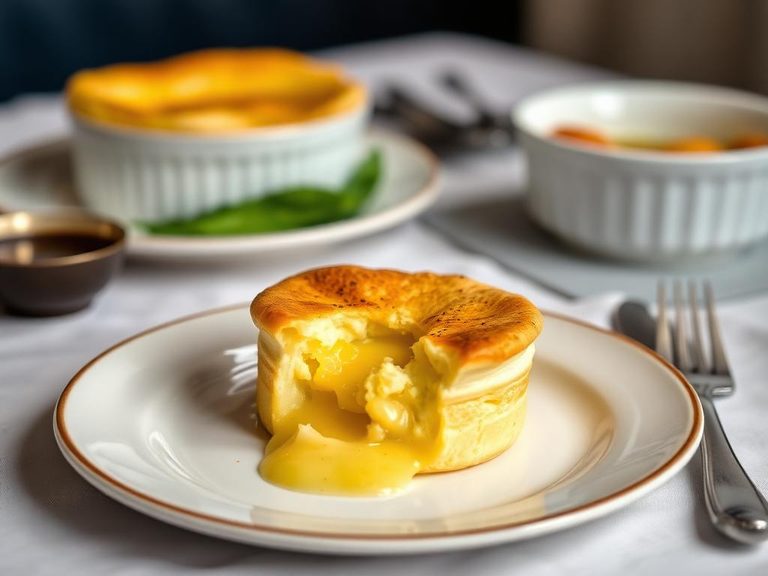
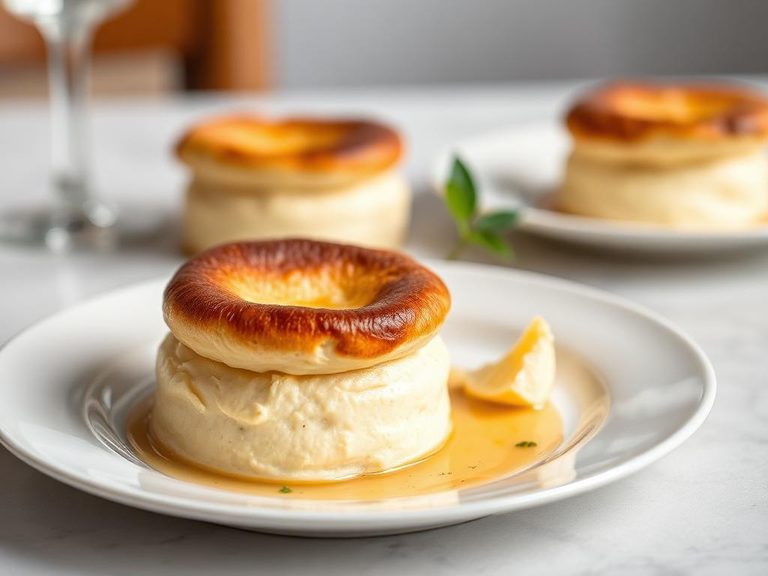
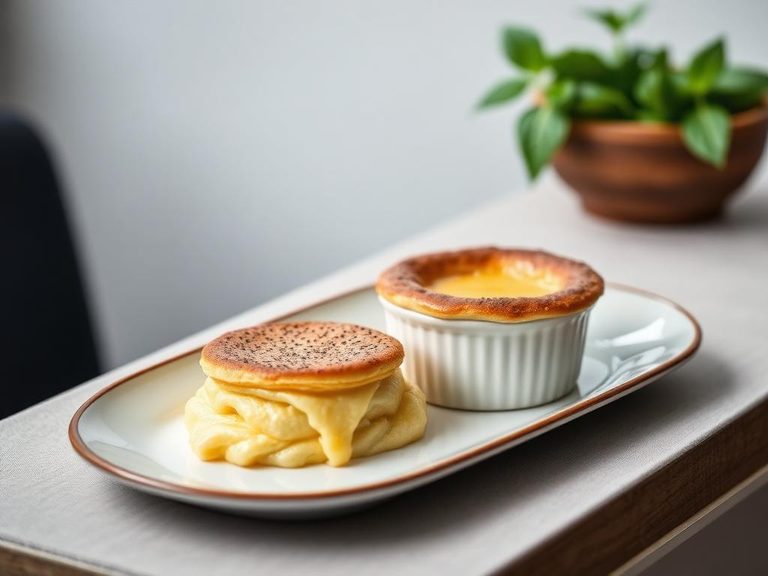
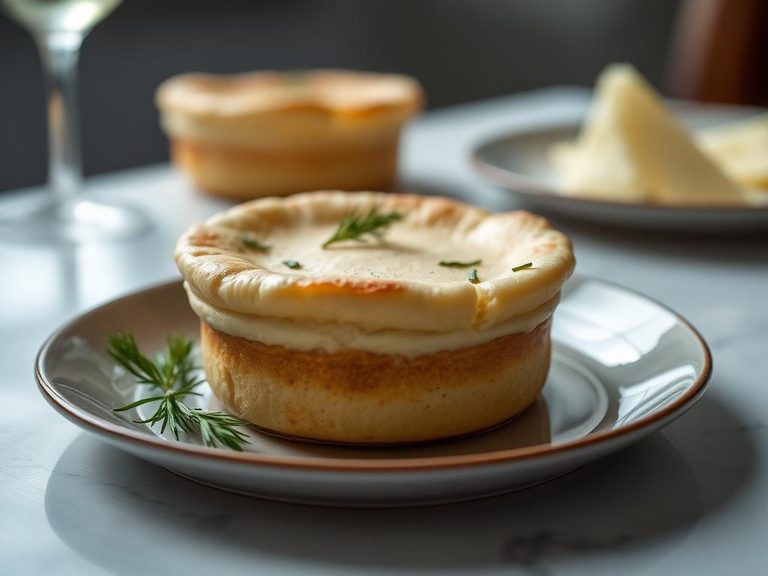
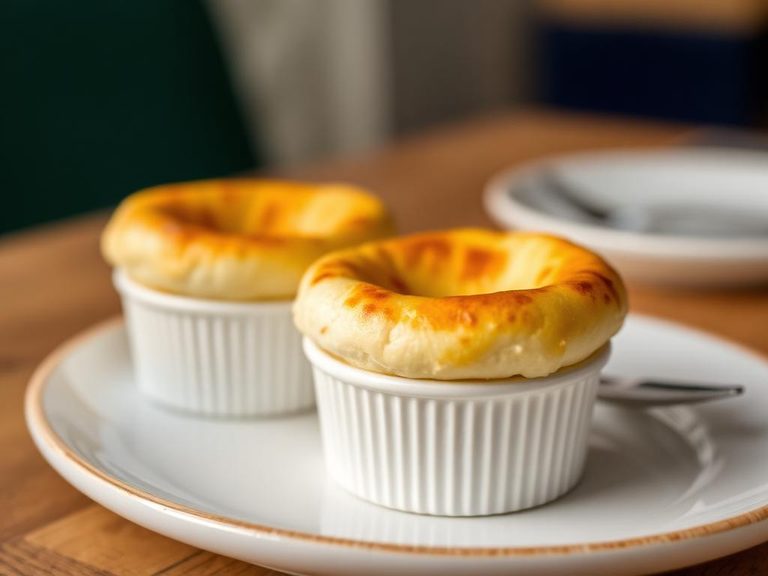
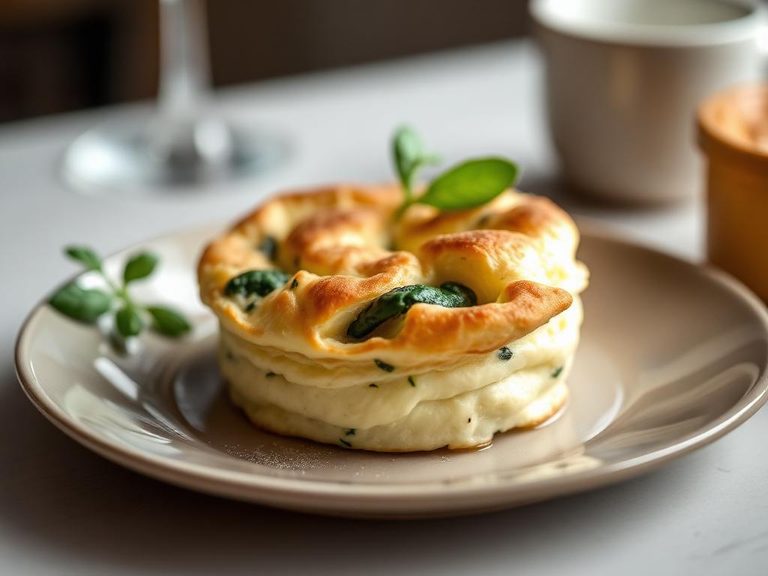
A cheese soufflé is a classic French dish of egg whites whipped to airy peaks and folded into a savory cheese base, baked until puffed and golden. Its texture is famously light and cloud-like, with a rich, tangy, and umami flavor from the cheese. Nutritionally, it is a high-fat, high-protein dish with relatively low carbohydrates, making it a dense source of energy.
Calorie split: 18% protein · 12% carbs · 69% fat
↓ Full nutrition💚 Why it's loved
People love it for the dramatic, theatrical rise in the oven and the satisfying contrast of a crispy top with a soft, molten interior. It is a versatile centerpiece that can be served for brunch, lunch, or dinner, and is deeply embedded in French culinary tradition.
⚠️ Watch-outs & how to enjoy it better
Its high fat and saturated fat content can be a concern for those monitoring cholesterol or heart health, and it is a common allergen due to dairy and eggs. To mitigate this, pair a smaller portion with a large green salad to add fiber and volume, and use a mix of sharp cheeses to maximize flavor without needing excessive amounts. For those with lactose intolerance, using aged cheeses like Gruyère or Parmesan can reduce symptoms.
Key benefits
- Excellent source of high-quality protein from eggs and cheese.
- Provides calcium and phosphorus for bone health.
- Low in carbohydrates and sugar, suitable for low-carb diets.
- Rich in fat-soluble vitamins like A, D, and K2 from dairy and eggs.
🍽️ Popular dishes
🌍 Where it's eaten
💡 Did you know?
The word 'soufflé' comes from the French verb 'souffler,' meaning 'to blow' or 'to puff up,' and the dish was first popularized in the 18th century by French chef Marie-Antoine Carême.
Full nutrition (USDA data · scales with serving)
| Water | 66.6 g |
| Energy | 207 kcal |
| Protein | 9.4 g |
| Total lipid (fat) | 16.0 g |
| Carbohydrate, by difference | 6.4 g |
| Fiber, total dietary | 0.10 g |
| Total Sugars | 2.4 g |
| Calcium, Ca | 189 mg |
| Iron, Fe | 0.76 mg |
| Magnesium, Mg | 14.0 mg |
| Phosphorus, P | 181 mg |
| Potassium, K | 131 mg |
| Sodium, Na | 314 mg |
| Zinc, Zn | 1.2 mg |
| Copper, Cu | 0.01 mg |
| Selenium, Se | 15.1 ug |
| Vitamin C, total ascorbic acid | 0.00 mg |
| Thiamin | 0.07 mg |
| Riboflavin | 0.27 mg |
| Niacin | 0.33 mg |
| Vitamin B-6 | 0.04 mg |
| Folate, total | 24.0 ug |
| Folic acid | 4.0 ug |
| Folate, food | 19.0 ug |
| Folate, DFE | 27.0 ug |
| Choline, total | 85.7 mg |
| Vitamin B-12 | 0.41 ug |
| Vitamin B-12, added | 0.00 ug |
| Vitamin A, RAE | 190 ug |
| Retinol | 189 ug |
| Carotene, beta | 15.0 ug |
| Carotene, alpha | 0.00 ug |
| Cryptoxanthin, beta | 4.0 ug |
| Lycopene | 0.00 ug |
| Lutein + zeaxanthin | 145 ug |
| Vitamin E (alpha-tocopherol) | 0.44 mg |
| Vitamin E, added | 0.00 mg |
| Vitamin D (D2 + D3) | 1.4 ug |
| Vitamin K (phylloquinone) | 1.1 ug |
| Alcohol, ethyl | 0.00 g |
| Caffeine | 0.00 mg |
| Theobromine | 0.00 mg |
Fat & fatty acid profile (per 100g)
| Fatty acids, total saturated | 8.3 g |
| SFA 4:0 | 0.29 g |
| SFA 6:0 | 0.22 g |
| SFA 8:0 | 0.14 g |
| SFA 10:0 | 0.32 g |
| SFA 12:0 | 0.36 g |
| SFA 14:0 | 1.2 g |
| SFA 16:0 | 4.1 g |
| SFA 18:0 | 1.5 g |
| Fatty acids, total monounsaturated | 3.8 g |
| MUFA 16:1 | 0.25 g |
| MUFA 18:1 | 3.6 g |
| MUFA 20:1 | 0.02 g |
| MUFA 22:1 | 0.00 g |
| Fatty acids, total polyunsaturated | 0.96 g |
| PUFA 18:2 | 0.84 g |
| PUFA 18:3 | 0.05 g |
| PUFA 18:4 | 0.00 g |
| PUFA 20:4 | 0.02 g |
| PUFA 20:5 n-3 (EPA) | 0.00 g |
| PUFA 22:5 n-3 (DPA) | 0.01 g |
| PUFA 22:6 n-3 (DHA) | 0.00 g |
| Cholesterol | 157 mg |
FAQ
Why does my cheese soufflé fall flat?
A soufflé can fall due to under-whipped egg whites, over-folding, or opening the oven door too early. Ensure egg whites are stiff and glossy, fold gently to keep air, and bake without disturbing until set.
Can I make a cheese soufflé ahead of time?
You can prepare the base and whip the egg whites in advance, but the final assembly and baking must be done just before serving, as soufflés deflate quickly after being removed from the oven.
What cheese is best for a cheese soufflé?
Gruyère, Comté, or sharp cheddar are traditional choices for their strong flavor and good melting properties, but you can use any flavorful, well-melting cheese.
Is a cheese soufflé gluten-free?
Traditional cheese soufflé uses a flour-based roux, so it is not gluten-free. However, you can make a gluten-free version by omitting the flour or using a gluten-free flour substitute.
Nutrient density (calculated · NRF9.3)
Nutrient Rich Foods index: beneficial nutrients (protein, fiber, vitamins, minerals) minus saturated fat, added sugar & sodium, per 100 kcal.
NRF9.3 index — Fulgoni, Keast & Drewnowski, 2009. Computed from USDA nutrients.
Weight-loss friendliness (composite index)
Energy density 2.07 kcal/g · 18% calories from protein · 0.1 g fiber · 2.4 g sugar per 100 g.
Composite of energy density (Rolls et al., 1999), protein & fiber satiety, minus sugar. A calculated heuristic — ranks satiety-per-calorie, not a clinical measure.
Dietary load (calculated from USDA values)
Potential renal acid load. Positive = acid-forming, negative = alkaline-forming.
Sodium-to-potassium ratio: 2.40 (lower is better — aim for ≤ 1)
Sodium:potassium per WHO potassium guidance. Computed from USDA nutrients.