

Cheese quiche, meatless
Common food

Photo: Wikipedia
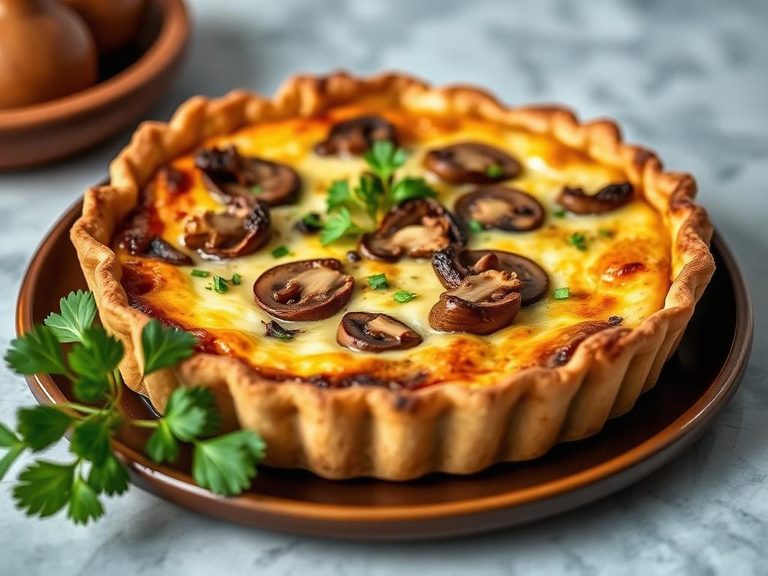
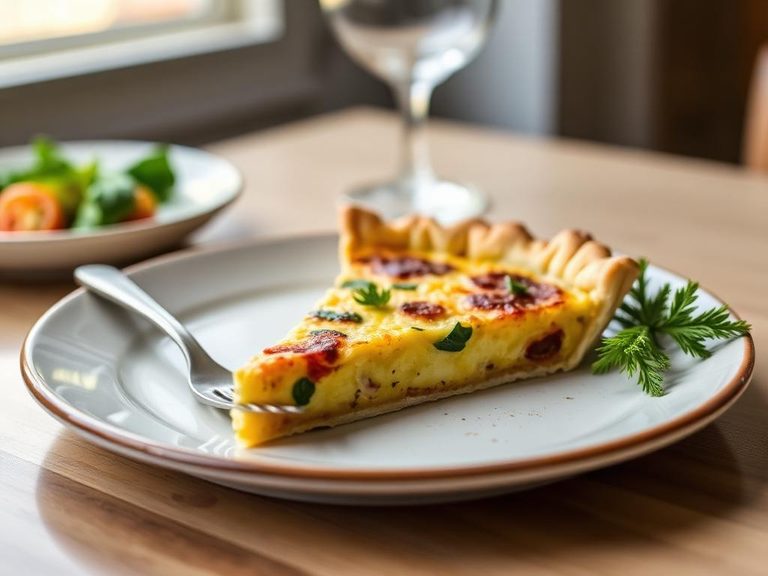
A savory, custard-like tart with a flaky pastry crust, filled with a rich, egg-and-cream custard and melted cheese, often studded with herbs or vegetables. The texture is silky and dense, with a satisfying contrast between the crisp crust and the smooth, savory filling. Nutritionally, it's a high-fat, calorie-dense dish, with nearly 30g of fat per 100g providing long-lasting energy and satiety.
Calorie split: 13% protein · 15% carbs · 72% fat
↓ Full nutrition💚 Why it's loved
People adore it for its comforting, savory richness and incredible versatility—it can be a simple weeknight dinner, an elegant brunch centerpiece, or a portable picnic food. It's a beloved staple in French bistro culture and home kitchens worldwide for its ability to transform basic ingredients into something deeply satisfying.
⚠️ Watch-outs & how to enjoy it better
The high fat and calorie content (over 290 kcal per 100g) can be a concern for those monitoring weight or heart health. The pastry crust is a refined carbohydrate with minimal fiber, which can lead to blood sugar spikes if eaten alone. To counteract this, pair a slice with a large, leafy green salad dressed with vinaigrette to add fiber and volume, or enjoy a smaller portion alongside lean protein like roasted chicken.
Key benefits
- Excellent source of complete protein from eggs and cheese
- High in calcium for bone health
- Rich in fat-soluble vitamins A, D, E, and K
- Provides B vitamins like B12 and riboflavin
- High satiety factor helps with portion control
🍽️ Popular dishes
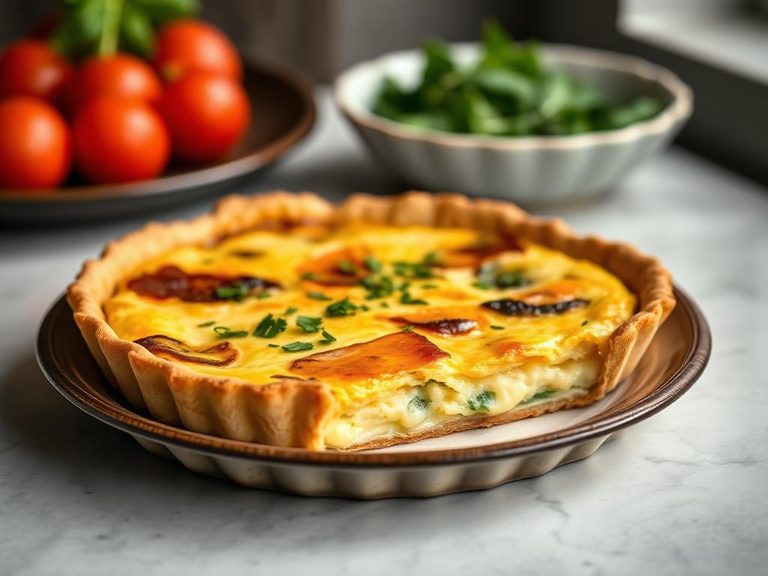
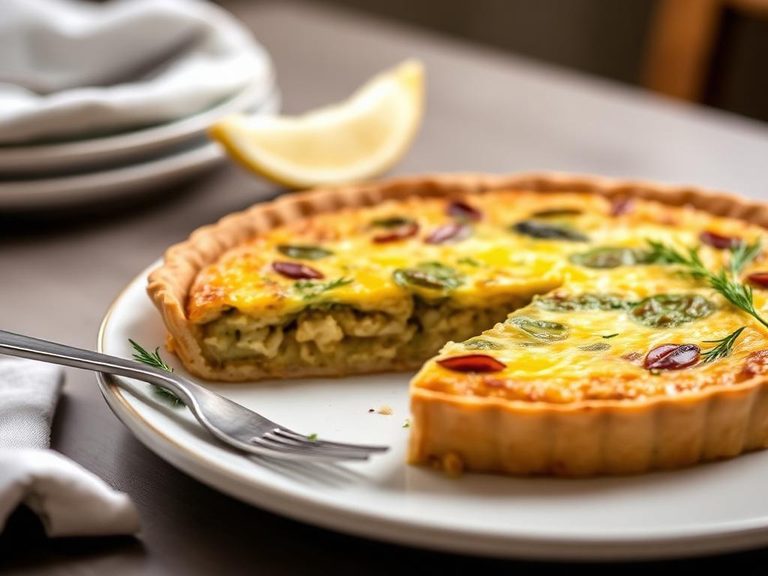
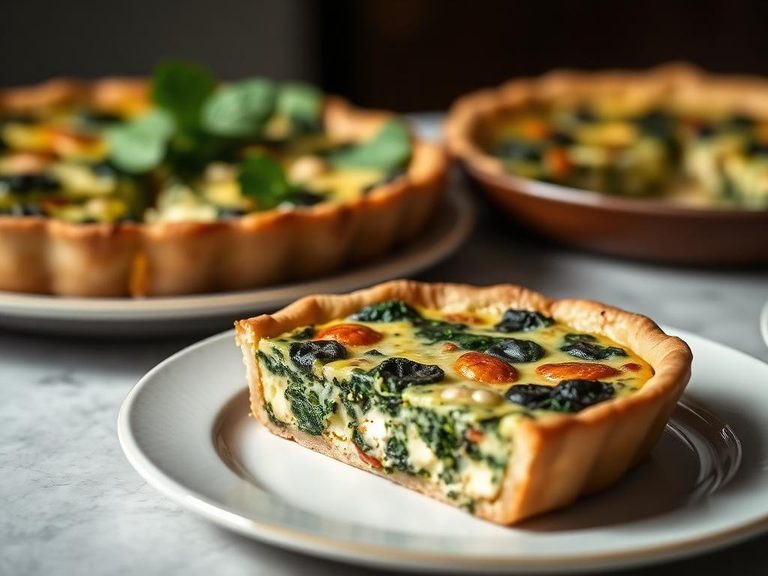
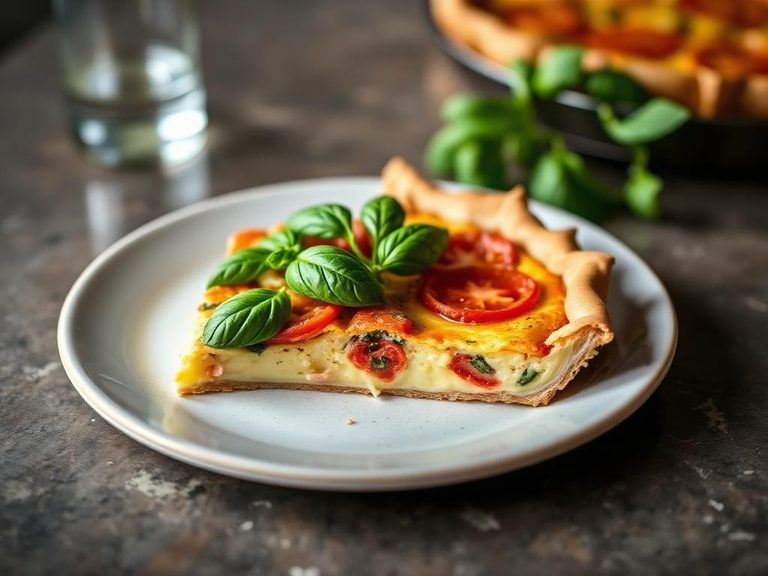
🌍 Where it's eaten
💡 Did you know?
The classic Quiche Lorraine originally contained no cheese at all; the addition of Gruyère or Emmental is a later, popular variation that is now standard in many recipes.
Full nutrition (USDA data · scales with serving)
| Water | 43.2 g |
| Energy | 365 kcal |
| Protein | 11.9 g |
| Total lipid (fat) | 29.2 g |
| Carbohydrate, by difference | 13.7 g |
| Fiber, total dietary | 0.80 g |
| Total Sugars | 2.2 g |
| Calcium, Ca | 267 mg |
| Iron, Fe | 1.0 mg |
| Magnesium, Mg | 17.0 mg |
| Phosphorus, P | 229 mg |
| Potassium, K | 117 mg |
| Sodium, Na | 361 mg |
| Zinc, Zn | 1.6 mg |
| Copper, Cu | 0.04 mg |
| Selenium, Se | 17.5 ug |
| Vitamin C, total ascorbic acid | 0.50 mg |
| Thiamin | 0.09 mg |
| Riboflavin | 0.27 mg |
| Niacin | 0.73 mg |
| Vitamin B-6 | 0.05 mg |
| Folate, total | 30.0 ug |
| Folic acid | 10.0 ug |
| Folate, food | 20.0 ug |
| Folate, DFE | 37.0 ug |
| Choline, total | 73.5 mg |
| Vitamin B-12 | 0.62 ug |
| Vitamin B-12, added | 0.00 ug |
| Vitamin A, RAE | 239 ug |
| Retinol | 238 ug |
| Carotene, beta | 16.0 ug |
| Carotene, alpha | 0.00 ug |
| Cryptoxanthin, beta | 4.0 ug |
| Lycopene | 0.00 ug |
| Lutein + zeaxanthin | 121 ug |
| Vitamin E (alpha-tocopherol) | 0.85 mg |
| Vitamin E, added | 0.00 mg |
| Vitamin D (D2 + D3) | 1.2 ug |
| Vitamin K (phylloquinone) | 3.3 ug |
| Alcohol, ethyl | 0.00 g |
| Caffeine | 0.00 mg |
| Theobromine | 0.00 mg |
Fat & fatty acid profile (per 100g)
| Fatty acids, total saturated | 14.9 g |
| SFA 4:0 | 0.45 g |
| SFA 6:0 | 0.37 g |
| SFA 8:0 | 0.23 g |
| SFA 10:0 | 0.53 g |
| SFA 12:0 | 0.63 g |
| SFA 14:0 | 2.1 g |
| SFA 16:0 | 7.2 g |
| SFA 18:0 | 2.9 g |
| Fatty acids, total monounsaturated | 8.1 g |
| MUFA 16:1 | 0.53 g |
| MUFA 18:1 | 8.1 g |
| MUFA 20:1 | 0.07 g |
| MUFA 22:1 | 0.00 g |
| Fatty acids, total polyunsaturated | 2.0 g |
| PUFA 18:2 | 1.6 g |
| PUFA 18:3 | 0.11 g |
| PUFA 18:4 | 0.00 g |
| PUFA 20:4 | 0.04 g |
| PUFA 20:5 n-3 (EPA) | 0.01 g |
| PUFA 22:5 n-3 (DPA) | 0.01 g |
| PUFA 22:6 n-3 (DHA) | 0.00 g |
| Cholesterol | 159 mg |
FAQ
Can I make a meatless quiche ahead of time?
Yes, quiche is ideal for make-ahead meals. Bake it completely, let it cool, then cover and refrigerate for up to 3 days. Reheat slices in a 350°F (175°C) oven for 10-15 minutes to re-crisp the crust.
Why is my quiche filling watery or runny?
This often happens if watery vegetables (like spinach, tomatoes, or mushrooms) weren't properly pre-cooked and drained. Always sauté and squeeze excess moisture from vegetables before adding them to the custard base.
Can I freeze a cheese quiche?
Yes, but texture may suffer slightly. Wrap the fully cooled quiche tightly in plastic and foil, or freeze individual slices. Thaw overnight in the fridge and reheat in the oven. The crust may lose some flakiness.
Nutrient density (calculated · NRF9.3)
Nutrient Rich Foods index: beneficial nutrients (protein, fiber, vitamins, minerals) minus saturated fat, added sugar & sodium, per 100 kcal.
NRF9.3 index — Fulgoni, Keast & Drewnowski, 2009. Computed from USDA nutrients.
Weight-loss friendliness (composite index)
Energy density 3.65 kcal/g · 13% calories from protein · 0.8 g fiber · 2.2 g sugar per 100 g.
Composite of energy density (Rolls et al., 1999), protein & fiber satiety, minus sugar. A calculated heuristic — ranks satiety-per-calorie, not a clinical measure.
Dietary load (calculated from USDA values)
Potential renal acid load. Positive = acid-forming, negative = alkaline-forming.
Sodium-to-potassium ratio: 3.09 (lower is better — aim for ≤ 1)
Sodium:potassium per WHO potassium guidance. Computed from USDA nutrients.