

Quiche with meat, poultry or fish
Common food

Photo: Wikipedia
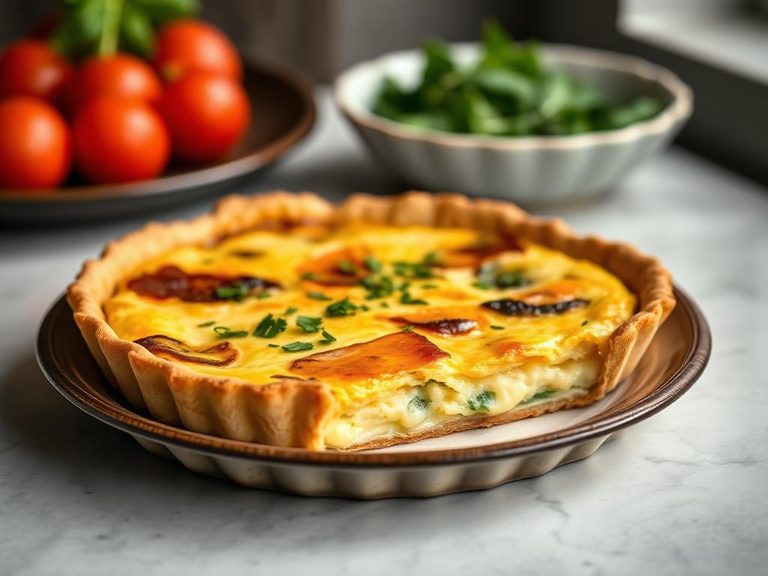
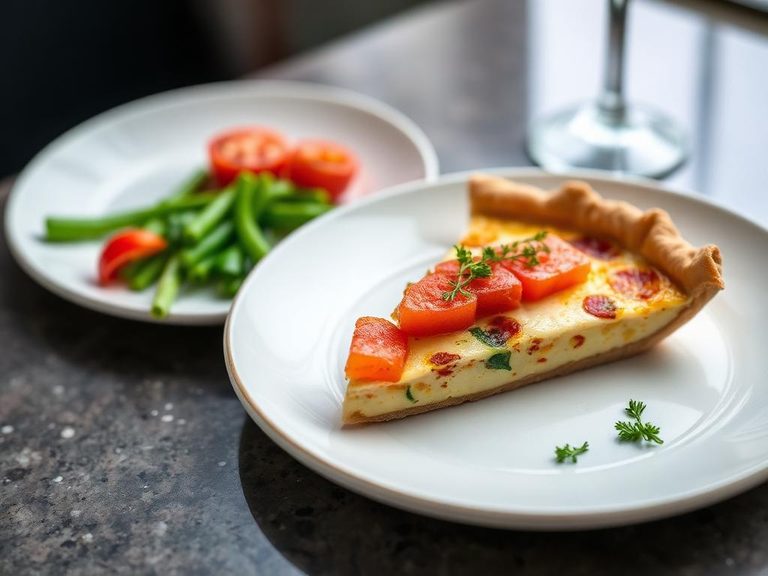
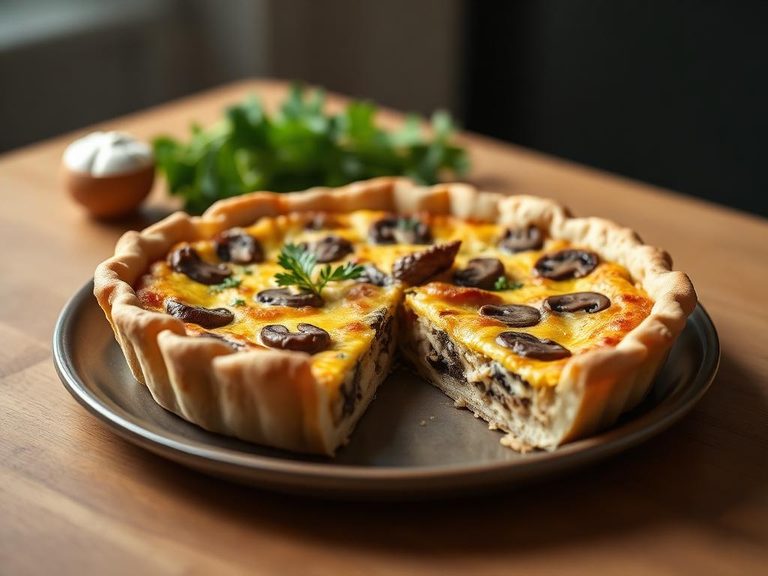
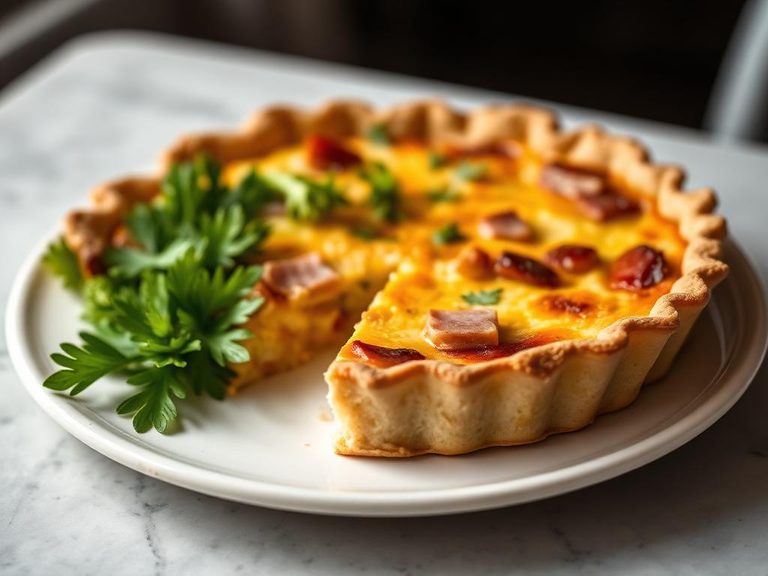
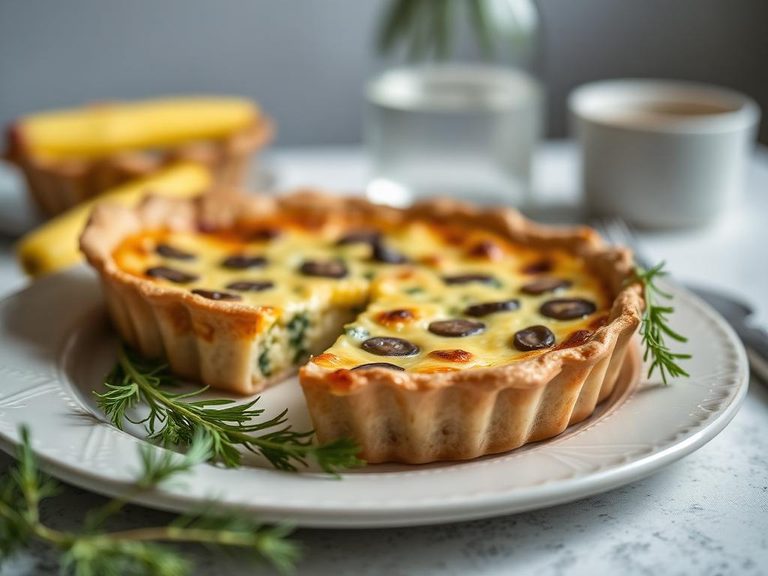
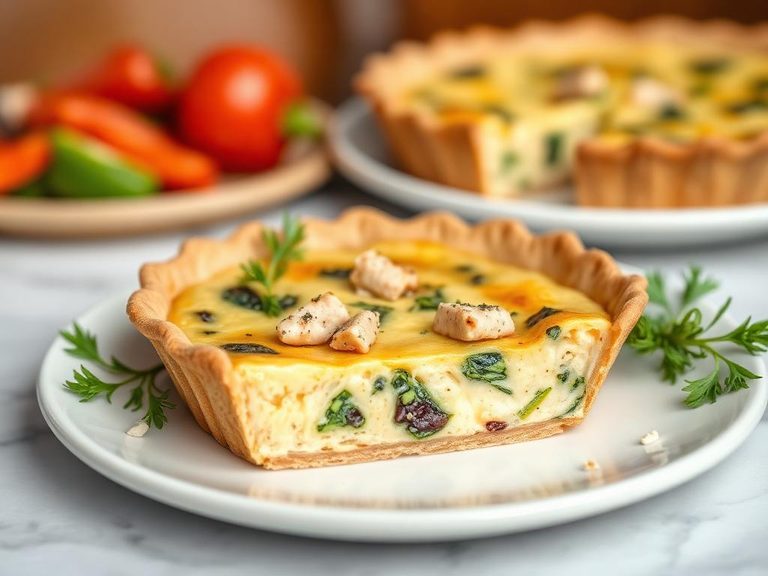
A savory custard tart, quiche features a flaky pastry crust filled with a rich egg and cream custard, studded with savory meats, poultry, or fish. The texture is a delightful contrast between the crisp, buttery crust and the smooth, silky interior. Nutritionally, it's a calorie-dense, high-fat dish that provides a substantial amount of protein from its animal-based fillings.
Calorie split: 16% protein · 13% carbs · 71% fat
↓ Full nutrition💚 Why it's loved
People adore quiche for its comforting, savory richness and its incredible versatility, making it a staple for everything from elegant brunches to quick weeknight dinners. It's a beloved classic in French cuisine and a crowd-pleaser at potlucks and buffets worldwide.
⚠️ Watch-outs & how to enjoy it better
Its high saturated fat and calorie content, primarily from the cream, eggs, and buttery crust, can be a concern for those monitoring heart health or calorie intake. To enjoy it mindfully, opt for a smaller slice, pair it with a large, vinegar-dressed green salad to add fiber and volume, and consider making a crustless version to significantly reduce calories and refined carbs.
Key benefits
- Excellent source of high-quality protein from eggs and meat fillings.
- Provides essential nutrients like vitamin B12, selenium, and phosphorus.
- A satisfying, complete meal that can be served hot or cold.
- Highly versatile; can be customized with countless filling combinations.
🍽️ Popular dishes
🌍 Where it's eaten
💡 Did you know?
The iconic Quiche Lorraine originally contained no cheese; the Gruyère or Emmental commonly added today is a later, popular variation.
Full nutrition (USDA data · scales with serving)
| Water | 39.2 g |
| Energy | 387 kcal |
| Protein | 15.5 g |
| Total lipid (fat) | 30.6 g |
| Carbohydrate, by difference | 12.1 g |
| Fiber, total dietary | 0.70 g |
| Total Sugars | 1.9 g |
| Calcium, Ca | 232 mg |
| Iron, Fe | 1.0 mg |
| Magnesium, Mg | 20.0 mg |
| Phosphorus, P | 257 mg |
| Potassium, K | 178 mg |
| Sodium, Na | 570 mg |
| Zinc, Zn | 1.9 mg |
| Copper, Cu | 0.05 mg |
| Selenium, Se | 22.9 ug |
| Vitamin C, total ascorbic acid | 0.40 mg |
| Thiamin | 0.16 mg |
| Riboflavin | 0.27 mg |
| Niacin | 2.2 mg |
| Vitamin B-6 | 0.13 mg |
| Folate, total | 26.0 ug |
| Folic acid | 8.0 ug |
| Folate, food | 17.0 ug |
| Folate, DFE | 32.0 ug |
| Choline, total | 77.2 mg |
| Vitamin B-12 | 0.70 ug |
| Vitamin B-12, added | 0.00 ug |
| Vitamin A, RAE | 208 ug |
| Retinol | 207 ug |
| Carotene, beta | 13.0 ug |
| Carotene, alpha | 0.00 ug |
| Cryptoxanthin, beta | 3.0 ug |
| Lycopene | 0.00 ug |
| Lutein + zeaxanthin | 105 ug |
| Vitamin E (alpha-tocopherol) | 0.80 mg |
| Vitamin E, added | 0.00 mg |
| Vitamin D (D2 + D3) | 1.1 ug |
| Vitamin K (phylloquinone) | 2.9 ug |
| Alcohol, ethyl | 0.00 g |
| Caffeine | 0.00 mg |
| Theobromine | 0.00 mg |
Fat & fatty acid profile (per 100g)
| Fatty acids, total saturated | 14.7 g |
| SFA 4:0 | 0.39 g |
| SFA 6:0 | 0.32 g |
| SFA 8:0 | 0.20 g |
| SFA 10:0 | 0.46 g |
| SFA 12:0 | 0.54 g |
| SFA 14:0 | 1.9 g |
| SFA 16:0 | 7.4 g |
| SFA 18:0 | 3.0 g |
| Fatty acids, total monounsaturated | 9.4 g |
| MUFA 16:1 | 0.57 g |
| MUFA 18:1 | 9.2 g |
| MUFA 20:1 | 0.11 g |
| MUFA 22:1 | 0.00 g |
| Fatty acids, total polyunsaturated | 2.7 g |
| PUFA 18:2 | 2.2 g |
| PUFA 18:3 | 0.13 g |
| PUFA 18:4 | 0.00 g |
| PUFA 20:4 | 0.06 g |
| PUFA 20:5 n-3 (EPA) | 0.01 g |
| PUFA 22:5 n-3 (DPA) | 0.01 g |
| PUFA 22:6 n-3 (DHA) | 0.00 g |
| Cholesterol | 153 mg |
FAQ
What's the difference between a quiche and a frittata?
A quiche has a pastry crust and a cream-based custard, while a frittata is a crustless Italian egg dish often finished in the oven and typically contains less dairy.
Can quiche be frozen?
Yes, quiche freezes well. Cool it completely, wrap tightly in plastic and foil, and freeze for up to 2-3 months. Reheat from frozen in a 350°F (175°C) oven until heated through.
Why is my quiche watery or has a soggy bottom?
This is often due to undercooking or adding wet ingredients (like vegetables) without pre-cooking them to release moisture. Blind-baking the crust also helps create a barrier.
Nutrient density (calculated · NRF9.3)
Nutrient Rich Foods index: beneficial nutrients (protein, fiber, vitamins, minerals) minus saturated fat, added sugar & sodium, per 100 kcal.
NRF9.3 index — Fulgoni, Keast & Drewnowski, 2009. Computed from USDA nutrients.
Weight-loss friendliness (composite index)
Energy density 3.87 kcal/g · 16% calories from protein · 0.7 g fiber · 1.9 g sugar per 100 g.
Composite of energy density (Rolls et al., 1999), protein & fiber satiety, minus sugar. A calculated heuristic — ranks satiety-per-calorie, not a clinical measure.
Dietary load (calculated from USDA values)
Potential renal acid load. Positive = acid-forming, negative = alkaline-forming.
Sodium-to-potassium ratio: 3.20 (lower is better — aim for ≤ 1)
Sodium:potassium per WHO potassium guidance. Computed from USDA nutrients.