

Cheese fondue
Common food

Photo: Wikipedia
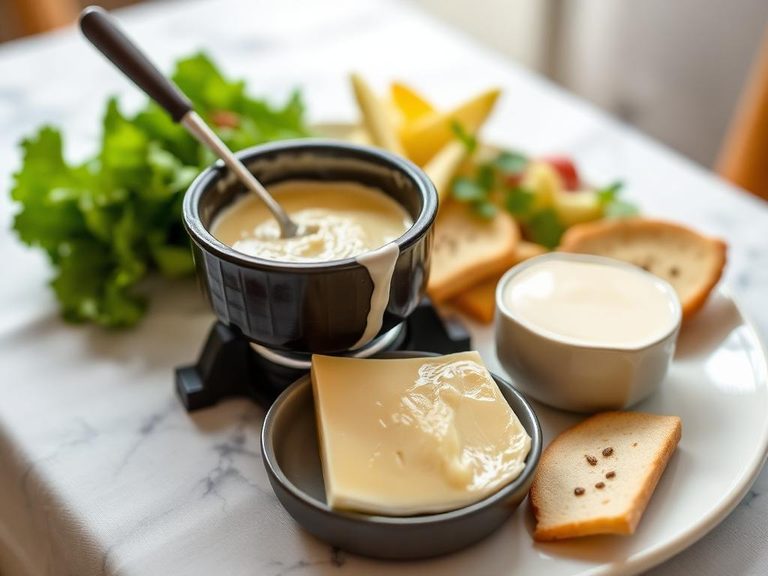
A communal pot of molten, blended cheese—typically Gruyère and Emmental—thickened with white wine and a splash of kirsch, creating a rich, savory, and stringy texture. It's a quintessential Alpine comfort food, prized for its luxurious mouthfeel and the interactive, social experience of dipping bread cubes. Nutritionally, it's a calorie-dense, high-protein, and high-fat dish with virtually no carbohydrates, making it a very satiating meal.
Calorie split: 28% protein · 3% carbs · 69% fat
↓ Full nutrition💚 Why it's loved
People adore cheese fondue for its decadent, savory flavor and the cozy, convivial atmosphere it creates, turning a meal into a shared event. The ritual of dipping, swirling, and scraping the pot is deeply satisfying and culturally ingrained in Swiss and Alpine traditions.
⚠️ Watch-outs & how to enjoy it better
The high fat and sodium content can be a concern for those monitoring heart health or blood pressure. To mitigate, pair it with plenty of blanched vegetables like broccoli or cauliflower for fiber and nutrients, use whole-grain bread for dipping, and practice portion control by limiting the number of bread cubes per person.
Key benefits
- Excellent source of protein for muscle maintenance and satiety.
- Rich in calcium and phosphorus for bone health.
- High in conjugated linoleic acid (CLA), a fatty acid linked to various health benefits.
- Provides essential vitamins like Vitamin A and B12.
- Promotes social bonding through its communal, interactive dining style.
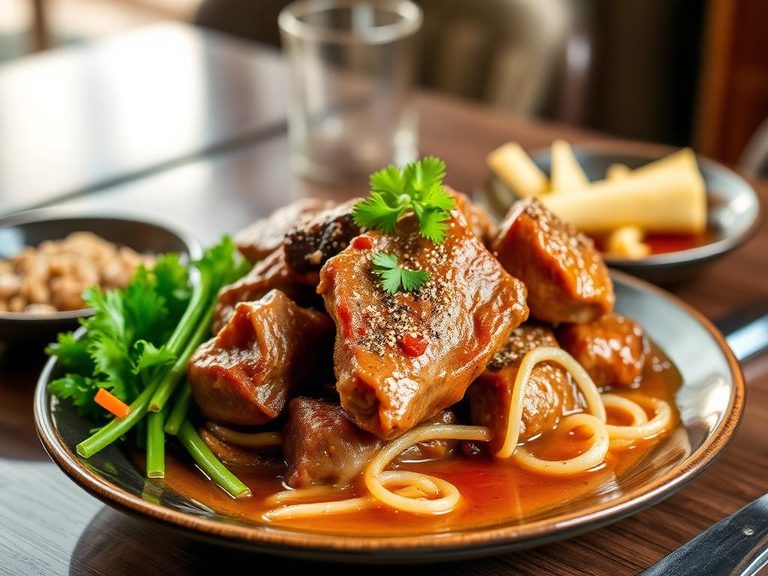
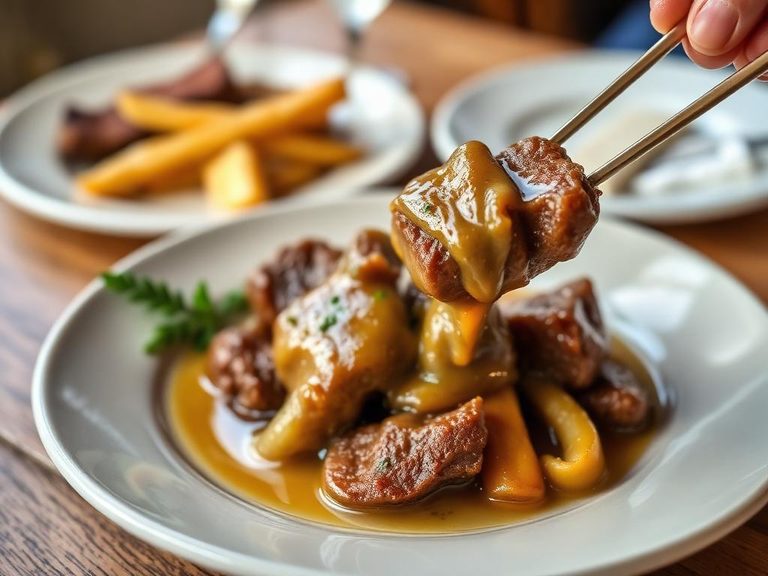
🍽️ Popular dishes



🌍 Where it's eaten
💡 Did you know?
The traditional rule for dropping your bread into the fondue pot is that if a man loses his bread, he must buy a round of drinks, and if a woman does, she must kiss her neighbor.
Full nutrition (USDA data · scales with serving)
| Water | 55.0 g |
| Energy | 276 kcal |
| Protein | 19.3 g |
| Total lipid (fat) | 21.2 g |
| Carbohydrate, by difference | 1.9 g |
| Fiber, total dietary | 0.00 g |
| Total Sugars | 0.53 g |
| Calcium, Ca | 639 mg |
| Iron, Fe | 0.32 mg |
| Magnesium, Mg | 27.0 mg |
| Phosphorus, P | 401 mg |
| Potassium, K | 85.0 mg |
| Sodium, Na | 303 mg |
| Zinc, Zn | 2.8 mg |
| Copper, Cu | 0.03 mg |
| Selenium, Se | 15.2 ug |
| Vitamin C, total ascorbic acid | 0.00 mg |
| Thiamin | 0.03 mg |
| Riboflavin | 0.20 mg |
| Niacin | 0.17 mg |
| Vitamin B-6 | 0.05 mg |
| Folate, total | 7.0 ug |
| Folic acid | 1.0 ug |
| Folate, food | 6.0 ug |
| Folate, DFE | 8.0 ug |
| Choline, total | 10.6 mg |
| Vitamin B-12 | 1.1 ug |
| Vitamin B-12, added | 0.00 ug |
| Vitamin A, RAE | 188 ug |
| Retinol | 186 ug |
| Carotene, beta | 31.0 ug |
| Carotene, alpha | 0.00 ug |
| Cryptoxanthin, beta | 1.0 ug |
| Lycopene | 0.00 ug |
| Lutein + zeaxanthin | 3.0 ug |
| Vitamin E (alpha-tocopherol) | 0.30 mg |
| Vitamin E, added | 0.00 mg |
| Vitamin D (D2 + D3) | 0.20 ug |
| Vitamin K (phylloquinone) | 1.4 ug |
| Alcohol, ethyl | 0.00 g |
| Caffeine | 0.00 mg |
| Theobromine | 0.00 mg |
Fat & fatty acid profile (per 100g)
| Fatty acids, total saturated | 12.4 g |
| SFA 4:0 | 0.58 g |
| SFA 6:0 | 0.39 g |
| SFA 8:0 | 0.23 g |
| SFA 10:0 | 0.51 g |
| SFA 12:0 | 0.60 g |
| SFA 14:0 | 2.1 g |
| SFA 16:0 | 5.7 g |
| SFA 18:0 | 1.8 g |
| Fatty acids, total monounsaturated | 5.8 g |
| MUFA 16:1 | 0.43 g |
| MUFA 18:1 | 5.2 g |
| MUFA 20:1 | 0.02 g |
| MUFA 22:1 | 0.00 g |
| Fatty acids, total polyunsaturated | 0.97 g |
| PUFA 18:2 | 0.80 g |
| PUFA 18:3 | 0.19 g |
| PUFA 18:4 | 0.00 g |
| PUFA 20:4 | 0.01 g |
| PUFA 20:5 n-3 (EPA) | 0.00 g |
| PUFA 22:5 n-3 (DPA) | 0.01 g |
| PUFA 22:6 n-3 (DHA) | 0.00 g |
| Cholesterol | 68.0 mg |
FAQ
What is the best cheese to use for fondue?
The classic Swiss combination is a mix of Gruyère and Emmental (or Vacherin Fribourgeois). These cheeses melt smoothly, have a rich flavor, and create the ideal stringy texture.
How do you keep fondue from getting grainy or separating?
Keep the heat low and steady, never boiling. Add cheese gradually, stirring constantly in a figure-eight pattern. A splash of white wine or a bit of cornstarch (mixed with the wine) helps stabilize the emulsion.
What should I dip in fondue besides bread?
Blanched vegetables (broccoli, cauliflower, carrots), boiled potatoes, apple slices, pickles, and even cooked meats like chicken or sausage are popular and delicious alternatives.
Nutrient density (calculated · NRF9.3)
Nutrient Rich Foods index: beneficial nutrients (protein, fiber, vitamins, minerals) minus saturated fat, added sugar & sodium, per 100 kcal.
NRF9.3 index — Fulgoni, Keast & Drewnowski, 2009. Computed from USDA nutrients.
Weight-loss friendliness (composite index)
Energy density 2.76 kcal/g · 28% calories from protein · 0.0 g fiber · 0.5 g sugar per 100 g.
Composite of energy density (Rolls et al., 1999), protein & fiber satiety, minus sugar. A calculated heuristic — ranks satiety-per-calorie, not a clinical measure.
Dietary load (calculated from USDA values)
Potential renal acid load. Positive = acid-forming, negative = alkaline-forming.
Sodium-to-potassium ratio: 3.56 (lower is better — aim for ≤ 1)
Sodium:potassium per WHO potassium guidance. Computed from USDA nutrients.