

Cheese dip
Common food
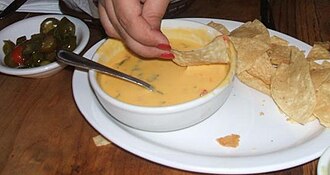
Photo: Wikipedia
Cheese dip is a rich, creamy sauce made from melted cheese and other ingredients, often enjoyed warm and gooey. Its texture ranges from smooth and velvety to thick and stringy, depending on the base cheese and preparation. Nutritionally, it is a high-fat, calorie-dense condiment that provides a concentrated source of energy and some protein.
Calorie split: 8% protein · 19% carbs · 73% fat
↓ Full nutrition💚 Why it's loved
People love cheese dip for its indulgent, savory flavor and its incredible versatility as a communal food for dipping chips, pretzels, and vegetables. It's a staple at social gatherings, parties, and game days, deeply embedded in casual dining culture.
⚠️ Watch-outs & how to enjoy it better
Cheese dip is high in saturated fat, sodium, and calories, which can be a concern for those managing heart health or weight. To counteract this, practice portion control, use it as a flavorful accent rather than a main dish, and pair it with high-fiber foods like raw vegetables to slow absorption and increase satiety.
Key benefits
- Provides a quick source of energy from fats and calories
- Contains calcium and protein from cheese
- Enhances palatability of vegetables and other foods
- Offers a convenient, flavorful way to add calories to meals
🍽️ Popular dishes


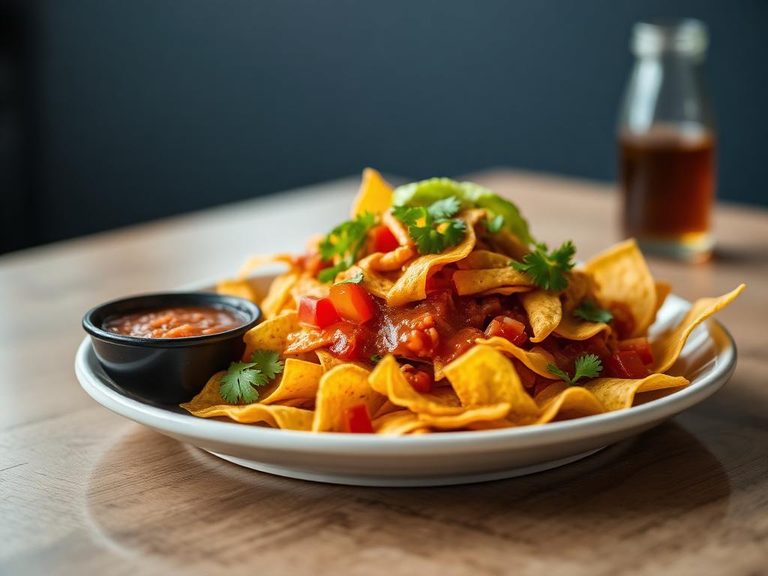
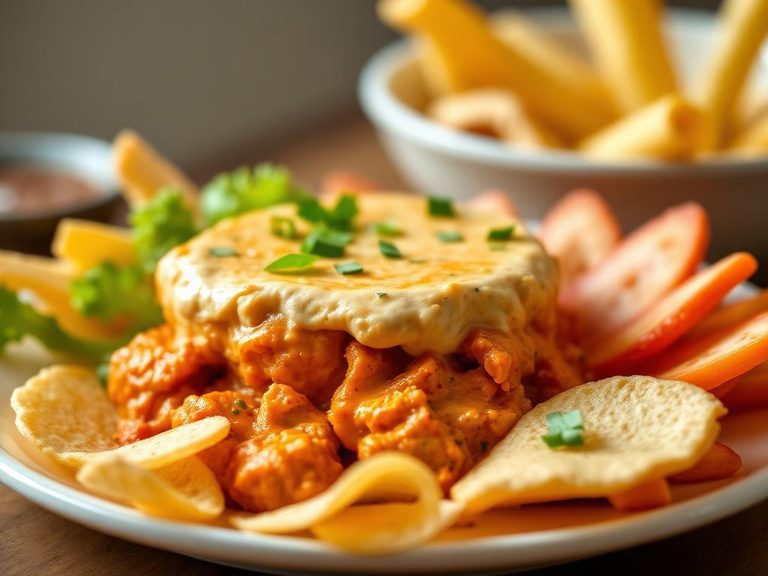


🌍 Where it's eaten
💡 Did you know?
The classic Tex-Mex 'queso' dip often gets its signature orange hue and smooth melt not from traditional cheese alone, but from processed American cheese or Velveeta, which contain sodium citrate as an emulsifier.
Full nutrition (USDA data · scales with serving)
| Water | 73.7 g |
| Energy | 163 kcal |
| Protein | 3.1 g |
| Total lipid (fat) | 13.3 g |
| Carbohydrate, by difference | 7.9 g |
| Fiber, total dietary | 0.30 g |
| Total Sugars | 0.29 g |
| Calcium, Ca | 71.0 mg |
| Iron, Fe | 0.56 mg |
| Magnesium, Mg | 6.0 mg |
| Phosphorus, P | 55.0 mg |
| Potassium, K | 27.0 mg |
| Sodium, Na | 656 mg |
| Zinc, Zn | 0.42 mg |
| Copper, Cu | 0.02 mg |
| Selenium, Se | 2.8 ug |
| Vitamin C, total ascorbic acid | 0.00 mg |
| Thiamin | 0.09 mg |
| Riboflavin | 0.08 mg |
| Niacin | 0.67 mg |
| Vitamin B-6 | 0.01 mg |
| Folate, total | 15.0 ug |
| Folic acid | 12.0 ug |
| Folate, food | 4.0 ug |
| Folate, DFE | 24.0 ug |
| Choline, total | 3.1 mg |
| Vitamin B-12 | 0.09 ug |
| Vitamin B-12, added | 0.00 ug |
| Vitamin A, RAE | 19.0 ug |
| Retinol | 19.0 ug |
| Carotene, beta | 0.00 ug |
| Carotene, alpha | 0.00 ug |
| Cryptoxanthin, beta | 0.00 ug |
| Lycopene | 0.00 ug |
| Lutein + zeaxanthin | 2.0 ug |
| Vitamin E (alpha-tocopherol) | 2.0 mg |
| Vitamin E, added | 0.00 mg |
| Vitamin D (D2 + D3) | 0.00 ug |
| Vitamin K (phylloquinone) | 10.5 ug |
| Alcohol, ethyl | 0.00 g |
| Caffeine | 0.00 mg |
| Theobromine | 0.00 mg |
Fat & fatty acid profile (per 100g)
| Fatty acids, total saturated | 3.1 g |
| SFA 4:0 | 0.09 g |
| SFA 6:0 | 0.02 g |
| SFA 8:0 | 0.03 g |
| SFA 10:0 | 0.05 g |
| SFA 12:0 | 0.09 g |
| SFA 14:0 | 0.27 g |
| SFA 16:0 | 1.8 g |
| SFA 18:0 | 0.55 g |
| Fatty acids, total monounsaturated | 4.9 g |
| MUFA 16:1 | 0.12 g |
| MUFA 18:1 | 4.9 g |
| MUFA 20:1 | 0.07 g |
| MUFA 22:1 | 0.00 g |
| Fatty acids, total polyunsaturated | 4.1 g |
| PUFA 18:2 | 3.6 g |
| PUFA 18:3 | 0.47 g |
| PUFA 18:4 | 0.00 g |
| PUFA 20:4 | 0.00 g |
| PUFA 20:5 n-3 (EPA) | 0.00 g |
| PUFA 22:5 n-3 (DPA) | 0.00 g |
| PUFA 22:6 n-3 (DHA) | 0.00 g |
| Cholesterol | 9.0 mg |
FAQ
Why does my homemade cheese dip become grainy or separate?
This is often caused by overheating or using cheeses with low moisture content. To prevent it, melt cheese over low heat, add a starch like cornstarch or a small amount of acid (like lemon juice or beer), and avoid boiling after the cheese is melted.
Is cheese dip gluten-free?
Traditional cheese dip made from cheese, milk, and spices is gluten-free. However, many commercial mixes or restaurant versions may use thickeners or additives containing gluten, so always check labels or ask about ingredients.
Can I freeze cheese dip?
Freezing is not recommended for most cheese dips, as the emulsion will break upon thawing, resulting in a grainy, oily texture. It's best enjoyed fresh or stored in the refrigerator for a few days.
Nutrient density (calculated · NRF9.3)
Nutrient Rich Foods index: beneficial nutrients (protein, fiber, vitamins, minerals) minus saturated fat, added sugar & sodium, per 100 kcal.
NRF9.3 index — Fulgoni, Keast & Drewnowski, 2009. Computed from USDA nutrients.
Weight-loss friendliness (composite index)
Energy density 1.63 kcal/g · 8% calories from protein · 0.3 g fiber · 0.3 g sugar per 100 g.
Composite of energy density (Rolls et al., 1999), protein & fiber satiety, minus sugar. A calculated heuristic — ranks satiety-per-calorie, not a clinical measure.
Dietary load (calculated from USDA values)
Potential renal acid load. Positive = acid-forming, negative = alkaline-forming.
Sodium-to-potassium ratio: 24.30 (lower is better — aim for ≤ 1)
Sodium:potassium per WHO potassium guidance. Computed from USDA nutrients.