

Cereals ready-to-eat, QUAKER, CAP'N CRUNCH with CRUNCHBERRIES
Whole food · Breakfast Cereals

Photo: Wikipedia
Cap'n Crunch with Crunchberries is a vibrant, sugary breakfast cereal known for its distinctive sweet corn and oat square base, punctuated by tart, berry-shaped puffs that deliver a satisfying crunch. The cereal's signature texture is a delightful interplay of crispy squares and slightly chewy berry bits, creating a playful eating experience. Nutritionally, it's a high-carbohydrate, high-sugar option, providing quick energy but lacking in protein and fiber.
Calorie split: 4% protein · 85% carbs · 11% fat
↓ Full nutrition💚 Why it's loved
People adore Cap'n Crunch with Crunchberries for its iconic, intensely sweet flavor and the satisfying crunch that holds up even in milk. It's a nostalgic staple for many, evoking childhood memories and serving as a comforting, indulgent treat.
⚠️ Watch-outs & how to enjoy it better
Its high sugar content (44.2g per 100g) can lead to rapid blood sugar spikes and subsequent energy crashes, making it less ideal for sustained energy or those managing blood sugar. To mitigate this, pair it with a source of protein (like Greek yogurt or milk) and healthy fat (like nuts) to slow sugar absorption, and practice portion control by measuring a single serving instead of eating from the box.
Key benefits
- Provides a quick source of energy due to high carbohydrate content.
- Offers a fun, nostalgic eating experience with its unique texture and bright colors.
- Fortified with essential vitamins and minerals, contributing to daily intake.
- Convenient and requires no cooking, making it a fast breakfast option.
🍽️ Popular dishes

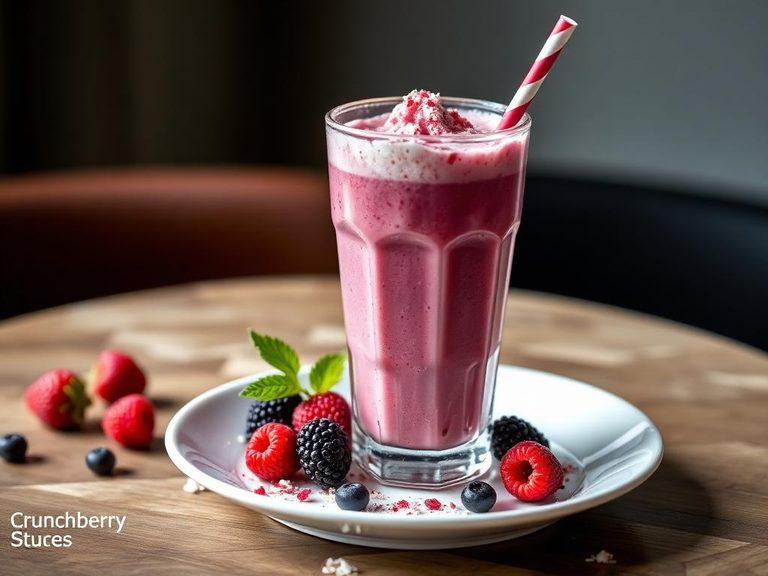
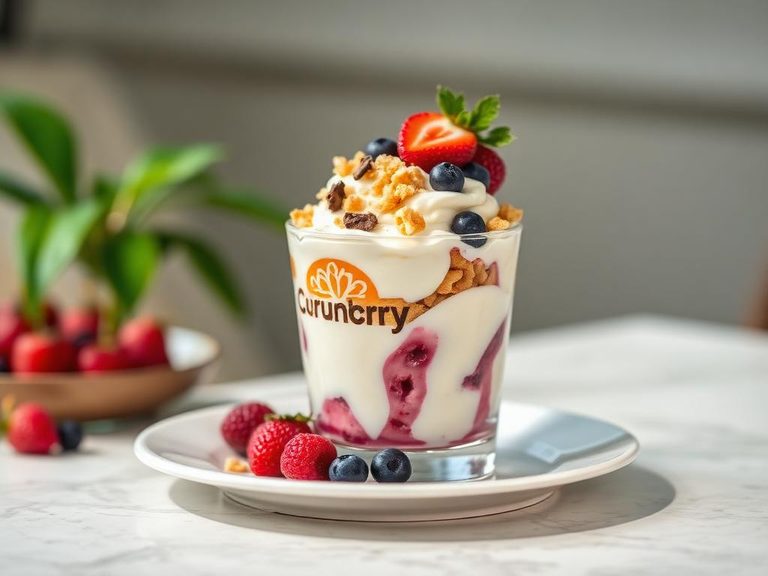
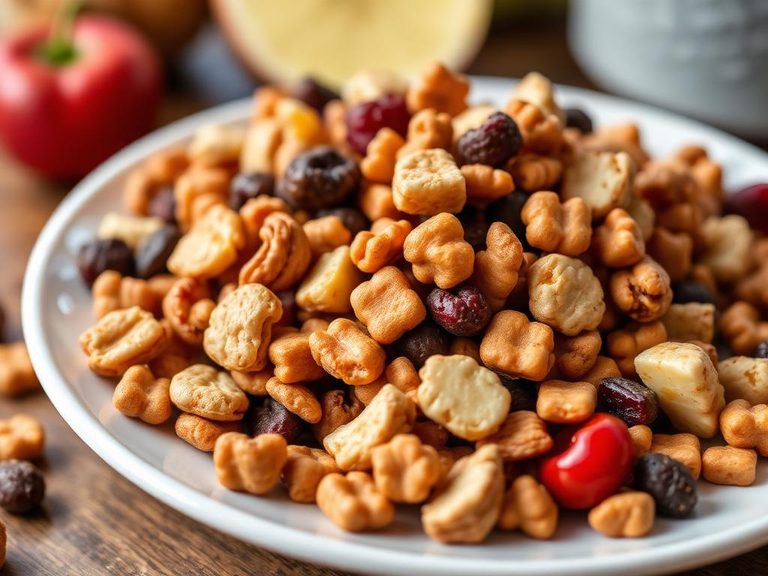
🌍 Where it's eaten
💡 Did you know?
The Crunchberries were originally marketed as a 'fruit-flavored' cereal, but the berry shapes are actually made from the same sweetened corn and oat blend as the squares, just with added fruit flavoring and color.
Full nutrition (USDA data · scales with serving)
| Water | 2.5 g |
| Energy | 397 kcal |
| Energy | 1662 kj |
| Protein | 4.5 g |
| Total lipid (fat) | 4.8 g |
| Ash | 2.3 g |
| Carbohydrate, by difference | 85.9 g |
| Fiber, total dietary | 2.6 g |
| Total Sugars | 44.2 g |
| Calcium, Ca | 11.0 mg |
| Iron, Fe | 19.8 mg |
| Magnesium, Mg | 55.0 mg |
| Phosphorus, P | 168 mg |
| Potassium, K | 187 mg |
| Sodium, Na | 725 mg |
| Zinc, Zn | 15.6 mg |
| Copper, Cu | 0.12 mg |
| Selenium, Se | 10.4 ug |
| Vitamin C, total ascorbic acid | 0.10 mg |
| Thiamin | 1.6 mg |
| Riboflavin | 1.8 mg |
| Niacin | 20.8 mg |
| Vitamin B-6 | 2.1 mg |
| Folate, total | 1630 ug |
| Folic acid | 1611 ug |
| Folate, food | 19.0 ug |
| Folate, DFE | 2757 ug |
| Choline, total | 8.6 mg |
| Vitamin B-12 | 0.00 ug |
| Vitamin B-12, added | 0.00 ug |
| Vitamin A, RAE | 7.0 ug |
| Retinol | 0.00 ug |
| Carotene, beta | 89.0 ug |
| Carotene, alpha | 0.00 ug |
| Cryptoxanthin, beta | 0.00 ug |
| Vitamin A, IU | 149 iu |
| Lycopene | 0.00 ug |
| Lutein + zeaxanthin | 538 ug |
| Vitamin E (alpha-tocopherol) | 0.63 mg |
| Vitamin E, added | 0.00 mg |
| Vitamin D (D2 + D3), International Units | 0.00 iu |
| Vitamin D (D2 + D3) | 0.00 ug |
| Vitamin K (phylloquinone) | 0.60 ug |
| Alcohol, ethyl | 0.00 g |
| Caffeine | 0.00 mg |
| Theobromine | 0.00 mg |
Fat & fatty acid profile (per 100g)
| Fatty acids, total saturated | 3.1 g |
| SFA 4:0 | 0.00 g |
| SFA 6:0 | 0.02 g |
| SFA 8:0 | 0.23 g |
| SFA 10:0 | 0.18 g |
| SFA 12:0 | 1.4 g |
| SFA 14:0 | 0.51 g |
| SFA 16:0 | 0.63 g |
| SFA 18:0 | 0.12 g |
| Fatty acids, total monounsaturated | 0.63 g |
| MUFA 16:1 | 0.00 g |
| MUFA 18:1 | 0.63 g |
| MUFA 20:1 | 0.00 g |
| MUFA 22:1 | 0.00 g |
| Fatty acids, total polyunsaturated | 0.75 g |
| PUFA 18:2 | 0.72 g |
| PUFA 18:3 | 0.03 g |
| PUFA 18:4 | 0.00 g |
| PUFA 20:4 | 0.00 g |
| PUFA 20:5 n-3 (EPA) | 0.00 g |
| PUFA 22:5 n-3 (DPA) | 0.00 g |
| PUFA 22:6 n-3 (DHA) | 0.00 g |
| Fatty acids, total trans | 0.02 g |
| Cholesterol | 0.00 mg |
FAQ
Is Cap'n Crunch with Crunchberries healthy?
It's a high-sugar, low-fiber cereal that provides quick energy but lacks sustained nutritional benefits. It can be part of an occasional treat but isn't recommended as a daily breakfast staple.
How can I reduce the sugar impact of this cereal?
Pair it with protein-rich milk or yogurt, add nuts or seeds, and stick to a single serving size to help stabilize blood sugar levels.
What are the main ingredients in Cap'n Crunch with Crunchberries?
The primary ingredients are corn flour, sugar, oat flour, and palm oil, with added artificial flavors and colors for the berry shapes.
Nutrient density (calculated · NRF9.3)
Nutrient Rich Foods index: beneficial nutrients (protein, fiber, vitamins, minerals) minus saturated fat, added sugar & sodium, per 100 kcal.
NRF9.3 index — Fulgoni, Keast & Drewnowski, 2009. Computed from USDA nutrients.
Weight-loss friendliness (composite index)
Energy density 3.97 kcal/g · 4% calories from protein · 2.6 g fiber · 44.2 g sugar per 100 g.
Composite of energy density (Rolls et al., 1999), protein & fiber satiety, minus sugar. A calculated heuristic — ranks satiety-per-calorie, not a clinical measure.
Dietary load (calculated from USDA values)
Potential renal acid load. Positive = acid-forming, negative = alkaline-forming.
Sodium-to-potassium ratio: 3.88 (lower is better — aim for ≤ 1)
Sodium:potassium per WHO potassium guidance. Computed from USDA nutrients.