

Cereals ready-to-eat, POST, COCOA PEBBLES
Whole food · Breakfast Cereals

Photo: Wikipedia
Cocoa Pebbles is a chocolate-flavored, crispy rice cereal that delivers a sweet, intensely cocoa-forward taste with a light, airy crunch. It's a nostalgic breakfast staple known for its vibrant brown color and the way it transforms milk into a chocolatey treat. Nutritionally, it's a high-carb, high-sugar option with minimal protein and fiber, making it more of an indulgent treat than a balanced meal.
Calorie split: 5% protein · 86% carbs · 9% fat
↓ Full nutrition💚 Why it's loved
People love it for its unmistakable chocolate flavor and satisfying crunch, which makes it a fun, sweet start to the day. It's also a cultural icon, tied to childhood memories and its association with the Flintstones cartoon characters.
⚠️ Watch-outs & how to enjoy it better
The high sugar content (35.8g per 100g) can lead to a rapid blood-sugar spike and subsequent crash, making it unsuitable for those managing diabetes or seeking sustained energy. To counteract this, pair it with a source of protein or healthy fat (like Greek yogurt or nuts) and practice portion control. It also contains common allergens like wheat and may have added sodium.
Key benefits
- Provides quick energy from carbohydrates
- Fortified with essential vitamins and minerals like iron and B vitamins
- Low in fat content
- Offers a fun, nostalgic eating experience
- Can be a convenient, no-cook breakfast option
🍽️ Popular dishes
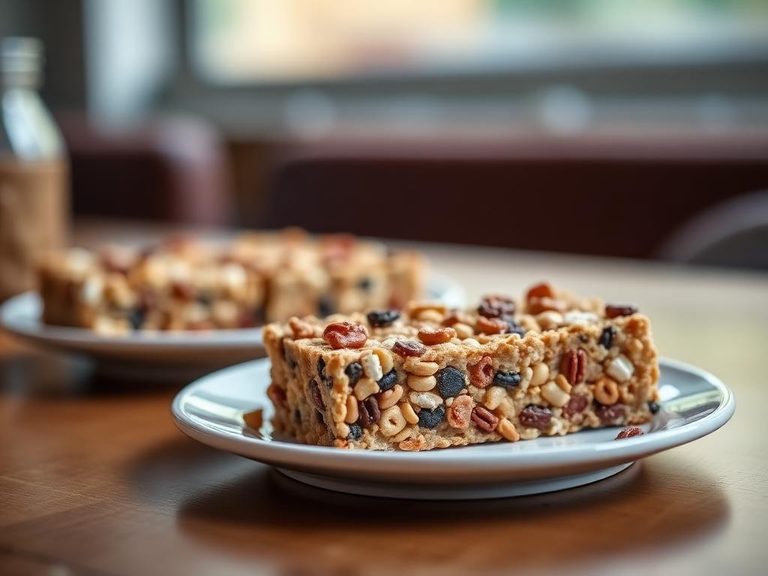
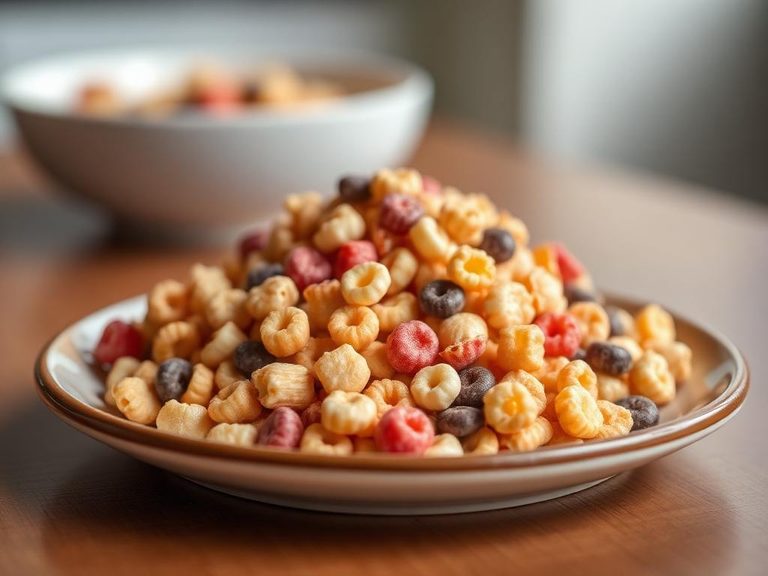

🌍 Where it's eaten
💡 Did you know?
Cocoa Pebbles was introduced in 1971 as the first chocolate-flavored rice cereal, and its mascot, Fred Flintstone, has been on the box for over 50 years.
Full nutrition (USDA data · scales with serving)
| Water | 2.5 g |
| Energy | 397 kcal |
| Energy | 1661 kj |
| Protein | 4.8 g |
| Total lipid (fat) | 4.1 g |
| Ash | 2.9 g |
| Carbohydrate, by difference | 85.7 g |
| Fiber, total dietary | 1.6 g |
| Total Sugars | 35.8 g |
| Calcium, Ca | 22.0 mg |
| Iron, Fe | 6.2 mg |
| Magnesium, Mg | 31.0 mg |
| Phosphorus, P | 95.0 mg |
| Potassium, K | 193 mg |
| Sodium, Na | 594 mg |
| Zinc, Zn | 5.2 mg |
| Copper, Cu | 0.30 mg |
| Selenium, Se | 14.0 ug |
| Vitamin C, total ascorbic acid | 0.00 mg |
| Thiamin | 1.3 mg |
| Riboflavin | 1.5 mg |
| Niacin | 17.2 mg |
| Vitamin B-6 | 1.7 mg |
| Folate, total | 345 ug |
| Folic acid | 341 ug |
| Folate, food | 4.0 ug |
| Folate, DFE | 583 ug |
| Choline, total | 3.8 mg |
| Vitamin B-12 | 5.2 ug |
| Vitamin B-12, added | 5.2 ug |
| Vitamin A, RAE | 776 ug |
| Retinol | 776 ug |
| Carotene, beta | 0.00 ug |
| Carotene, alpha | 0.00 ug |
| Cryptoxanthin, beta | 0.00 ug |
| Vitamin A, IU | 2586 iu |
| Lycopene | 0.00 ug |
| Lutein + zeaxanthin | 1.0 ug |
| Vitamin E (alpha-tocopherol) | 0.13 mg |
| Vitamin E, added | 0.00 mg |
| Vitamin D (D2 + D3), International Units | 276 iu |
| Vitamin D (D2 + D3) | 6.9 ug |
| Vitamin D3 (cholecalciferol) | 6.9 ug |
| Vitamin K (phylloquinone) | 1.3 ug |
| Alcohol, ethyl | 0.00 g |
| Caffeine | 2.0 mg |
| Theobromine | 75.0 mg |
Fat & fatty acid profile (per 100g)
| Fatty acids, total saturated | 3.6 g |
| SFA 4:0 | 0.00 g |
| SFA 6:0 | 0.00 g |
| SFA 8:0 | 0.14 g |
| SFA 10:0 | 0.14 g |
| SFA 12:0 | 1.2 g |
| SFA 14:0 | 0.49 g |
| SFA 16:0 | 0.73 g |
| SFA 18:0 | 0.89 g |
| Fatty acids, total monounsaturated | 0.20 g |
| MUFA 16:1 | 0.00 g |
| MUFA 18:1 | 0.20 g |
| MUFA 20:1 | 0.00 g |
| MUFA 22:1 | 0.00 g |
| Fatty acids, total polyunsaturated | 0.10 g |
| PUFA 18:2 | 0.09 g |
| PUFA 18:3 | 0.01 g |
| PUFA 18:4 | 0.00 g |
| PUFA 20:4 | 0.00 g |
| PUFA 20:5 n-3 (EPA) | 0.00 g |
| PUFA 22:5 n-3 (DPA) | 0.00 g |
| PUFA 22:6 n-3 (DHA) | 0.00 g |
| Fatty acids, total trans | 0.10 g |
| Cholesterol | 0.00 mg |
FAQ
Is Cocoa Pebbles gluten-free?
No, Cocoa Pebbles is made with rice and wheat, so it contains gluten and is not suitable for those with celiac disease or gluten sensitivity.
Can I eat Cocoa Pebbles as part of a healthy diet?
Yes, in moderation. It can be part of a balanced diet when portioned carefully and paired with protein or fiber to slow sugar absorption.
What vitamins and minerals are in Cocoa Pebbles?
It is fortified with iron, vitamin B6, vitamin B12, folic acid, and other essential nutrients, though it remains high in sugar.
Nutrient density (calculated · NRF9.3)
Nutrient Rich Foods index: beneficial nutrients (protein, fiber, vitamins, minerals) minus saturated fat, added sugar & sodium, per 100 kcal.
NRF9.3 index — Fulgoni, Keast & Drewnowski, 2009. Computed from USDA nutrients.
Weight-loss friendliness (composite index)
Energy density 3.97 kcal/g · 5% calories from protein · 1.6 g fiber · 35.8 g sugar per 100 g.
Composite of energy density (Rolls et al., 1999), protein & fiber satiety, minus sugar. A calculated heuristic — ranks satiety-per-calorie, not a clinical measure.
Dietary load (calculated from USDA values)
Potential renal acid load. Positive = acid-forming, negative = alkaline-forming.
Sodium-to-potassium ratio: 3.08 (lower is better — aim for ≤ 1)
Sodium:potassium per WHO potassium guidance. Computed from USDA nutrients.