

Broccoli, stalks, raw
Whole food · Vegetables and Vegetable Products

Photo: Wikipedia
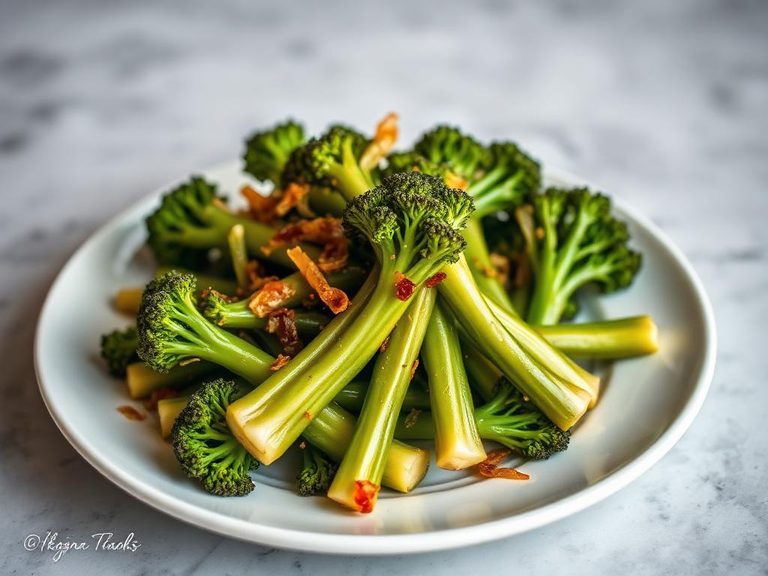
Broccoli stalks are the firm, pale-green stems of the broccoli plant, often discarded but prized for their mild, slightly sweet flavor and satisfying crunch when raw. With a dense, fibrous texture that softens beautifully when cooked, they offer a low-calorie, nutrient-dense addition to meals. Nutritionally, they provide a solid protein punch (nearly 3g per 100g) for a vegetable, alongside a good dose of carbohydrates for energy.
Calorie split: 33% protein · 58% carbs · 9% fat
↓ Full nutrition💚 Why it's loved
People love broccoli stalks for their mild, sweet taste and satisfying crunch, which makes them a favorite for slaws, stir-fries, and salads. They're also celebrated for their zero-waste appeal, turning a often-discarded part of the plant into a delicious, nutritious ingredient.
⚠️ Watch-outs & how to enjoy it better
Broccoli stalks contain goitrogens, which can interfere with thyroid function in large amounts, so those with thyroid conditions should consume them in moderation. To counteract this, cooking (especially steaming) reduces goitrogen levels, and pairing with iodine-rich foods like seaweed or dairy can help balance thyroid health.
Key benefits
- High in protein for a vegetable, supporting muscle maintenance.
- Very low in calories, aiding weight management.
- Contains vitamin C and potassium for immune and heart health.
- Provides glucosinolates, compounds linked to cellular health.
- Versatile in both raw and cooked preparations.
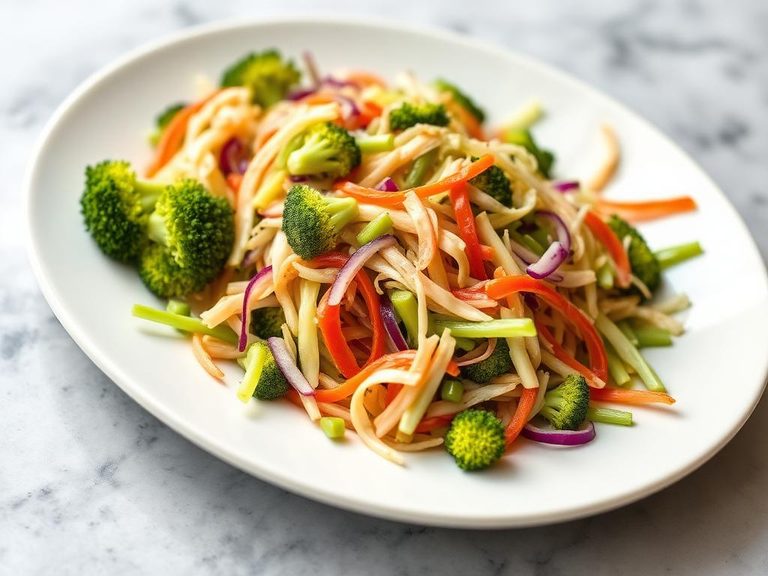
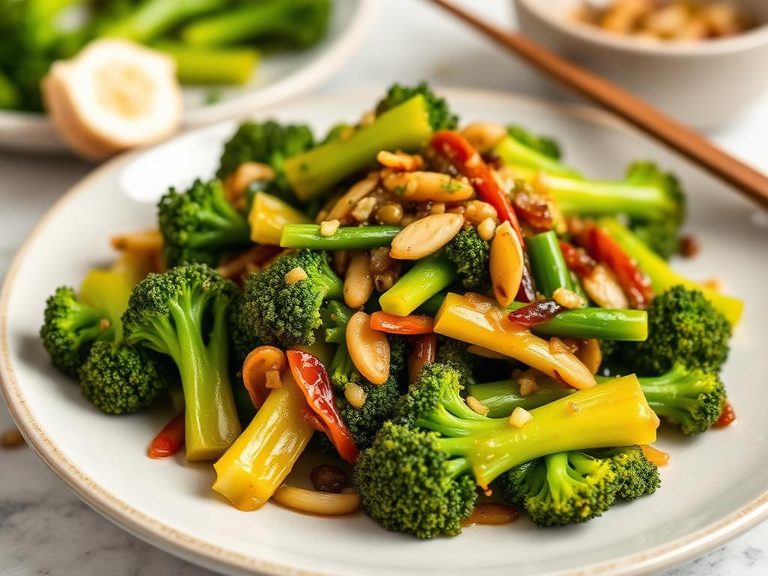
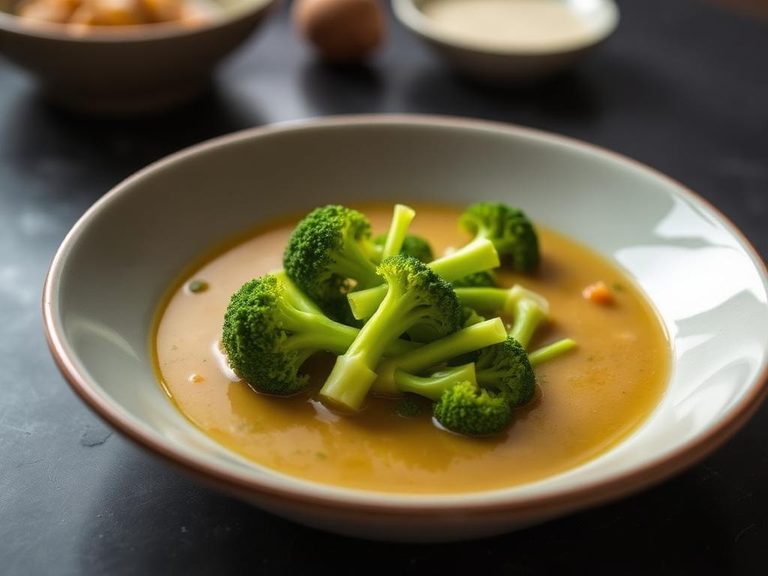
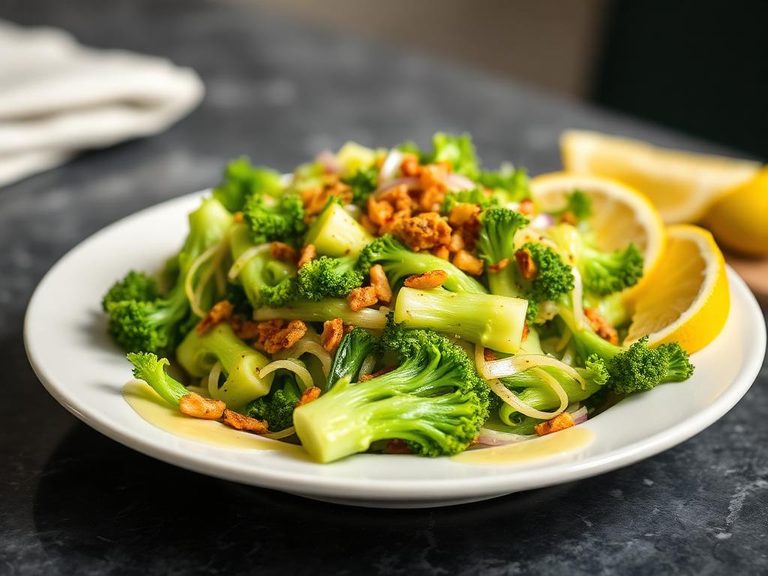
🍽️ Popular dishes
🌍 Where it's eaten
💡 Did you know?
Broccoli stalks are actually more nutrient-dense than the florets in some aspects, containing higher levels of fiber and certain vitamins like vitamin K.
Full nutrition (USDA data · scales with serving)
| Water | 90.7 g |
| Energy | 28.0 kcal |
| Energy | 117 kj |
| Protein | 3.0 g |
| Total lipid (fat) | 0.35 g |
| Ash | 0.92 g |
| Carbohydrate, by difference | 5.2 g |
| Calcium, Ca | 48.0 mg |
| Iron, Fe | 0.88 mg |
| Magnesium, Mg | 25.0 mg |
| Phosphorus, P | 66.0 mg |
| Potassium, K | 325 mg |
| Sodium, Na | 27.0 mg |
| Zinc, Zn | 0.40 mg |
| Copper, Cu | 0.04 mg |
| Manganese, Mn | 0.23 mg |
| Selenium, Se | 3.0 ug |
| Vitamin C, total ascorbic acid | 93.2 mg |
| Thiamin | 0.07 mg |
| Riboflavin | 0.12 mg |
| Niacin | 0.64 mg |
| Pantothenic acid | 0.54 mg |
| Vitamin B-6 | 0.16 mg |
| Folate, total | 71.0 ug |
| Folic acid | 0.00 ug |
| Folate, food | 71.0 ug |
| Folate, DFE | 71.0 ug |
| Vitamin B-12 | 0.00 ug |
| Vitamin A, RAE | 20.0 ug |
| Retinol | 0.00 ug |
| Vitamin A, IU | 400 iu |
| Vitamin D (D2 + D3), International Units | 0.00 iu |
| Vitamin D (D2 + D3) | 0.00 ug |
Fat & fatty acid profile (per 100g)
| Fatty acids, total saturated | 0.05 g |
| SFA 16:0 | 0.05 g |
| SFA 18:0 | 0.01 g |
| Fatty acids, total monounsaturated | 0.02 g |
| MUFA 18:1 | 0.02 g |
| Fatty acids, total polyunsaturated | 0.17 g |
| PUFA 18:2 | 0.04 g |
| PUFA 18:3 | 0.13 g |
| Fatty acids, total trans | 0.00 g |
| Cholesterol | 0.00 mg |
Amino acid profile (per 100g)
| Tryptophan | 0.03 g |
| Threonine | 0.09 g |
| Isoleucine | 0.11 g |
| Leucine | 0.13 g |
| Lysine | 0.14 g |
| Methionine | 0.03 g |
| Cystine | 0.02 g |
| Phenylalanine | 0.08 g |
| Tyrosine | 0.06 g |
| Valine | 0.13 g |
| Arginine | 0.14 g |
| Histidine | 0.05 g |
| Alanine | 0.12 g |
| Aspartic acid | 0.21 g |
| Glutamic acid | 0.38 g |
| Glycine | 0.10 g |
| Proline | 0.11 g |
| Serine | 0.10 g |
FAQ
Are broccoli stalks edible raw?
Yes, they are edible raw, but their tough, fibrous texture can be challenging. For raw use, slice them very thinly or grate them into slaws to soften the texture.
How do I prepare broccoli stalks for cooking?
Peel the tough outer layer with a vegetable peeler, then slice or dice the tender inner core. They can be steamed, roasted, stir-fried, or added to soups for a sweet, mild flavor.
Do broccoli stalks have any health concerns?
Broccoli stalks contain goitrogens, which can affect thyroid function if consumed in very large quantities. Cooking them thoroughly and pairing with iodine-rich foods can mitigate this risk.
Nutrient density (calculated · NRF9.3)
Nutrient Rich Foods index: beneficial nutrients (protein, fiber, vitamins, minerals) minus saturated fat, added sugar & sodium, per 100 kcal.
NRF9.3 index — Fulgoni, Keast & Drewnowski, 2009. Computed from USDA nutrients.
Weight-loss friendliness (composite index)
Energy density 0.28 kcal/g · 43% calories from protein · 0.0 g fiber · 0.0 g sugar per 100 g.
Composite of energy density (Rolls et al., 1999), protein & fiber satiety, minus sugar. A calculated heuristic — ranks satiety-per-calorie, not a clinical measure.
Dietary load (calculated from USDA values)
Potential renal acid load. Positive = acid-forming, negative = alkaline-forming.
Sodium-to-potassium ratio: 0.08 (lower is better — aim for ≤ 1)
Sodium:potassium per WHO potassium guidance. Computed from USDA nutrients.