

Bibimbap, Korean
Common food

Photo: Wikipedia
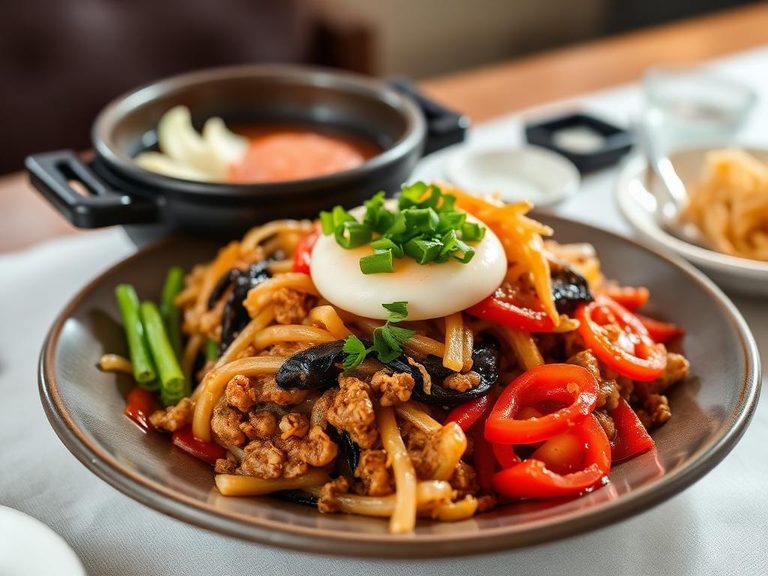
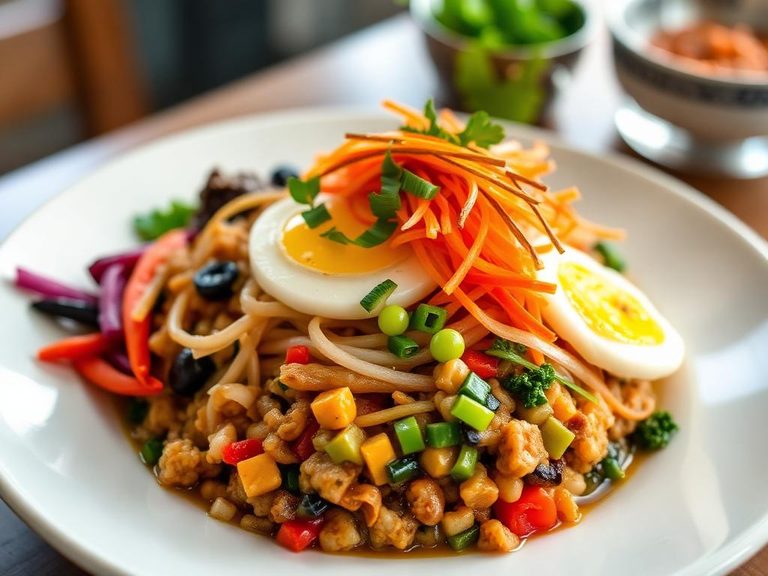
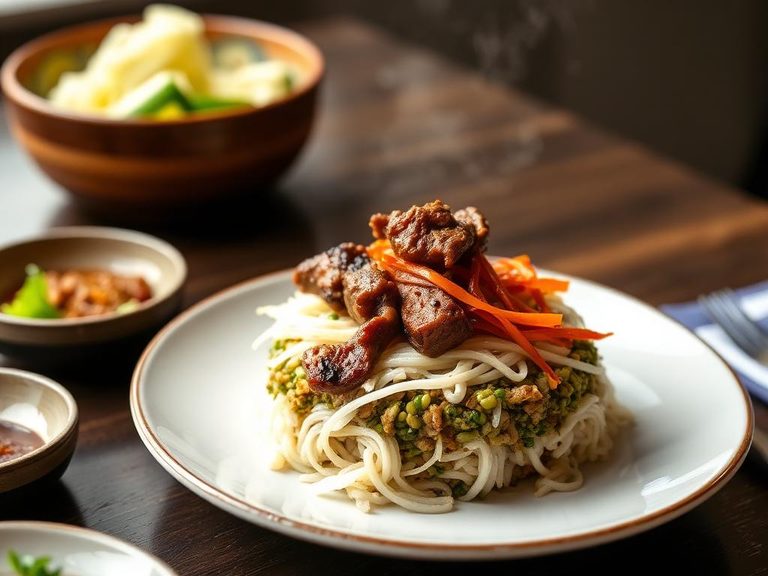
Bibimbap is a vibrant Korean rice bowl, where a bed of warm white rice is topped with an array of sautéed, seasoned vegetables, a fried egg, and often a spicy gochujang sauce, all mixed together before eating. The experience is a delightful contrast of textures—soft rice, crisp-tender vegetables, and a runny yolk—unified by a savory, slightly sweet, and spicy flavor profile. Nutritionally, it's a balanced one-bowl meal, offering a good mix of complex carbs, plant-based protein from the vegetables, and fiber.
Calorie split: 29% protein · 42% carbs · 29% fat
↓ Full nutrition💚 Why it's loved
People love bibimbap for its customizable nature and the satisfying ritual of mixing all the ingredients together, creating a harmonious blend of flavors and textures in every bite. It's also deeply tied to Korean culture, representing balance and communal eating, making it both a comforting staple and a festive dish.
⚠️ Watch-outs & how to enjoy it better
The primary concern is the high sodium content, especially from the gochujang sauce and seasoned vegetables, which can be problematic for those monitoring blood pressure. To counteract this, use the sauce sparingly or request it on the side, and balance the meal with a side of low-sodium kimchi or a fresh salad. The white rice base can also cause a quicker blood sugar rise; mixing in extra non-starchy vegetables and adding a protein like beef or tofu helps slow digestion.
Key benefits
- Provides a balanced mix of carbohydrates, protein, and fat in one meal.
- High in dietary fiber from the variety of vegetable toppings.
- Contains a wide array of vitamins and minerals from the colorful vegetable selection.
- The egg adds high-quality protein and essential nutrients like choline.
- Can be easily customized to increase vegetable and protein intake.
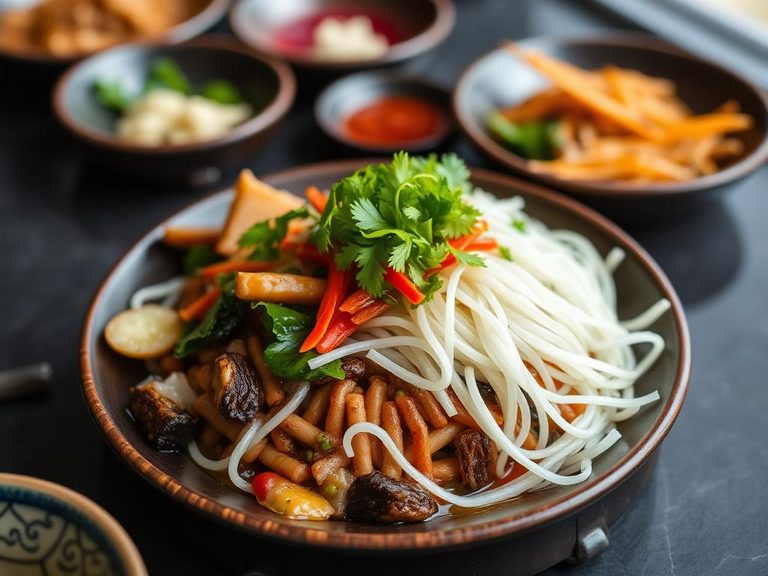
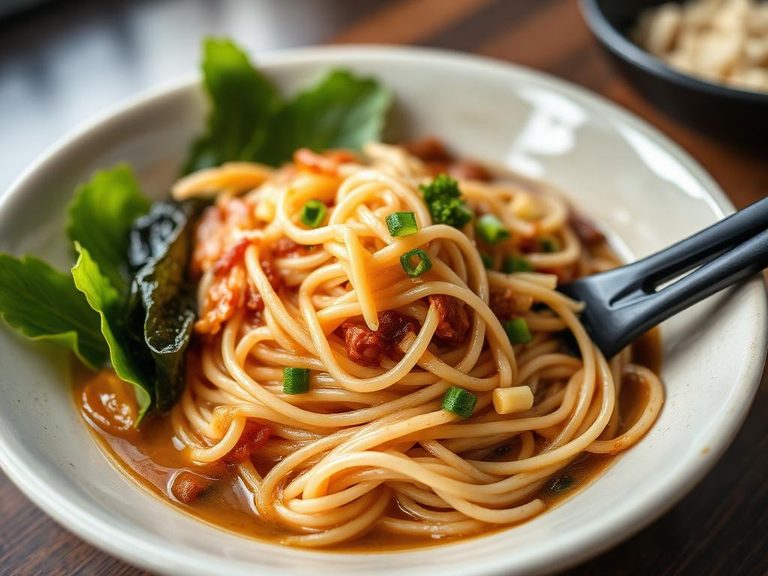
🍽️ Popular dishes
🌍 Where it's eaten
💡 Did you know?
The sizzling sound and crispy rice crust (nurungji) at the bottom of a dolsot bibimbap are considered a prized part of the eating experience, not just a byproduct of the hot stone pot.
Full nutrition (USDA data · scales with serving)
| Water | 82.2 g |
| Energy | 76.0 kcal |
| Protein | 5.5 g |
| Total lipid (fat) | 2.4 g |
| Carbohydrate, by difference | 8.1 g |
| Fiber, total dietary | 1.1 g |
| Total Sugars | 1.5 g |
| Calcium, Ca | 25.0 mg |
| Iron, Fe | 0.93 mg |
| Magnesium, Mg | 28.0 mg |
| Phosphorus, P | 68.0 mg |
| Potassium, K | 244 mg |
| Sodium, Na | 435 mg |
| Zinc, Zn | 0.92 mg |
| Copper, Cu | 0.08 mg |
| Selenium, Se | 5.0 ug |
| Vitamin C, total ascorbic acid | 10.5 mg |
| Thiamin | 0.07 mg |
| Riboflavin | 0.11 mg |
| Niacin | 1.8 mg |
| Vitamin B-6 | 0.21 mg |
| Folate, total | 37.0 ug |
| Folic acid | 10.0 ug |
| Folate, food | 27.0 ug |
| Folate, DFE | 44.0 ug |
| Choline, total | 18.7 mg |
| Vitamin B-12 | 0.26 ug |
| Vitamin B-12, added | 0.00 ug |
| Vitamin A, RAE | 113 ug |
| Retinol | 1.0 ug |
| Carotene, beta | 1230 ug |
| Carotene, alpha | 243 ug |
| Cryptoxanthin, beta | 7.0 ug |
| Lycopene | 0.00 ug |
| Lutein + zeaxanthin | 1537 ug |
| Vitamin E (alpha-tocopherol) | 0.52 mg |
| Vitamin E, added | 0.00 mg |
| Vitamin D (D2 + D3) | 0.00 ug |
| Vitamin K (phylloquinone) | 95.4 ug |
| Alcohol, ethyl | 0.00 g |
| Caffeine | 0.00 mg |
| Theobromine | 0.00 mg |
Fat & fatty acid profile (per 100g)
| Fatty acids, total saturated | 0.49 g |
| SFA 4:0 | 0.00 g |
| SFA 6:0 | 0.00 g |
| SFA 8:0 | 0.00 g |
| SFA 10:0 | 0.00 g |
| SFA 12:0 | 0.00 g |
| SFA 14:0 | 0.02 g |
| SFA 16:0 | 0.30 g |
| SFA 18:0 | 0.15 g |
| Fatty acids, total monounsaturated | 0.90 g |
| MUFA 16:1 | 0.02 g |
| MUFA 18:1 | 0.86 g |
| MUFA 20:1 | 0.00 g |
| MUFA 22:1 | 0.00 g |
| Fatty acids, total polyunsaturated | 0.78 g |
| PUFA 18:2 | 0.73 g |
| PUFA 18:3 | 0.04 g |
| PUFA 18:4 | 0.00 g |
| PUFA 20:4 | 0.01 g |
| PUFA 20:5 n-3 (EPA) | 0.00 g |
| PUFA 22:5 n-3 (DPA) | 0.00 g |
| PUFA 22:6 n-3 (DHA) | 0.00 g |
| Cholesterol | 10.0 mg |
FAQ
Is bibimbap healthy?
Yes, bibimbap is generally considered a healthy and balanced meal. It provides a good mix of complex carbohydrates from rice, plant-based protein and fiber from the vegetables, and additional protein from the egg. The key is mindful use of the high-sodium gochujang sauce.
What is the difference between regular bibimbap and dolsot bibimbap?
Dolsot bibimbap is served in a heated stone pot (dolsot). This keeps the food hot throughout the meal and, most importantly, creates a delicious, crispy layer of rice at the bottom called nurungji, which adds a wonderful textural contrast.
Can I make bibimbap vegetarian or vegan?
Absolutely. A vegetarian version (Yasai Bibimbap) typically omits meat and uses a variety of sautéed vegetables, tofu, and a fried egg. For a vegan version, simply omit the egg and ensure the sauce (gochujang) is vegan, as some traditional versions may contain fish-based ingredients.
Nutrient density (calculated · NRF9.3)
Nutrient Rich Foods index: beneficial nutrients (protein, fiber, vitamins, minerals) minus saturated fat, added sugar & sodium, per 100 kcal.
NRF9.3 index — Fulgoni, Keast & Drewnowski, 2009. Computed from USDA nutrients.
Weight-loss friendliness (composite index)
Energy density 0.76 kcal/g · 29% calories from protein · 1.1 g fiber · 1.5 g sugar per 100 g.
Composite of energy density (Rolls et al., 1999), protein & fiber satiety, minus sugar. A calculated heuristic — ranks satiety-per-calorie, not a clinical measure.
Dietary load (calculated from USDA values)
Potential renal acid load. Positive = acid-forming, negative = alkaline-forming.
Sodium-to-potassium ratio: 1.78 (lower is better — aim for ≤ 1)
Sodium:potassium per WHO potassium guidance. Computed from USDA nutrients.