

Dukboki or Tteokbokki, Korean
Common food

Photo: Wikipedia
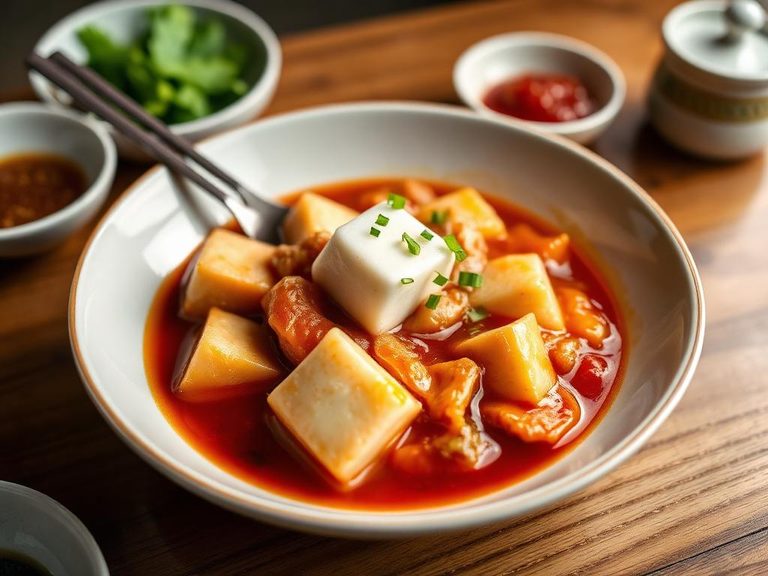
Tteokbokki is a beloved Korean street food featuring chewy, cylindrical rice cakes (tteok) drenched in a fiery-sweet, gochujang-based sauce. Its signature texture is soft yet bouncy, delivering a satisfying bite that pairs perfectly with the bold, spicy, and slightly sweet flavor profile. While modest in calories, it is primarily a carbohydrate-rich dish, offering quick energy with a small amount of protein and fat.
Calorie split: 13% protein · 60% carbs · 28% fat
↓ Full nutrition💚 Why it's loved
People adore tteokbokki for its addictive combination of spicy, sweet, and savory flavors, along with its uniquely satisfying chewy texture. It's a quintessential comfort food and social snack, deeply embedded in Korean street food culture and often enjoyed at festivals, markets, and late-night gatherings.
⚠️ Watch-outs & how to enjoy it better
The dish can be high in sodium and sugar from the sauce, which may cause blood sugar spikes and is a concern for those with hypertension or diabetes. To counteract this, pair it with a side of protein (like boiled eggs or fish cakes) and vegetables (like cabbage or spinach) to slow sugar absorption, and practice portion control by sharing a serving.
Key benefits
- Provides a quick source of energy from complex carbohydrates.
- Contains some plant-based protein from rice cakes.
- Gochujang (fermented chili paste) offers capsaicin and probiotics.
- A versatile base for adding proteins like fish cakes, eggs, or cheese.
- A popular comfort food that can boost mood and social connection.
🍽️ Popular dishes
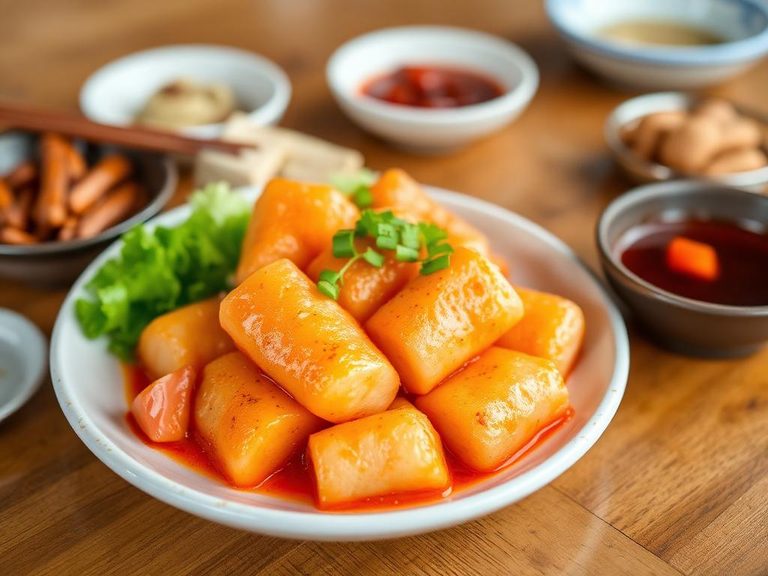
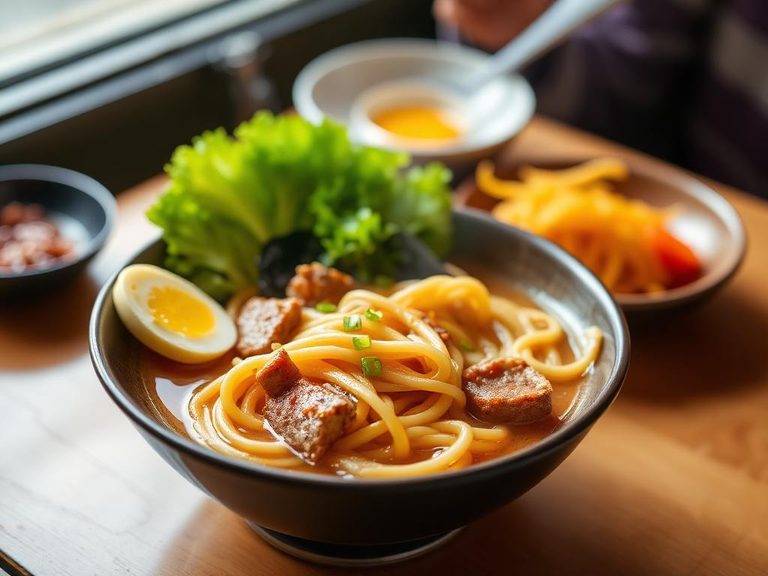
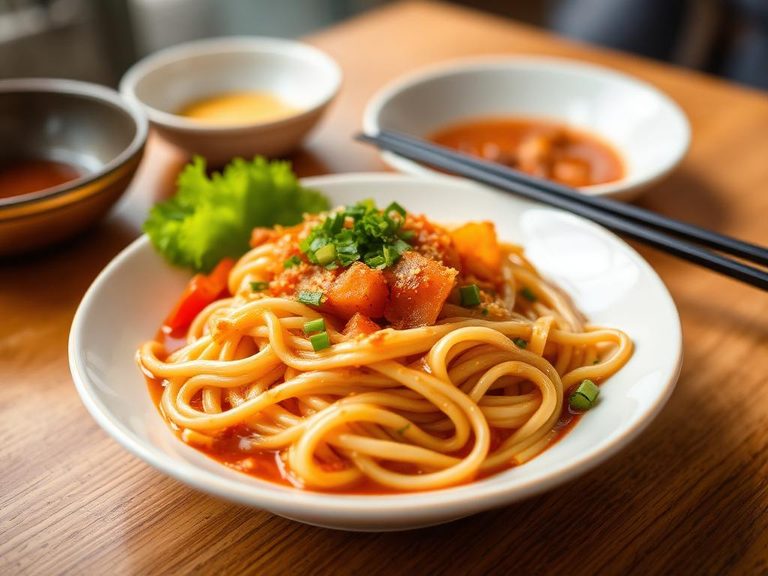
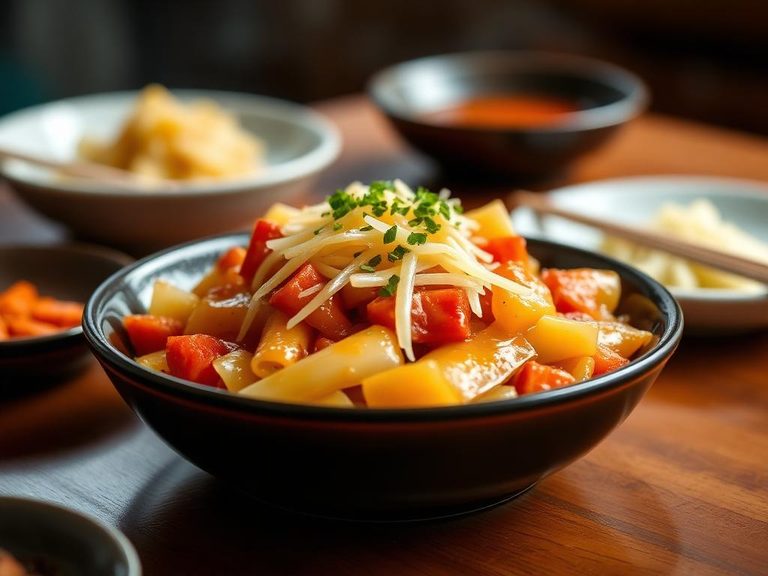
🌍 Where it's eaten
💡 Did you know?
The original tteokbokki, called 'gungjung tteokbokki,' was a mild, soy sauce-based dish served to royalty in the Joseon Dynasty, and the spicy gochujang version only became popular in the 1950s after the Korean War.
Full nutrition (USDA data · scales with serving)
| Water | 71.4 g |
| Energy | 131 kcal |
| Protein | 4.1 g |
| Total lipid (fat) | 4.0 g |
| Carbohydrate, by difference | 19.6 g |
| Fiber, total dietary | 0.80 g |
| Total Sugars | 1.5 g |
| Calcium, Ca | 19.0 mg |
| Iron, Fe | 0.39 mg |
| Magnesium, Mg | 14.0 mg |
| Phosphorus, P | 70.0 mg |
| Potassium, K | 104 mg |
| Sodium, Na | 198 mg |
| Zinc, Zn | 0.37 mg |
| Copper, Cu | 0.06 mg |
| Selenium, Se | 4.7 ug |
| Vitamin C, total ascorbic acid | 4.7 mg |
| Thiamin | 0.05 mg |
| Riboflavin | 0.05 mg |
| Niacin | 0.76 mg |
| Vitamin B-6 | 0.07 mg |
| Folate, total | 14.0 ug |
| Folic acid | 0.00 ug |
| Folate, food | 14.0 ug |
| Folate, DFE | 14.0 ug |
| Choline, total | 12.7 mg |
| Vitamin B-12 | 0.22 ug |
| Vitamin B-12, added | 0.00 ug |
| Vitamin A, RAE | 25.0 ug |
| Retinol | 1.0 ug |
| Carotene, beta | 285 ug |
| Carotene, alpha | 4.0 ug |
| Cryptoxanthin, beta | 7.0 ug |
| Lycopene | 0.00 ug |
| Lutein + zeaxanthin | 21.0 ug |
| Vitamin E (alpha-tocopherol) | 1.7 mg |
| Vitamin E, added | 0.00 mg |
| Vitamin D (D2 + D3) | 0.00 ug |
| Vitamin K (phylloquinone) | 6.0 ug |
| Alcohol, ethyl | 0.00 g |
| Caffeine | 0.00 mg |
| Theobromine | 0.00 mg |
Fat & fatty acid profile (per 100g)
| Fatty acids, total saturated | 0.94 g |
| SFA 4:0 | 0.00 g |
| SFA 6:0 | 0.00 g |
| SFA 8:0 | 0.00 g |
| SFA 10:0 | 0.00 g |
| SFA 12:0 | 0.00 g |
| SFA 14:0 | 0.03 g |
| SFA 16:0 | 0.78 g |
| SFA 18:0 | 0.10 g |
| Fatty acids, total monounsaturated | 0.82 g |
| MUFA 16:1 | 0.02 g |
| MUFA 18:1 | 0.79 g |
| MUFA 20:1 | 0.01 g |
| MUFA 22:1 | 0.00 g |
| Fatty acids, total polyunsaturated | 1.9 g |
| PUFA 18:2 | 1.8 g |
| PUFA 18:3 | 0.07 g |
| PUFA 18:4 | 0.00 g |
| PUFA 20:4 | 0.00 g |
| PUFA 20:5 n-3 (EPA) | 0.01 g |
| PUFA 22:5 n-3 (DPA) | 0.00 g |
| PUFA 22:6 n-3 (DHA) | 0.02 g |
| Cholesterol | 6.0 mg |
FAQ
Is tteokbokki gluten-free?
Traditional rice cakes are gluten-free, but the sauce often contains wheat-based soy sauce or gochujang, so check labels or use gluten-free alternatives.
Can I make tteokbokki less spicy?
Yes, reduce the gochujang (red chili paste) and add more sugar or honey, or use a milder red pepper powder (gochugaru) to balance the heat.
What are the best proteins to add to tteokbokki?
Common additions include fish cakes (eomuk), boiled eggs, cheese, or even chicken, which help balance the carbs and add flavor.
Nutrient density (calculated · NRF9.3)
Nutrient Rich Foods index: beneficial nutrients (protein, fiber, vitamins, minerals) minus saturated fat, added sugar & sodium, per 100 kcal.
NRF9.3 index — Fulgoni, Keast & Drewnowski, 2009. Computed from USDA nutrients.
Weight-loss friendliness (composite index)
Energy density 1.31 kcal/g · 13% calories from protein · 0.8 g fiber · 1.5 g sugar per 100 g.
Composite of energy density (Rolls et al., 1999), protein & fiber satiety, minus sugar. A calculated heuristic — ranks satiety-per-calorie, not a clinical measure.
Dietary load (calculated from USDA values)
Potential renal acid load. Positive = acid-forming, negative = alkaline-forming.
Sodium-to-potassium ratio: 1.90 (lower is better — aim for ≤ 1)
Sodium:potassium per WHO potassium guidance. Computed from USDA nutrients.