

Korean dressing or marinade
Common food

Photo: Wikipedia
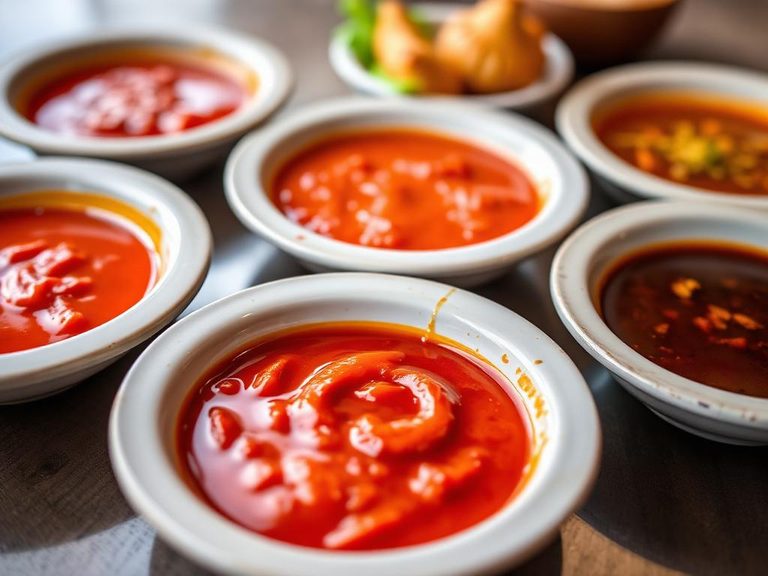
Korean dressing or marinade is a vibrant, savory-sweet condiment that forms the backbone of Korean cuisine's bold flavors. It typically has a glossy, slightly viscous texture with a complex taste profile balancing soy sauce's umami, garlic's pungency, and a hint of sweetness. Nutritionally, it's a high-fat, high-calorie condiment, with over 31g of fat per 100g, making it more of a flavor enhancer than a primary nutrient source.
Calorie split: 4% protein · 15% carbs · 82% fat
↓ Full nutrition💚 Why it's loved
People love it for its transformative ability to turn simple ingredients into complex, restaurant-quality meals with minimal effort. Its perfect balance of salty, sweet, and savory notes makes it incredibly versatile for grilling, stir-frying, or as a dipping sauce.
⚠️ Watch-outs & how to enjoy it better
Its high sodium and sugar content can be problematic for those monitoring blood pressure or blood sugar. To counteract, use it sparingly as a condiment rather than a cooking sauce, and pair it with fiber-rich vegetables and lean proteins to slow sugar absorption.
Key benefits
- Adds deep umami flavor to dishes
- Contains garlic and ginger with antioxidant properties
- Versatile for both marinating and finishing dishes
- Can tenderize meats through enzymatic action in some versions
- Provides a cultural connection to Korean culinary traditions
🍽️ Popular dishes
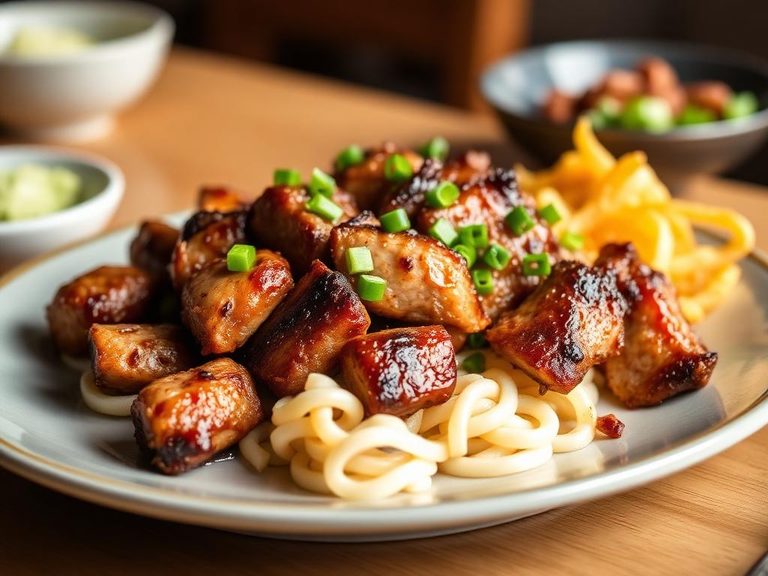
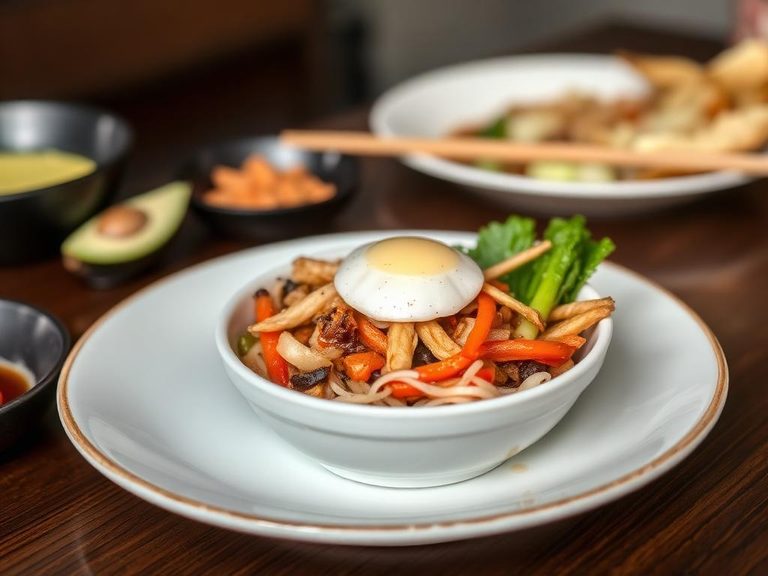
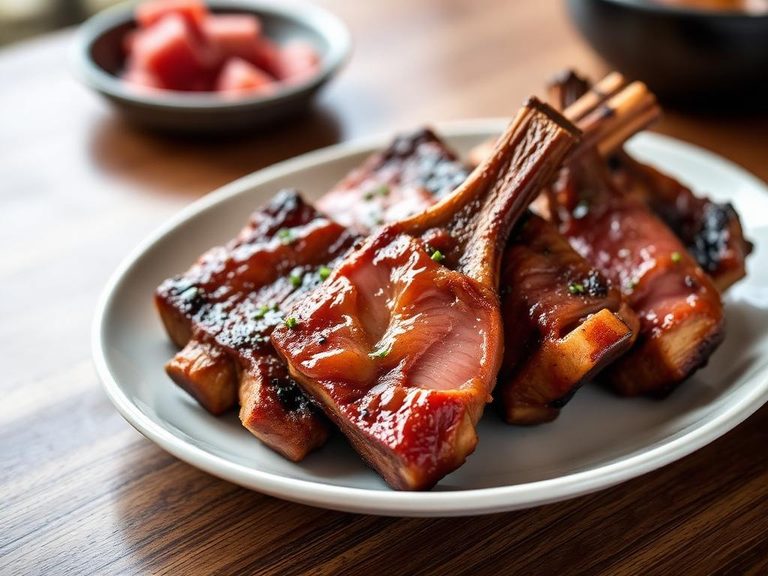
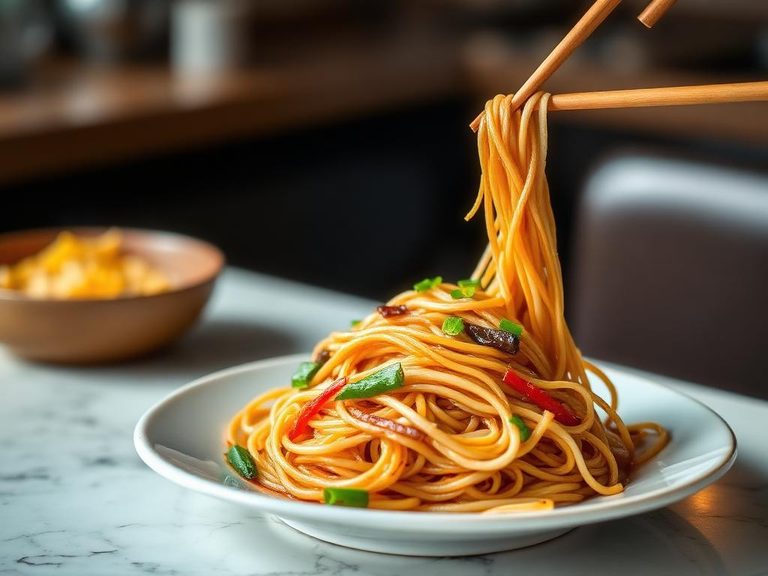
🌍 Where it's eaten
💡 Did you know?
Traditional Korean marinades often use grated Asian pear or kiwi as a natural meat tenderizer, thanks to enzymes that break down protein fibers.
Full nutrition (USDA data · scales with serving)
| Water | 46.3 g |
| Energy | 348 kcal |
| Protein | 3.2 g |
| Total lipid (fat) | 31.4 g |
| Carbohydrate, by difference | 12.7 g |
| Fiber, total dietary | 0.50 g |
| Total Sugars | 10.2 g |
| Calcium, Ca | 17.0 mg |
| Iron, Fe | 0.74 mg |
| Magnesium, Mg | 31.0 mg |
| Phosphorus, P | 70.0 mg |
| Potassium, K | 182 mg |
| Sodium, Na | 1850 mg |
| Zinc, Zn | 0.40 mg |
| Copper, Cu | 0.03 mg |
| Selenium, Se | 2.8 ug |
| Vitamin C, total ascorbic acid | 0.10 mg |
| Thiamin | 0.02 mg |
| Riboflavin | 0.06 mg |
| Niacin | 0.80 mg |
| Vitamin B-6 | 0.07 mg |
| Folate, total | 7.0 ug |
| Folic acid | 0.00 ug |
| Folate, food | 7.0 ug |
| Folate, DFE | 7.0 ug |
| Choline, total | 8.2 mg |
| Vitamin B-12 | 0.00 ug |
| Vitamin B-12, added | 0.00 ug |
| Vitamin A, RAE | 0.00 ug |
| Retinol | 0.00 ug |
| Carotene, beta | 0.00 ug |
| Carotene, alpha | 0.00 ug |
| Cryptoxanthin, beta | 0.00 ug |
| Lycopene | 0.00 ug |
| Lutein + zeaxanthin | 6.0 ug |
| Vitamin E (alpha-tocopherol) | 5.7 mg |
| Vitamin E, added | 0.00 mg |
| Vitamin D (D2 + D3) | 0.00 ug |
| Vitamin K (phylloquinone) | 29.9 ug |
| Alcohol, ethyl | 0.00 g |
| Caffeine | 0.00 mg |
| Theobromine | 0.00 mg |
Fat & fatty acid profile (per 100g)
| Fatty acids, total saturated | 4.2 g |
| SFA 4:0 | 0.00 g |
| SFA 6:0 | 0.00 g |
| SFA 8:0 | 0.00 g |
| SFA 10:0 | 0.00 g |
| SFA 12:0 | 0.00 g |
| SFA 14:0 | 0.01 g |
| SFA 16:0 | 3.0 g |
| SFA 18:0 | 0.92 g |
| Fatty acids, total monounsaturated | 13.3 g |
| MUFA 16:1 | 0.11 g |
| MUFA 18:1 | 12.8 g |
| MUFA 20:1 | 0.25 g |
| MUFA 22:1 | 0.10 g |
| Fatty acids, total polyunsaturated | 12.1 g |
| PUFA 18:2 | 10.7 g |
| PUFA 18:3 | 1.3 g |
| PUFA 18:4 | 0.00 g |
| PUFA 20:4 | 0.00 g |
| PUFA 20:5 n-3 (EPA) | 0.00 g |
| PUFA 22:5 n-3 (DPA) | 0.00 g |
| PUFA 22:6 n-3 (DHA) | 0.00 g |
| Cholesterol | 0.00 mg |
FAQ
Is Korean dressing the same as soy sauce?
No, it's a complex blend. While soy sauce is a primary ingredient, Korean dressing or marinade typically includes additional components like sesame oil, garlic, ginger, sugar, and sometimes rice vinegar or gochujang (chili paste) for a more layered flavor.
Can I use it as a salad dressing?
Yes, but it's often quite intense. Dilute it with a bit of rice vinegar, water, or neutral oil to create a lighter vinaigrette, or use it as a dipping sauce for fresh vegetable salads.
How long can I marinate meat in it?
For most meats like beef or chicken, 30 minutes to 2 hours is ideal. Longer marination (overnight) can be done, but the texture of the meat's surface may become mushy due to the enzymatic action of ingredients like garlic or pear.
Nutrient density (calculated · NRF9.3)
Nutrient Rich Foods index: beneficial nutrients (protein, fiber, vitamins, minerals) minus saturated fat, added sugar & sodium, per 100 kcal.
NRF9.3 index — Fulgoni, Keast & Drewnowski, 2009. Computed from USDA nutrients.
Weight-loss friendliness (composite index)
Energy density 3.48 kcal/g · 4% calories from protein · 0.5 g fiber · 10.2 g sugar per 100 g.
Composite of energy density (Rolls et al., 1999), protein & fiber satiety, minus sugar. A calculated heuristic — ranks satiety-per-calorie, not a clinical measure.
Dietary load (calculated from USDA values)
Potential renal acid load. Positive = acid-forming, negative = alkaline-forming.
Sodium-to-potassium ratio: 10.16 (lower is better — aim for ≤ 1)
Sodium:potassium per WHO potassium guidance. Computed from USDA nutrients.