

Jeonju Bibimbap
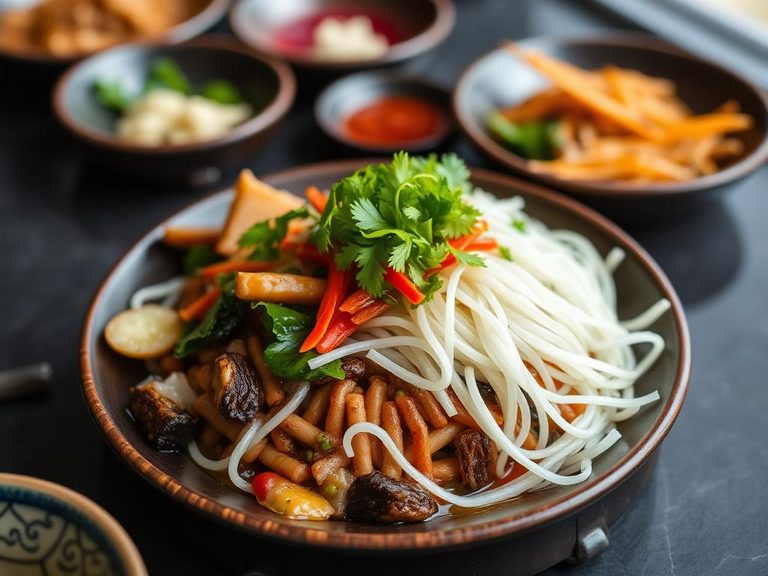
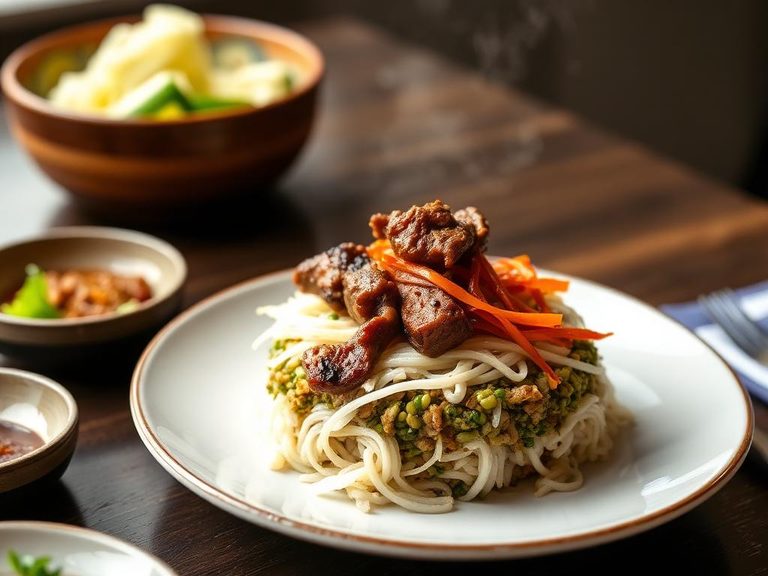
Jeonju Bibimbap is a celebrated regional variation of the classic Korean mixed rice dish, originating from the city of Jeonju. It is renowned for its vibrant presentation, featuring a bed of rice topped with an array of meticulously prepared vegetables, bean sprouts, raw beef (yukhoe), a fried egg, and a generous dollop of spicy gochujang chili paste. The dish is traditionally served in a hot stone bowl (dolsot), which creates a coveted crispy rice layer at the bottom.
🍽️ Nutrition at a glance
Jeonju Bibimbap offers a balanced macronutrient profile, providing complex carbohydrates from rice, protein from beef, egg, and bean sprouts, and healthy fats from the cooking oils and sesame. It is rich in dietary fiber, vitamins A and C, and minerals like iron and calcium from the diverse vegetable toppings. A typical serving generally ranges from 700 to 900 calories, depending on portion size and specific ingredients.
Nutrition breakdown
| Calories | 550 kcal |
| Protein | 20 g |
| Carbs | 80 g |
| Fat | 18 g |
| Fiber | 8 g |
| Sugar | 6 g |
| Sodium | 1200 mg |
| Iron | 5 mg |
| Calcium | 120 mg |
| Potassium | 550 mg |
| Vitamin A | 300 µg RAE |
| Vitamin C | 15 mg |
| Vitamin K | 80 µg |
| Folate | 150 µg DFE |
| Manganese | 2 mg |
Per 1 bowl (approx. 450 g) · estimated, varies by recipe
💡 What's interesting
Culturally, Jeonju Bibimbap is considered a pinnacle of Korean culinary artistry, with its five-color vegetable toppings symbolizing the five elements and promoting harmony. Nutritionally, the practice of mixing all ingredients together before eating ensures a synergistic blend of flavors and a well-rounded intake of nutrients in every bite.
🍽️ Related dishes
AI estimate may be inaccurate · Terms