

Beef as ingredient in recipes
Common food
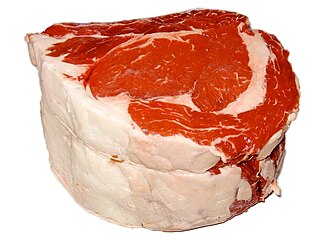
Photo: Wikipedia
Beef is a rich, savory red meat prized for its deep umami flavor and satisfyingly firm, juicy texture when cooked properly. It's a powerhouse of complete protein, iron, and B12, making it a cornerstone of hearty, muscle-building meals. The fat content, which varies by cut, contributes significantly to its succulence and flavor.
Calorie split: 42% protein · 0% carbs · 58% fat
↓ Full nutrition💚 Why it's loved
People adore beef for its robust, savory flavor that forms the backbone of countless comfort foods, from sizzling steaks to slow-braised stews. Its incredible versatility allows it to be grilled, roasted, braised, or ground, adapting to cuisines worldwide.
⚠️ Watch-outs & how to enjoy it better
High-fat cuts can be calorie-dense and high in saturated fat, which some individuals may need to moderate for heart health. To counteract this, choose leaner cuts like sirloin or tenderloin, trim visible fat, and balance portions with abundant vegetables and fiber-rich sides. Overcooking can also make it tough; using a meat thermometer and resting the meat helps ensure tenderness.
Key benefits
- Excellent source of high-quality, complete protein
- Rich in heme iron, which is highly absorbable
- Key dietary source of vitamin B12 for nerve function
- Provides zinc and selenium for immune support
- Contains creatine, which may support muscle performance
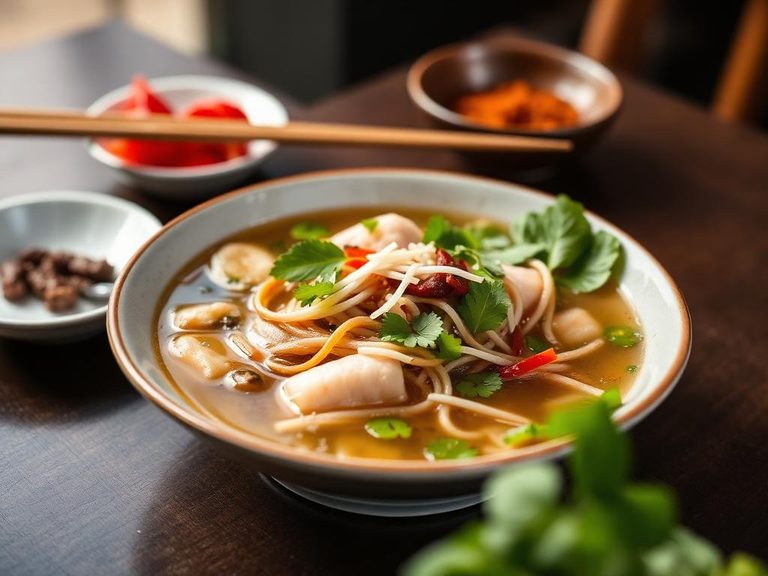
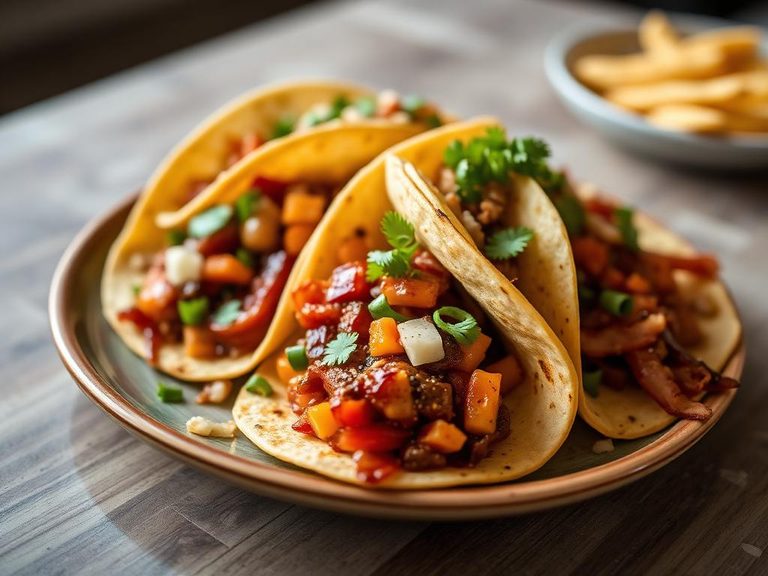
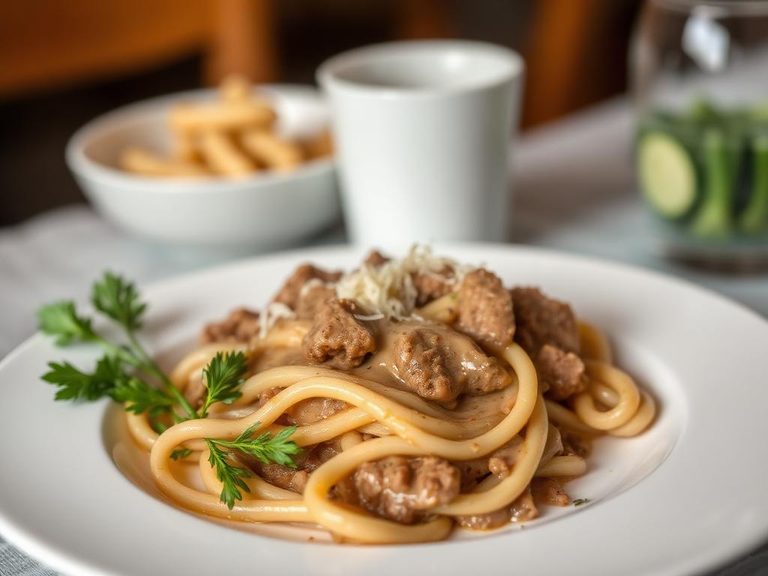
🍽️ Popular dishes
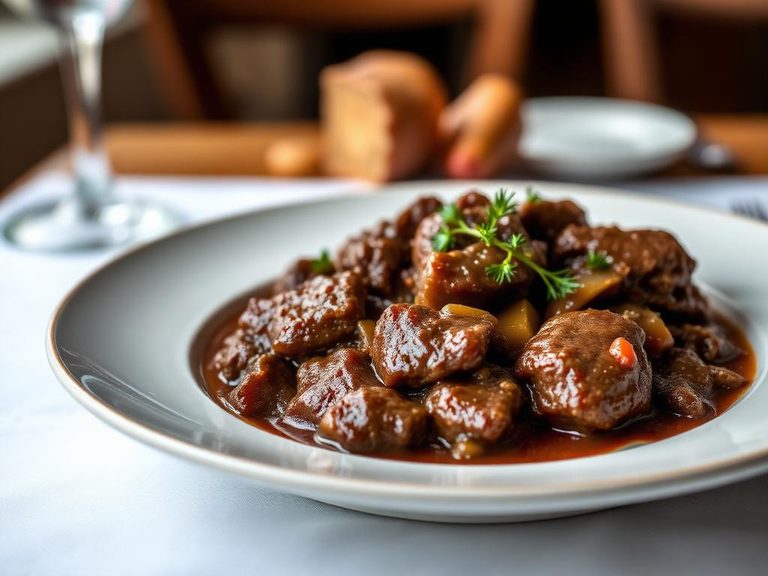
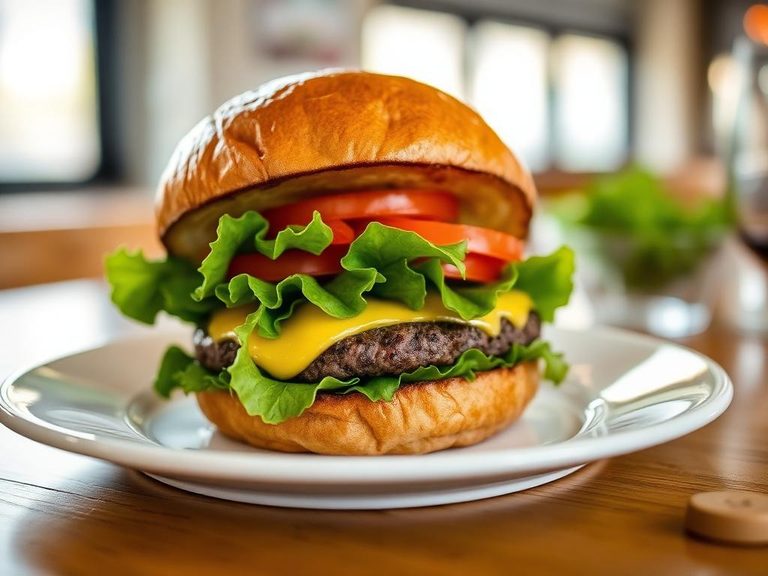
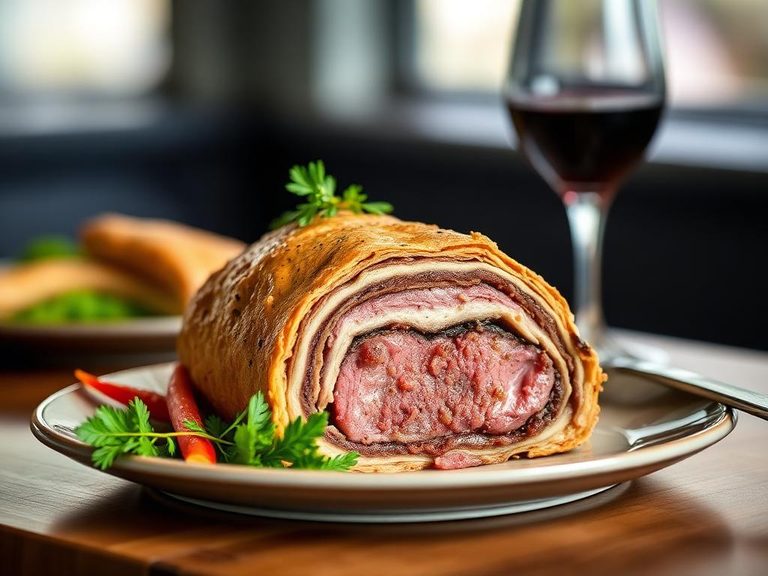
🌍 Where it's eaten
💡 Did you know?
The Maillard reaction, which creates the complex, savory crust on seared beef, involves over 1,000 different chemical reactions.
Full nutrition (USDA data · scales with serving)
| Water | 56.4 g |
| Energy | 261 kcal |
| Protein | 26.4 g |
| Total lipid (fat) | 16.5 g |
| Carbohydrate, by difference | 0.00 g |
| Fiber, total dietary | 0.00 g |
| Total Sugars | 0.00 g |
| Calcium, Ca | 20.0 mg |
| Iron, Fe | 2.5 mg |
| Magnesium, Mg | 20.0 mg |
| Phosphorus, P | 206 mg |
| Potassium, K | 310 mg |
| Sodium, Na | 71.0 mg |
| Zinc, Zn | 6.3 mg |
| Copper, Cu | 0.08 mg |
| Selenium, Se | 24.2 ug |
| Vitamin C, total ascorbic acid | 0.00 mg |
| Thiamin | 0.06 mg |
| Riboflavin | 0.19 mg |
| Niacin | 5.3 mg |
| Vitamin B-6 | 0.42 mg |
| Folate, total | 9.0 ug |
| Folic acid | 0.00 ug |
| Folate, food | 9.0 ug |
| Folate, DFE | 9.0 ug |
| Choline, total | 86.1 mg |
| Vitamin B-12 | 2.6 ug |
| Vitamin B-12, added | 0.00 ug |
| Vitamin A, RAE | 3.0 ug |
| Retinol | 3.0 ug |
| Carotene, beta | 0.00 ug |
| Carotene, alpha | 0.00 ug |
| Cryptoxanthin, beta | 0.00 ug |
| Lycopene | 0.00 ug |
| Lutein + zeaxanthin | 0.00 ug |
| Vitamin E (alpha-tocopherol) | 0.18 mg |
| Vitamin E, added | 0.00 mg |
| Vitamin D (D2 + D3) | 0.10 ug |
| Vitamin K (phylloquinone) | 1.6 ug |
| Alcohol, ethyl | 0.00 g |
| Caffeine | 0.00 mg |
| Theobromine | 0.00 mg |
Fat & fatty acid profile (per 100g)
| Fatty acids, total saturated | 6.4 g |
| SFA 4:0 | 0.00 g |
| SFA 6:0 | 0.00 g |
| SFA 8:0 | 0.00 g |
| SFA 10:0 | 0.01 g |
| SFA 12:0 | 0.02 g |
| SFA 14:0 | 0.48 g |
| SFA 16:0 | 3.6 g |
| SFA 18:0 | 2.0 g |
| Fatty acids, total monounsaturated | 7.4 g |
| MUFA 16:1 | 0.60 g |
| MUFA 18:1 | 6.4 g |
| MUFA 20:1 | 0.04 g |
| MUFA 22:1 | 0.00 g |
| Fatty acids, total polyunsaturated | 0.55 g |
| PUFA 18:2 | 0.42 g |
| PUFA 18:3 | 0.07 g |
| PUFA 18:4 | 0.00 g |
| PUFA 20:4 | 0.05 g |
| PUFA 20:5 n-3 (EPA) | 0.00 g |
| PUFA 22:5 n-3 (DPA) | 0.01 g |
| PUFA 22:6 n-3 (DHA) | 0.00 g |
| Cholesterol | 89.0 mg |
FAQ
What's the difference between grass-fed and grain-fed beef?
Grass-fed beef comes from cattle raised primarily on pasture, often resulting in a leaner meat with a slightly gamier flavor and a different fatty acid profile (e.g., more omega-3s). Grain-fed beef is finished on grains like corn, leading to more marbling, a milder taste, and a consistently tender texture.
How do I choose a tough cut for a tender result?
For tough, collagen-rich cuts like chuck or brisket, low-and-slow cooking methods (braising, stewing) are key. The long, moist heat breaks down the tough connective tissue into gelatin, resulting in melt-in-your-mouth tenderness.
Is it safe to eat beef that's pink in the middle?
Yes, when cooked to a safe internal temperature. For whole cuts of beef like steak or roast, the USDA recommends a minimum of 145°F (63°C) followed by a 3-minute rest. Ground beef must reach 160°F (71°C).
Nutrient density (calculated · NRF9.3)
Nutrient Rich Foods index: beneficial nutrients (protein, fiber, vitamins, minerals) minus saturated fat, added sugar & sodium, per 100 kcal.
NRF9.3 index — Fulgoni, Keast & Drewnowski, 2009. Computed from USDA nutrients.
Weight-loss friendliness (composite index)
Energy density 2.61 kcal/g · 41% calories from protein · 0.0 g fiber · 0.0 g sugar per 100 g.
Composite of energy density (Rolls et al., 1999), protein & fiber satiety, minus sugar. A calculated heuristic — ranks satiety-per-calorie, not a clinical measure.
Dietary load (calculated from USDA values)
Potential renal acid load. Positive = acid-forming, negative = alkaline-forming.
Sodium-to-potassium ratio: 0.23 (lower is better — aim for ≤ 1)
Sodium:potassium per WHO potassium guidance. Computed from USDA nutrients.