

Beans, pinto, mature seeds, sprouted, cooked, boiled, drained, without salt
Whole food · Vegetables and Vegetable Products

Photo: Wikipedia
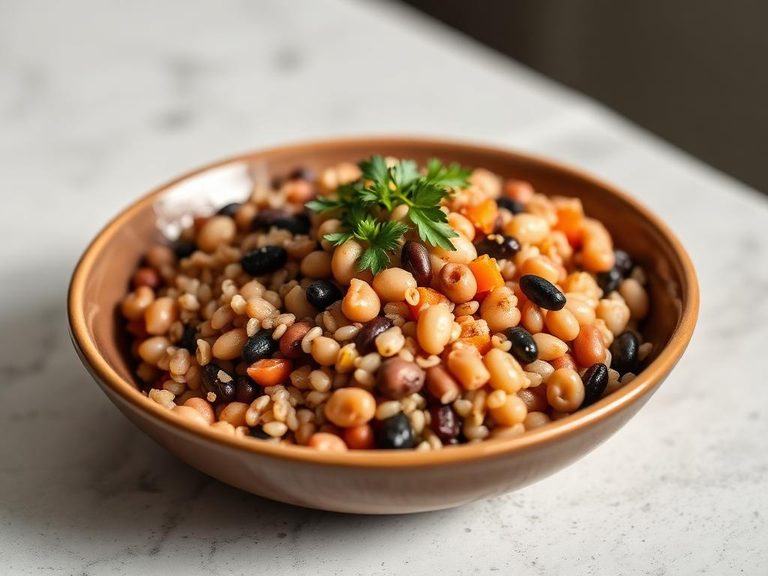
Sprouted and boiled pinto beans are tender yet slightly firmer than their unsprouted counterparts, with a mild, earthy flavor and a creamy texture. They are exceptionally low in calories at just 22 kcal per 100g, making them a light yet protein-rich addition to meals. Their sprouting process enhances digestibility and gives them a subtle, fresh, nutty note.
Calorie split: 28% protein · 61% carbs · 11% fat
↓ Full nutrition💚 Why it's loved
People love them for their delicate, fresh flavor that's less 'beany' than regular beans, and their versatile texture that holds up well in salads or gets creamy in soups. They are a beloved ingredient in health-conscious and traditional cuisines for adding light, plant-based protein.
⚠️ Watch-outs & how to enjoy it better
As a legume, they can cause digestive gas in some individuals, though sprouting helps mitigate this. Those monitoring blood sugar should note the 4.1g of carbs per 100g, though the glycemic impact is moderate. Tip: Pair with a source of fat or protein (like avocado or cheese) to further stabilize blood sugar response.
Key benefits
- Excellent low-calorie protein source (1.86g per 100g).
- Sprouting increases nutrient bioavailability and reduces anti-nutrients.
- Very low in fat and contains no added sodium.
- Provides a good source of complex carbohydrates for sustained energy.
- Naturally gluten-free and suitable for various dietary patterns.
🍽️ Popular dishes
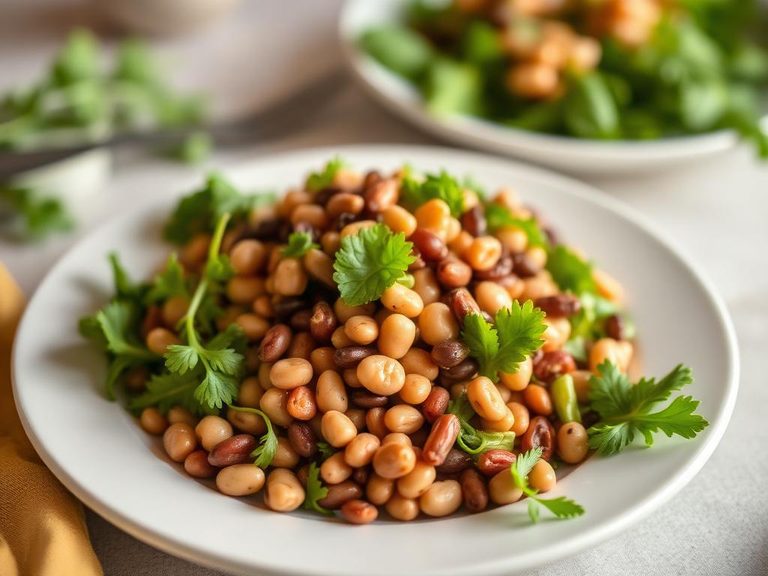
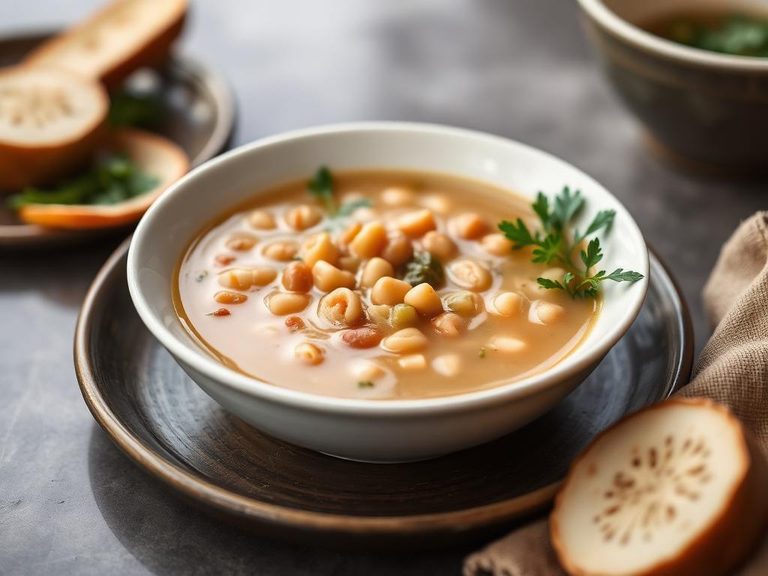
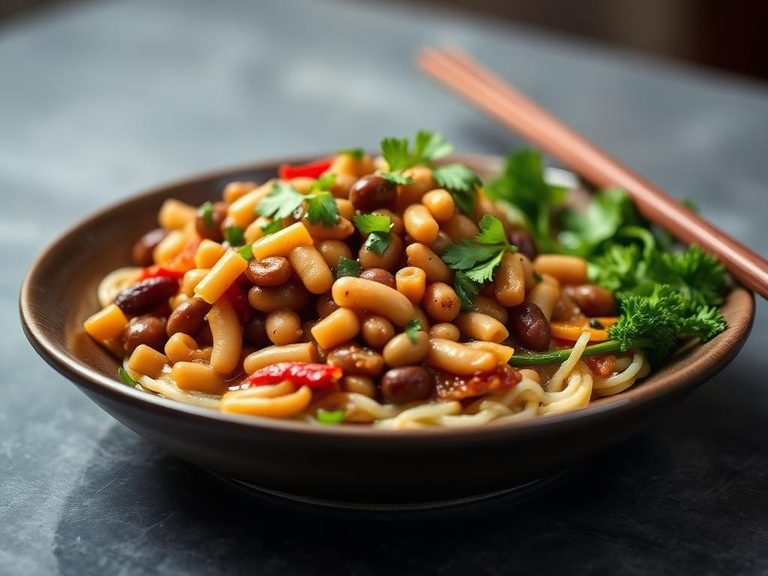
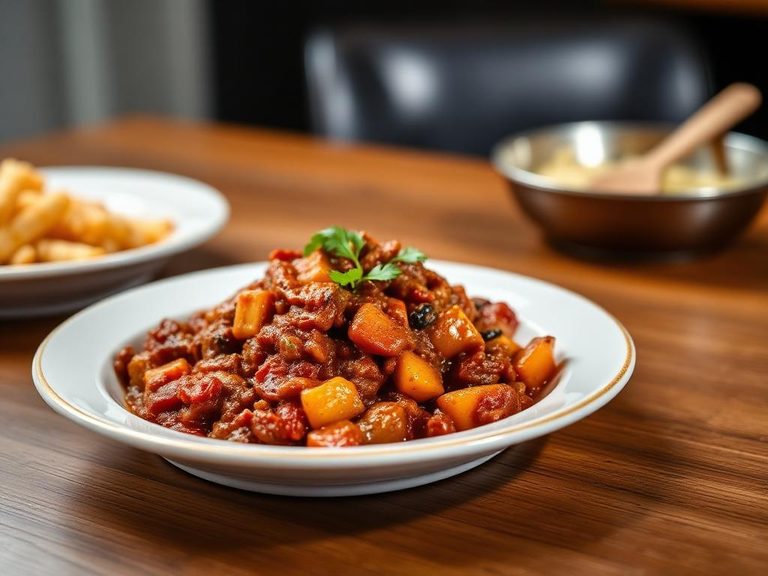
🌍 Where it's eaten
💡 Did you know?
The sprouting process can reduce the raffinose (a complex sugar) content by up to 75%, which is the primary compound responsible for the gas often associated with eating beans.
Full nutrition (USDA data · scales with serving)
| Water | 93.4 g |
| Energy | 22.0 kcal |
| Energy | 92.0 kj |
| Protein | 1.9 g |
| Total lipid (fat) | 0.32 g |
| Ash | 0.34 g |
| Carbohydrate, by difference | 4.1 g |
| Calcium, Ca | 15.0 mg |
| Iron, Fe | 0.66 mg |
| Magnesium, Mg | 18.0 mg |
| Phosphorus, P | 30.0 mg |
| Potassium, K | 98.0 mg |
| Sodium, Na | 51.0 mg |
| Zinc, Zn | 0.17 mg |
| Copper, Cu | 0.11 mg |
| Manganese, Mn | 0.12 mg |
| Selenium, Se | 0.60 ug |
| Vitamin C, total ascorbic acid | 6.1 mg |
| Thiamin | 0.07 mg |
| Riboflavin | 0.06 mg |
| Niacin | 0.72 mg |
| Pantothenic acid | 0.23 mg |
| Vitamin B-6 | 0.05 mg |
| Folate, total | 29.0 ug |
| Folic acid | 0.00 ug |
| Folate, food | 29.0 ug |
| Folate, DFE | 29.0 ug |
| Vitamin B-12 | 0.00 ug |
| Vitamin A, RAE | 0.00 ug |
| Retinol | 0.00 ug |
| Vitamin A, IU | 1.0 iu |
| Vitamin D (D2 + D3), International Units | 0.00 iu |
| Vitamin D (D2 + D3) | 0.00 ug |
Fat & fatty acid profile (per 100g)
| Fatty acids, total saturated | 0.04 g |
| SFA 16:0 | 0.03 g |
| SFA 18:0 | 0.00 g |
| Fatty acids, total monounsaturated | 0.02 g |
| MUFA 18:1 | 0.02 g |
| Fatty acids, total polyunsaturated | 0.18 g |
| PUFA 18:2 | 0.07 g |
| PUFA 18:3 | 0.12 g |
| Fatty acids, total trans | 0.00 g |
| Cholesterol | 0.00 mg |
Amino acid profile (per 100g)
| Tryptophan | 0.02 g |
| Threonine | 0.08 g |
| Isoleucine | 0.08 g |
| Leucine | 0.13 g |
| Lysine | 0.11 g |
| Methionine | 0.02 g |
| Cystine | 0.02 g |
| Phenylalanine | 0.09 g |
| Tyrosine | 0.06 g |
| Valine | 0.10 g |
| Arginine | 0.10 g |
| Histidine | 0.05 g |
| Alanine | 0.08 g |
| Aspartic acid | 0.24 g |
| Glutamic acid | 0.23 g |
| Glycine | 0.06 g |
| Proline | 0.07 g |
| Serine | 0.10 g |
FAQ
How is this different from regular cooked pinto beans?
Sprouted pinto beans are germinated before cooking, which softens them faster, gives a fresher taste, and may increase the availability of certain nutrients like B vitamins and antioxidants.
Can I eat them straight from the can?
Yes, if they are canned and ready-to-eat. If raw or dried, they must be properly sprouted and then thoroughly cooked (boiled) to ensure safety and digestibility.
What's the best way to store them?
Cooked sprouted beans can be refrigerated in an airtight container for 3-5 days or frozen for up to 3 months for best quality.
Nutrient density (calculated · NRF9.3)
Nutrient Rich Foods index: beneficial nutrients (protein, fiber, vitamins, minerals) minus saturated fat, added sugar & sodium, per 100 kcal.
NRF9.3 index — Fulgoni, Keast & Drewnowski, 2009. Computed from USDA nutrients.
Weight-loss friendliness (composite index)
Energy density 0.22 kcal/g · 34% calories from protein · 0.0 g fiber · 0.0 g sugar per 100 g.
Composite of energy density (Rolls et al., 1999), protein & fiber satiety, minus sugar. A calculated heuristic — ranks satiety-per-calorie, not a clinical measure.
Dietary load (calculated from USDA values)
Potential renal acid load. Positive = acid-forming, negative = alkaline-forming.
Sodium-to-potassium ratio: 0.52 (lower is better — aim for ≤ 1)
Sodium:potassium per WHO potassium guidance. Computed from USDA nutrients.