

Bacon bits
Common food

Photo: Wikipedia
Bacon bits are small, crispy, savory crumbles made from cured pork belly, delivering a potent, smoky, salty punch with a satisfying crunch. Nutritionally, they are a dense source of protein and fat, with a notable fiber content when made from soy or textured vegetable protein (TVP) alternatives. They are a flavor amplifier, not a main course.
Calorie split: 27% protein · 24% carbs · 49% fat
↓ Full nutrition💚 Why it's loved
People love bacon bits for their unparalleled ability to instantly elevate a dish with a smoky, salty, and crunchy element. They are a beloved, versatile garnish that bridges comfort food and gourmet touches, deeply embedded in casual American and Western cuisine.
⚠️ Watch-outs & how to enjoy it better
The primary downsides are very high sodium content and saturated fat from cured pork, which can be a concern for heart health and blood pressure. Plant-based versions, while lower in fat, can be highly processed. To counteract, use them as a sparse garnish rather than a main ingredient, and pair them with potassium-rich foods like leafy greens or avocado to help balance sodium.
Key benefits
- High-quality protein source (32g per 100g)
- Provides dietary fiber, especially in plant-based versions
- Zero sugar, suitable for low-sugar diets
- Adds intense umami flavor without added sauces
- Shelf-stable and convenient for meal prep
🍽️ Popular dishes

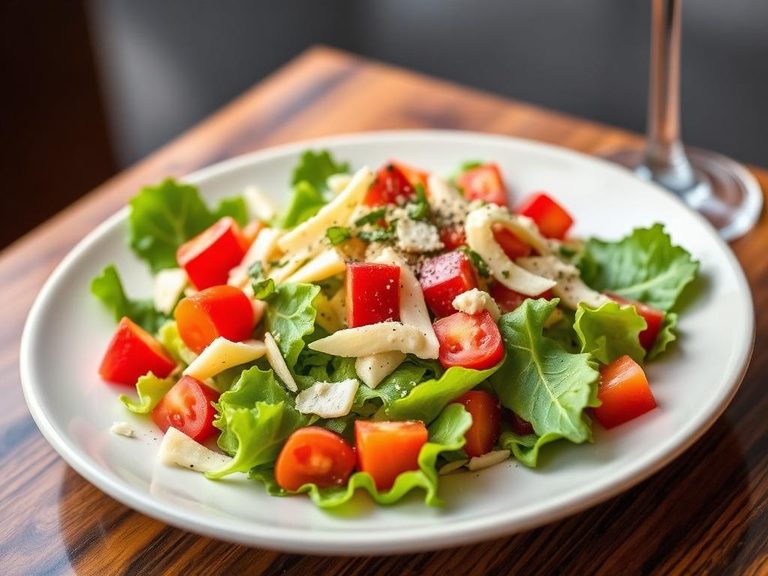
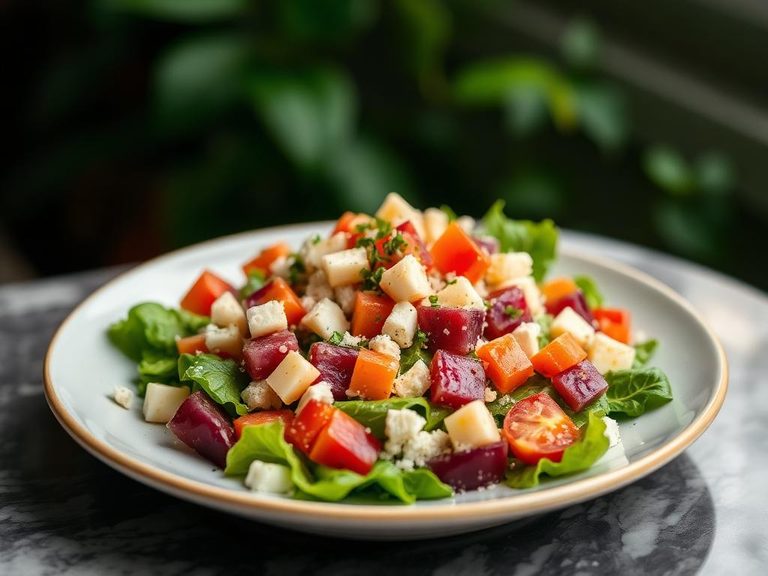
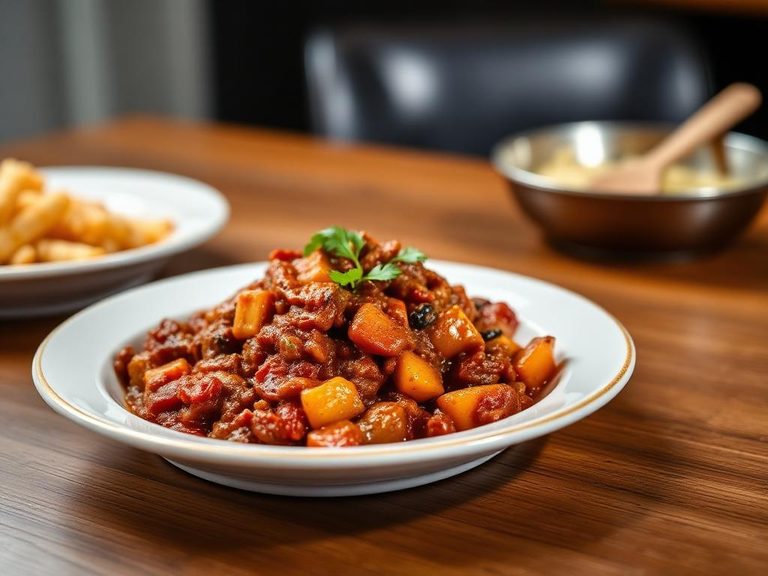
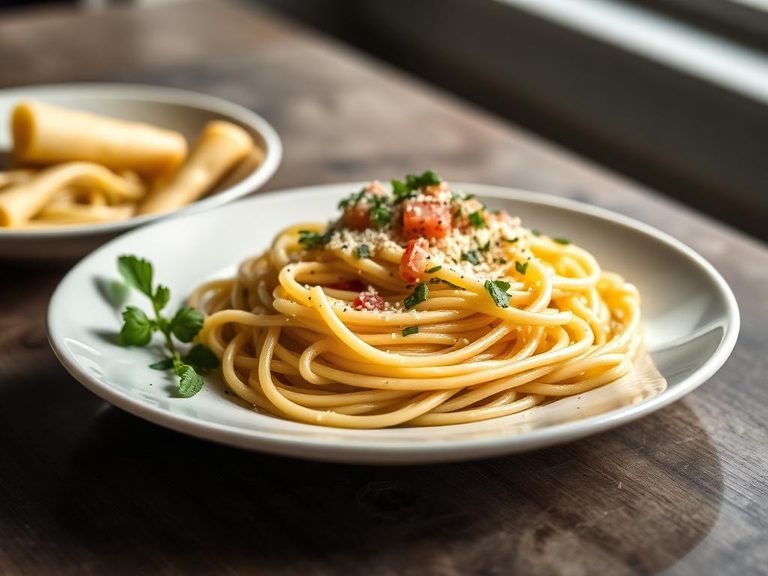
🌍 Where it's eaten
💡 Did you know?
The most popular 'bacon bits' sold in grocery stores are often entirely meatless, made primarily from textured soy flour, flavorings, and color, yet they are so convincing in taste and texture that many consumers don't realize they've never contained actual bacon.
Full nutrition (USDA data · scales with serving)
| Water | 8.0 g |
| Energy | 476 kcal |
| Protein | 32.0 g |
| Total lipid (fat) | 25.9 g |
| Carbohydrate, by difference | 28.6 g |
| Fiber, total dietary | 10.2 g |
| Total Sugars | 0.00 g |
| Calcium, Ca | 101 mg |
| Iron, Fe | 0.72 mg |
| Magnesium, Mg | 95.0 mg |
| Phosphorus, P | 217 mg |
| Potassium, K | 145 mg |
| Sodium, Na | 1770 mg |
| Zinc, Zn | 1.9 mg |
| Copper, Cu | 0.54 mg |
| Selenium, Se | 7.4 ug |
| Vitamin C, total ascorbic acid | 1.9 mg |
| Thiamin | 0.60 mg |
| Riboflavin | 0.07 mg |
| Niacin | 1.6 mg |
| Vitamin B-6 | 0.08 mg |
| Folate, total | 127 ug |
| Folic acid | 0.00 ug |
| Folate, food | 127 ug |
| Folate, DFE | 127 ug |
| Choline, total | 135 mg |
| Vitamin B-12 | 1.2 ug |
| Vitamin B-12, added | 1.2 ug |
| Vitamin A, RAE | 0.00 ug |
| Retinol | 0.00 ug |
| Carotene, beta | 0.00 ug |
| Carotene, alpha | 0.00 ug |
| Cryptoxanthin, beta | 0.00 ug |
| Lycopene | 0.00 ug |
| Lutein + zeaxanthin | 0.00 ug |
| Vitamin E (alpha-tocopherol) | 6.9 mg |
| Vitamin E, added | 0.00 mg |
| Vitamin D (D2 + D3) | 0.00 ug |
| Vitamin K (phylloquinone) | 0.00 ug |
| Alcohol, ethyl | 0.00 g |
| Caffeine | 0.00 mg |
| Theobromine | 0.00 mg |
Fat & fatty acid profile (per 100g)
| Fatty acids, total saturated | 4.1 g |
| SFA 4:0 | 0.00 g |
| SFA 6:0 | 0.00 g |
| SFA 8:0 | 0.00 g |
| SFA 10:0 | 0.00 g |
| SFA 12:0 | 0.21 g |
| SFA 14:0 | 0.14 g |
| SFA 16:0 | 2.7 g |
| SFA 18:0 | 1.0 g |
| Fatty acids, total monounsaturated | 6.2 g |
| MUFA 16:1 | 0.00 g |
| MUFA 18:1 | 6.2 g |
| MUFA 20:1 | 0.00 g |
| MUFA 22:1 | 0.00 g |
| Fatty acids, total polyunsaturated | 13.5 g |
| PUFA 18:2 | 12.1 g |
| PUFA 18:3 | 1.5 g |
| PUFA 18:4 | 0.00 g |
| PUFA 20:4 | 0.00 g |
| PUFA 20:5 n-3 (EPA) | 0.00 g |
| PUFA 22:5 n-3 (DPA) | 0.00 g |
| PUFA 22:6 n-3 (DHA) | 0.00 g |
| Cholesterol | 0.00 mg |
FAQ
Are bacon bits the same as real bacon?
Not necessarily. Many commercial 'bacon bits' are plant-based (soy), while others are made from real, cooked, and crumbled bacon. Always check the ingredients list to know what you're buying.
Can I use bacon bits in a vegetarian dish?
Yes, but only if you use certified vegetarian or vegan bacon bits, which are typically made from soy, wheat gluten, or mushrooms. Traditional bacon bits are meat-based.
How should I store bacon bits to keep them crispy?
Once opened, store them in a sealed container or zip-top bag in the refrigerator to maintain freshness and crunch for several weeks. Freezing can extend their life further.
Nutrient density (calculated · NRF9.3)
Nutrient Rich Foods index: beneficial nutrients (protein, fiber, vitamins, minerals) minus saturated fat, added sugar & sodium, per 100 kcal.
NRF9.3 index — Fulgoni, Keast & Drewnowski, 2009. Computed from USDA nutrients.
Weight-loss friendliness (composite index)
Energy density 4.76 kcal/g · 27% calories from protein · 10.2 g fiber · 0.0 g sugar per 100 g.
Composite of energy density (Rolls et al., 1999), protein & fiber satiety, minus sugar. A calculated heuristic — ranks satiety-per-calorie, not a clinical measure.
Dietary load (calculated from USDA values)
Potential renal acid load. Positive = acid-forming, negative = alkaline-forming.
Sodium-to-potassium ratio: 12.21 (lower is better — aim for ≤ 1)
Sodium:potassium per WHO potassium guidance. Computed from USDA nutrients.