

Babyfood, dessert, peach melba, strained
Whole food · Baby Foods

Photo: Wikipedia
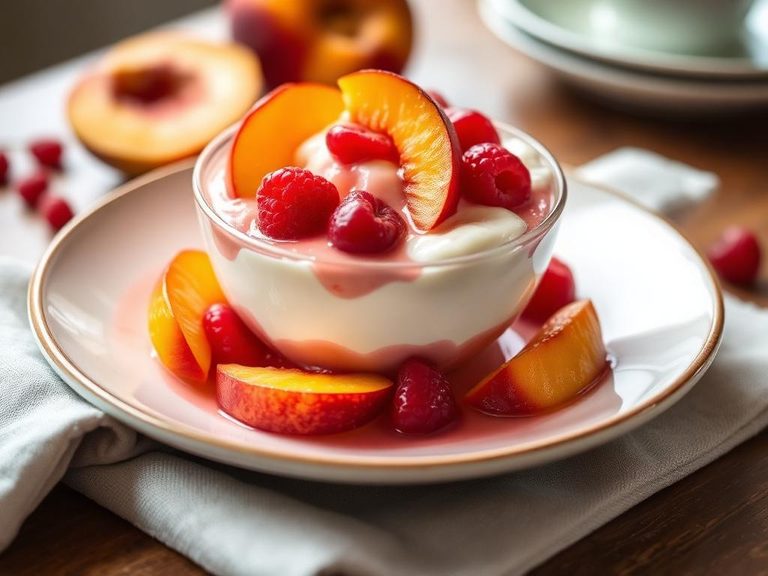
This is a smooth, velvety strained baby food dessert that captures the classic Peach Melba flavor profile in a form safe for infants. It offers a naturally sweet, mild peach taste with a hint of raspberry, and its ultra-fine, spoonable texture is designed for easy swallowing. Nutritionally, it's a light, carbohydrate-focused energy source with virtually no fat, protein, or fiber.
Calorie split: 1% protein · 99% carbs · 0% fat
↓ Full nutrition💚 Why it's loved
Parents love it for introducing the sophisticated, fruity balance of a classic dessert in a safe, age-appropriate way. Its familiar sweetness and smooth consistency often make it a reliable choice for fussy eaters or during teething.
⚠️ Watch-outs & how to enjoy it better
The primary downside is its high carbohydrate content relative to other nutrients, which could contribute to blood-sugar spikes if offered frequently or in large portions. To counteract this, serve it as an occasional treat rather than a staple, and pair it with a protein-rich food like plain yogurt or a small piece of cheese to balance the meal.
Key benefits
- Provides quick, easily digestible energy from natural fruit sugars
- Smooth texture supports the transition to solid foods
- Introduces classic fruit flavor combinations early
- Convenient, ready-to-serve option for caregivers
- Free from added fats and common allergens like dairy or nuts
🍽️ Popular dishes
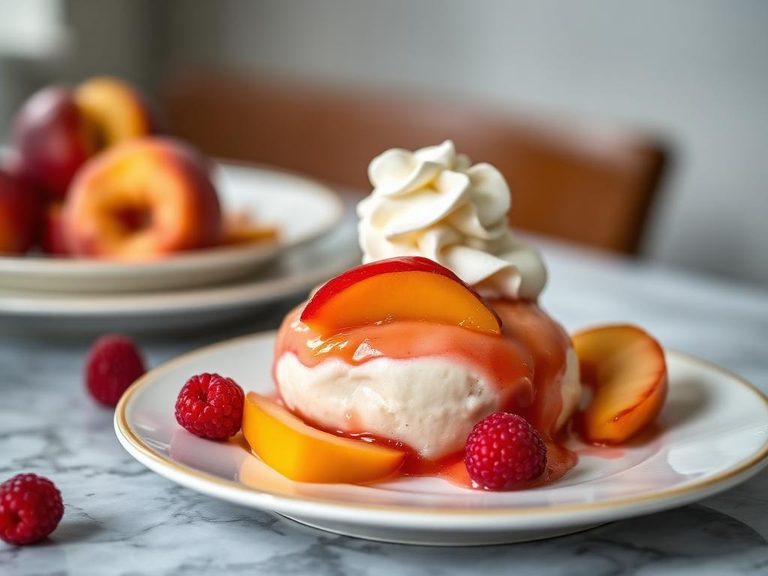
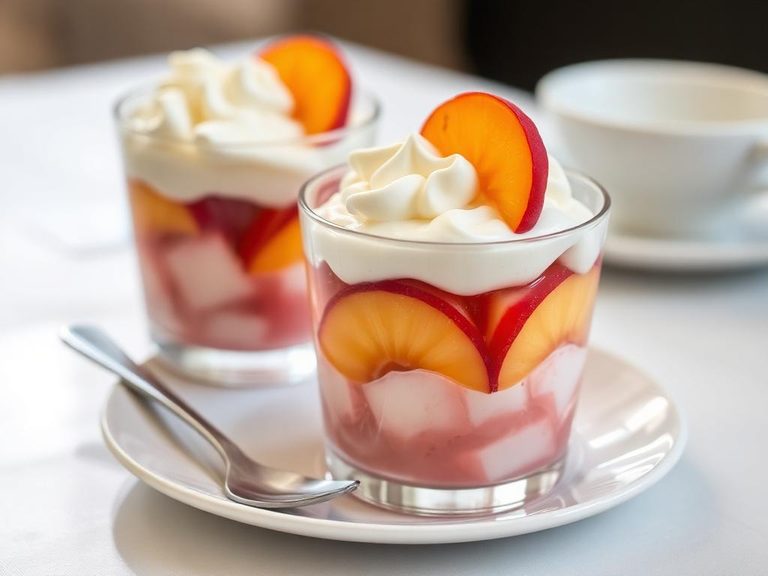
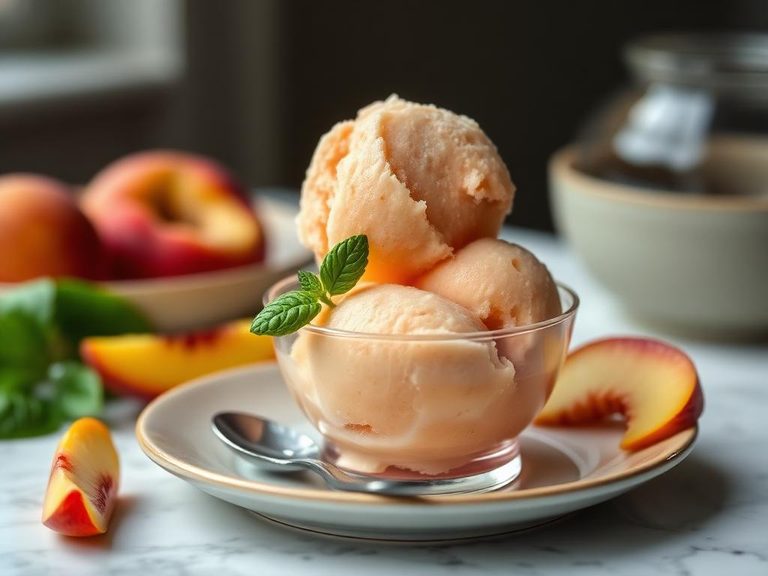
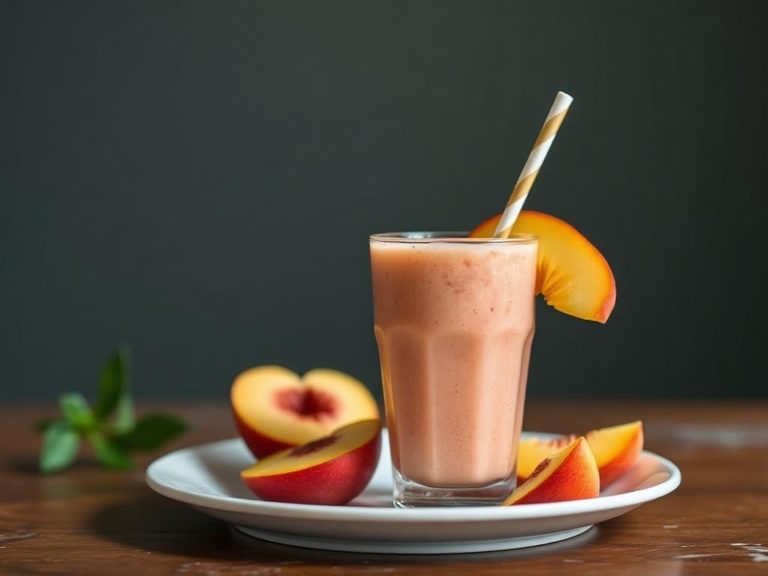
🌍 Where it's eaten
💡 Did you know?
The original Peach Melba dessert was created in the 1890s by legendary chef Auguste Escoffier to honor Australian opera singer Nellie Melba, and it was famously served on a swan made of ice.
Full nutrition (USDA data · scales with serving)
| Water | 82.9 g |
| Energy | 60.0 kcal |
| Energy | 251 kj |
| Protein | 0.20 g |
| Total lipid (fat) | 0.00 g |
| Ash | 0.30 g |
| Carbohydrate, by difference | 16.5 g |
| Calcium, Ca | 10.0 mg |
| Iron, Fe | 0.33 mg |
| Magnesium, Mg | 2.0 mg |
| Phosphorus, P | 5.0 mg |
| Potassium, K | 83.0 mg |
| Sodium, Na | 9.0 mg |
| Zinc, Zn | 0.28 mg |
| Copper, Cu | 0.18 mg |
| Vitamin C, total ascorbic acid | 31.4 mg |
| Thiamin | 0.01 mg |
| Riboflavin | 0.04 mg |
| Niacin | 0.34 mg |
| Vitamin B-6 | 0.01 mg |
| Folate, total | 2.0 ug |
| Folate, food | 2.0 ug |
| Vitamin B-12 | 0.00 ug |
| Vitamin A, RAE | 56.0 ug |
| Vitamin A, IU | 184 iu |
Fat & fatty acid profile (per 100g)
Estimated from Babyfood, grape juice, no sugar, canned — USDA does not publish this profile for Babyfood.
| Fatty acids, total saturated | 0.00 g |
| SFA 4:0 | 0.00 g |
| SFA 6:0 | 0.00 g |
| SFA 8:0 | 0.00 g |
| SFA 10:0 | 0.00 g |
| SFA 12:0 | 0.00 g |
| SFA 14:0 | 0.00 g |
| SFA 16:0 | 0.00 g |
| SFA 18:0 | 0.00 g |
| Fatty acids, total monounsaturated | 0.00 g |
| MUFA 16:1 | 0.00 g |
| MUFA 18:1 | 0.00 g |
| MUFA 20:1 | 0.00 g |
| MUFA 22:1 | 0.00 g |
| Fatty acids, total polyunsaturated | 0.00 g |
| PUFA 18:2 | 0.00 g |
| PUFA 18:3 | 0.00 g |
| PUFA 18:4 | 0.00 g |
| PUFA 20:4 | 0.00 g |
| PUFA 20:5 n-3 (EPA) | 0.00 g |
| PUFA 22:5 n-3 (DPA) | 0.00 g |
| PUFA 22:6 n-3 (DHA) | 0.00 g |
| Cholesterol | 0.00 mg |
Amino acid profile (per 100g)
Estimated from Babyfood, grape juice, no sugar, canned — USDA does not publish this profile for Babyfood.
| Threonine | 0.02 g |
| Isoleucine | 0.01 g |
| Leucine | 0.02 g |
| Lysine | 0.02 g |
| Methionine | 0.03 g |
| Cystine | 0.01 g |
| Phenylalanine | 0.02 g |
| Tyrosine | 0.02 g |
| Valine | 0.02 g |
| Arginine | 0.06 g |
| Histidine | 0.03 g |
| Alanine | 0.04 g |
| Aspartic acid | 0.10 g |
| Glutamic acid | 0.18 g |
| Glycine | 0.03 g |
| Proline | 0.03 g |
| Serine | 0.04 g |
FAQ
Is this the same as regular Peach Melba?
No. This is a strained baby food version, which is much smoother, thinner, and lacks the chunks, cream, and ice cream of the classic dessert. It's designed for infant consumption.
Does it contain added sugar?
The nutrition profile shows 0g of sugar per 100g, which likely means no *added* sugars. The sweetness comes entirely from the natural sugars in the peaches and raspberries.
Can I mix it with other baby foods?
Yes, its mild flavor makes it a good base for mixing with iron-fortified cereals or other fruit purées to create a more balanced meal.
Nutrient density (calculated · NRF9.3)
Nutrient Rich Foods index: beneficial nutrients (protein, fiber, vitamins, minerals) minus saturated fat, added sugar & sodium, per 100 kcal.
NRF9.3 index — Fulgoni, Keast & Drewnowski, 2009. Computed from USDA nutrients.
Weight-loss friendliness (composite index)
Energy density 0.60 kcal/g · 1% calories from protein · 0.0 g fiber · 0.0 g sugar per 100 g.
Composite of energy density (Rolls et al., 1999), protein & fiber satiety, minus sugar. A calculated heuristic — ranks satiety-per-calorie, not a clinical measure.
Dietary load (calculated from USDA values)
Potential renal acid load. Positive = acid-forming, negative = alkaline-forming.
Sodium-to-potassium ratio: 0.11 (lower is better — aim for ≤ 1)
Sodium:potassium per WHO potassium guidance. Computed from USDA nutrients.