

Alfredo sauce
Common food

Photo: Wikipedia
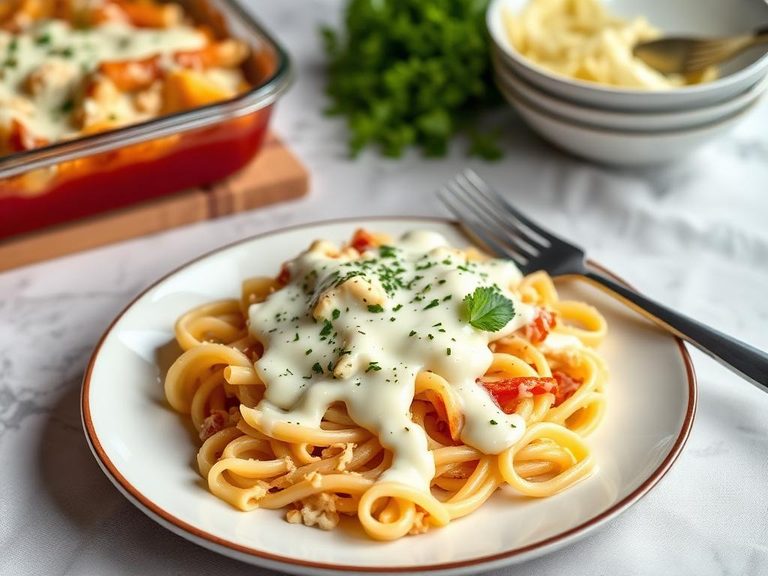
Alfredo sauce is a rich, velvety Italian-American pasta sauce made primarily from butter, heavy cream, and Parmesan cheese. It boasts a luxuriously smooth, coating texture and a deeply savory, salty, and buttery flavor profile. Nutritionally, it is very high in fat, providing 15g per 100g, with minimal protein and carbohydrates.
Calorie split: 6% protein · 5% carbs · 90% fat
↓ Full nutrition💚 Why it's loved
People adore Alfredo for its decadent, comforting creaminess and its ability to transform simple pasta into a satisfying meal. Its mild, savory flavor makes it a universally appealing canvas for countless variations.
⚠️ Watch-outs & how to enjoy it better
The high saturated fat and calorie content can be a concern for heart health and weight management if consumed frequently or in large portions. To enjoy it mindfully, practice strict portion control (use 2-3 tablespoons per serving), bulk up the dish with a large volume of vegetables (like steamed broccoli or spinach), and pair it with a lean protein like grilled chicken or shrimp to balance the meal.
Key benefits
- Provides a quick source of dietary fat for energy.
- Contains calcium from Parmesan cheese.
- Enhances the palatability and calorie density of vegetable-based dishes like zucchini noodles.
- Acts as a versatile base for adding other flavors like garlic, herbs, or protein.
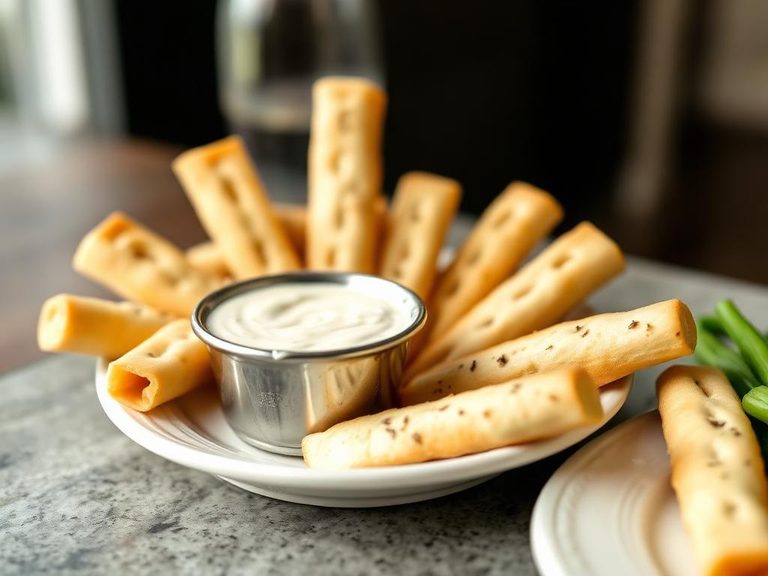
🍽️ Popular dishes
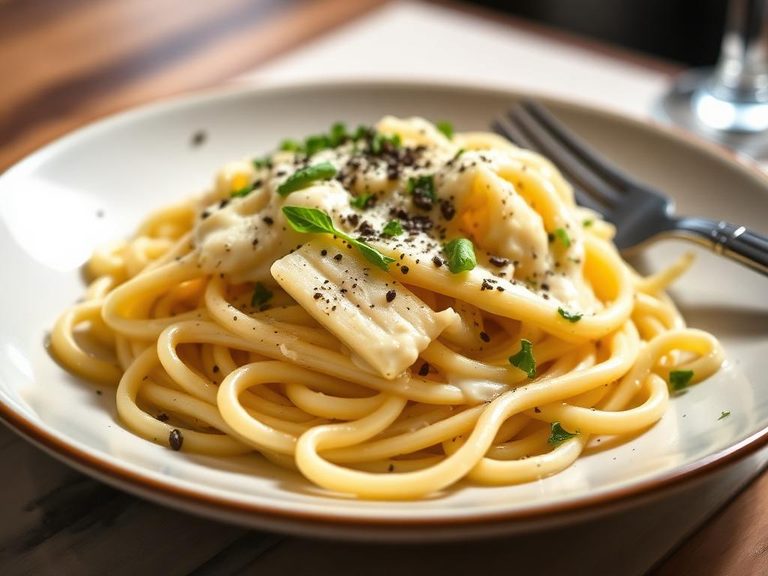
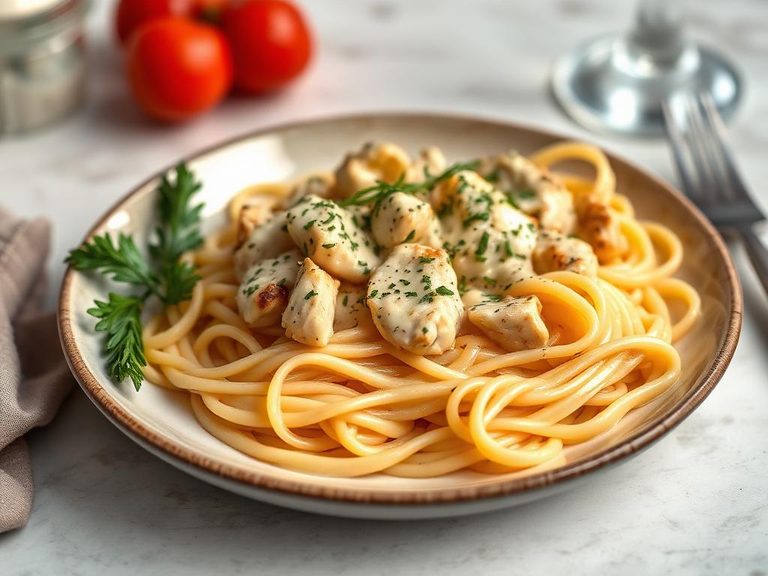
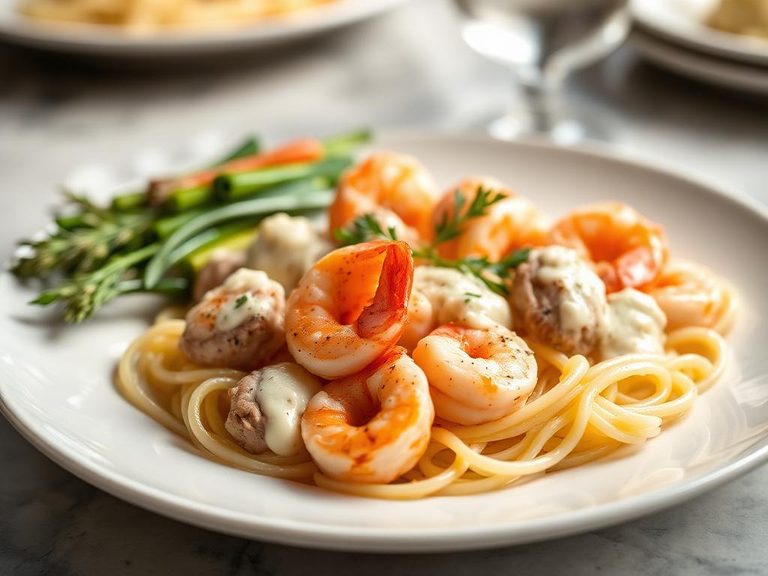
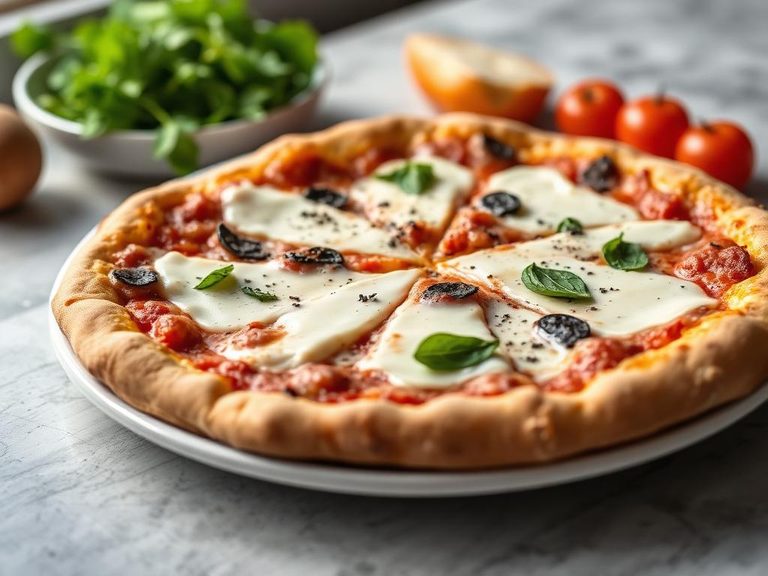
🌍 Where it's eaten
💡 Did you know?
The original Roman 'Fettuccine al burro' was a simple dish of pasta tossed with butter and Parmigiano-Reggiano, with no cream; the creamy, heavy version popular in the U.S. was popularized by Alfredo di Lelio in Rome for American tourists and later adapted by American restaurants.
Full nutrition (USDA data · scales with serving)
| Water | 79.4 g |
| Energy | 150 kcal |
| Protein | 2.1 g |
| Total lipid (fat) | 15.0 g |
| Carbohydrate, by difference | 1.8 g |
| Fiber, total dietary | 0.00 g |
| Total Sugars | 0.90 g |
| Calcium, Ca | 66.0 mg |
| Iron, Fe | 0.02 mg |
| Magnesium, Mg | 4.0 mg |
| Phosphorus, P | 50.0 mg |
| Potassium, K | 39.0 mg |
| Sodium, Na | 552 mg |
| Zinc, Zn | 0.29 mg |
| Copper, Cu | 0.01 mg |
| Selenium, Se | 2.7 ug |
| Vitamin C, total ascorbic acid | 0.20 mg |
| Thiamin | 0.01 mg |
| Riboflavin | 0.07 mg |
| Niacin | 0.02 mg |
| Vitamin B-6 | 0.01 mg |
| Folate, total | 2.0 ug |
| Folic acid | 0.00 ug |
| Folate, food | 2.0 ug |
| Folate, DFE | 2.0 ug |
| Choline, total | 6.4 mg |
| Vitamin B-12 | 0.07 ug |
| Vitamin B-12, added | 0.00 ug |
| Vitamin A, RAE | 137 ug |
| Retinol | 136 ug |
| Carotene, beta | 6.0 ug |
| Carotene, alpha | 0.00 ug |
| Cryptoxanthin, beta | 0.00 ug |
| Lycopene | 0.00 ug |
| Lutein + zeaxanthin | 0.00 ug |
| Vitamin E (alpha-tocopherol) | 0.30 mg |
| Vitamin E, added | 0.00 mg |
| Vitamin D (D2 + D3) | 0.50 ug |
| Vitamin K (phylloquinone) | 1.3 ug |
| Alcohol, ethyl | 0.00 g |
| Caffeine | 0.00 mg |
| Theobromine | 0.00 mg |
Fat & fatty acid profile (per 100g)
| Fatty acids, total saturated | 8.5 g |
| SFA 4:0 | 0.32 g |
| SFA 6:0 | 0.26 g |
| SFA 8:0 | 0.16 g |
| SFA 10:0 | 0.37 g |
| SFA 12:0 | 0.44 g |
| SFA 14:0 | 1.4 g |
| SFA 16:0 | 3.9 g |
| SFA 18:0 | 1.4 g |
| Fatty acids, total monounsaturated | 3.1 g |
| MUFA 16:1 | 0.25 g |
| MUFA 18:1 | 3.3 g |
| MUFA 20:1 | 0.03 g |
| MUFA 22:1 | 0.00 g |
| Fatty acids, total polyunsaturated | 0.62 g |
| PUFA 18:2 | 0.36 g |
| PUFA 18:3 | 0.06 g |
| PUFA 18:4 | 0.00 g |
| PUFA 20:4 | 0.02 g |
| PUFA 20:5 n-3 (EPA) | 0.00 g |
| PUFA 22:5 n-3 (DPA) | 0.01 g |
| PUFA 22:6 n-3 (DHA) | 0.00 g |
| Cholesterol | 44.0 mg |
FAQ
Is Alfredo sauce the same as béchamel sauce?
No. Béchamel is a white sauce made from a roux (butter and flour) and milk. Alfredo is a reduction sauce based on butter, cream, and cheese, with no flour.
Can I make a lighter version of Alfredo sauce?
Yes. Common lighter modifications include using half-and-half or evaporated milk instead of heavy cream, incorporating cream cheese or Greek yogurt for thickness, or blending steamed cauliflower or white beans into the sauce for creaminess with more fiber and protein.
Why does my homemade Alfredo sauce separate or become grainy?
This is often due to overheating or using pre-grated cheese with anti-caking agents. Use freshly grated Parmesan, melt it into the warm (not boiling) cream and butter mixture off the heat, and stir constantly until just combined.
Nutrient density (calculated · NRF9.3)
Nutrient Rich Foods index: beneficial nutrients (protein, fiber, vitamins, minerals) minus saturated fat, added sugar & sodium, per 100 kcal.
NRF9.3 index — Fulgoni, Keast & Drewnowski, 2009. Computed from USDA nutrients.
Weight-loss friendliness (composite index)
Energy density 1.50 kcal/g · 6% calories from protein · 0.0 g fiber · 0.9 g sugar per 100 g.
Composite of energy density (Rolls et al., 1999), protein & fiber satiety, minus sugar. A calculated heuristic — ranks satiety-per-calorie, not a clinical measure.
Dietary load (calculated from USDA values)
Potential renal acid load. Positive = acid-forming, negative = alkaline-forming.
Sodium-to-potassium ratio: 14.15 (lower is better — aim for ≤ 1)
Sodium:potassium per WHO potassium guidance. Computed from USDA nutrients.