

Alfredo sauce with added vegetables
Common food

Photo: Wikipedia
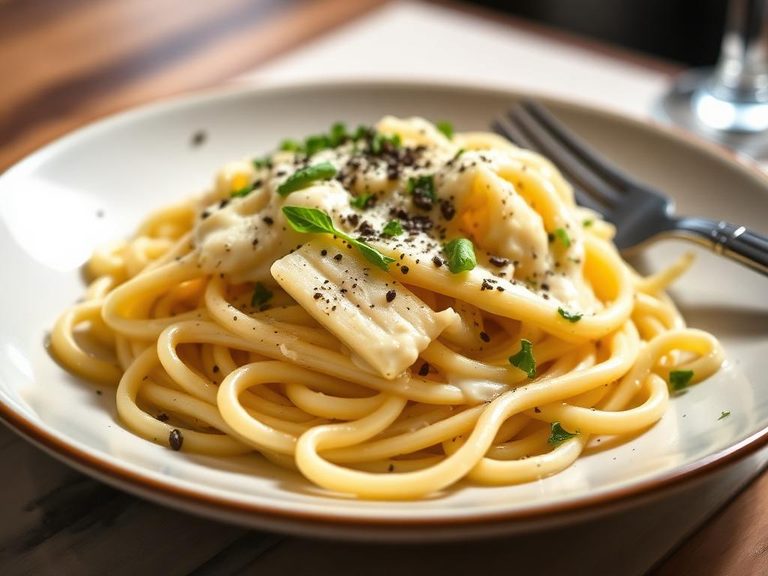
A creamy, velvety Italian-American sauce traditionally made with butter, Parmesan, and cream, here enriched with finely diced vegetables like carrots, celery, or zucchini. It coats pasta in a rich, savory blanket with a subtle sweetness from the vegetables. Nutritionally, it's a high-fat, low-protein, low-fiber condiment, with the added vegetables contributing minimal calories but a touch of extra vitamins.
Calorie split: 7% protein · 9% carbs · 85% fat
↓ Full nutrition💚 Why it's loved
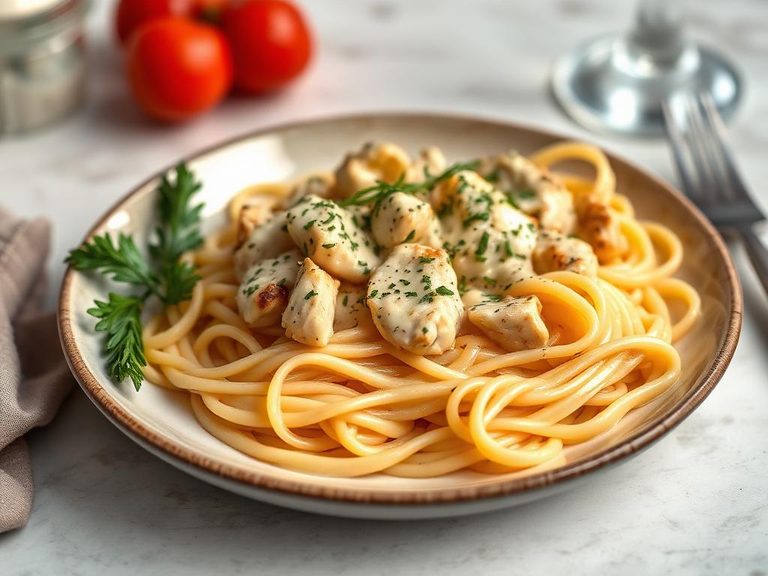
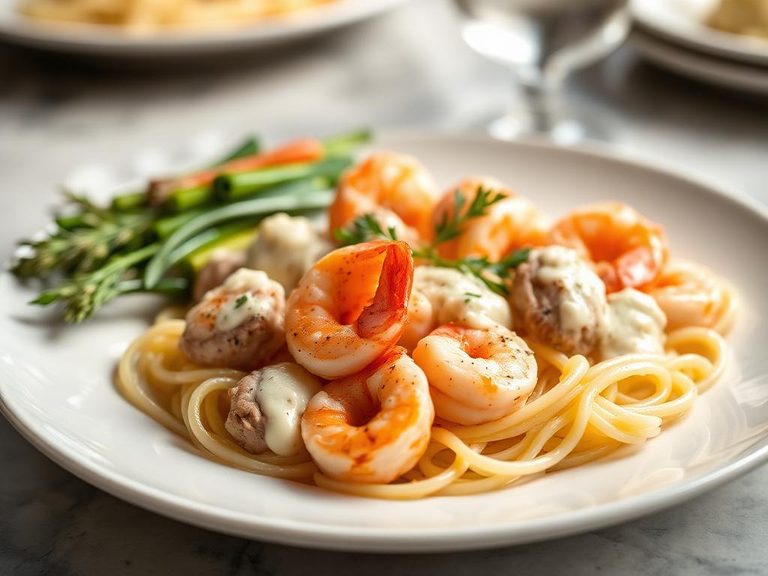
People adore it for its luxurious, umami-rich creaminess that transforms simple pasta into a decadent meal. Its versatility as a base for proteins like chicken or shrimp makes it a weeknight favorite.
⚠️ Watch-outs & how to enjoy it better
Its high saturated fat and calorie density can be a concern for heart health or weight management. The low fiber and protein content means it can cause rapid blood sugar spikes when paired with refined pasta. Counteract this by pairing it with a lean protein (grilled chicken, shrimp) and a large side of steamed or roasted non-starchy vegetables to add fiber and slow digestion.
Key benefits
- Provides a quick source of energy from fats.
- Contains calcium from Parmesan cheese.
- Vegetable additions offer trace vitamins and minerals.
- Enhances palatability of plain vegetables or pasta.
- Offers a comforting, familiar flavor profile.
🍽️ Popular dishes
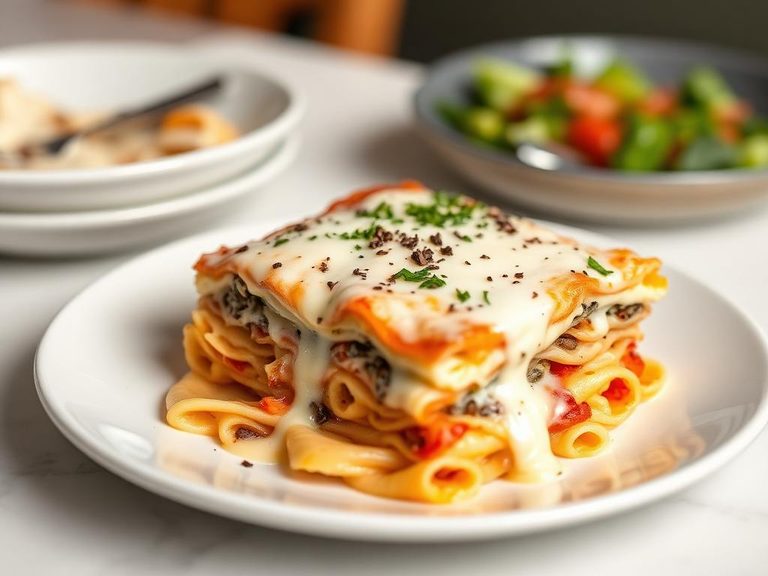
🌍 Where it's eaten
💡 Did you know?
The original Alfredo sauce, created by Alfredo di Lelio in Rome, was simply butter and Parmesan cheese, emulsified with pasta water—no cream was used at all.
Full nutrition (USDA data · scales with serving)
| Water | 82.3 g |
| Energy | 122 kcal |
| Protein | 2.1 g |
| Total lipid (fat) | 11.5 g |
| Carbohydrate, by difference | 2.6 g |
| Fiber, total dietary | 0.40 g |
| Total Sugars | 1.4 g |
| Calcium, Ca | 53.0 mg |
| Iron, Fe | 0.11 mg |
| Magnesium, Mg | 7.0 mg |
| Phosphorus, P | 52.0 mg |
| Potassium, K | 102 mg |
| Sodium, Na | 423 mg |
| Zinc, Zn | 0.31 mg |
| Copper, Cu | 0.05 mg |
| Selenium, Se | 3.8 ug |
| Vitamin C, total ascorbic acid | 10.7 mg |
| Thiamin | 0.02 mg |
| Riboflavin | 0.11 mg |
| Niacin | 0.46 mg |
| Vitamin B-6 | 0.05 mg |
| Folate, total | 8.0 ug |
| Folic acid | 0.00 ug |
| Folate, food | 8.0 ug |
| Folate, DFE | 8.0 ug |
| Choline, total | 7.8 mg |
| Vitamin B-12 | 0.06 ug |
| Vitamin B-12, added | 0.00 ug |
| Vitamin A, RAE | 113 ug |
| Retinol | 104 ug |
| Carotene, beta | 98.0 ug |
| Carotene, alpha | 2.0 ug |
| Cryptoxanthin, beta | 23.0 ug |
| Lycopene | 0.00 ug |
| Lutein + zeaxanthin | 121 ug |
| Vitamin E (alpha-tocopherol) | 0.34 mg |
| Vitamin E, added | 0.00 mg |
| Vitamin D (D2 + D3) | 0.40 ug |
| Vitamin K (phylloquinone) | 2.0 ug |
| Alcohol, ethyl | 0.00 g |
| Caffeine | 0.00 mg |
| Theobromine | 0.00 mg |
Fat & fatty acid profile (per 100g)
| Fatty acids, total saturated | 6.5 g |
| SFA 4:0 | 0.24 g |
| SFA 6:0 | 0.20 g |
| SFA 8:0 | 0.12 g |
| SFA 10:0 | 0.29 g |
| SFA 12:0 | 0.34 g |
| SFA 14:0 | 1.1 g |
| SFA 16:0 | 3.0 g |
| SFA 18:0 | 1.0 g |
| Fatty acids, total monounsaturated | 2.4 g |
| MUFA 16:1 | 0.19 g |
| MUFA 18:1 | 2.5 g |
| MUFA 20:1 | 0.02 g |
| MUFA 22:1 | 0.00 g |
| Fatty acids, total polyunsaturated | 0.51 g |
| PUFA 18:2 | 0.30 g |
| PUFA 18:3 | 0.05 g |
| PUFA 18:4 | 0.00 g |
| PUFA 20:4 | 0.02 g |
| PUFA 20:5 n-3 (EPA) | 0.00 g |
| PUFA 22:5 n-3 (DPA) | 0.01 g |
| PUFA 22:6 n-3 (DHA) | 0.00 g |
| Cholesterol | 33.0 mg |
FAQ
Is Alfredo sauce with vegetables healthier than regular Alfredo?
Marginally. The added vegetables contribute minimal calories but add small amounts of fiber, vitamins, and minerals. The sauce remains high in fat and low in protein.
Can I use Alfredo sauce as a base for soup?
Yes, it's often used as a creamy base for soups like creamy tomato soup or chicken pot pie soup, typically thinned with broth or milk.
Why does my Alfredo sauce break or become grainy?
This is usually due to overheating, which causes the cheese to separate. To prevent it, melt butter and cream over low heat, then remove from heat before stirring in Parmesan until just melted.
Nutrient density (calculated · NRF9.3)
Nutrient Rich Foods index: beneficial nutrients (protein, fiber, vitamins, minerals) minus saturated fat, added sugar & sodium, per 100 kcal.
NRF9.3 index — Fulgoni, Keast & Drewnowski, 2009. Computed from USDA nutrients.
Weight-loss friendliness (composite index)
Energy density 1.22 kcal/g · 7% calories from protein · 0.4 g fiber · 1.4 g sugar per 100 g.
Composite of energy density (Rolls et al., 1999), protein & fiber satiety, minus sugar. A calculated heuristic — ranks satiety-per-calorie, not a clinical measure.
Dietary load (calculated from USDA values)
Potential renal acid load. Positive = acid-forming, negative = alkaline-forming.
Sodium-to-potassium ratio: 4.15 (lower is better — aim for ≤ 1)
Sodium:potassium per WHO potassium guidance. Computed from USDA nutrients.