

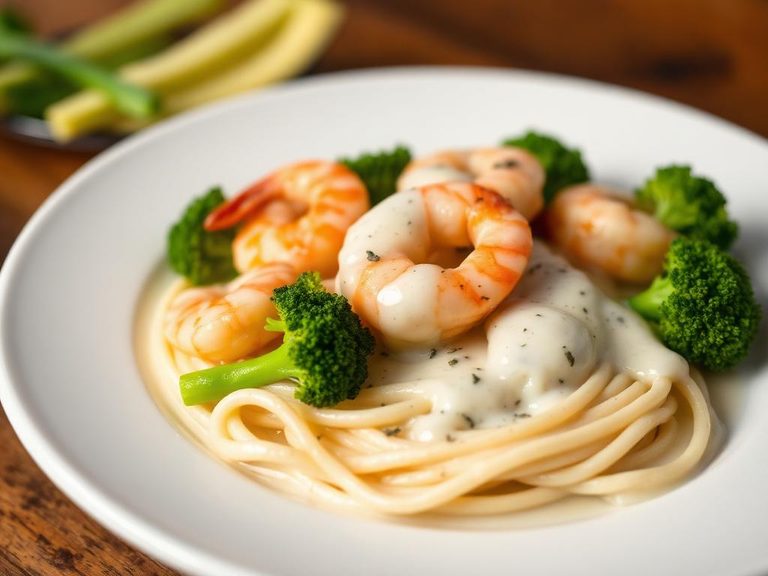
Alfredo sauce with meat and added vegetables
Common food

Photo: Wikipedia
This is a rich, creamy variation of classic Alfredo sauce, incorporating savory meat and tender vegetables into the velvety, butter-and-cheese base. The texture is luxuriously smooth with satisfying bites of protein and vegetable, offering a savory, umami-forward flavor profile with a hint of sweetness from the added ingredients. Nutritionally, it's a high-fat, low-carb option, with over 12 grams of fat per 100g providing significant satiety.
Calorie split: 18% protein · 6% carbs · 77% fat
↓ Full nutrition💚 Why it's loved
People love it for its decadent, comforting creaminess that coats every bite, delivering a profound sense of indulgence. Its versatility makes it a beloved base for countless dishes, from pasta to chicken, deeply rooted in Italian-American comfort food culture.
⚠️ Watch-outs & how to enjoy it better
The high saturated fat and calorie density can be a concern for heart health or weight management if consumed frequently. To counteract this, practice strict portion control, use it as a flavor enhancer rather than the main component, and pair it with a large side of steamed or roasted non-starchy vegetables to add volume and fiber without excessive calories.
Key benefits
- High in satiating fats for prolonged fullness
- Provides a moderate protein boost from the meat component
- Low in carbohydrates and sugars, suitable for low-carb diets
- Vegetables add fiber and micronutrients to the rich base
- Versatile sauce that can transform simple pasta or proteins
🍽️ Popular dishes
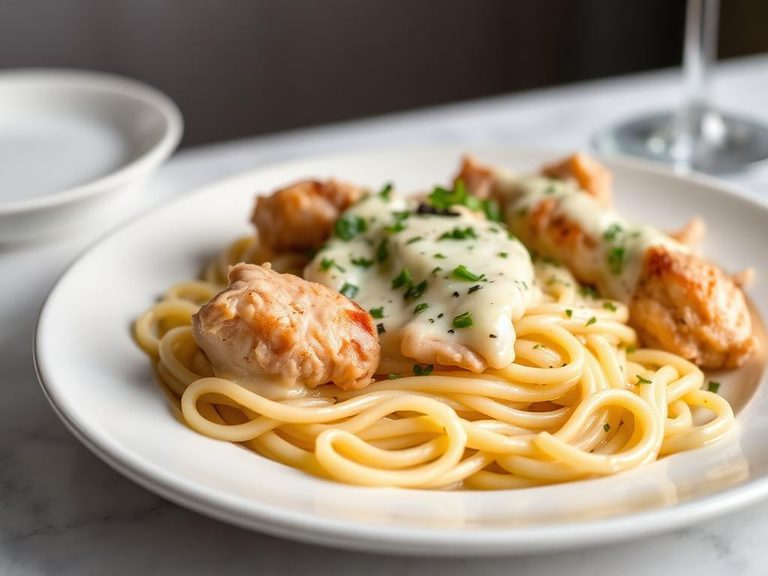
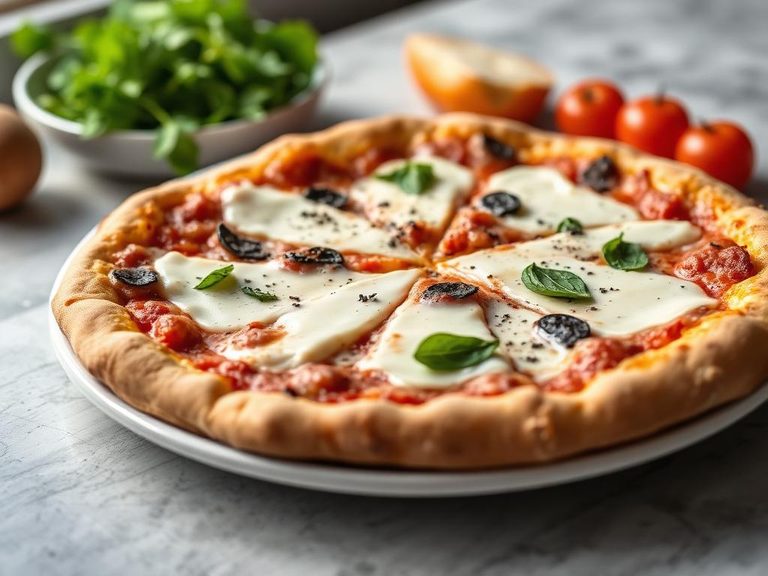
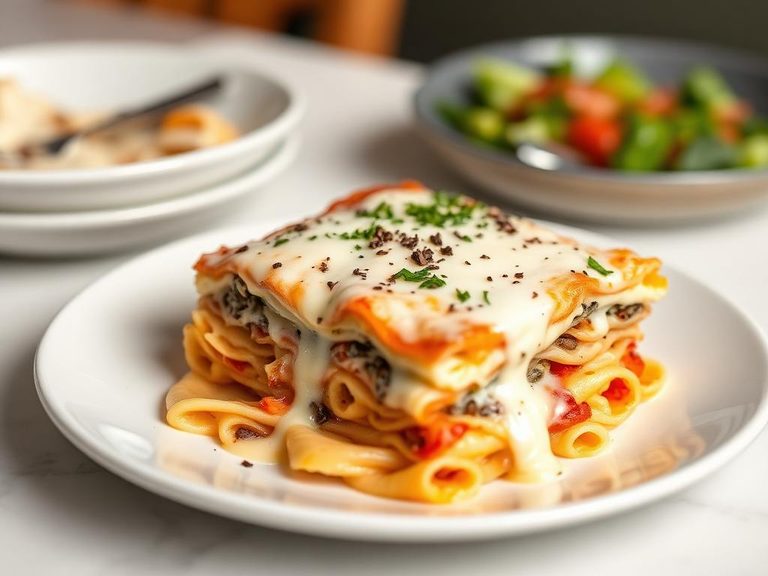
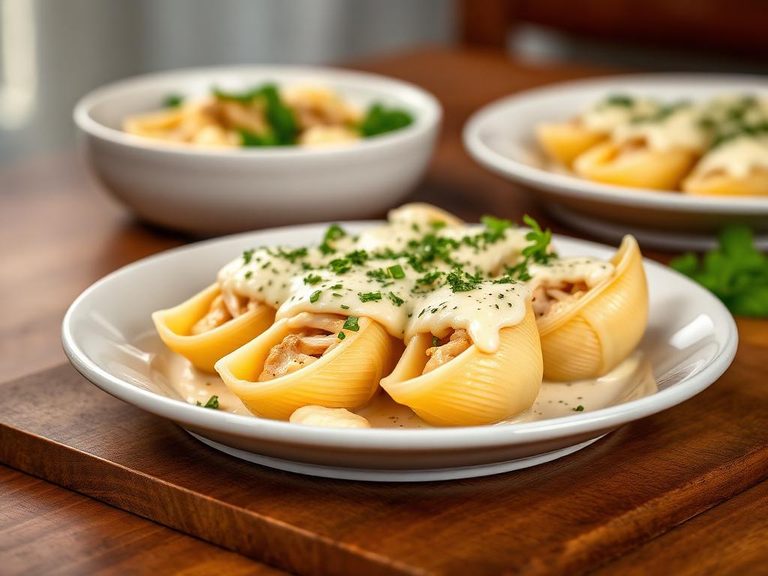
🌍 Where it's eaten
💡 Did you know?
The original Alfredo sauce, created by Roman restaurateur Alfredo di Lelio in the 1920s, contained only butter and Parmigiano-Reggiano cheese—no cream, meat, or vegetables.
Full nutrition (USDA data · scales with serving)
| Water | 77.4 g |
| Energy | 148 kcal |
| Protein | 6.5 g |
| Total lipid (fat) | 12.5 g |
| Carbohydrate, by difference | 2.1 g |
| Fiber, total dietary | 0.30 g |
| Total Sugars | 1.2 g |
| Calcium, Ca | 48.0 mg |
| Iron, Fe | 0.55 mg |
| Magnesium, Mg | 9.0 mg |
| Phosphorus, P | 78.0 mg |
| Potassium, K | 140 mg |
| Sodium, Na | 415 mg |
| Zinc, Zn | 1.4 mg |
| Copper, Cu | 0.06 mg |
| Selenium, Se | 7.1 ug |
| Vitamin C, total ascorbic acid | 8.7 mg |
| Thiamin | 0.03 mg |
| Riboflavin | 0.12 mg |
| Niacin | 1.3 mg |
| Vitamin B-6 | 0.11 mg |
| Folate, total | 9.0 ug |
| Folic acid | 0.00 ug |
| Folate, food | 9.0 ug |
| Folate, DFE | 9.0 ug |
| Choline, total | 21.4 mg |
| Vitamin B-12 | 0.55 ug |
| Vitamin B-12, added | 0.00 ug |
| Vitamin A, RAE | 93.0 ug |
| Retinol | 85.0 ug |
| Carotene, beta | 80.0 ug |
| Carotene, alpha | 2.0 ug |
| Cryptoxanthin, beta | 18.0 ug |
| Lycopene | 0.00 ug |
| Lutein + zeaxanthin | 98.0 ug |
| Vitamin E (alpha-tocopherol) | 0.30 mg |
| Vitamin E, added | 0.00 mg |
| Vitamin D (D2 + D3) | 0.30 ug |
| Vitamin K (phylloquinone) | 1.9 ug |
| Alcohol, ethyl | 0.00 g |
| Caffeine | 0.00 mg |
| Theobromine | 0.00 mg |
Fat & fatty acid profile (per 100g)
| Fatty acids, total saturated | 6.5 g |
| SFA 4:0 | 0.20 g |
| SFA 6:0 | 0.16 g |
| SFA 8:0 | 0.10 g |
| SFA 10:0 | 0.23 g |
| SFA 12:0 | 0.28 g |
| SFA 14:0 | 0.96 g |
| SFA 16:0 | 3.1 g |
| SFA 18:0 | 1.2 g |
| Fatty acids, total monounsaturated | 3.4 g |
| MUFA 16:1 | 0.27 g |
| MUFA 18:1 | 3.2 g |
| MUFA 20:1 | 0.03 g |
| MUFA 22:1 | 0.00 g |
| Fatty acids, total polyunsaturated | 0.51 g |
| PUFA 18:2 | 0.32 g |
| PUFA 18:3 | 0.05 g |
| PUFA 18:4 | 0.00 g |
| PUFA 20:4 | 0.02 g |
| PUFA 20:5 n-3 (EPA) | 0.00 g |
| PUFA 22:5 n-3 (DPA) | 0.01 g |
| PUFA 22:6 n-3 (DHA) | 0.00 g |
| Cholesterol | 43.0 mg |
FAQ
Is Alfredo sauce with meat and vegetables keto-friendly?
Yes, it is generally very keto-friendly due to its high fat, moderate protein, and very low carbohydrate content (only 2.15g carbs per 100g). Always check for added sugars in pre-made versions.
Can I freeze this sauce?
Cream-based sauces can sometimes separate or become grainy when frozen and thawed. For best results, cool it completely, freeze in airtight containers, and reheat gently over low heat while whisking. Adding a splash of cream upon reheating can help restore smoothness.
How can I make it lighter?
You can lighten it by using a blend of whole milk and a small amount of heavy cream, incorporating pureed steamed cauliflower for creaminess, or using a roux base with low-fat milk. However, this will alter the classic rich texture and flavor.
Nutrient density (calculated · NRF9.3)
Nutrient Rich Foods index: beneficial nutrients (protein, fiber, vitamins, minerals) minus saturated fat, added sugar & sodium, per 100 kcal.
NRF9.3 index — Fulgoni, Keast & Drewnowski, 2009. Computed from USDA nutrients.
Weight-loss friendliness (composite index)
Energy density 1.48 kcal/g · 17% calories from protein · 0.3 g fiber · 1.2 g sugar per 100 g.
Composite of energy density (Rolls et al., 1999), protein & fiber satiety, minus sugar. A calculated heuristic — ranks satiety-per-calorie, not a clinical measure.
Dietary load (calculated from USDA values)
Potential renal acid load. Positive = acid-forming, negative = alkaline-forming.
Sodium-to-potassium ratio: 2.96 (lower is better — aim for ≤ 1)
Sodium:potassium per WHO potassium guidance. Computed from USDA nutrients.