

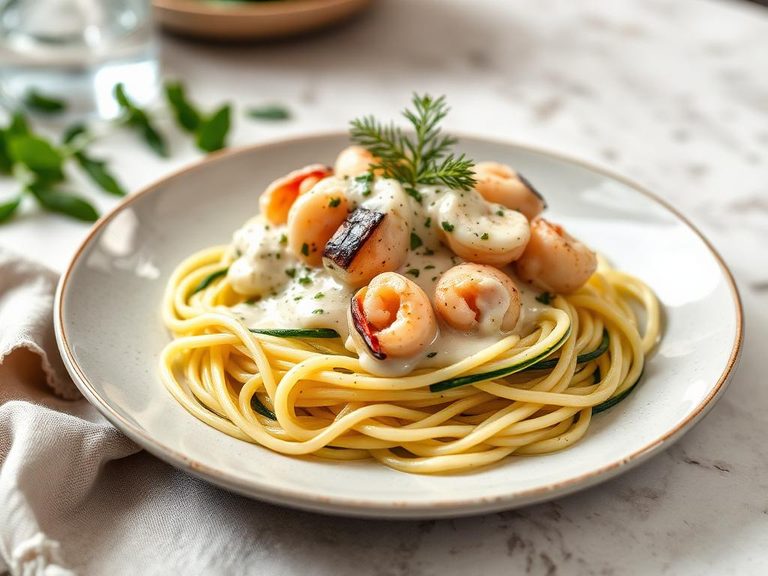
Alfredo sauce with seafood and added vegetables
Common food

Photo: Wikipedia
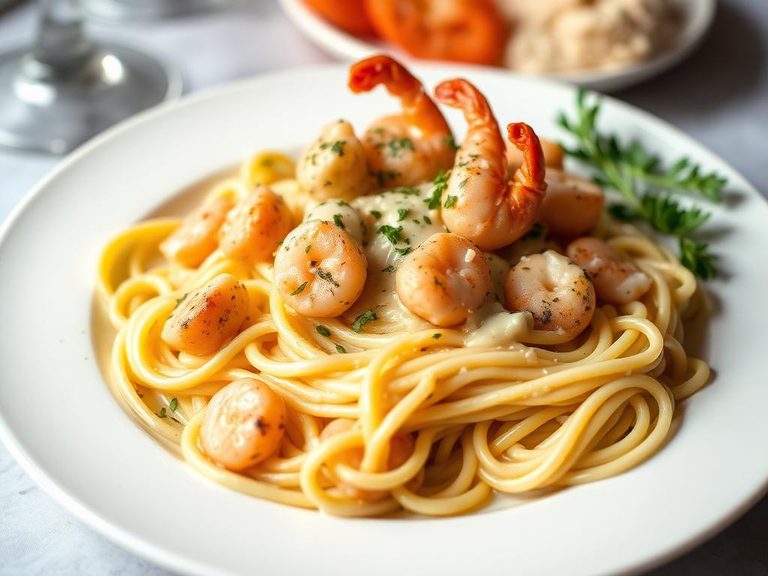
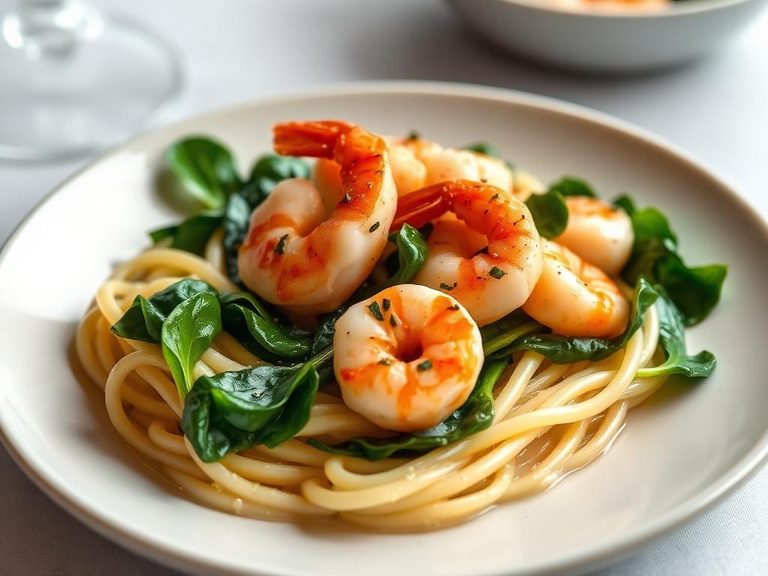
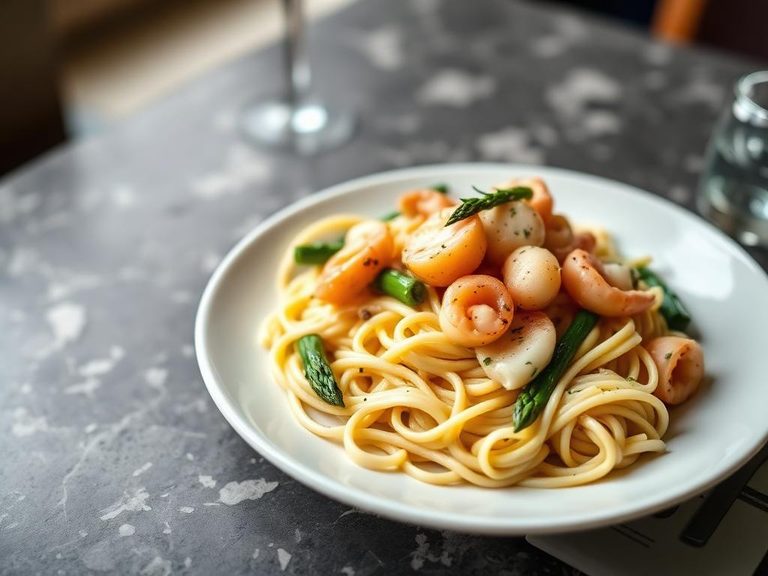
A rich, velvety Alfredo sauce elevated with tender seafood like shrimp or scallops and vibrant vegetables such as spinach, bell peppers, or asparagus. It offers a luxurious, creamy mouthfeel with a savory, umami depth from the seafood and a subtle sweetness from the veggies. Nutritionally, it's a moderate-calorie option with a good protein boost from the seafood, though its fat content comes primarily from the dairy base.
Calorie split: 19% protein · 9% carbs · 72% fat
↓ Full nutrition💚 Why it's loved
People adore it for its indulgent, comforting creaminess paired with the luxurious taste of seafood, making it feel like a special-occasion meal. Its versatility allows it to be served over pasta, rice, or vegetables, fitting into various culinary traditions from Italian-American to coastal cuisines.
⚠️ Watch-outs & how to enjoy it better
The high fat and sodium content can be a concern for those monitoring heart health or blood pressure, and the dairy base may cause digestive issues for lactose-intolerant individuals. To counteract, pair it with a large side of steamed or roasted non-starchy vegetables to increase fiber and volume, and use portion control by serving it as a sauce rather than the main component of the meal.
Key benefits
- Provides a good source of protein from seafood, supporting muscle maintenance.
- Contains healthy fats from dairy and seafood, which can aid in nutrient absorption.
- Vegetables add vitamins, minerals, and a small amount of fiber.
- Can be a satisfying, lower-carb option compared to pasta-heavy dishes.
- Offers a balanced flavor profile with umami, creaminess, and vegetable freshness.
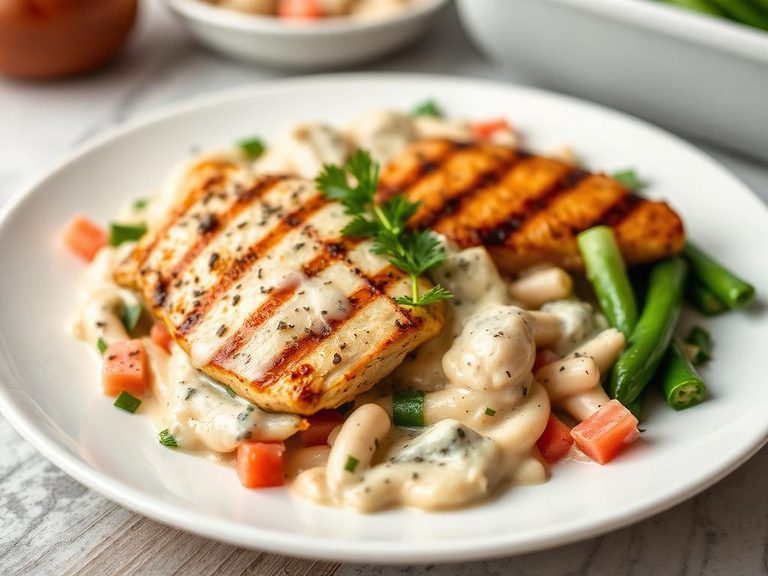
🍽️ Popular dishes
🌍 Where it's eaten
💡 Did you know?
Traditional Alfredo sauce, created by Alfredo di Lelio in Rome, was originally made with just butter and Parmesan cheese, and the addition of cream and seafood is a modern, Americanized twist.
Full nutrition (USDA data · scales with serving)
| Water | 80.1 g |
| Energy | 122 kcal |
| Protein | 5.9 g |
| Total lipid (fat) | 9.7 g |
| Carbohydrate, by difference | 2.7 g |
| Fiber, total dietary | 0.30 g |
| Total Sugars | 1.2 g |
| Calcium, Ca | 63.0 mg |
| Iron, Fe | 0.54 mg |
| Magnesium, Mg | 12.0 mg |
| Phosphorus, P | 91.0 mg |
| Potassium, K | 150 mg |
| Sodium, Na | 436 mg |
| Zinc, Zn | 0.51 mg |
| Copper, Cu | 0.07 mg |
| Selenium, Se | 12.3 ug |
| Vitamin C, total ascorbic acid | 9.0 mg |
| Thiamin | 0.02 mg |
| Riboflavin | 0.10 mg |
| Niacin | 0.48 mg |
| Vitamin B-6 | 0.04 mg |
| Folate, total | 8.0 ug |
| Folic acid | 0.00 ug |
| Folate, food | 8.0 ug |
| Folate, DFE | 8.0 ug |
| Choline, total | 24.0 mg |
| Vitamin B-12 | 1.9 ug |
| Vitamin B-12, added | 0.00 ug |
| Vitamin A, RAE | 106 ug |
| Retinol | 98.0 ug |
| Carotene, beta | 80.0 ug |
| Carotene, alpha | 2.0 ug |
| Cryptoxanthin, beta | 18.0 ug |
| Lycopene | 0.00 ug |
| Lutein + zeaxanthin | 98.0 ug |
| Vitamin E (alpha-tocopherol) | 0.48 mg |
| Vitamin E, added | 0.00 mg |
| Vitamin D (D2 + D3) | 0.30 ug |
| Vitamin K (phylloquinone) | 1.6 ug |
| Alcohol, ethyl | 0.00 g |
| Caffeine | 0.00 mg |
| Theobromine | 0.00 mg |
Fat & fatty acid profile (per 100g)
| Fatty acids, total saturated | 5.4 g |
| SFA 4:0 | 0.20 g |
| SFA 6:0 | 0.16 g |
| SFA 8:0 | 0.10 g |
| SFA 10:0 | 0.23 g |
| SFA 12:0 | 0.28 g |
| SFA 14:0 | 0.87 g |
| SFA 16:0 | 2.5 g |
| SFA 18:0 | 0.86 g |
| Fatty acids, total monounsaturated | 2.0 g |
| MUFA 16:1 | 0.16 g |
| MUFA 18:1 | 2.0 g |
| MUFA 20:1 | 0.02 g |
| MUFA 22:1 | 0.00 g |
| Fatty acids, total polyunsaturated | 0.51 g |
| PUFA 18:2 | 0.26 g |
| PUFA 18:3 | 0.04 g |
| PUFA 18:4 | 0.00 g |
| PUFA 20:4 | 0.02 g |
| PUFA 20:5 n-3 (EPA) | 0.04 g |
| PUFA 22:5 n-3 (DPA) | 0.01 g |
| PUFA 22:6 n-3 (DHA) | 0.03 g |
| Cholesterol | 55.0 mg |
FAQ
Is Alfredo sauce with seafood healthy?
It can be part of a balanced diet when consumed in moderation. The seafood provides protein and omega-3 fatty acids, while the vegetables add vitamins and fiber. However, the sauce is high in fat and sodium, so it's best enjoyed as an occasional treat or paired with plenty of vegetables and whole grains.
How can I make Alfredo sauce with seafood lighter?
To lighten it, use a blend of low-fat milk and a small amount of heavy cream, incorporate Greek yogurt or blended cauliflower for creaminess, and increase the proportion of vegetables. Choose lean seafood like shrimp or cod, and serve it over whole-grain pasta or zucchini noodles to boost fiber.
What seafood works best in Alfredo sauce?
Shrimp, scallops, and lobster are classic choices due to their sweet, delicate flavors that complement the creamy sauce. Mussels, clams, or white fish like cod can also work well, but avoid overcooking them to maintain texture. Always ensure seafood is fresh and cooked to a safe internal temperature.
Nutrient density (calculated · NRF9.3)
Nutrient Rich Foods index: beneficial nutrients (protein, fiber, vitamins, minerals) minus saturated fat, added sugar & sodium, per 100 kcal.
NRF9.3 index — Fulgoni, Keast & Drewnowski, 2009. Computed from USDA nutrients.
Weight-loss friendliness (composite index)
Energy density 1.22 kcal/g · 19% calories from protein · 0.3 g fiber · 1.2 g sugar per 100 g.
Composite of energy density (Rolls et al., 1999), protein & fiber satiety, minus sugar. A calculated heuristic — ranks satiety-per-calorie, not a clinical measure.
Dietary load (calculated from USDA values)
Potential renal acid load. Positive = acid-forming, negative = alkaline-forming.
Sodium-to-potassium ratio: 2.91 (lower is better — aim for ≤ 1)
Sodium:potassium per WHO potassium guidance. Computed from USDA nutrients.