

Wheat, soft red winter
Whole food · Cereal Grains and Pasta

Photo: Wikipedia
Soft red winter wheat is the workhorse of American baking, prized for its lower protein content that yields tender, delicate crumb. Its mild, slightly sweet flavor and fine texture make it ideal for pastries and cakes rather than chewy breads. Nutritionally, it's a solid source of fiber and plant-based protein, providing sustained energy.
Calorie split: 12% protein · 84% carbs · 4% fat
↓ Full nutrition💚 Why it's loved
Bakers adore it for creating tender, flaky pie crusts, soft cookies, and light cakes without the chewiness of bread flour. Its mild, neutral flavor lets other ingredients like butter, sugar, and fruit truly shine.
⚠️ Watch-outs & how to enjoy it better
As a common wheat, it contains gluten, making it unsuitable for those with celiac disease or gluten sensitivity. Its lower protein can lead to denser results in yeast breads if not carefully formulated. To counteract, always use it for its intended tender applications, and those with gluten issues must avoid it entirely.
Key benefits
- Excellent source of dietary fiber (12.5g per 100g)
- Good plant-based protein source (10.35g per 100g)
- Contains complex carbohydrates for sustained energy
- Naturally low in fat (1.56g per 100g)
- Provides essential minerals like iron and magnesium
🍽️ Popular dishes

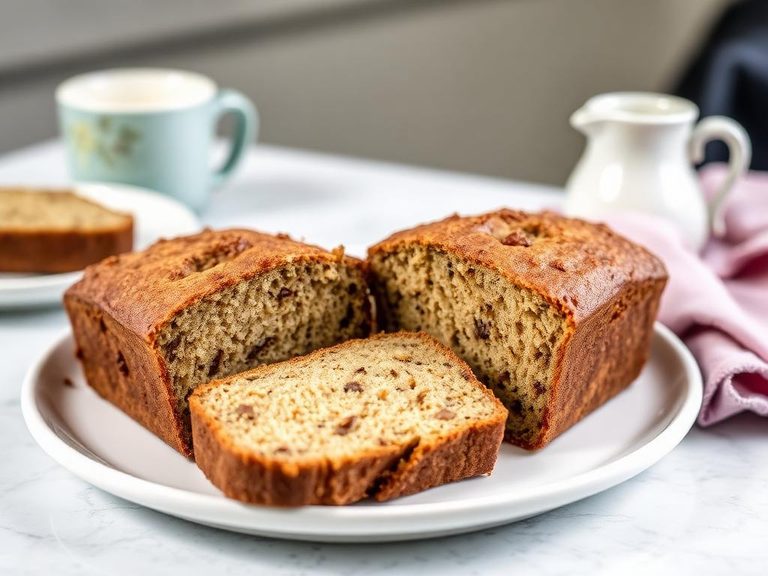
🌍 Where it's eaten
💡 Did you know?
Soft red winter wheat gets its name from its planting season (winter) and its reddish-brown kernel color; it's the dominant wheat class grown in the eastern United States.
Full nutrition (USDA data · scales with serving)
| Water | 12.2 g |
| Energy | 331 kcal |
| Energy | 1385 kj |
| Protein | 10.3 g |
| Total lipid (fat) | 1.6 g |
| Ash | 1.7 g |
| Carbohydrate, by difference | 74.2 g |
| Fiber, total dietary | 12.5 g |
| Total Sugars | 0.41 g |
| Calcium, Ca | 27.0 mg |
| Iron, Fe | 3.2 mg |
| Magnesium, Mg | 126 mg |
| Phosphorus, P | 493 mg |
| Potassium, K | 397 mg |
| Sodium, Na | 2.0 mg |
| Zinc, Zn | 2.6 mg |
| Copper, Cu | 0.45 mg |
| Manganese, Mn | 4.4 mg |
| Vitamin C, total ascorbic acid | 0.00 mg |
| Thiamin | 0.39 mg |
| Riboflavin | 0.10 mg |
| Niacin | 4.8 mg |
| Pantothenic acid | 0.85 mg |
| Vitamin B-6 | 0.27 mg |
| Folate, total | 41.0 ug |
| Folic acid | 0.00 ug |
| Folate, food | 41.0 ug |
| Folate, DFE | 41.0 ug |
| Vitamin B-12 | 0.00 ug |
| Vitamin B-12, added | 0.00 ug |
| Vitamin A, RAE | 0.00 ug |
| Retinol | 0.00 ug |
| Vitamin A, IU | 0.00 iu |
| Vitamin E (alpha-tocopherol) | 1.0 mg |
| Vitamin E, added | 0.00 mg |
| Vitamin D (D2 + D3), International Units | 0.00 iu |
| Vitamin D (D2 + D3) | 0.00 ug |
| Alcohol, ethyl | 0.00 g |
Fat & fatty acid profile (per 100g)
| Fatty acids, total saturated | 0.29 g |
| SFA 14:0 | 0.00 g |
| SFA 16:0 | 0.27 g |
| SFA 18:0 | 0.01 g |
| Fatty acids, total monounsaturated | 0.18 g |
| MUFA 16:1 | 0.01 g |
| MUFA 18:1 | 0.17 g |
| Fatty acids, total polyunsaturated | 0.66 g |
| PUFA 18:2 | 0.63 g |
| PUFA 18:3 | 0.03 g |
| Cholesterol | 0.00 mg |
Amino acid profile (per 100g)
| Threonine | 0.34 g |
| Isoleucine | 0.40 g |
| Leucine | 0.76 g |
| Lysine | 0.32 g |
| Methionine | 0.17 g |
| Cystine | 0.30 g |
| Phenylalanine | 0.51 g |
| Tyrosine | 0.33 g |
| Valine | 0.50 g |
| Arginine | 0.52 g |
| Histidine | 0.26 g |
| Alanine | 0.41 g |
| Aspartic acid | 0.56 g |
| Glutamic acid | 3.7 g |
| Glycine | 0.46 g |
| Proline | 1.2 g |
| Serine | 0.54 g |
FAQ
How is soft red winter wheat different from bread flour?
It has significantly lower protein (gluten) content, around 8-10% versus 12-14% in bread flour. This makes it ideal for tender baked goods like cakes and pastries, not chewy breads.
Can I substitute it for all-purpose flour?
Yes, it is often milled and sold as all-purpose flour in the eastern U.S. However, national all-purpose flour is typically a blend of hard red and soft white wheats for more consistent performance.
Why is it called 'winter' wheat?
It is planted in the fall, goes dormant under winter snow, and is harvested in early summer. This growth cycle helps it develop its characteristic soft texture.
Nutrient density (calculated · NRF9.3)
Nutrient Rich Foods index: beneficial nutrients (protein, fiber, vitamins, minerals) minus saturated fat, added sugar & sodium, per 100 kcal.
NRF9.3 index — Fulgoni, Keast & Drewnowski, 2009. Computed from USDA nutrients.
Weight-loss friendliness (composite index)
Energy density 3.31 kcal/g · 13% calories from protein · 12.5 g fiber · 0.4 g sugar per 100 g.
Composite of energy density (Rolls et al., 1999), protein & fiber satiety, minus sugar. A calculated heuristic — ranks satiety-per-calorie, not a clinical measure.
Dietary load (calculated from USDA values)
Potential renal acid load. Positive = acid-forming, negative = alkaline-forming.
Sodium-to-potassium ratio: 0.01 (lower is better — aim for ≤ 1)
Sodium:potassium per WHO potassium guidance. Computed from USDA nutrients.