

Turnover or hot pocket, meatless
Common food
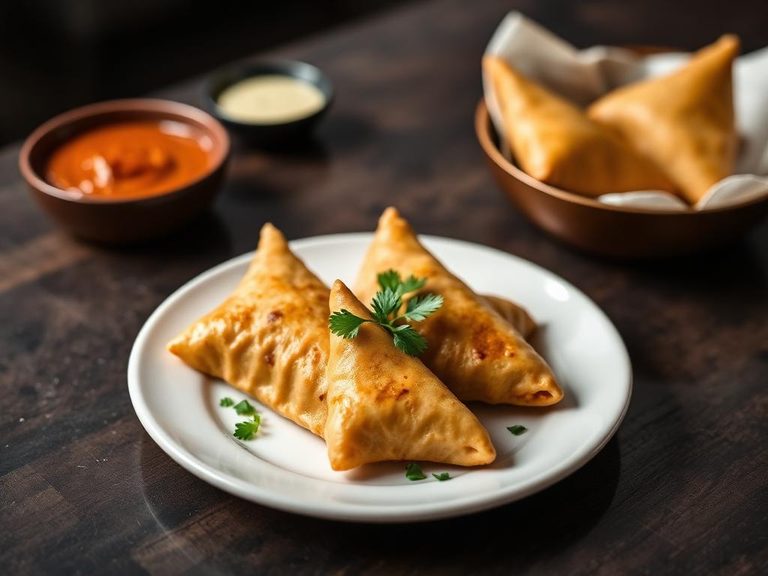
A savory, hand-held pastry pocket filled with a meatless blend, typically featuring vegetables like spinach, broccoli, and cheese in a creamy sauce, all encased in a flaky, golden-brown crust. The texture is a delightful contrast between the crisp, buttery exterior and the soft, warm, savory filling. Nutritionally, it's a moderate-calorie option that provides a decent source of carbohydrates for energy and a modest amount of protein, especially if cheese-based.
Calorie split: 10% protein · 54% carbs · 35% fat
↓ Full nutrition💚 Why it's loved
People love it for the ultimate comfort-food combination of flaky pastry and hot, savory filling, making it a nostalgic and satisfying quick meal. Its versatility shines as a grab-and-go lunch, a post-workout snack, or a simple dinner when paired with a side salad.
⚠️ Watch-outs & how to enjoy it better
The refined flour crust and creamy filling can lead to a rapid blood-sugar spike, and it may be high in sodium and saturated fat depending on the brand. To counteract this, pair it with a fiber-rich side like a large green salad or steamed vegetables, and be mindful of portion size, opting for one pocket as part of a balanced plate.
Key benefits
- Convenient, portable meal or snack
- Provides quick energy from carbohydrates
- Offers a meatless protein source (from cheese/legumes)
- Satisfying savory flavor profile
- Long shelf life when frozen
🍽️ Popular dishes
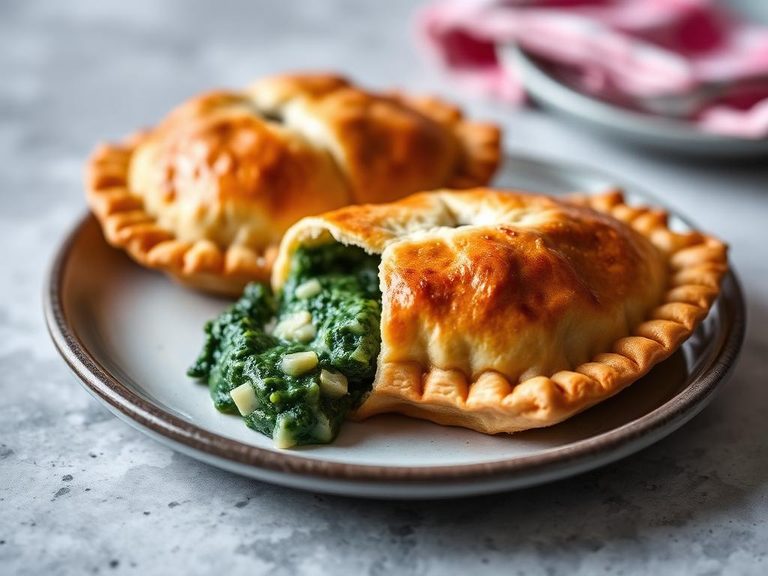
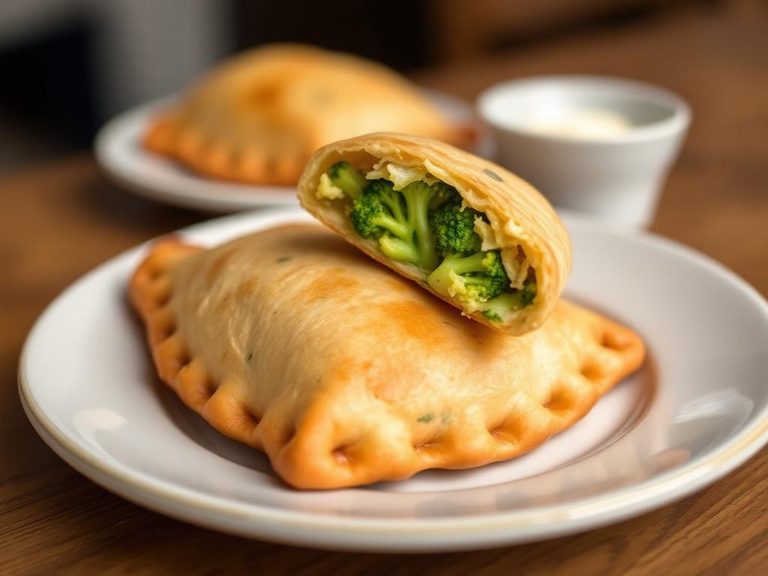
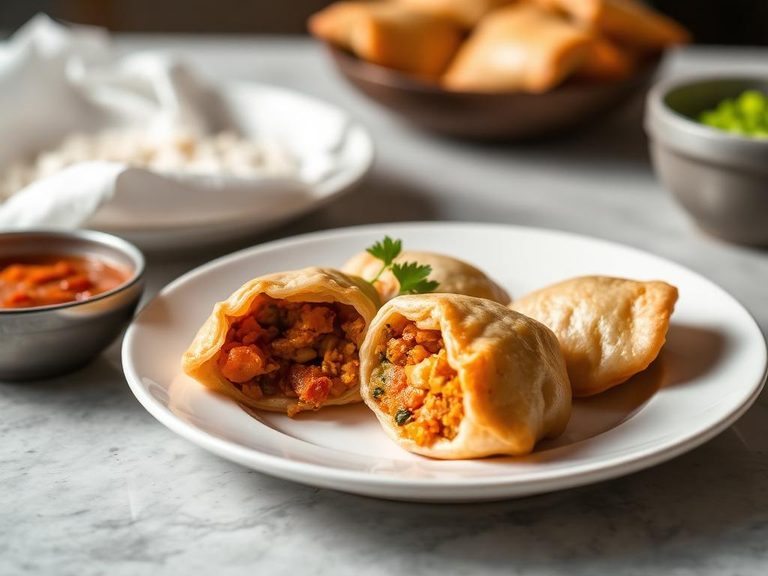
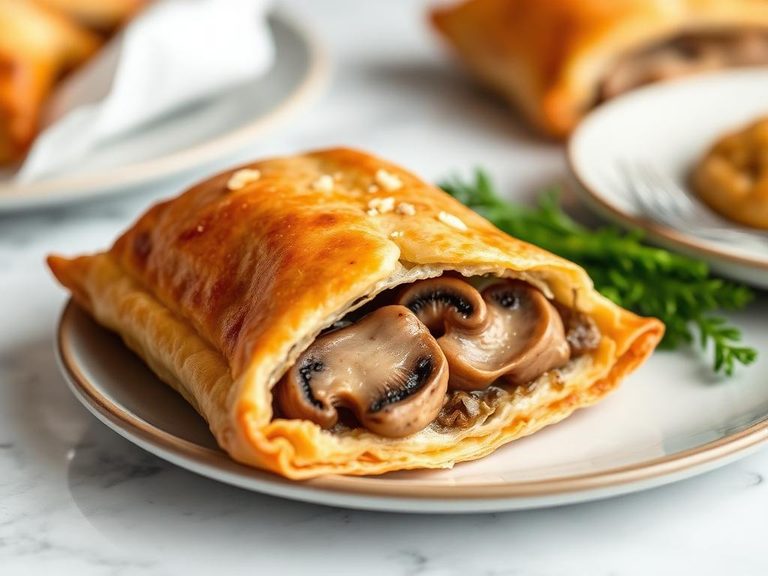
🌍 Where it's eaten
💡 Did you know?
The modern commercial 'Hot Pocket' was inspired by a Greek dish called 'pita,' and its name was trademarked in 1983 after a successful test market in Los Angeles.
Full nutrition (USDA data · scales with serving)
| Water | 58.3 g |
| Energy | 198 kcal |
| Protein | 5.1 g |
| Total lipid (fat) | 7.8 g |
| Carbohydrate, by difference | 27.0 g |
| Fiber, total dietary | 1.6 g |
| Total Sugars | 3.2 g |
| Calcium, Ca | 97.0 mg |
| Iron, Fe | 1.7 mg |
| Magnesium, Mg | 16.0 mg |
| Phosphorus, P | 69.0 mg |
| Potassium, K | 126 mg |
| Sodium, Na | 504 mg |
| Zinc, Zn | 0.52 mg |
| Copper, Cu | 0.08 mg |
| Selenium, Se | 9.6 ug |
| Vitamin C, total ascorbic acid | 4.5 mg |
| Thiamin | 0.24 mg |
| Riboflavin | 0.13 mg |
| Niacin | 2.4 mg |
| Vitamin B-6 | 0.07 mg |
| Folate, total | 54.0 ug |
| Folic acid | 39.0 ug |
| Folate, food | 15.0 ug |
| Folate, DFE | 81.0 ug |
| Choline, total | 9.2 mg |
| Vitamin B-12 | 0.02 ug |
| Vitamin B-12, added | 0.00 ug |
| Vitamin A, RAE | 15.0 ug |
| Retinol | 4.0 ug |
| Carotene, beta | 109 ug |
| Carotene, alpha | 24.0 ug |
| Cryptoxanthin, beta | 0.00 ug |
| Lycopene | 609 ug |
| Lutein + zeaxanthin | 49.0 ug |
| Vitamin E (alpha-tocopherol) | 0.74 mg |
| Vitamin E, added | 0.00 mg |
| Vitamin D (D2 + D3) | 0.00 ug |
| Vitamin K (phylloquinone) | 5.5 ug |
| Alcohol, ethyl | 0.00 g |
| Caffeine | 0.00 mg |
| Theobromine | 0.00 mg |
Fat & fatty acid profile (per 100g)
| Fatty acids, total saturated | 2.1 g |
| SFA 4:0 | 0.02 g |
| SFA 6:0 | 0.01 g |
| SFA 8:0 | 0.01 g |
| SFA 10:0 | 0.01 g |
| SFA 12:0 | 0.03 g |
| SFA 14:0 | 0.10 g |
| SFA 16:0 | 1.2 g |
| SFA 18:0 | 0.62 g |
| Fatty acids, total monounsaturated | 3.0 g |
| MUFA 16:1 | 0.08 g |
| MUFA 18:1 | 2.9 g |
| MUFA 20:1 | 0.04 g |
| MUFA 22:1 | 0.00 g |
| Fatty acids, total polyunsaturated | 2.0 g |
| PUFA 18:2 | 1.8 g |
| PUFA 18:3 | 0.20 g |
| PUFA 18:4 | 0.00 g |
| PUFA 20:4 | 0.00 g |
| PUFA 20:5 n-3 (EPA) | 0.00 g |
| PUFA 22:5 n-3 (DPA) | 0.00 g |
| PUFA 22:6 n-3 (DHA) | 0.00 g |
| Cholesterol | 2.0 mg |
FAQ
Are meatless turnovers a good source of protein?
They provide a modest amount of protein, typically 5-7 grams per 100g, primarily from cheese or legumes in the filling. For a significant protein boost, pair it with a side of Greek yogurt, beans, or a protein shake.
How can I make a meatless turnover healthier at home?
Use whole-wheat or whole-grain pastry dough, fill it with a mix of vegetables (like spinach, mushrooms, and bell peppers) and a moderate amount of cheese, and bake instead of frying to reduce fat content.
Why do they sometimes have a soggy bottom?
This is often due to steam from the moist filling being trapped. To prevent it, ensure your filling isn't overly wet, pre-bake the bottom crust slightly (blind bake), or place the turnover on a preheated baking sheet.
Nutrient density (calculated · NRF9.3)
Nutrient Rich Foods index: beneficial nutrients (protein, fiber, vitamins, minerals) minus saturated fat, added sugar & sodium, per 100 kcal.
NRF9.3 index — Fulgoni, Keast & Drewnowski, 2009. Computed from USDA nutrients.
Weight-loss friendliness (composite index)
Energy density 1.98 kcal/g · 10% calories from protein · 1.6 g fiber · 3.2 g sugar per 100 g.
Composite of energy density (Rolls et al., 1999), protein & fiber satiety, minus sugar. A calculated heuristic — ranks satiety-per-calorie, not a clinical measure.
Dietary load (calculated from USDA values)
Potential renal acid load. Positive = acid-forming, negative = alkaline-forming.
Sodium-to-potassium ratio: 4.00 (lower is better — aim for ≤ 1)
Sodium:potassium per WHO potassium guidance. Computed from USDA nutrients.