

Turnover or hot pocket, NFS
Common food
A turnover or hot pocket is a savory, hand-held pastry with a flaky or crisp crust encasing a hot, often saucy filling of meat, cheese, and vegetables. The texture contrasts a shattering, buttery exterior with a molten, cohesive interior. Nutritionally, it's a calorie-dense package where fat provides over a third of the energy, alongside a moderate protein boost from the filling.
Calorie split: 16% protein · 43% carbs · 41% fat
↓ Full nutrition💚 Why it's loved
People love the satisfying contrast of a hot, flavorful, gooey filling encased in a crisp, flaky shell—it's the ultimate comfort food. Its handheld nature makes it a beloved, no-mess option for busy lunches, game days, and late-night snacks.
⚠️ Watch-outs & how to enjoy it better
The high fat and refined carbohydrate content can lead to blood-sugar spikes and energy crashes, and the sodium level is often very high. Those watching sodium or saturated fat should opt for smaller portions and pair with a fresh, vinegar-dressed salad to blunt the glycemic impact.
Key benefits
- Provides a quick, portable source of energy and protein
- Offers a convenient way to combine protein, carbs, and fat in one item
- The crust can be a source of quick-digesting carbohydrates
- Fillings can include vegetables, adding some fiber and micronutrients
🍽️ Popular dishes
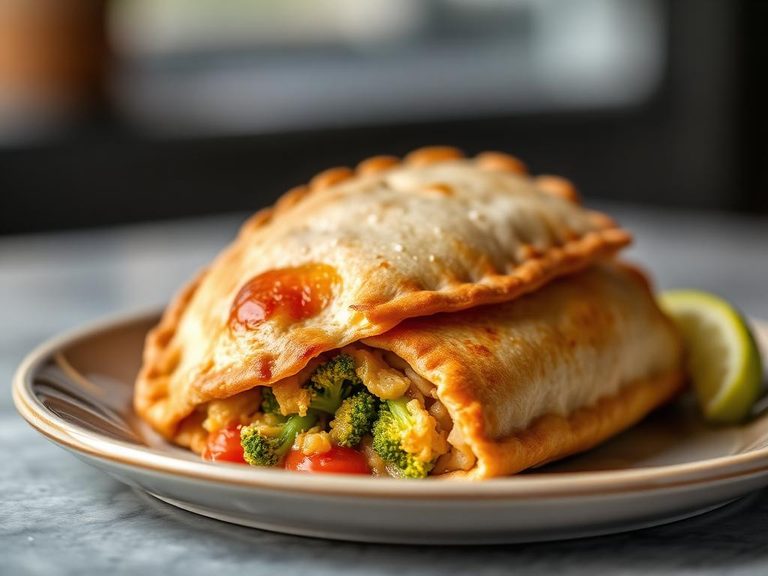
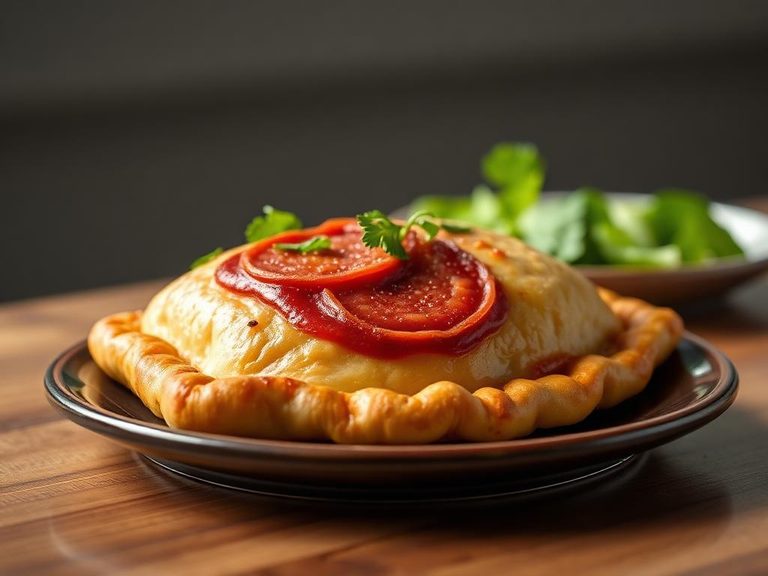
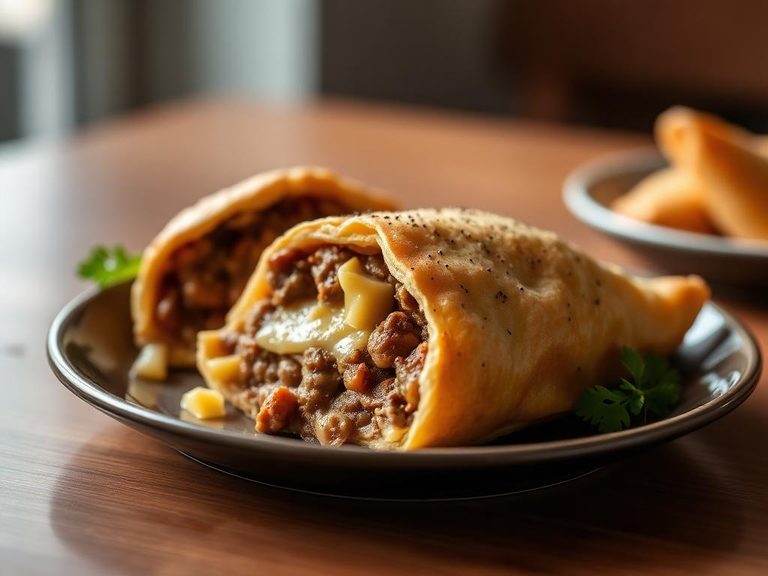
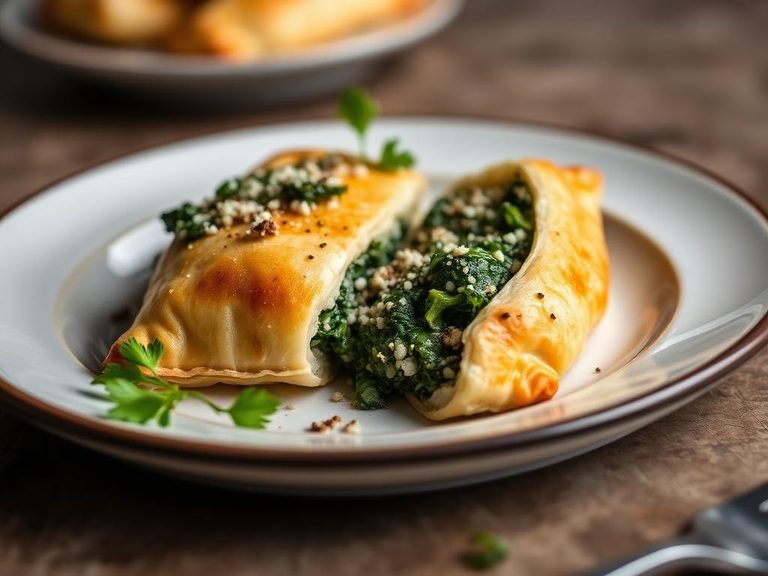
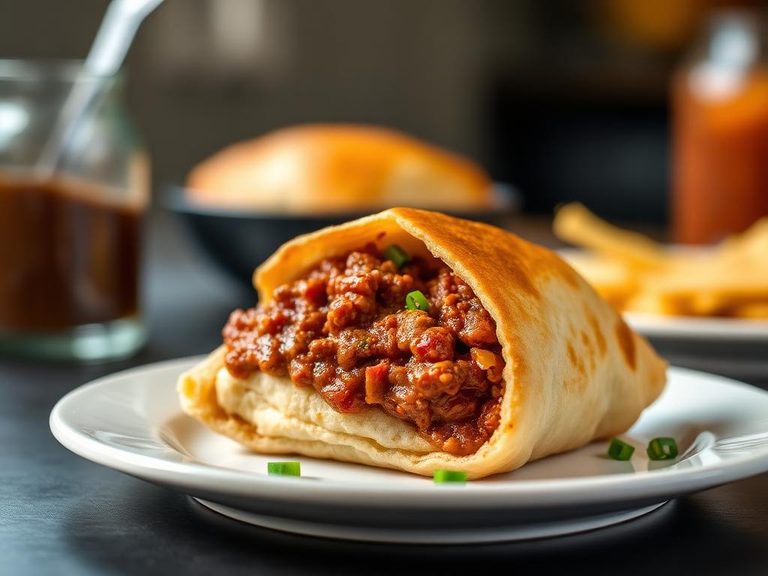
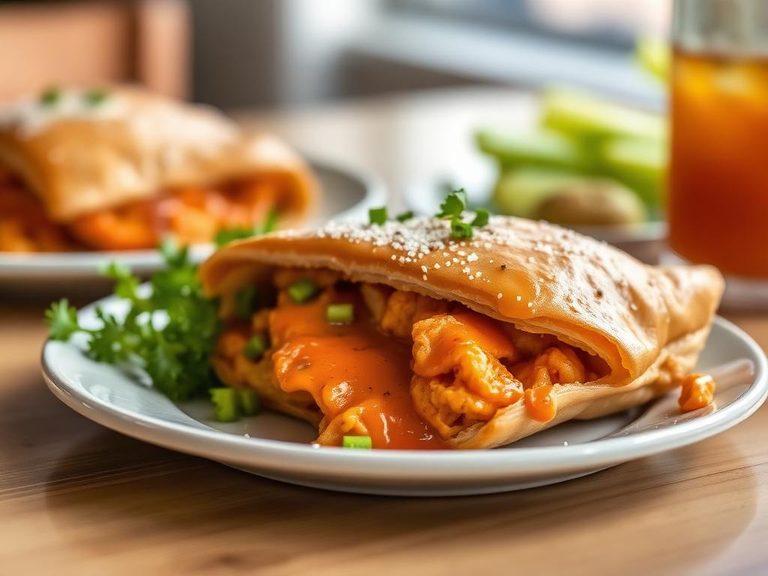
🌍 Where it's eaten
💡 Did you know?
The modern frozen hot pocket was invented by two Iranian-American brothers in the 1980s who were inspired by the traditional meat-filled pastries of their homeland.
Full nutrition (USDA data · scales with serving)
| Water | 47.6 g |
| Energy | 260 kcal |
| Protein | 10.3 g |
| Total lipid (fat) | 11.9 g |
| Carbohydrate, by difference | 27.9 g |
| Fiber, total dietary | 1.6 g |
| Total Sugars | 3.9 g |
| Calcium, Ca | 218 mg |
| Iron, Fe | 1.9 mg |
| Magnesium, Mg | 22.0 mg |
| Phosphorus, P | 169 mg |
| Potassium, K | 157 mg |
| Sodium, Na | 536 mg |
| Zinc, Zn | 1.3 mg |
| Copper, Cu | 0.09 mg |
| Selenium, Se | 16.6 ug |
| Vitamin C, total ascorbic acid | 0.40 mg |
| Thiamin | 0.25 mg |
| Riboflavin | 0.20 mg |
| Niacin | 3.3 mg |
| Vitamin B-6 | 0.11 mg |
| Folate, total | 58.0 ug |
| Folic acid | 38.0 ug |
| Folate, food | 19.0 ug |
| Folate, DFE | 84.0 ug |
| Choline, total | 15.4 mg |
| Vitamin B-12 | 0.39 ug |
| Vitamin B-12, added | 0.00 ug |
| Vitamin A, RAE | 44.0 ug |
| Retinol | 38.0 ug |
| Carotene, beta | 73.0 ug |
| Carotene, alpha | 0.00 ug |
| Cryptoxanthin, beta | 0.00 ug |
| Lycopene | 2381 ug |
| Lutein + zeaxanthin | 52.0 ug |
| Vitamin E (alpha-tocopherol) | 0.76 mg |
| Vitamin E, added | 0.00 mg |
| Vitamin D (D2 + D3) | 0.20 ug |
| Vitamin K (phylloquinone) | 4.3 ug |
| Alcohol, ethyl | 0.00 g |
| Caffeine | 0.00 mg |
| Theobromine | 0.00 mg |
Fat & fatty acid profile (per 100g)
| Fatty acids, total saturated | 4.8 g |
| SFA 4:0 | 0.08 g |
| SFA 6:0 | 0.06 g |
| SFA 8:0 | 0.04 g |
| SFA 10:0 | 0.10 g |
| SFA 12:0 | 0.12 g |
| SFA 14:0 | 0.46 g |
| SFA 16:0 | 2.5 g |
| SFA 18:0 | 1.3 g |
| Fatty acids, total monounsaturated | 4.2 g |
| MUFA 16:1 | 0.21 g |
| MUFA 18:1 | 4.0 g |
| MUFA 20:1 | 0.05 g |
| MUFA 22:1 | 0.00 g |
| Fatty acids, total polyunsaturated | 1.7 g |
| PUFA 18:2 | 1.5 g |
| PUFA 18:3 | 0.13 g |
| PUFA 18:4 | 0.00 g |
| PUFA 20:4 | 0.02 g |
| PUFA 20:5 n-3 (EPA) | 0.00 g |
| PUFA 22:5 n-3 (DPA) | 0.00 g |
| PUFA 22:6 n-3 (DHA) | 0.00 g |
| Cholesterol | 19.0 mg |
FAQ
Are turnovers and hot pockets the same thing?
Not exactly. A turnover is a general term for a filled pastry (sweet or savory) folded into a half-moon shape. A hot pocket is a specific, trademarked brand of frozen turnover with a distinctive rectangular shape and often a crisping sleeve for microwave cooking.
How can I make a hot pocket healthier at home?
Use whole-wheat or phyllo dough, fill with lean proteins like chicken or turkey, load up on vegetables, and use lower-fat cheeses. Baking instead of microwaving improves texture without added fat.
Why do they sometimes get so hot inside?
The dense, insulated filling traps steam, creating pockets of superheated liquid (especially if it contains cheese or sauce). This is why letting it rest for a minute after cooking is crucial to avoid burns.
Nutrient density (calculated · NRF9.3)
Nutrient Rich Foods index: beneficial nutrients (protein, fiber, vitamins, minerals) minus saturated fat, added sugar & sodium, per 100 kcal.
NRF9.3 index — Fulgoni, Keast & Drewnowski, 2009. Computed from USDA nutrients.
Weight-loss friendliness (composite index)
Energy density 2.60 kcal/g · 16% calories from protein · 1.6 g fiber · 3.9 g sugar per 100 g.
Composite of energy density (Rolls et al., 1999), protein & fiber satiety, minus sugar. A calculated heuristic — ranks satiety-per-calorie, not a clinical measure.
Dietary load (calculated from USDA values)
Potential renal acid load. Positive = acid-forming, negative = alkaline-forming.
Sodium-to-potassium ratio: 3.41 (lower is better — aim for ≤ 1)
Sodium:potassium per WHO potassium guidance. Computed from USDA nutrients.