

Turnover or hot pocket, pizza pocket, meat
Common food
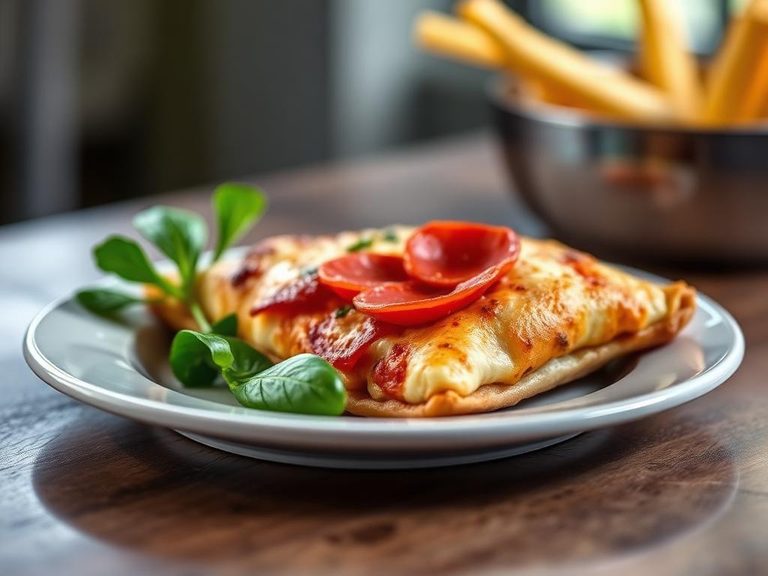
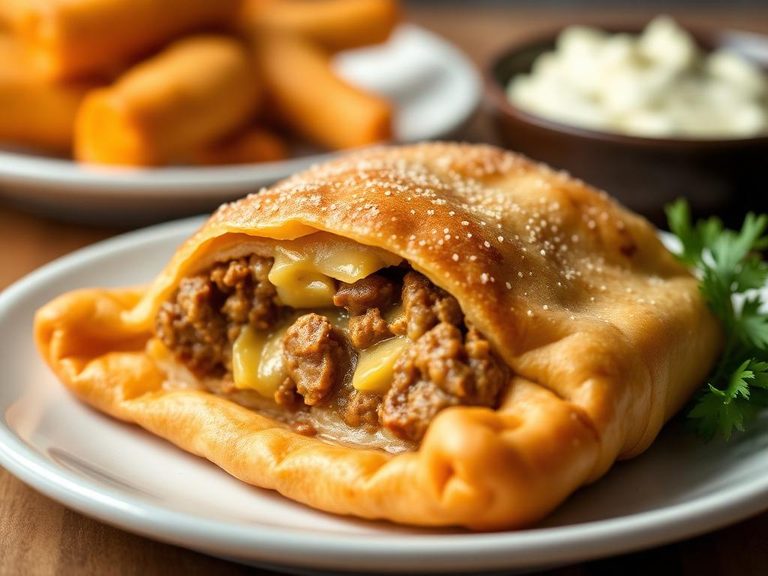
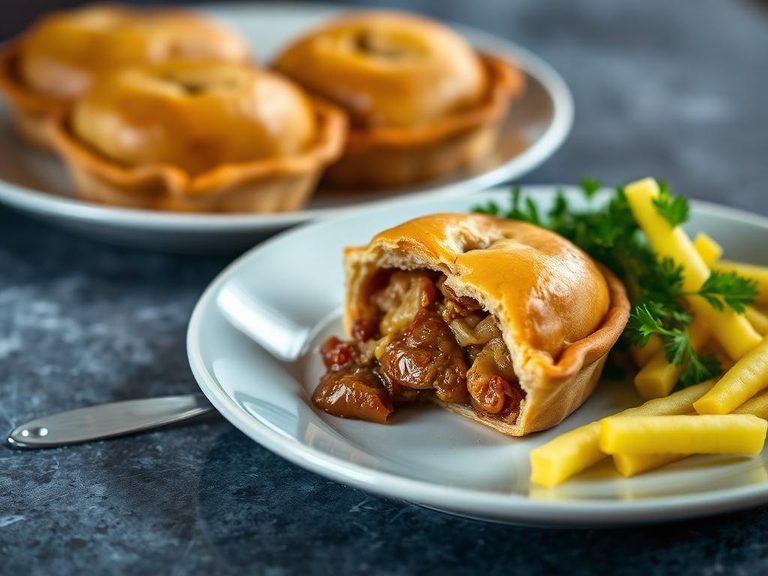
A turnover or hot pocket is a savory, hand-held pastry with a flaky, golden-brown crust encasing a molten core of melted cheese, seasoned tomato sauce, and savory meats like pepperoni or sausage. The experience is a satisfying contrast of a crisp, buttery exterior yielding to a hot, gooey, and intensely flavorful filling. Nutritionally, it's a calorie-dense, energy-rich snack or meal, delivering a solid protein punch alongside a significant carbohydrate load from the refined flour crust.
Calorie split: 16% protein · 43% carbs · 41% fat
↓ Full nutrition💚 Why it's loved
People love it for the ultimate comfort-food combination: the satisfying crunch of the pastry shell giving way to a hot, cheesy, and savory interior. It's a nostalgic, versatile meal that can be customized with countless fillings and enjoyed as a quick lunch, game-day snack, or late-night bite.
⚠️ Watch-outs & how to enjoy it better
The high sodium, refined carbohydrates, and saturated fat content can contribute to blood-sugar spikes and are not ideal for those monitoring heart health or blood pressure. To counteract this, pair it with a large, fiber-rich side salad or steamed vegetables to slow digestion, and practice strict portion control by enjoying just one as part of a balanced meal.
Key benefits
- Provides a quick, convenient source of energy and calories
- Offers a substantial amount of protein from cheese and meat fillings
- Delivers satisfying fat content for flavor and satiety
- Portable and requires no preparation, ideal for on-the-go meals
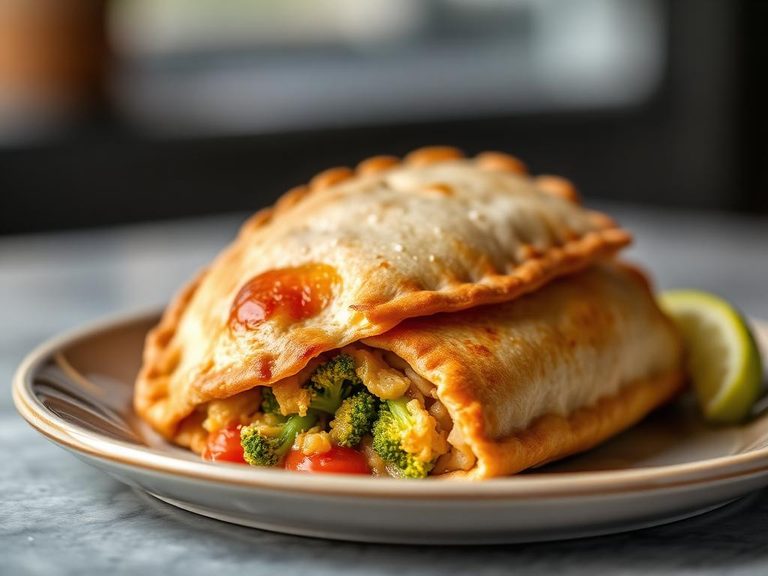
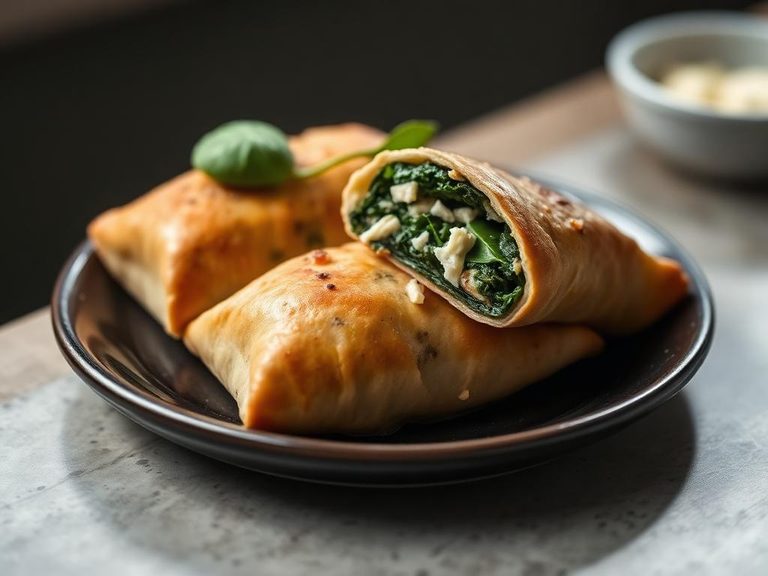
- Can be a vehicle for vegetables if filled with spinach, peppers, or mushrooms
🍽️ Popular dishes
🌍 Where it's eaten
💡 Did you know?
The modern 'Hot Pocket' was inspired by the ancient Middle Eastern and Central Asian meat-filled pastries called 'bourekas' or 'sambusas,' which traveled trade routes for centuries before being adapted into a microwaveable format in the 1980s.
Full nutrition (USDA data · scales with serving)
| Water | 47.6 g |
| Energy | 260 kcal |
| Protein | 10.3 g |
| Total lipid (fat) | 11.9 g |
| Carbohydrate, by difference | 27.9 g |
| Fiber, total dietary | 1.6 g |
| Total Sugars | 3.9 g |
| Calcium, Ca | 218 mg |
| Iron, Fe | 1.9 mg |
| Magnesium, Mg | 22.0 mg |
| Phosphorus, P | 169 mg |
| Potassium, K | 157 mg |
| Sodium, Na | 536 mg |
| Zinc, Zn | 1.3 mg |
| Copper, Cu | 0.09 mg |
| Selenium, Se | 16.6 ug |
| Vitamin C, total ascorbic acid | 0.40 mg |
| Thiamin | 0.25 mg |
| Riboflavin | 0.20 mg |
| Niacin | 3.3 mg |
| Vitamin B-6 | 0.11 mg |
| Folate, total | 58.0 ug |
| Folic acid | 38.0 ug |
| Folate, food | 19.0 ug |
| Folate, DFE | 84.0 ug |
| Choline, total | 15.4 mg |
| Vitamin B-12 | 0.39 ug |
| Vitamin B-12, added | 0.00 ug |
| Vitamin A, RAE | 44.0 ug |
| Retinol | 38.0 ug |
| Carotene, beta | 73.0 ug |
| Carotene, alpha | 0.00 ug |
| Cryptoxanthin, beta | 0.00 ug |
| Lycopene | 2381 ug |
| Lutein + zeaxanthin | 52.0 ug |
| Vitamin E (alpha-tocopherol) | 0.76 mg |
| Vitamin E, added | 0.00 mg |
| Vitamin D (D2 + D3) | 0.20 ug |
| Vitamin K (phylloquinone) | 4.3 ug |
| Alcohol, ethyl | 0.00 g |
| Caffeine | 0.00 mg |
| Theobromine | 0.00 mg |
Fat & fatty acid profile (per 100g)
| Fatty acids, total saturated | 4.8 g |
| SFA 4:0 | 0.08 g |
| SFA 6:0 | 0.06 g |
| SFA 8:0 | 0.04 g |
| SFA 10:0 | 0.10 g |
| SFA 12:0 | 0.12 g |
| SFA 14:0 | 0.46 g |
| SFA 16:0 | 2.5 g |
| SFA 18:0 | 1.3 g |
| Fatty acids, total monounsaturated | 4.2 g |
| MUFA 16:1 | 0.21 g |
| MUFA 18:1 | 4.0 g |
| MUFA 20:1 | 0.05 g |
| MUFA 22:1 | 0.00 g |
| Fatty acids, total polyunsaturated | 1.7 g |
| PUFA 18:2 | 1.5 g |
| PUFA 18:3 | 0.13 g |
| PUFA 18:4 | 0.00 g |
| PUFA 20:4 | 0.02 g |
| PUFA 20:5 n-3 (EPA) | 0.00 g |
| PUFA 22:5 n-3 (DPA) | 0.00 g |
| PUFA 22:6 n-3 (DHA) | 0.00 g |
| Cholesterol | 19.0 mg |
FAQ
Can I make a healthier version at home?
Absolutely. Use whole-wheat or phyllo dough for the crust, fill with lean proteins like ground turkey or chicken, load up on vegetables, and use part-skim mozzarella. Baking instead of microwaving gives a crispier, less soggy result.
Why does the filling sometimes get so hot it burns my mouth?
The dense, moist filling (especially cheese and sauce) retains heat much longer than the crust. The steam trapped inside creates pockets of superheated liquid. Always let it rest for 2-3 minutes after cooking, and test the filling temperature carefully before taking a big bite.
Are these a good source of fiber?
Typically, no. The standard version made with refined white flour crust has very little fiber (around 1.6g per 100g). To boost fiber, look for versions with whole-grain crusts or pair it with a high-fiber side like a bean salad or raw veggies.
Nutrient density (calculated · NRF9.3)
Nutrient Rich Foods index: beneficial nutrients (protein, fiber, vitamins, minerals) minus saturated fat, added sugar & sodium, per 100 kcal.
NRF9.3 index — Fulgoni, Keast & Drewnowski, 2009. Computed from USDA nutrients.
Weight-loss friendliness (composite index)
Energy density 2.60 kcal/g · 16% calories from protein · 1.6 g fiber · 3.9 g sugar per 100 g.
Composite of energy density (Rolls et al., 1999), protein & fiber satiety, minus sugar. A calculated heuristic — ranks satiety-per-calorie, not a clinical measure.
Dietary load (calculated from USDA values)
Potential renal acid load. Positive = acid-forming, negative = alkaline-forming.
Sodium-to-potassium ratio: 3.41 (lower is better — aim for ≤ 1)
Sodium:potassium per WHO potassium guidance. Computed from USDA nutrients.