

Turnover or hot pocket, pizza pocket
Common food
A turnover or hot pocket is a savory hand pie featuring a flaky, baked or fried crust encasing a molten filling of cheese, tomato sauce, and pepperoni or sausage. The texture contrasts a crisp, buttery exterior with a gooey, steaming interior. Nutritionally, it delivers a concentrated source of energy with a moderate protein content per 100g.
Calorie split: 16% protein · 49% carbs · 35% fat
↓ Full nutrition💚 Why it's loved
People love it for the nostalgic, comforting combination of melted cheese and seasoned tomato sauce in a handheld, mess-free form. Its versatility allows for endless filling variations, from classic pepperoni to vegetable medleys, making it a customizable staple for quick meals or snacks.
⚠️ Watch-outs & how to enjoy it better
These can be high in sodium and refined carbohydrates, potentially causing blood-sugar spikes. They often contain common allergens like wheat (gluten) and dairy. To counteract, pair with a side salad or steamed vegetables to add fiber, and opt for a smaller portion with a protein-rich side like Greek yogurt.
Key benefits
- Provides quick, calorie-dense energy
- Offers a convenient, portable meal format
- Contains a moderate amount of protein for muscle maintenance
- Can be a source of calcium from cheese filling
- Shelf-stable and easy to store or transport
🍽️ Popular dishes
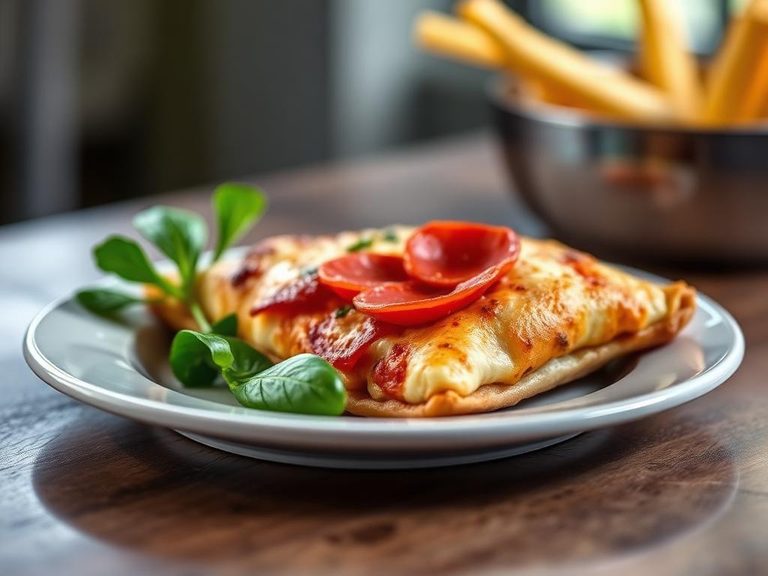
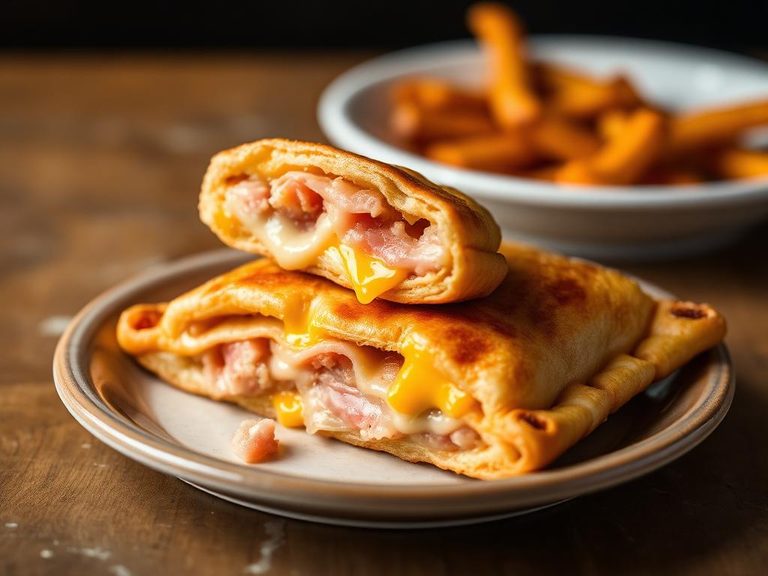
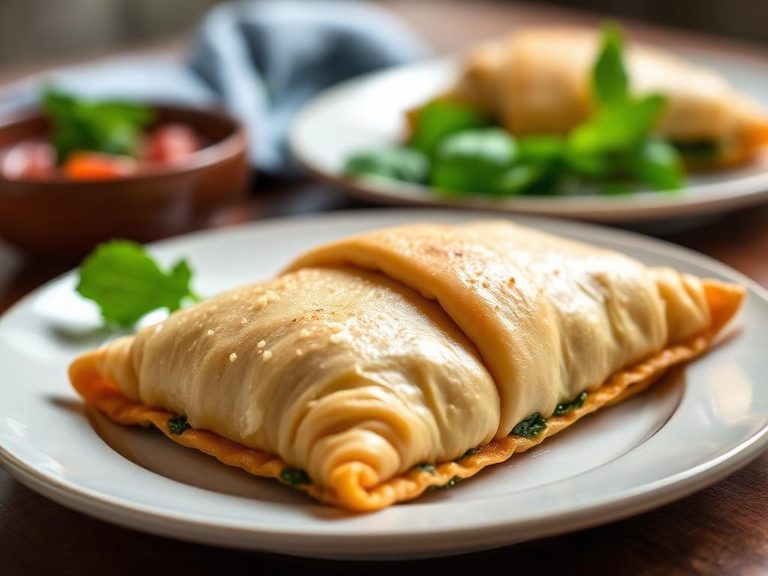
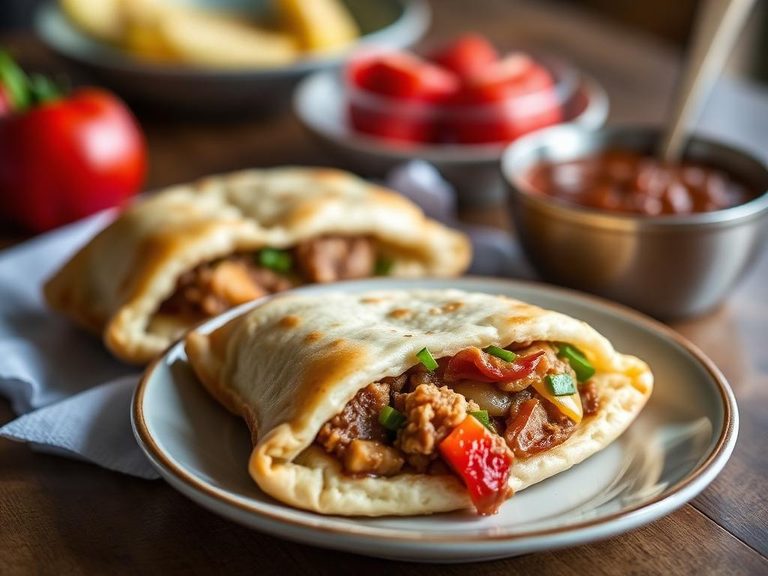
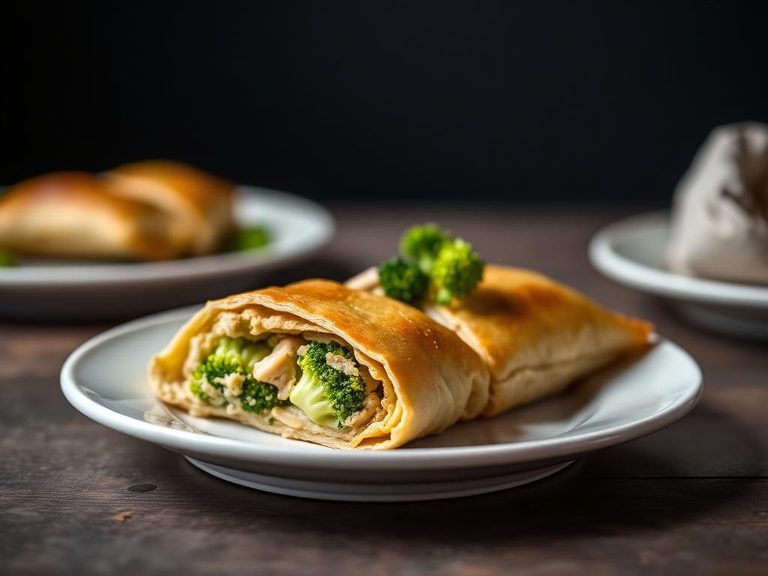
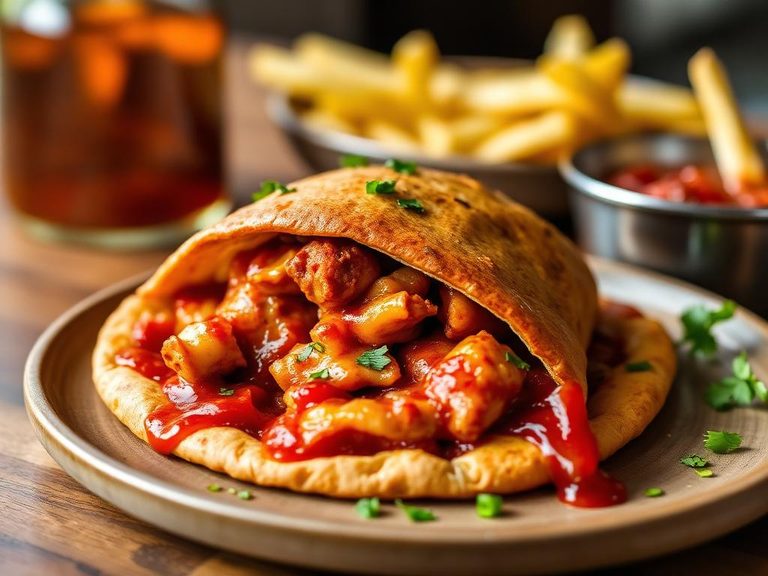
🌍 Where it's eaten
💡 Did you know?
The Hot Pocket brand was inspired by a traditional Middle Eastern pastry called a 'meat pie' and was first marketed in the 1980s as a 'pizza pocket' before the name was changed.
Full nutrition (USDA data · scales with serving)
| Water | 48.9 g |
| Energy | 244 kcal |
| Protein | 9.7 g |
| Total lipid (fat) | 9.6 g |
| Carbohydrate, by difference | 29.7 g |
| Fiber, total dietary | 1.7 g |
| Total Sugars | 4.2 g |
| Calcium, Ca | 231 mg |
| Iron, Fe | 1.9 mg |
| Magnesium, Mg | 22.0 mg |
| Phosphorus, P | 170 mg |
| Potassium, K | 149 mg |
| Sodium, Na | 466 mg |
| Zinc, Zn | 1.2 mg |
| Copper, Cu | 0.09 mg |
| Selenium, Se | 15.8 ug |
| Vitamin C, total ascorbic acid | 0.40 mg |
| Thiamin | 0.25 mg |
| Riboflavin | 0.20 mg |
| Niacin | 3.2 mg |
| Vitamin B-6 | 0.10 mg |
| Folate, total | 61.0 ug |
| Folic acid | 41.0 ug |
| Folate, food | 20.0 ug |
| Folate, DFE | 90.0 ug |
| Choline, total | 13.1 mg |
| Vitamin B-12 | 0.33 ug |
| Vitamin B-12, added | 0.00 ug |
| Vitamin A, RAE | 47.0 ug |
| Retinol | 41.0 ug |
| Carotene, beta | 78.0 ug |
| Carotene, alpha | 0.00 ug |
| Cryptoxanthin, beta | 0.00 ug |
| Lycopene | 2540 ug |
| Lutein + zeaxanthin | 56.0 ug |
| Vitamin E (alpha-tocopherol) | 0.74 mg |
| Vitamin E, added | 0.00 mg |
| Vitamin D (D2 + D3) | 0.10 ug |
| Vitamin K (phylloquinone) | 4.2 ug |
| Alcohol, ethyl | 0.00 g |
| Caffeine | 0.00 mg |
| Theobromine | 0.00 mg |
Fat & fatty acid profile (per 100g)
| Fatty acids, total saturated | 3.9 g |
| SFA 4:0 | 0.08 g |
| SFA 6:0 | 0.07 g |
| SFA 8:0 | 0.04 g |
| SFA 10:0 | 0.10 g |
| SFA 12:0 | 0.12 g |
| SFA 14:0 | 0.42 g |
| SFA 16:0 | 2.0 g |
| SFA 18:0 | 0.97 g |
| Fatty acids, total monounsaturated | 3.1 g |
| MUFA 16:1 | 0.13 g |
| MUFA 18:1 | 3.0 g |
| MUFA 20:1 | 0.04 g |
| MUFA 22:1 | 0.00 g |
| Fatty acids, total polyunsaturated | 1.5 g |
| PUFA 18:2 | 1.3 g |
| PUFA 18:3 | 0.13 g |
| PUFA 18:4 | 0.00 g |
| PUFA 20:4 | 0.01 g |
| PUFA 20:5 n-3 (EPA) | 0.00 g |
| PUFA 22:5 n-3 (DPA) | 0.00 g |
| PUFA 22:6 n-3 (DHA) | 0.00 g |
| Cholesterol | 13.0 mg |
FAQ
Are hot pockets baked or fried?
Most commercial versions are pre-cooked and designed to be heated in a microwave or conventional oven, which crisps the crust without additional frying.
Can I make a healthier version at home?
Yes. Use whole-wheat or whole-grain dough, fill with lean proteins like grilled chicken, and load up on vegetables. Baking instead of frying reduces fat content.
Why do they sometimes get so hot inside?
The filling is dense and retains heat, while the crust acts as an insulator. The microwave heats unevenly, creating superheated pockets of sauce and cheese.
Nutrient density (calculated · NRF9.3)
Nutrient Rich Foods index: beneficial nutrients (protein, fiber, vitamins, minerals) minus saturated fat, added sugar & sodium, per 100 kcal.
NRF9.3 index — Fulgoni, Keast & Drewnowski, 2009. Computed from USDA nutrients.
Weight-loss friendliness (composite index)
Energy density 2.44 kcal/g · 16% calories from protein · 1.7 g fiber · 4.2 g sugar per 100 g.
Composite of energy density (Rolls et al., 1999), protein & fiber satiety, minus sugar. A calculated heuristic — ranks satiety-per-calorie, not a clinical measure.
Dietary load (calculated from USDA values)
Potential renal acid load. Positive = acid-forming, negative = alkaline-forming.
Sodium-to-potassium ratio: 3.13 (lower is better — aim for ≤ 1)
Sodium:potassium per WHO potassium guidance. Computed from USDA nutrients.