

Tofu, dried-frozen (koyadofu), prepared with calcium sulfate
Whole food · Legumes and Legume Products

Photo: Wikipedia
Koyadofu is a Japanese dried-frozen tofu with a uniquely spongy, chewy texture that absorbs flavors like a culinary sponge. It's a concentrated source of plant-based protein, packing over 52g per 100g, making it a powerhouse for vegetarian and vegan diets. Its preparation involves freezing and thawing, which creates its signature porous structure, perfect for soaking up broths and sauces.
Calorie split: 41% protein · 6% carbs · 53% fat
↓ Full nutrition💚 Why it's loved
People love koyadofu for its unique, meat-like chewiness and its remarkable ability to soak up the flavors of any broth, sauce, or marinade it's cooked in. It's a staple in Japanese home cooking, valued for its versatility and ability to add satisfying texture to soups, stews, and stir-fries.
⚠️ Watch-outs & how to enjoy it better
Its dense, chewy texture can be off-putting to those accustomed to softer tofu varieties, and it may require longer cooking times to fully rehydrate and tenderize. It's also a soy-based product, making it unsuitable for those with soy allergies, and its high protein content can be heavy for some digestive systems.
Key benefits
- Extremely high in plant-based protein (52g per 100g)
- Low in carbohydrates and sugar, suitable for low-carb diets
- Good source of calcium when prepared with calcium sulfate
- Versatile texture that absorbs flavors deeply
- Long shelf life when stored frozen or dried
🍽️ Popular dishes
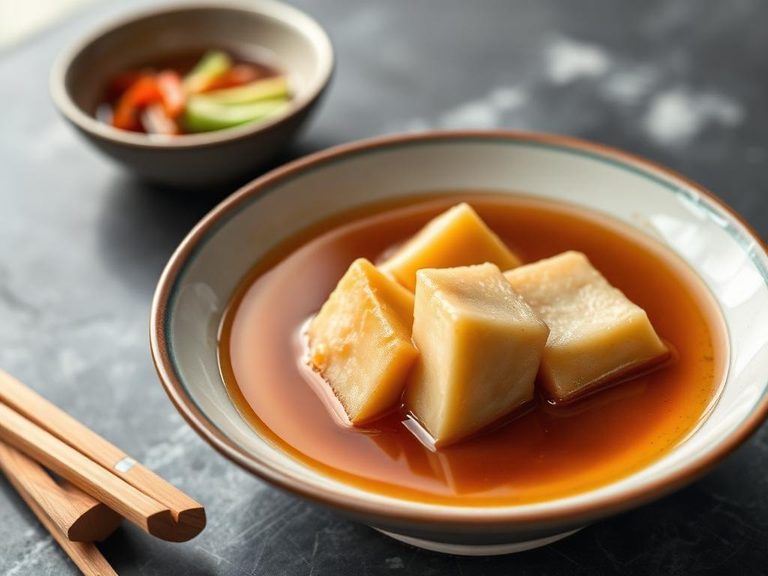
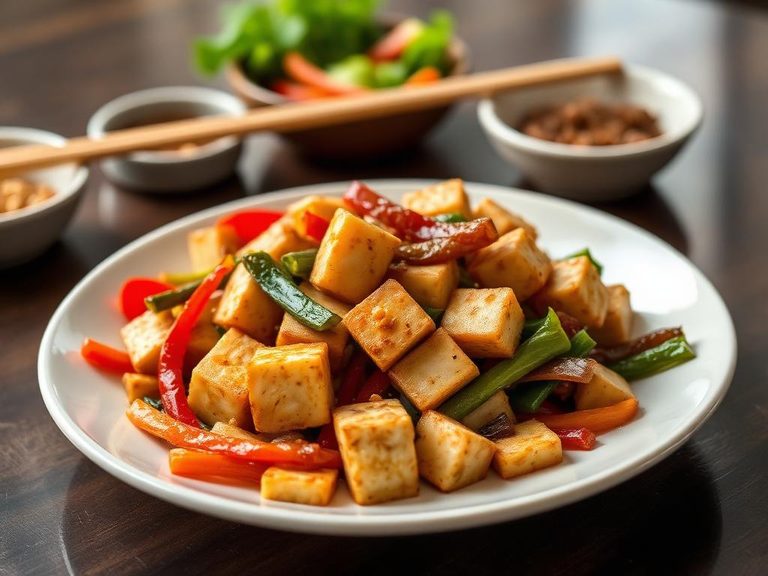
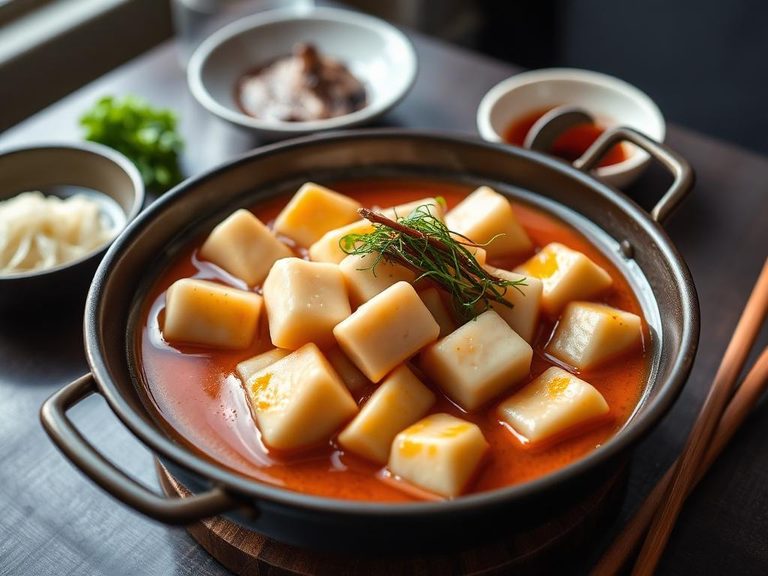
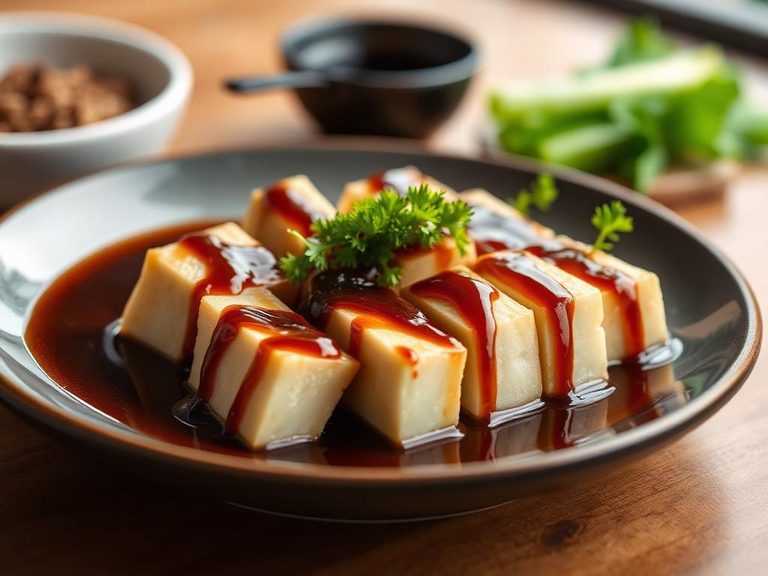
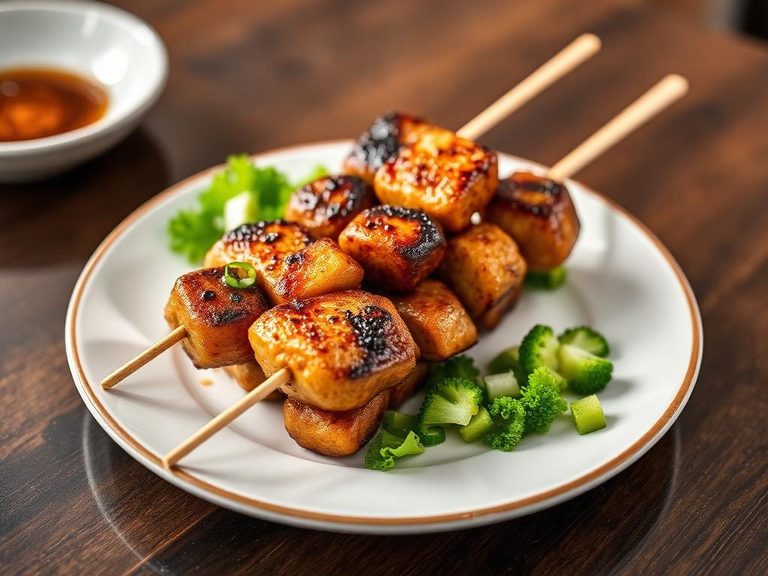
🌍 Where it's eaten
💡 Did you know?
Koyadofu is traditionally made by freezing tofu, which causes the water inside to expand and create a network of tiny holes; when thawed, these holes remain, giving it its signature sponge-like texture that can absorb up to 10 times its weight in liquid.
Full nutrition (USDA data · scales with serving)
| Water | 5.8 g |
| Energy | 470 kcal |
| Energy | 1965 kj |
| Protein | 52.4 g |
| Total lipid (fat) | 30.3 g |
| Ash | 3.1 g |
| Carbohydrate, by difference | 8.3 g |
| Fiber, total dietary | 1.2 g |
| Calcium, Ca | 2134 mg |
| Iron, Fe | 9.7 mg |
| Magnesium, Mg | 181 mg |
| Phosphorus, P | 483 mg |
| Potassium, K | 20.0 mg |
| Sodium, Na | 6.0 mg |
| Zinc, Zn | 4.9 mg |
| Copper, Cu | 1.2 mg |
| Manganese, Mn | 3.7 mg |
| Selenium, Se | 54.3 ug |
| Vitamin C, total ascorbic acid | 0.70 mg |
| Thiamin | 0.49 mg |
| Riboflavin | 0.32 mg |
| Niacin | 1.2 mg |
| Pantothenic acid | 0.41 mg |
| Vitamin B-6 | 0.29 mg |
| Folate, total | 92.0 ug |
| Folic acid | 0.00 ug |
| Folate, food | 92.0 ug |
| Folate, DFE | 92.0 ug |
| Vitamin B-12 | 0.00 ug |
| Vitamin A, RAE | 0.00 ug |
| Retinol | 0.00 ug |
| Vitamin A, IU | 0.00 iu |
| Vitamin D (D2 + D3), International Units | 0.00 iu |
| Vitamin D (D2 + D3) | 0.00 ug |
Fat & fatty acid profile (per 100g)
| Fatty acids, total saturated | 4.4 g |
| SFA 14:0 | 0.08 g |
| SFA 16:0 | 3.2 g |
| SFA 18:0 | 1.1 g |
| Fatty acids, total monounsaturated | 6.7 g |
| MUFA 16:1 | 0.08 g |
| MUFA 18:1 | 6.6 g |
| Fatty acids, total polyunsaturated | 17.1 g |
| PUFA 18:2 | 15.1 g |
| PUFA 18:3 | 2.0 g |
| Fatty acids, total trans | 0.00 g |
| Cholesterol | 0.00 mg |
Amino acid profile (per 100g)
| Tryptophan | 0.75 g |
| Threonine | 2.0 g |
| Isoleucine | 2.4 g |
| Leucine | 3.6 g |
| Lysine | 3.2 g |
| Methionine | 0.61 g |
| Cystine | 0.66 g |
| Phenylalanine | 2.3 g |
| Tyrosine | 1.6 g |
| Valine | 2.4 g |
| Arginine | 3.2 g |
| Histidine | 1.4 g |
| Alanine | 2.0 g |
| Aspartic acid | 5.3 g |
| Glutamic acid | 8.3 g |
| Glycine | 1.9 g |
| Proline | 2.6 g |
| Serine | 2.3 g |
FAQ
How do you prepare dried koyadofu?
Soak the dried koyadofu in warm water for 20-30 minutes until it becomes soft and spongy. Squeeze out excess water before cooking, then simmer, stir-fry, or add to soups to absorb flavors.
Is koyadofu the same as regular tofu?
No, koyadofu is a specific type of tofu that has been frozen and thawed, creating a porous, chewy texture. Regular tofu is softer and has a smoother consistency.
Can koyadofu be used in place of meat?
Yes, its dense, chewy texture makes it a popular meat substitute in vegetarian and vegan dishes, especially in stews and stir-fries where it can absorb savory flavors.
How should koyadofu be stored?
Dried koyadofu should be stored in a cool, dry place. Once rehydrated, it should be used immediately or stored in the refrigerator for up to 3 days.
Nutrient density (calculated · NRF9.3)
Nutrient Rich Foods index: beneficial nutrients (protein, fiber, vitamins, minerals) minus saturated fat, added sugar & sodium, per 100 kcal.
NRF9.3 index — Fulgoni, Keast & Drewnowski, 2009. Computed from USDA nutrients.
Weight-loss friendliness (composite index)
Energy density 4.70 kcal/g · 45% calories from protein · 1.2 g fiber · 0.0 g sugar per 100 g.
Composite of energy density (Rolls et al., 1999), protein & fiber satiety, minus sugar. A calculated heuristic — ranks satiety-per-calorie, not a clinical measure.
Dietary load (calculated from USDA values)
Potential renal acid load. Positive = acid-forming, negative = alkaline-forming.
Sodium-to-potassium ratio: 0.30 (lower is better — aim for ≤ 1)
Sodium:potassium per WHO potassium guidance. Computed from USDA nutrients.