

Sushi, topped with tuna
Common food
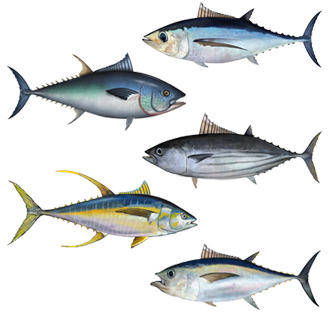
Photo: Wikipedia
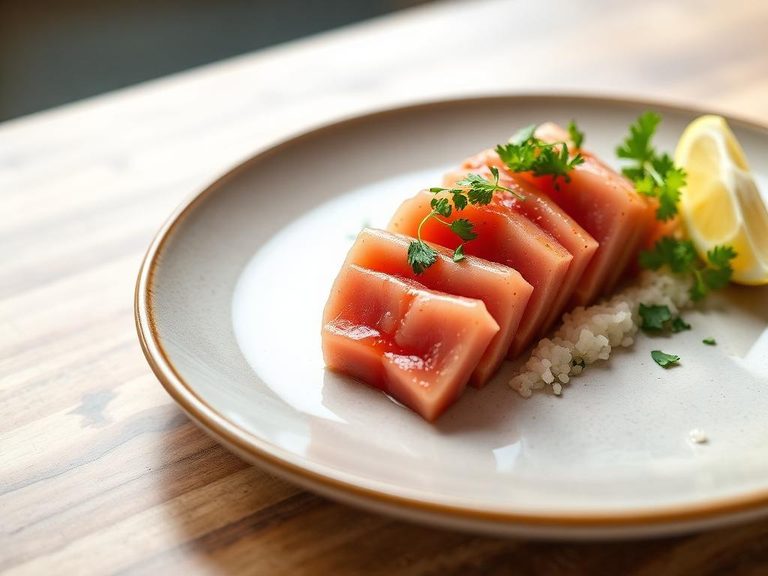
Sushi topped with tuna, or tuna nigiri, is a quintessential piece of Japanese cuisine featuring a slice of raw or seared fish draped over a compact mound of vinegared rice. The experience is a delicate balance of textures—the cool, buttery, and slightly metallic tang of the tuna against the sticky, subtly sweet rice. Nutritionally, it is a lean, high-protein food with minimal fat, making it a light yet satisfying choice.
Calorie split: 41% protein · 56% carbs · 3% fat
↓ Full nutrition💚 Why it's loved
People love tuna sushi for its clean, umami-rich flavor and the satisfying contrast between the tender fish and the seasoned rice. It's a versatile staple that can be enjoyed as a simple snack or part of an elaborate omakase meal, deeply rooted in Japanese culinary tradition.
⚠️ Watch-outs & how to enjoy it better
The primary concern is the potential for high sodium from the soy sauce and rice seasoning, which can be problematic for those with hypertension. Raw fish also carries a risk of parasites or bacteria, making it unsuitable for pregnant individuals or those with compromised immune systems. To mitigate sodium, use low-sodium soy sauce sparingly or opt for a ponzu-based dip. For food safety, always consume sushi from reputable establishments that use sushi-grade fish and follow strict handling protocols.
Key benefits
- High in lean protein, essential for muscle repair and satiety.
- Very low in fat, particularly saturated fat.
- Contains omega-3 fatty acids (especially in bluefin or albacore) for heart health.
- A good source of selenium, an important antioxidant mineral.
- Provides B vitamins, including B12, crucial for nerve function.
🍽️ Popular dishes
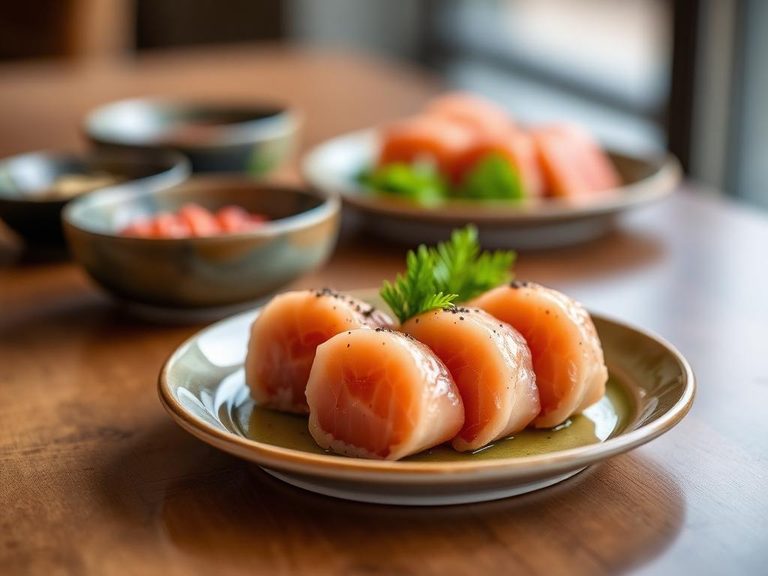
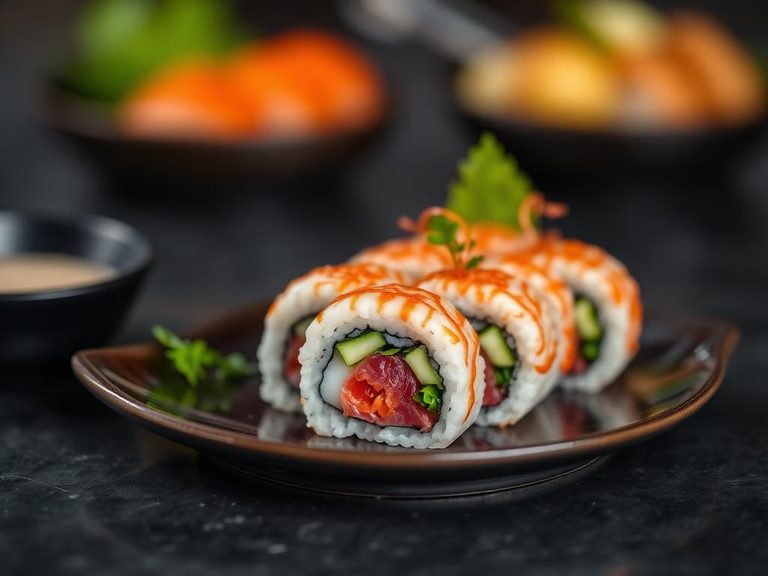
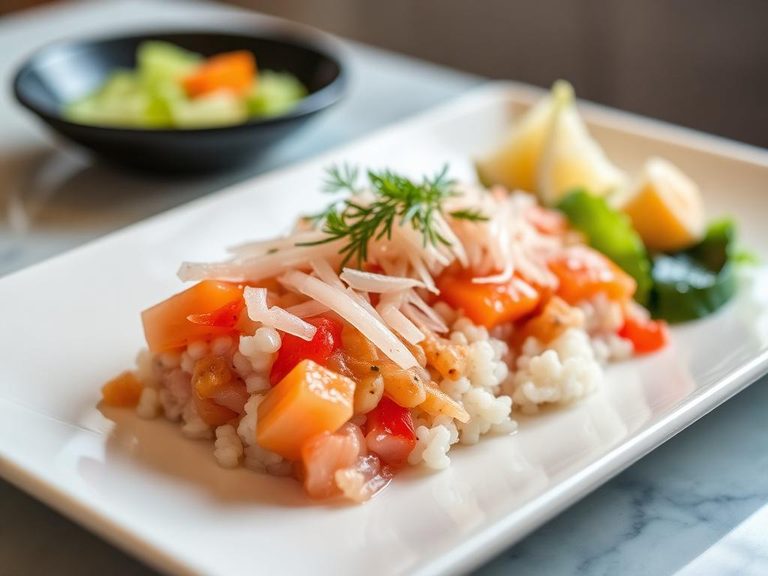
🌍 Where it's eaten
💡 Did you know?
The 'red' in tuna sushi often comes from the 'akami' (lean) part of the fish, but the most prized and fatty cut is 'toro,' which can be so marbled it melts on the tongue.
Full nutrition (USDA data · scales with serving)
| Water | 75.3 g |
| Energy | 100 kcal |
| Protein | 9.7 g |
| Total lipid (fat) | 0.29 g |
| Carbohydrate, by difference | 13.4 g |
| Fiber, total dietary | 0.60 g |
| Total Sugars | 0.80 g |
| Calcium, Ca | 3.0 mg |
| Iron, Fe | 0.35 mg |
| Magnesium, Mg | 15.0 mg |
| Phosphorus, P | 101 mg |
| Potassium, K | 159 mg |
| Sodium, Na | 306 mg |
| Zinc, Zn | 0.37 mg |
| Copper, Cu | 0.04 mg |
| Selenium, Se | 34.8 ug |
| Vitamin C, total ascorbic acid | 0.00 mg |
| Thiamin | 0.05 mg |
| Riboflavin | 0.05 mg |
| Niacin | 6.6 mg |
| Vitamin B-6 | 0.34 mg |
| Folate, total | 1.0 ug |
| Folic acid | 0.00 ug |
| Folate, food | 1.0 ug |
| Folate, DFE | 1.0 ug |
| Choline, total | 23.8 mg |
| Vitamin B-12 | 0.72 ug |
| Vitamin B-12, added | 0.00 ug |
| Vitamin A, RAE | 6.0 ug |
| Retinol | 6.0 ug |
| Carotene, beta | 0.00 ug |
| Carotene, alpha | 0.00 ug |
| Cryptoxanthin, beta | 0.00 ug |
| Lycopene | 0.00 ug |
| Lutein + zeaxanthin | 0.00 ug |
| Vitamin E (alpha-tocopherol) | 0.11 mg |
| Vitamin E, added | 0.00 mg |
| Vitamin D (D2 + D3) | 0.60 ug |
| Vitamin K (phylloquinone) | 0.00 ug |
| Alcohol, ethyl | 0.00 g |
| Caffeine | 0.00 mg |
| Theobromine | 0.00 mg |
Fat & fatty acid profile (per 100g)
| Fatty acids, total saturated | 0.08 g |
| SFA 4:0 | 0.00 g |
| SFA 6:0 | 0.00 g |
| SFA 8:0 | 0.00 g |
| SFA 10:0 | 0.00 g |
| SFA 12:0 | 0.00 g |
| SFA 14:0 | 0.00 g |
| SFA 16:0 | 0.06 g |
| SFA 18:0 | 0.02 g |
| Fatty acids, total monounsaturated | 0.08 g |
| MUFA 16:1 | 0.00 g |
| MUFA 18:1 | 0.07 g |
| MUFA 20:1 | 0.00 g |
| MUFA 22:1 | 0.00 g |
| Fatty acids, total polyunsaturated | 0.09 g |
| PUFA 18:2 | 0.05 g |
| PUFA 18:3 | 0.00 g |
| PUFA 18:4 | 0.00 g |
| PUFA 20:4 | 0.01 g |
| PUFA 20:5 n-3 (EPA) | 0.00 g |
| PUFA 22:5 n-3 (DPA) | 0.00 g |
| PUFA 22:6 n-3 (DHA) | 0.03 g |
| Cholesterol | 14.0 mg |
FAQ
Is tuna sushi healthy?
Yes, it's a lean, high-protein food low in fat, making it a nutritious choice. However, moderation is key due to potential sodium and mercury content, especially in larger predatory tuna species.
What is the difference between nigiri and sashimi?
Nigiri is a slice of fish served over a small mound of vinegared rice. Sashimi is simply sliced raw fish served without rice.
Can I eat tuna sushi if I'm pregnant?
Most health organizations advise pregnant women to avoid raw fish due to the risk of foodborne illness. Cooked tuna options, like seared tuna or tuna rolls with cooked fish, are generally considered safer alternatives.
Nutrient density (calculated · NRF9.3)
Nutrient Rich Foods index: beneficial nutrients (protein, fiber, vitamins, minerals) minus saturated fat, added sugar & sodium, per 100 kcal.
NRF9.3 index — Fulgoni, Keast & Drewnowski, 2009. Computed from USDA nutrients.
Weight-loss friendliness (composite index)
Energy density 1.00 kcal/g · 39% calories from protein · 0.6 g fiber · 0.8 g sugar per 100 g.
Composite of energy density (Rolls et al., 1999), protein & fiber satiety, minus sugar. A calculated heuristic — ranks satiety-per-calorie, not a clinical measure.
Dietary load (calculated from USDA values)
Potential renal acid load. Positive = acid-forming, negative = alkaline-forming.
Sodium-to-potassium ratio: 1.92 (lower is better — aim for ≤ 1)
Sodium:potassium per WHO potassium guidance. Computed from USDA nutrients.