

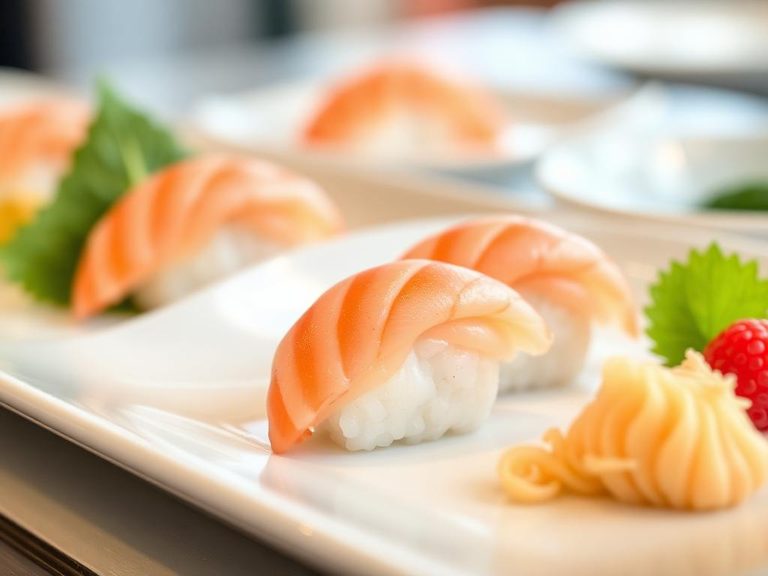
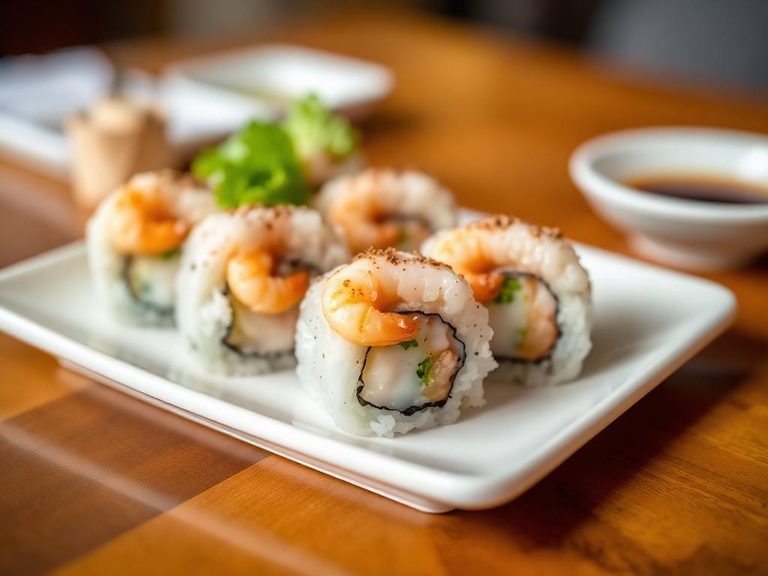
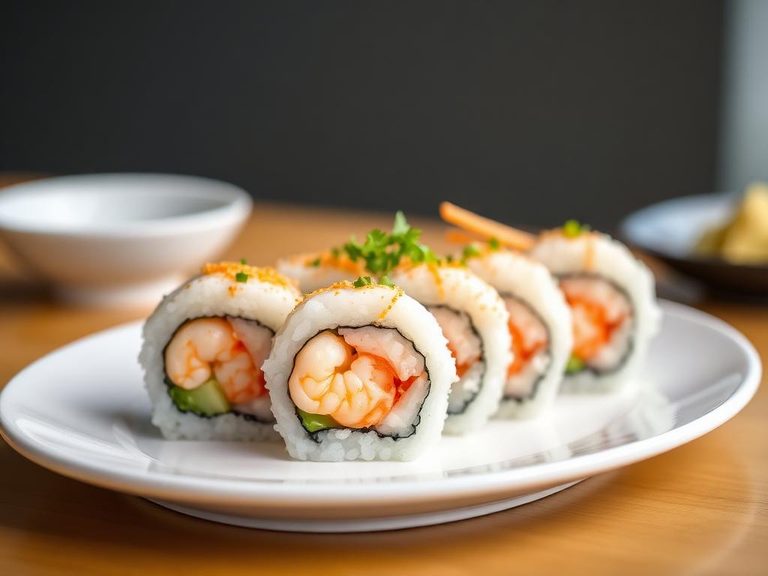
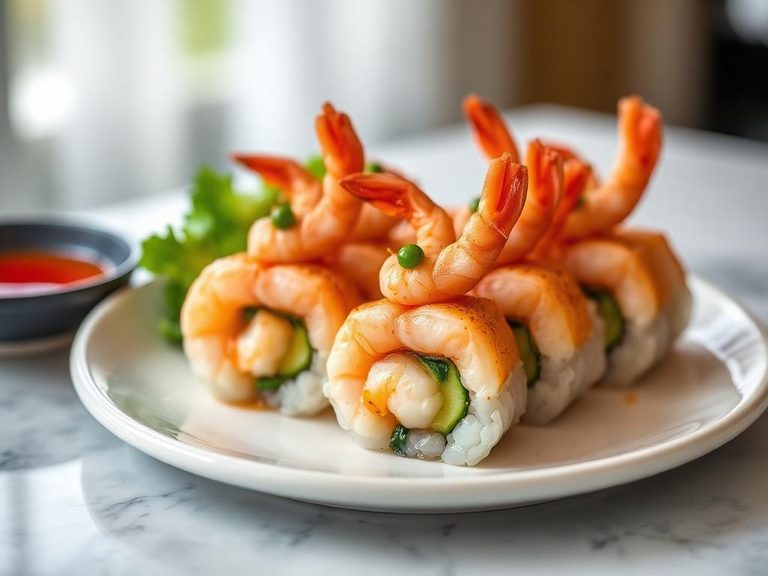
Sushi, topped with shrimp
Common food

Photo: Wikipedia
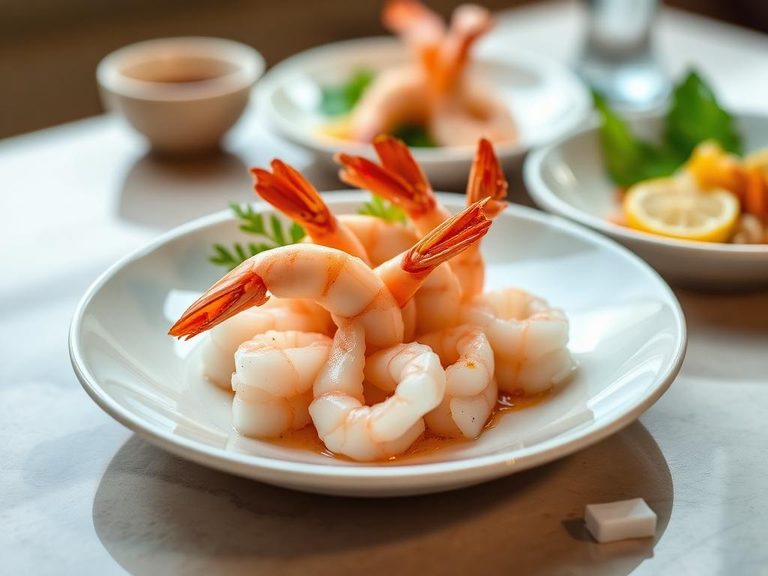
Shrimp-topped sushi is a classic bite of vinegared rice crowned with a sweet, briny piece of cooked shrimp, often featuring a satisfyingly firm yet tender texture. Its flavor profile is a delicate balance of umami, subtle sweetness, and the clean taste of the sea, enhanced by the tangy rice and a touch of soy or wasabi. Nutritionally, it's a lean, high-protein, low-fat option, making it a light yet satisfying meal or appetizer.
Calorie split: 37% protein · 57% carbs · 6% fat
↓ Full nutrition💚 Why it's loved
People love shrimp sushi for its elegant simplicity, where the sweet, oceanic flavor of the shrimp harmonizes with the tangy, slightly sticky rice. It's a versatile staple in Japanese cuisine, enjoyed as a quick snack, part of a bento, or a refined course in a multi-dish meal.
⚠️ Watch-outs & how to enjoy it better
Shrimp is a common allergen, and the sushi rice can cause blood-sugar spikes due to its high glycemic index. To counteract this, pair it with a side of edamame or a small salad with a protein-rich dressing to slow digestion, and consider using brown rice for a lower-glycemic alternative. Additionally, be mindful of sodium content from soy sauce and opt for low-sodium versions or use it sparingly.
Key benefits
- High in lean protein for muscle maintenance and satiety
- Low in fat and calories, supporting weight management
- Rich in selenium and vitamin B12 from shrimp
- Provides quick energy from the carbohydrate-rich rice
- Contains omega-3 fatty acids in small amounts from shrimp
🍽️ Popular dishes
🌍 Where it's eaten
💡 Did you know?
The word 'sushi' doesn't refer to the fish or shrimp, but to the seasoned rice itself, which is the core of the dish.
Full nutrition (USDA data · scales with serving)
| Water | 74.4 g |
| Energy | 103 kcal |
| Protein | 9.1 g |
| Total lipid (fat) | 0.70 g |
| Carbohydrate, by difference | 13.9 g |
| Fiber, total dietary | 0.60 g |
| Total Sugars | 0.80 g |
| Calcium, Ca | 33.0 mg |
| Iron, Fe | 0.20 mg |
| Magnesium, Mg | 16.0 mg |
| Phosphorus, P | 111 mg |
| Potassium, K | 65.0 mg |
| Sodium, Na | 329 mg |
| Zinc, Zn | 0.81 mg |
| Copper, Cu | 0.12 mg |
| Selenium, Se | 20.5 ug |
| Vitamin C, total ascorbic acid | 0.00 mg |
| Thiamin | 0.02 mg |
| Riboflavin | 0.02 mg |
| Niacin | 1.1 mg |
| Vitamin B-6 | 0.10 mg |
| Folate, total | 9.0 ug |
| Folic acid | 0.00 ug |
| Folate, food | 9.0 ug |
| Folate, DFE | 9.0 ug |
| Choline, total | 48.2 mg |
| Vitamin B-12 | 0.57 ug |
| Vitamin B-12, added | 0.00 ug |
| Vitamin A, RAE | 31.0 ug |
| Retinol | 31.0 ug |
| Carotene, beta | 0.00 ug |
| Carotene, alpha | 0.00 ug |
| Cryptoxanthin, beta | 0.00 ug |
| Lycopene | 0.00 ug |
| Lutein + zeaxanthin | 0.00 ug |
| Vitamin E (alpha-tocopherol) | 0.79 mg |
| Vitamin E, added | 0.00 mg |
| Vitamin D (D2 + D3) | 0.00 ug |
| Vitamin K (phylloquinone) | 0.10 ug |
| Alcohol, ethyl | 0.00 g |
| Caffeine | 0.00 mg |
| Theobromine | 0.00 mg |
Fat & fatty acid profile (per 100g)
| Fatty acids, total saturated | 0.20 g |
| SFA 4:0 | 0.00 g |
| SFA 6:0 | 0.00 g |
| SFA 8:0 | 0.00 g |
| SFA 10:0 | 0.00 g |
| SFA 12:0 | 0.00 g |
| SFA 14:0 | 0.01 g |
| SFA 16:0 | 0.12 g |
| SFA 18:0 | 0.06 g |
| Fatty acids, total monounsaturated | 0.17 g |
| MUFA 16:1 | 0.01 g |
| MUFA 18:1 | 0.12 g |
| MUFA 20:1 | 0.00 g |
| MUFA 22:1 | 0.00 g |
| Fatty acids, total polyunsaturated | 0.25 g |
| PUFA 18:2 | 0.11 g |
| PUFA 18:3 | 0.01 g |
| PUFA 18:4 | 0.00 g |
| PUFA 20:4 | 0.02 g |
| PUFA 20:5 n-3 (EPA) | 0.05 g |
| PUFA 22:5 n-3 (DPA) | 0.00 g |
| PUFA 22:6 n-3 (DHA) | 0.05 g |
| Cholesterol | 73.0 mg |
FAQ
Is shrimp sushi healthy?
Yes, it's a healthy choice due to its high protein, low fat, and calorie content. However, it's important to be mindful of sodium from soy sauce and potential allergens if you have sensitivities.
How many calories are in a typical serving?
A 100g serving has about 103 calories, but a typical medium piece (around 118g) would be roughly 121 calories, depending on the exact preparation and toppings.
Can I eat shrimp sushi if I'm on a low-carb diet?
While shrimp is low-carb, the sushi rice is high in carbohydrates. You might consider ordering sashimi (just the shrimp without rice) or asking for a rice-free version if available.
Nutrient density (calculated · NRF9.3)
Nutrient Rich Foods index: beneficial nutrients (protein, fiber, vitamins, minerals) minus saturated fat, added sugar & sodium, per 100 kcal.
NRF9.3 index — Fulgoni, Keast & Drewnowski, 2009. Computed from USDA nutrients.
Weight-loss friendliness (composite index)
Energy density 1.03 kcal/g · 35% calories from protein · 0.6 g fiber · 0.8 g sugar per 100 g.
Composite of energy density (Rolls et al., 1999), protein & fiber satiety, minus sugar. A calculated heuristic — ranks satiety-per-calorie, not a clinical measure.
Dietary load (calculated from USDA values)
Potential renal acid load. Positive = acid-forming, negative = alkaline-forming.
Sodium-to-potassium ratio: 5.06 (lower is better — aim for ≤ 1)
Sodium:potassium per WHO potassium guidance. Computed from USDA nutrients.