

Sugar, white, granulated or lump
Common food
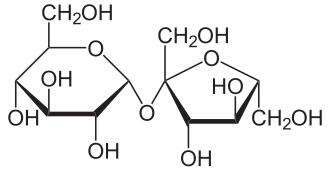
Photo: Wikipedia
White granulated sugar is the crystalline, pure form of sucrose, typically derived from sugarcane or sugar beets. It has a clean, intensely sweet taste with a crisp, dry texture that dissolves quickly on the tongue. Nutritionally, it is a concentrated source of simple carbohydrates, providing 401 kcal and nearly 100g of sugar per 100g, with no protein, fat, or fiber.
Calorie split: 0% protein · 99% carbs · 1% fat
↓ Full nutrition💚 Why it's loved
People love sugar for its powerful ability to deliver immediate sweetness and pleasure, a primal reward our brains are wired to seek. Its unparalleled versatility makes it a cornerstone of global baking, confectionery, and beverage culture, from holiday cookies to daily coffee.
⚠️ Watch-outs & how to enjoy it better
Excessive consumption is linked to blood sugar spikes, empty calories, and increased risk of metabolic issues. For those managing diabetes or insulin resistance, it requires strict portion control. To mitigate spikes, always pair sugary foods with protein, fat, or fiber (e.g., have fruit with nuts instead of candy), and prioritize whole-food sources of sweetness.
Key benefits
- Provides a rapid source of energy for the body and brain.
- Acts as a preservative in jams, jellies, and pickles by inhibiting microbial growth.
- Facilitates fermentation in baking (yeast food) and brewing.
- Enhances and balances flavors in savory and sweet dishes alike.
- Helps create specific textures like crispness in meringues or caramelization in sauces.
🍽️ Popular dishes





🌍 Where it's eaten
💡 Did you know?
The average American consumes about 17 teaspoons (71 grams) of added sugar daily, far exceeding the recommended limit, and a single can of soda contains roughly 10 teaspoons.
Full nutrition (USDA data · scales with serving)
| Water | 0.02 g |
| Energy | 401 kcal |
| Protein | 0.00 g |
| Total lipid (fat) | 0.32 g |
| Carbohydrate, by difference | 99.6 g |
| Fiber, total dietary | 0.00 g |
| Total Sugars | 99.8 g |
| Calcium, Ca | 1.0 mg |
| Iron, Fe | 0.05 mg |
| Magnesium, Mg | 0.00 mg |
| Phosphorus, P | 0.00 mg |
| Potassium, K | 2.0 mg |
| Sodium, Na | 1.0 mg |
| Zinc, Zn | 0.01 mg |
| Copper, Cu | 0.01 mg |
| Selenium, Se | 0.60 ug |
| Vitamin C, total ascorbic acid | 0.00 mg |
| Thiamin | 0.00 mg |
| Riboflavin | 0.02 mg |
| Niacin | 0.00 mg |
| Vitamin B-6 | 0.00 mg |
| Folate, total | 0.00 ug |
| Folic acid | 0.00 ug |
| Folate, food | 0.00 ug |
| Folate, DFE | 0.00 ug |
| Choline, total | 0.00 mg |
| Vitamin B-12 | 0.00 ug |
| Vitamin B-12, added | 0.00 ug |
| Vitamin A, RAE | 0.00 ug |
| Retinol | 0.00 ug |
| Carotene, beta | 0.00 ug |
| Carotene, alpha | 0.00 ug |
| Cryptoxanthin, beta | 0.00 ug |
| Lycopene | 0.00 ug |
| Lutein + zeaxanthin | 0.00 ug |
| Vitamin E (alpha-tocopherol) | 0.00 mg |
| Vitamin E, added | 0.00 mg |
| Vitamin D (D2 + D3) | 0.00 ug |
| Vitamin K (phylloquinone) | 0.00 ug |
| Alcohol, ethyl | 0.00 g |
| Caffeine | 0.00 mg |
| Theobromine | 0.00 mg |
Fat & fatty acid profile (per 100g)
| Fatty acids, total saturated | 0.00 g |
| SFA 4:0 | 0.00 g |
| SFA 6:0 | 0.00 g |
| SFA 8:0 | 0.00 g |
| SFA 10:0 | 0.00 g |
| SFA 12:0 | 0.00 g |
| SFA 14:0 | 0.00 g |
| SFA 16:0 | 0.00 g |
| SFA 18:0 | 0.00 g |
| Fatty acids, total monounsaturated | 0.00 g |
| MUFA 16:1 | 0.00 g |
| MUFA 18:1 | 0.00 g |
| MUFA 20:1 | 0.00 g |
| MUFA 22:1 | 0.00 g |
| Fatty acids, total polyunsaturated | 0.00 g |
| PUFA 18:2 | 0.00 g |
| PUFA 18:3 | 0.00 g |
| PUFA 18:4 | 0.00 g |
| PUFA 20:4 | 0.00 g |
| PUFA 20:5 n-3 (EPA) | 0.00 g |
| PUFA 22:5 n-3 (DPA) | 0.00 g |
| PUFA 22:6 n-3 (DHA) | 0.00 g |
| Cholesterol | 0.00 mg |
FAQ
What's the difference between white sugar, brown sugar, and powdered sugar?
White sugar is pure sucrose crystals. Brown sugar is white sugar with molasses added back for moisture and flavor. Powdered (confectioners') sugar is white sugar ground to a fine powder, often with a tiny amount of cornstarch to prevent clumping.
Is sugar vegan?
Most white sugar is vegan, but some refined using bone char (animal-derived carbon) is not. Look for brands labeled 'vegan' or 'unrefined' like organic cane sugar to be certain.
How should I store sugar?
Store in a cool, dry place in an airtight container to prevent clumping or hardening from moisture. It does not expire but can absorb odors if not sealed properly.
Nutrient density (calculated · NRF9.3)
Nutrient Rich Foods index: beneficial nutrients (protein, fiber, vitamins, minerals) minus saturated fat, added sugar & sodium, per 100 kcal.
NRF9.3 index — Fulgoni, Keast & Drewnowski, 2009. Computed from USDA nutrients.
Weight-loss friendliness (composite index)
Energy density 4.01 kcal/g · 0% calories from protein · 0.0 g fiber · 99.8 g sugar per 100 g.
Composite of energy density (Rolls et al., 1999), protein & fiber satiety, minus sugar. A calculated heuristic — ranks satiety-per-calorie, not a clinical measure.
Dietary load (calculated from USDA values)
Potential renal acid load. Positive = acid-forming, negative = alkaline-forming.
Sodium-to-potassium ratio: 0.50 (lower is better — aim for ≤ 1)
Sodium:potassium per WHO potassium guidance. Computed from USDA nutrients.