

Stewed potatoes
Common food

Photo: Wikipedia
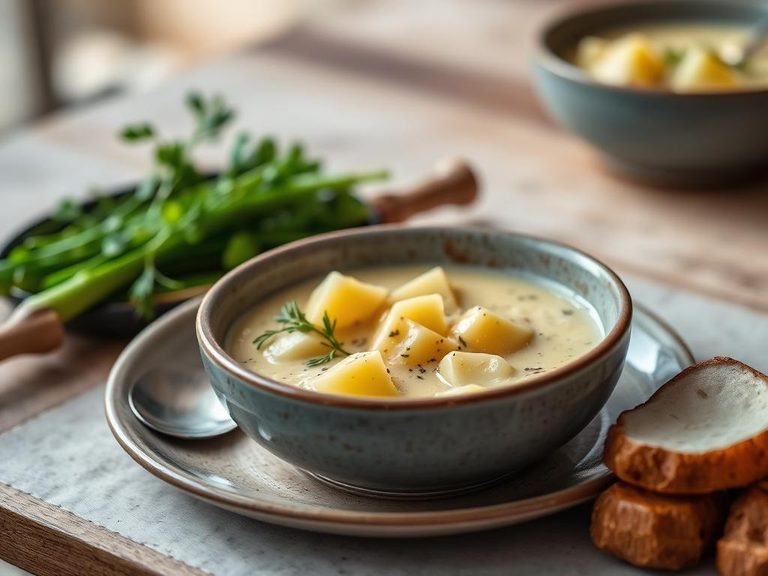
Stewed potatoes are tender, savory chunks of potato gently simmered in broth or seasoned liquid until they become soft, creamy, and infused with flavor. The texture is comforting and yielding, often with a slightly thickened sauce from the potato's natural starch. Nutritionally, they are a low-calorie, high-fiber source of energy, providing a good balance of complex carbohydrates and modest protein.
Calorie split: 8% protein · 63% carbs · 29% fat
↓ Full nutrition💚 Why it's loved
People love stewed potatoes for their comforting, home-cooked appeal and ability to absorb the flavors of herbs, spices, and broths. They are incredibly versatile, serving as a hearty side dish or a simple, satisfying main when paired with other ingredients.
⚠️ Watch-outs & how to enjoy it better
The primary caution is their high glycemic index, which can cause rapid blood sugar spikes, especially for those with diabetes or insulin resistance. To counteract this, pair them with a source of protein (like beans or meat) or healthy fat (like olive oil) to slow digestion, and practice portion control. If using canned or pre-made broth, be mindful of high sodium content; opt for low-sodium versions or homemade stock.
Key benefits
- Low-calorie, energy-dense carbohydrate source
- Good source of dietary fiber for digestive health
- Contains potassium, which supports heart and muscle function
- Naturally fat-free, with fat added only through cooking method
- Gluten-free and suitable for many dietary restrictions
🍽️ Popular dishes
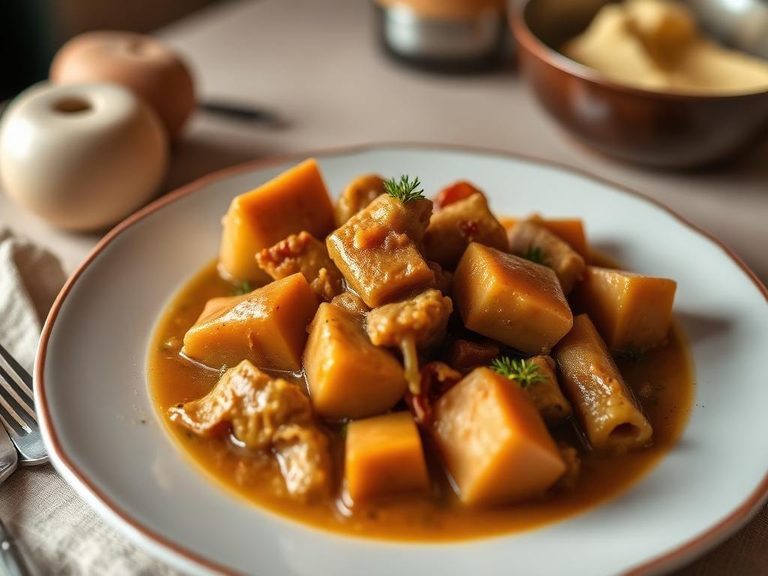
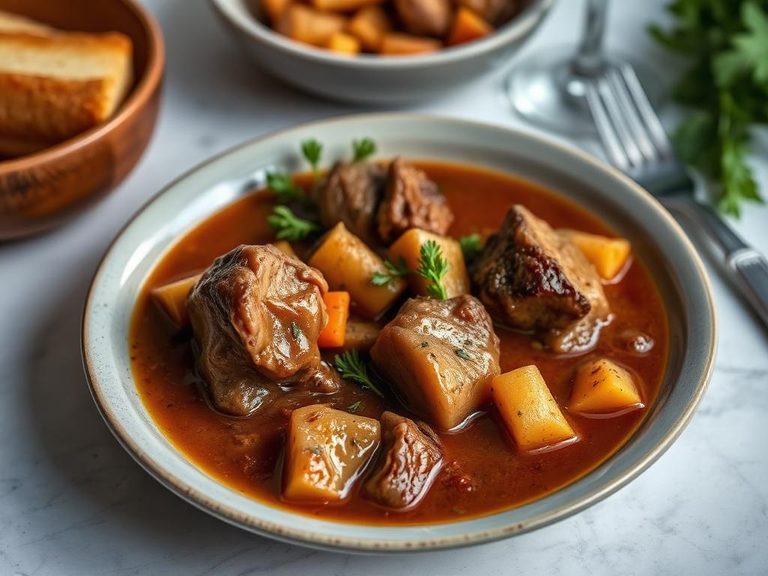
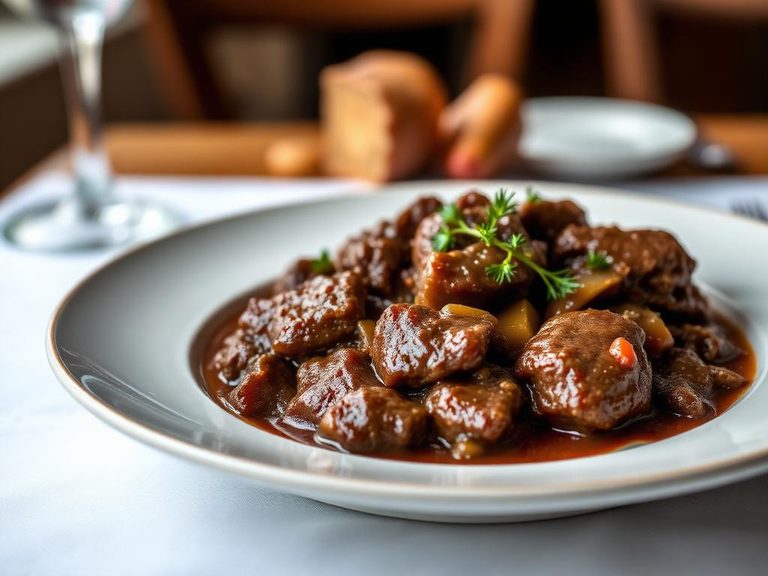
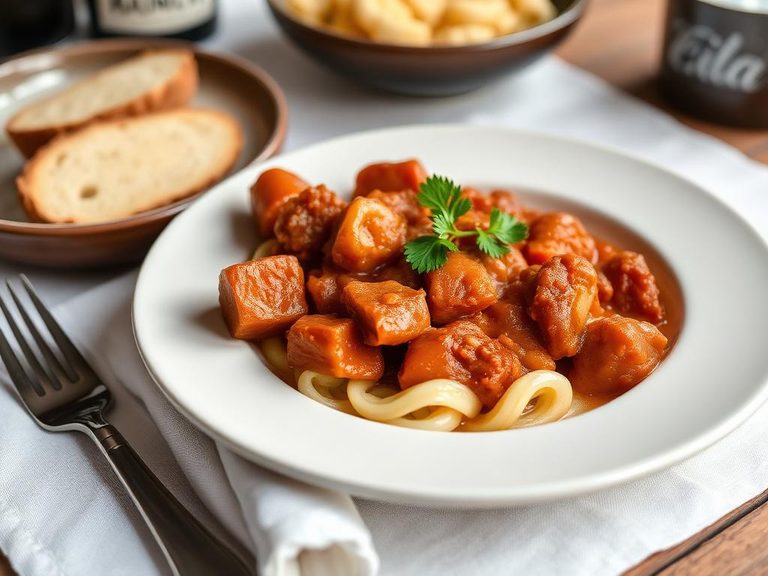
🌍 Where it's eaten
💡 Did you know?
The starch released during stewing acts as a natural thickener, which is why the broth in a good stew becomes richly viscous without adding flour or cornstarch.
Full nutrition (USDA data · scales with serving)
| Water | 77.1 g |
| Energy | 103 kcal |
| Protein | 2.0 g |
| Total lipid (fat) | 3.4 g |
| Carbohydrate, by difference | 16.3 g |
| Fiber, total dietary | 2.1 g |
| Total Sugars | 0.96 g |
| Calcium, Ca | 8.0 mg |
| Iron, Fe | 0.38 mg |
| Magnesium, Mg | 23.0 mg |
| Phosphorus, P | 54.0 mg |
| Potassium, K | 435 mg |
| Sodium, Na | 147 mg |
| Zinc, Zn | 0.37 mg |
| Copper, Cu | 0.10 mg |
| Selenium, Se | 0.00 ug |
| Vitamin C, total ascorbic acid | 15.1 mg |
| Thiamin | 0.06 mg |
| Riboflavin | 0.03 mg |
| Niacin | 1.3 mg |
| Vitamin B-6 | 0.13 mg |
| Folate, total | 13.0 ug |
| Folic acid | 0.00 ug |
| Folate, food | 13.0 ug |
| Folate, DFE | 13.0 ug |
| Choline, total | 11.7 mg |
| Vitamin B-12 | 0.00 ug |
| Vitamin B-12, added | 0.00 ug |
| Vitamin A, RAE | 0.00 ug |
| Retinol | 0.00 ug |
| Carotene, beta | 1.0 ug |
| Carotene, alpha | 0.00 ug |
| Cryptoxanthin, beta | 0.00 ug |
| Lycopene | 0.00 ug |
| Lutein + zeaxanthin | 8.0 ug |
| Vitamin E (alpha-tocopherol) | 0.60 mg |
| Vitamin E, added | 0.00 mg |
| Vitamin D (D2 + D3) | 0.00 ug |
| Vitamin K (phylloquinone) | 4.2 ug |
| Alcohol, ethyl | 0.00 g |
| Caffeine | 0.00 mg |
| Theobromine | 0.00 mg |
Fat & fatty acid profile (per 100g)
| Fatty acids, total saturated | 0.44 g |
| SFA 4:0 | 0.00 g |
| SFA 6:0 | 0.00 g |
| SFA 8:0 | 0.00 g |
| SFA 10:0 | 0.00 g |
| SFA 12:0 | 0.00 g |
| SFA 14:0 | 0.00 g |
| SFA 16:0 | 0.32 g |
| SFA 18:0 | 0.09 g |
| Fatty acids, total monounsaturated | 1.3 g |
| MUFA 16:1 | 0.01 g |
| MUFA 18:1 | 1.3 g |
| MUFA 20:1 | 0.02 g |
| MUFA 22:1 | 0.00 g |
| Fatty acids, total polyunsaturated | 1.2 g |
| PUFA 18:2 | 1.1 g |
| PUFA 18:3 | 0.14 g |
| PUFA 18:4 | 0.00 g |
| PUFA 20:4 | 0.00 g |
| PUFA 20:5 n-3 (EPA) | 0.00 g |
| PUFA 22:5 n-3 (DPA) | 0.00 g |
| PUFA 22:6 n-3 (DHA) | 0.00 g |
| Cholesterol | 0.00 mg |
FAQ
What's the difference between stewed and boiled potatoes?
Stewing involves cooking potatoes slowly in a flavorful liquid (like broth with aromatics) until tender and infused with taste. Boiling typically uses plain water and is a faster method, often as a preliminary step for mashing or roasting.
Can I make stewed potatoes ahead of time?
Yes, they reheat well. Store in an airtight container in the refrigerator for up to 3-4 days. The flavors often meld and improve overnight. Reheat gently on the stovetop with a splash of water or broth to prevent drying.
How can I prevent stewed potatoes from becoming mushy?
Choose waxy potato varieties like Yukon Gold or Red potatoes, which hold their shape better than starchy russets. Add them to the simmering liquid and cook just until tender, avoiding overcooking.
Nutrient density (calculated · NRF9.3)
Nutrient Rich Foods index: beneficial nutrients (protein, fiber, vitamins, minerals) minus saturated fat, added sugar & sodium, per 100 kcal.
NRF9.3 index — Fulgoni, Keast & Drewnowski, 2009. Computed from USDA nutrients.
Weight-loss friendliness (composite index)
Energy density 1.03 kcal/g · 8% calories from protein · 2.1 g fiber · 1.0 g sugar per 100 g.
Composite of energy density (Rolls et al., 1999), protein & fiber satiety, minus sugar. A calculated heuristic — ranks satiety-per-calorie, not a clinical measure.
Dietary load (calculated from USDA values)
Potential renal acid load. Positive = acid-forming, negative = alkaline-forming.
Sodium-to-potassium ratio: 0.34 (lower is better — aim for ≤ 1)
Sodium:potassium per WHO potassium guidance. Computed from USDA nutrients.