

Soup, tomato bisque, canned, prepared with equal volume milk
Whole food · Soups, Sauces, and Gravies

Photo: Wikipedia
This is a classic, velvety tomato bisque, typically found in a can and prepared with milk for a richer, creamier texture. It offers a smooth, comforting consistency with a balanced, savory-sweet tomato flavor. A 100g serving provides a modest 79 calories, making it a light yet satisfying option.
Calorie split: 12% protein · 58% carbs · 29% fat
↓ Full nutrition💚 Why it's loved
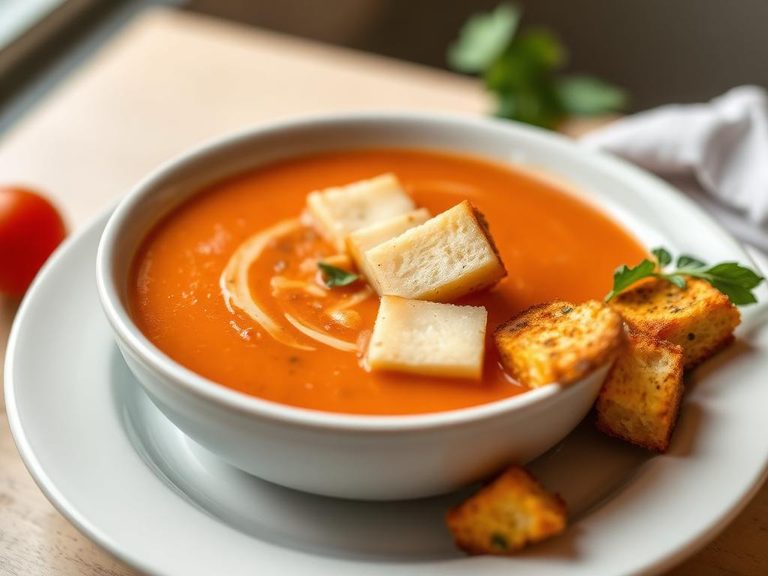
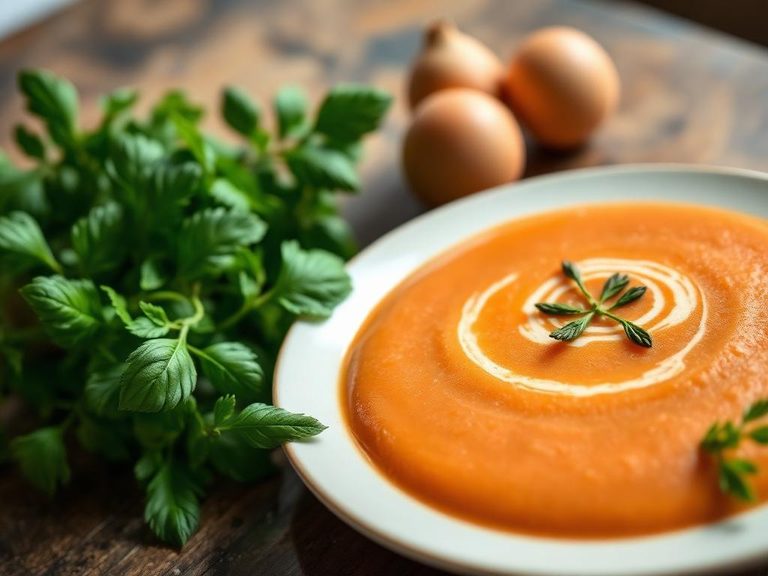
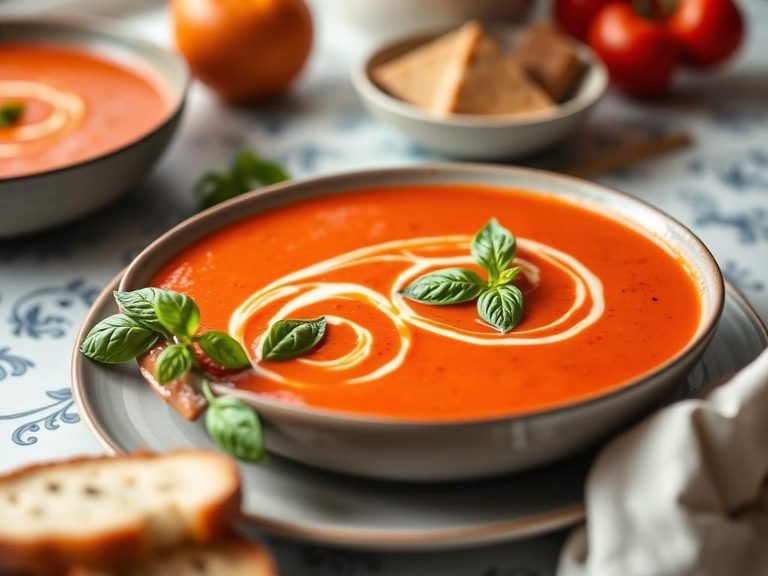
People adore it for its nostalgic, comforting warmth and the creamy, familiar taste that feels like a hug in a bowl. Its versatility makes it a perfect canvas for toppings like croutons, a swirl of cream, or fresh herbs.
⚠️ Watch-outs & how to enjoy it better
The primary concern is often the high sodium content common in canned soups, which can be problematic for those monitoring blood pressure. To counteract this, look for low-sodium versions, and always pair it with a protein source like grilled cheese or a side salad to create a more balanced, blood-sugar-friendly meal.
Key benefits
- Good source of quick energy from carbohydrates
- Provides some protein from the added milk
- Low in fat per serving
- Convenient shelf-stable meal or starter
- Can be a vehicle for other nutrients when customized
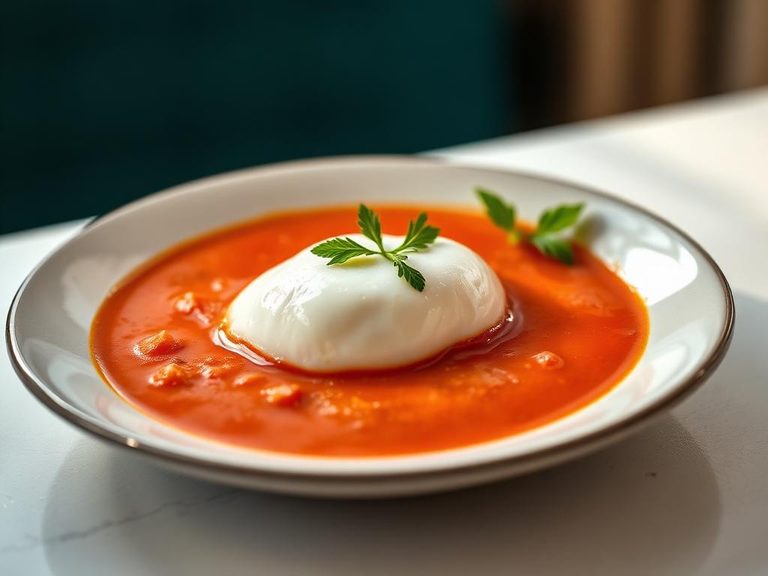
🍽️ Popular dishes


🌍 Where it's eaten
💡 Did you know?
The term 'bisque' originally referred to a creamy, highly seasoned soup made from crustaceans like lobster or crab, but in modern American usage, it's often applied to any smooth, creamy vegetable soup, like tomato.
Full nutrition (USDA data · scales with serving)
| Water | 81.5 g |
| Energy | 79.0 kcal |
| Energy | 331 kj |
| Protein | 2.5 g |
| Total lipid (fat) | 2.6 g |
| Ash | 1.6 g |
| Carbohydrate, by difference | 11.7 g |
| Fiber, total dietary | 0.20 g |
| Calcium, Ca | 74.0 mg |
| Iron, Fe | 0.35 mg |
| Magnesium, Mg | 10.0 mg |
| Phosphorus, P | 69.0 mg |
| Potassium, K | 241 mg |
| Sodium, Na | 442 mg |
| Zinc, Zn | 0.25 mg |
| Copper, Cu | 0.06 mg |
| Manganese, Mn | 0.10 mg |
| Vitamin C, total ascorbic acid | 2.8 mg |
| Thiamin | 0.04 mg |
| Riboflavin | 0.11 mg |
| Niacin | 0.50 mg |
| Pantothenic acid | 0.20 mg |
| Vitamin B-6 | 0.06 mg |
| Folate, total | 9.0 ug |
| Folic acid | 0.00 ug |
| Folate, food | 9.0 ug |
| Folate, DFE | 9.0 ug |
| Vitamin B-12 | 0.17 ug |
| Vitamin A, RAE | 25.0 ug |
| Retinol | 9.0 ug |
| Vitamin A, IU | 350 iu |
Fat & fatty acid profile (per 100g)
| Fatty acids, total saturated | 1.3 g |
| SFA 4:0 | 0.06 g |
| SFA 6:0 | 0.03 g |
| SFA 8:0 | 0.02 g |
| SFA 10:0 | 0.04 g |
| SFA 12:0 | 0.05 g |
| SFA 14:0 | 0.18 g |
| SFA 16:0 | 0.56 g |
| SFA 18:0 | 0.24 g |
| Fatty acids, total monounsaturated | 0.75 g |
| MUFA 16:1 | 0.05 g |
| MUFA 18:1 | 0.68 g |
| Fatty acids, total polyunsaturated | 0.49 g |
| PUFA 18:2 | 0.42 g |
| PUFA 18:3 | 0.08 g |
| Cholesterol | 9.0 mg |
Amino acid profile (per 100g)
| Tryptophan | 0.03 g |
| Threonine | 0.10 g |
| Isoleucine | 0.13 g |
| Leucine | 0.21 g |
| Lysine | 0.16 g |
| Methionine | 0.05 g |
| Cystine | 0.02 g |
| Phenylalanine | 0.11 g |
| Tyrosine | 0.10 g |
| Valine | 0.14 g |
| Arginine | 0.08 g |
| Histidine | 0.06 g |
| Alanine | 0.08 g |
| Aspartic acid | 0.20 g |
| Glutamic acid | 0.65 g |
| Glycine | 0.06 g |
| Proline | 0.21 g |
| Serine | 0.12 g |
FAQ
Is canned tomato bisque healthy?
It can be a part of a healthy diet, especially when chosen in low-sodium varieties. It's relatively low in calories and fat, but its nutritional value is enhanced when paired with protein and fiber-rich sides to create a complete meal.
Can I use this as a pasta sauce?
Absolutely! It makes a quick and creamy tomato sauce. Simply simmer it to thicken slightly, and toss with pasta. For extra protein, add cooked chicken or white beans.
How can I make it richer without adding more fat?
Blend in a handful of cooked red lentils or white beans for creaminess and a protein boost. A spoonful of nutritional yeast can also add a savory, cheesy depth.
Nutrient density (calculated · NRF9.3)
Nutrient Rich Foods index: beneficial nutrients (protein, fiber, vitamins, minerals) minus saturated fat, added sugar & sodium, per 100 kcal.
NRF9.3 index — Fulgoni, Keast & Drewnowski, 2009. Computed from USDA nutrients.
Weight-loss friendliness (composite index)
Energy density 0.79 kcal/g · 13% calories from protein · 0.2 g fiber · 0.0 g sugar per 100 g.
Composite of energy density (Rolls et al., 1999), protein & fiber satiety, minus sugar. A calculated heuristic — ranks satiety-per-calorie, not a clinical measure.
Dietary load (calculated from USDA values)
Potential renal acid load. Positive = acid-forming, negative = alkaline-forming.
Sodium-to-potassium ratio: 1.83 (lower is better — aim for ≤ 1)
Sodium:potassium per WHO potassium guidance. Computed from USDA nutrients.