

Seeds, breadfruit seeds, boiled
Whole food · Nut and Seed Products

Photo: Wikipedia
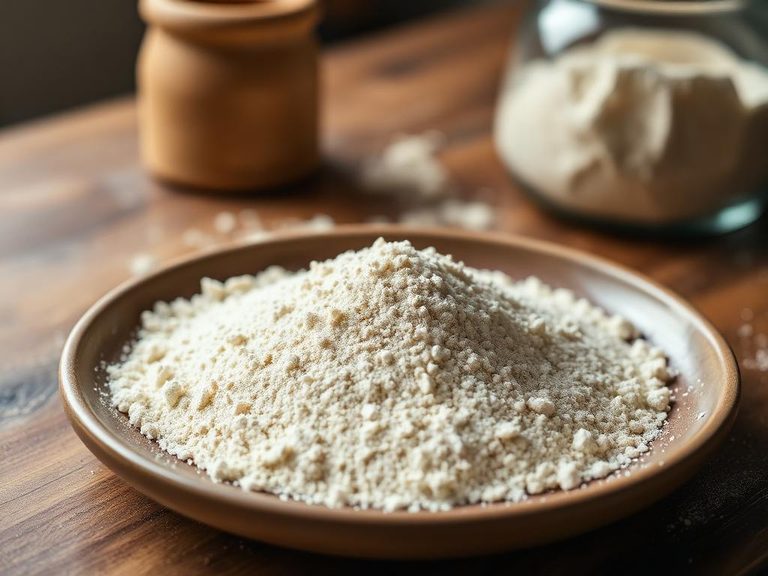
Boiled breadfruit seeds are the starchy, edible kernels found inside the fruit, often discarded but prized in many tropical cuisines. They have a texture similar to a chestnut or a firm potato, with a mild, nutty, and slightly earthy flavor. Nutritionally, they are a solid source of complex carbohydrates and dietary fiber, providing sustained energy with very little fat.
Calorie split: 12% protein · 75% carbs · 12% fat
↓ Full nutrition💚 Why it's loved
People love them for their satisfying, starchy texture and subtle nutty taste, which makes them a versatile staple. They are deeply embedded in the culinary traditions of the Pacific Islands and Caribbean, where they represent a reliable and comforting food source.
⚠️ Watch-outs & how to enjoy it better
The seeds are high in carbohydrates and have a moderate glycemic load, which could cause blood-sugar spikes if eaten in large quantities alone. To counteract this, pair them with a source of protein or healthy fat (like coconut milk or fish) and practice portion control. Their dense, starchy nature can also be heavy for some digestive systems.
Key benefits
- Good source of complex carbohydrates for energy
- High in dietary fiber, aiding digestion
- Contains plant-based protein
- Low in fat and sugar-free
- Provides essential minerals like potassium and magnesium
🍽️ Popular dishes
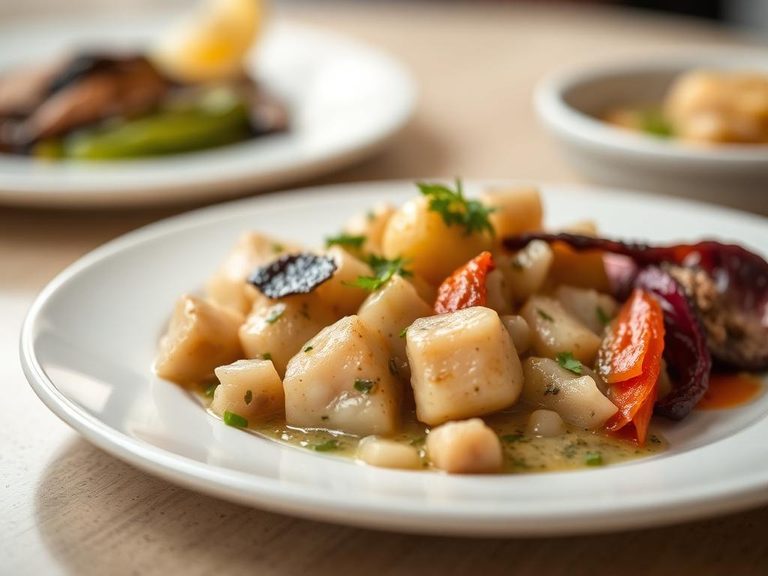
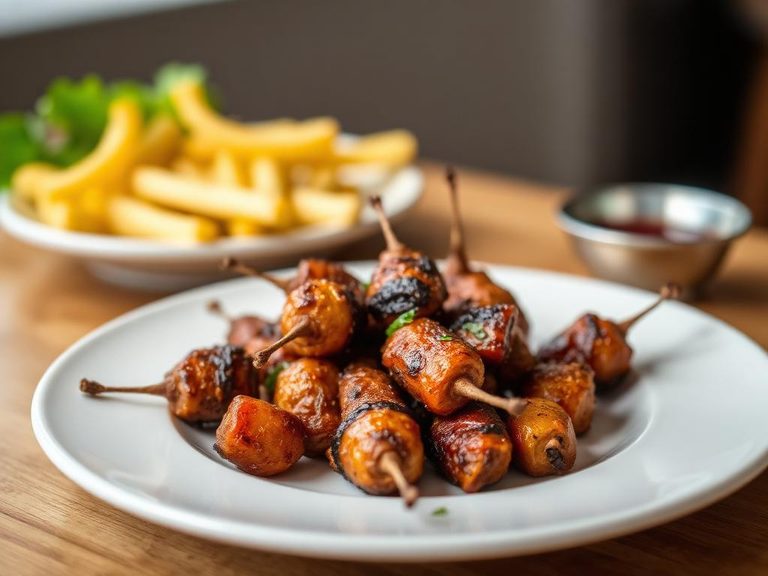
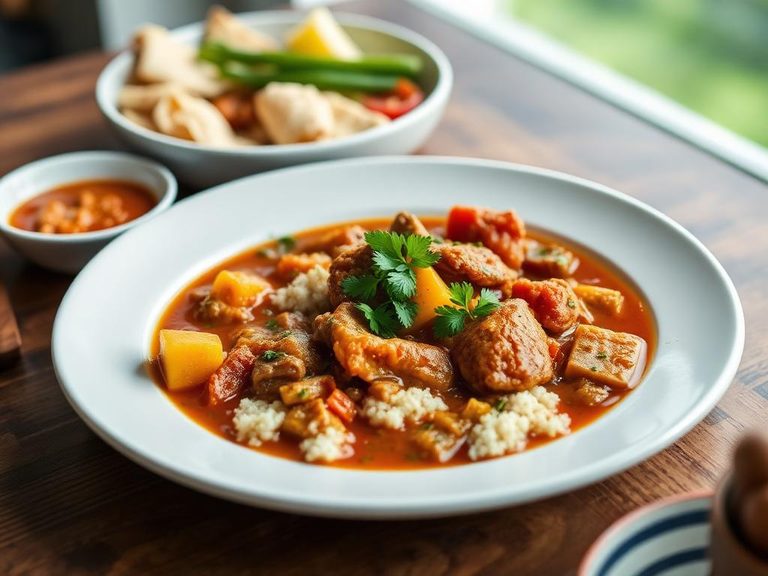

🌍 Where it's eaten
💡 Did you know?
While we eat the seeds, the breadfruit tree itself is famous for its massive, starchy fruit, which was historically used as a cheap, high-energy food source for enslaved people in the Caribbean.
Full nutrition (USDA data · scales with serving)
| Water | 59.3 g |
| Energy | 168 kcal |
| Energy | 703 kj |
| Protein | 5.3 g |
| Total lipid (fat) | 2.3 g |
| Ash | 1.1 g |
| Carbohydrate, by difference | 32.0 g |
| Fiber, total dietary | 4.8 g |
| Calcium, Ca | 61.0 mg |
| Iron, Fe | 0.60 mg |
| Magnesium, Mg | 50.0 mg |
| Phosphorus, P | 124 mg |
| Potassium, K | 875 mg |
| Sodium, Na | 23.0 mg |
| Zinc, Zn | 0.83 mg |
| Copper, Cu | 1.1 mg |
| Manganese, Mn | 0.13 mg |
| Vitamin C, total ascorbic acid | 6.1 mg |
| Thiamin | 0.29 mg |
| Riboflavin | 0.17 mg |
| Niacin | 5.3 mg |
| Pantothenic acid | 0.82 mg |
| Vitamin B-6 | 0.30 mg |
| Folate, total | 49.0 ug |
| Folic acid | 0.00 ug |
| Folate, food | 49.0 ug |
| Folate, DFE | 49.0 ug |
| Vitamin B-12 | 0.00 ug |
| Vitamin A, RAE | 12.0 ug |
| Retinol | 0.00 ug |
| Vitamin A, IU | 238 iu |
| Vitamin D (D2 + D3), International Units | 0.00 iu |
| Vitamin D (D2 + D3) | 0.00 ug |
Fat & fatty acid profile (per 100g)
| Fatty acids, total saturated | 0.62 g |
| SFA 16:0 | 0.41 g |
| SFA 18:0 | 0.21 g |
| Fatty acids, total monounsaturated | 0.29 g |
| MUFA 16:1 | 0.01 g |
| MUFA 18:1 | 0.28 g |
| Fatty acids, total polyunsaturated | 1.2 g |
| PUFA 18:2 | 0.94 g |
| PUFA 18:3 | 0.28 g |
| Cholesterol | 0.00 mg |
Amino acid profile (per 100g)
| Tryptophan | 0.09 g |
| Threonine | 0.28 g |
| Isoleucine | 0.32 g |
| Leucine | 0.40 g |
| Lysine | 0.41 g |
| Methionine | 0.07 g |
| Cystine | 0.08 g |
| Phenylalanine | 0.57 g |
| Tyrosine | 0.39 g |
| Valine | 0.38 g |
| Arginine | 0.35 g |
| Histidine | 0.15 g |
| Alanine | 0.24 g |
| Aspartic acid | 0.58 g |
| Glutamic acid | 0.74 g |
| Glycine | 0.33 g |
| Proline | 0.26 g |
| Serine | 0.35 g |
FAQ
Are breadfruit seeds the same as breadfruit?
No. Breadfruit is the large, starchy fruit of the tree. The seeds are the small, edible kernels found inside the fruit's core. Both are edible but have different textures and uses.
How do you prepare breadfruit seeds?
They must be removed from the fruit's fibrous core, then boiled, roasted, or fried. Boiling is common, often in salted water until tender, similar to preparing a chestnut or potato.
Do all breadfruits have seeds?
No. Many cultivated varieties, especially those propagated by root cuttings, are seedless or have very few, small, non-viable seeds. Seeded varieties are more common in wild or traditional cultivars.
Nutrient density (calculated · NRF9.3)
Nutrient Rich Foods index: beneficial nutrients (protein, fiber, vitamins, minerals) minus saturated fat, added sugar & sodium, per 100 kcal.
NRF9.3 index — Fulgoni, Keast & Drewnowski, 2009. Computed from USDA nutrients.
Weight-loss friendliness (composite index)
Energy density 1.68 kcal/g · 13% calories from protein · 4.8 g fiber · 0.0 g sugar per 100 g.
Composite of energy density (Rolls et al., 1999), protein & fiber satiety, minus sugar. A calculated heuristic — ranks satiety-per-calorie, not a clinical measure.
Dietary load (calculated from USDA values)
Potential renal acid load. Positive = acid-forming, negative = alkaline-forming.
Sodium-to-potassium ratio: 0.03 (lower is better — aim for ≤ 1)
Sodium:potassium per WHO potassium guidance. Computed from USDA nutrients.