

Salmon salad
Common food

Photo: Wikipedia
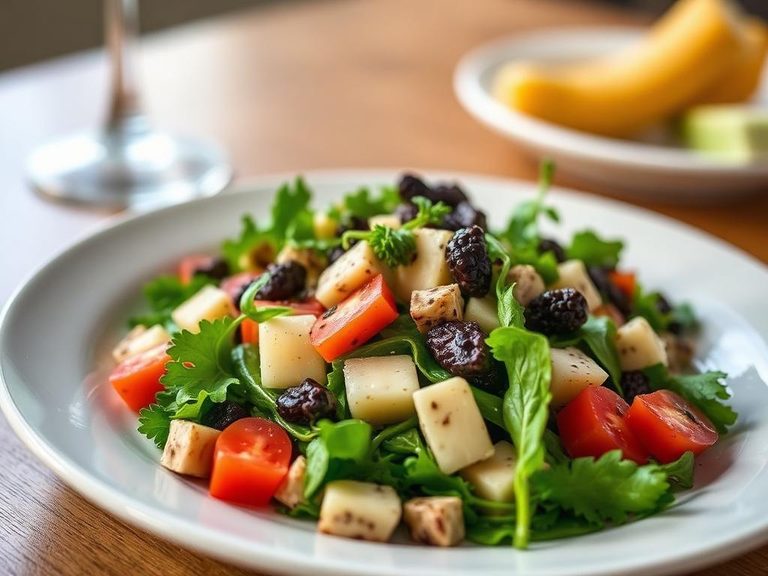
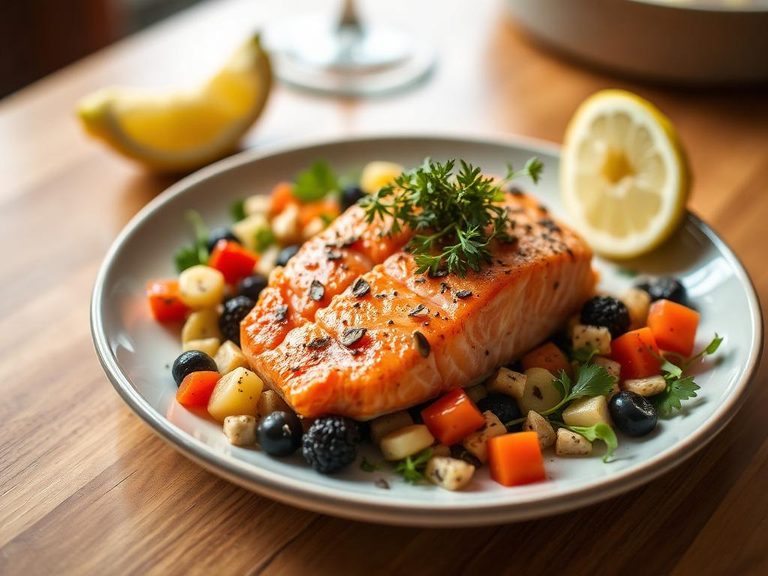
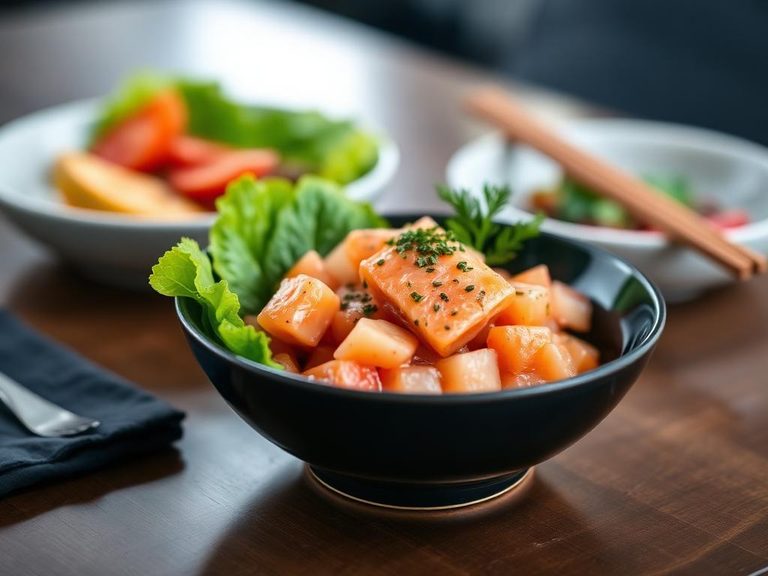
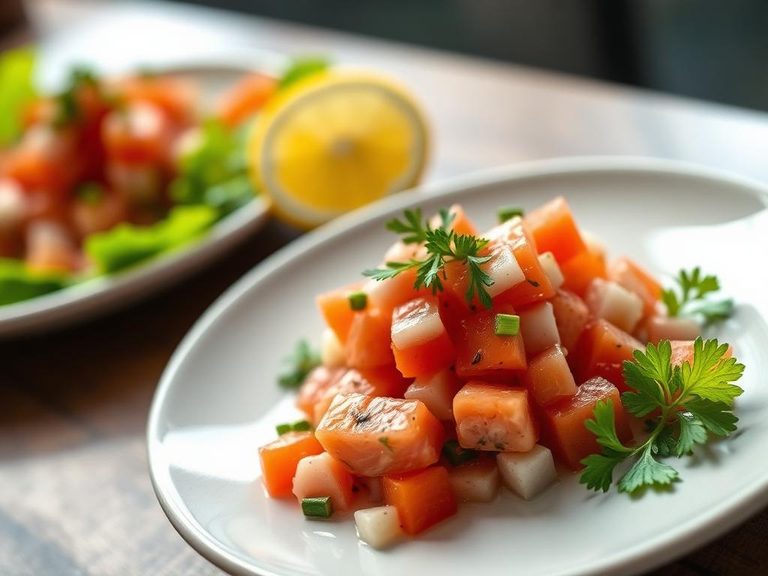
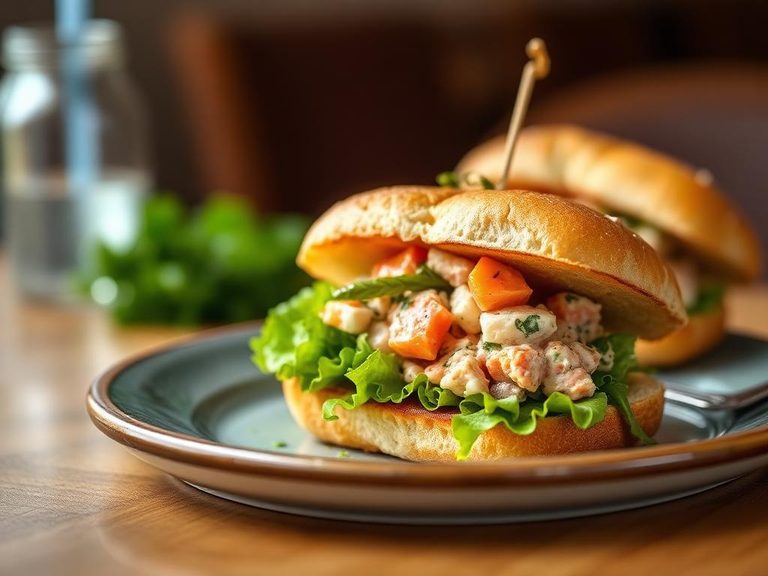
A vibrant, nutrient-dense salad featuring flaked or diced salmon, typically tossed with crisp greens, vegetables, and a creamy or tangy dressing. The texture is a satisfying contrast of tender, flaky fish and crunchy produce, with a rich, savory flavor profile. It is a powerhouse of high-quality protein and heart-healthy fats, particularly omega-3 fatty acids.
Calorie split: 21% protein · 5% carbs · 74% fat
↓ Full nutrition💚 Why it's loved
People love it for its perfect balance of rich, savory salmon and fresh, crisp vegetables, making it a satisfying yet light meal. It's incredibly versatile, easily customized with different dressings, greens, and mix-ins to suit any palate or occasion.
⚠️ Watch-outs & how to enjoy it better
The primary concern is potential mercury content in certain salmon species, which can be a consideration for pregnant individuals or young children. To mitigate this, opt for wild-caught salmon like sockeye or pink salmon, which generally have lower mercury levels, and practice portion control. Additionally, some dressings can be high in sodium or added sugars; choosing a homemade vinaigrette or a simple lemon-olive oil dressing can help manage this.
Key benefits
- High in complete protein for muscle repair and satiety
- Rich in omega-3 fatty acids for heart and brain health
- Low in carbohydrates, suitable for low-carb and keto diets
- Provides essential vitamins like B12 and D
- Contains selenium, an important antioxidant mineral
🍽️ Popular dishes
🌍 Where it's eaten
💡 Did you know?
A traditional Japanese salmon salad, often called 'Salmon Flakes' or 'Salmon Soboro,' is a common topping for rice bowls and is frequently used in bento boxes as a protein-rich, shelf-stable ingredient.
Full nutrition (USDA data · scales with serving)
| Water | 67.5 g |
| Energy | 213 kcal |
| Protein | 10.8 g |
| Total lipid (fat) | 17.4 g |
| Carbohydrate, by difference | 2.7 g |
| Fiber, total dietary | 0.40 g |
| Total Sugars | 2.0 g |
| Calcium, Ca | 126 mg |
| Iron, Fe | 0.43 mg |
| Magnesium, Mg | 19.0 mg |
| Phosphorus, P | 189 mg |
| Potassium, K | 245 mg |
| Sodium, Na | 507 mg |
| Zinc, Zn | 0.46 mg |
| Copper, Cu | 0.04 mg |
| Selenium, Se | 18.2 ug |
| Vitamin C, total ascorbic acid | 0.70 mg |
| Thiamin | 0.02 mg |
| Riboflavin | 0.12 mg |
| Niacin | 3.6 mg |
| Vitamin B-6 | 0.17 mg |
| Folate, total | 17.0 ug |
| Folic acid | 0.00 ug |
| Folate, food | 17.0 ug |
| Folate, DFE | 17.0 ug |
| Choline, total | 55.1 mg |
| Vitamin B-12 | 2.4 ug |
| Vitamin B-12, added | 0.00 ug |
| Vitamin A, RAE | 20.0 ug |
| Retinol | 12.0 ug |
| Carotene, beta | 87.0 ug |
| Carotene, alpha | 7.0 ug |
| Cryptoxanthin, beta | 17.0 ug |
| Lycopene | 0.00 ug |
| Lutein + zeaxanthin | 78.0 ug |
| Vitamin E (alpha-tocopherol) | 1.1 mg |
| Vitamin E, added | 0.00 mg |
| Vitamin D (D2 + D3) | 7.4 ug |
| Vitamin K (phylloquinone) | 43.0 ug |
| Alcohol, ethyl | 0.00 g |
| Caffeine | 0.00 mg |
| Theobromine | 0.00 mg |
Fat & fatty acid profile (per 100g)
| Fatty acids, total saturated | 2.8 g |
| SFA 4:0 | 0.00 g |
| SFA 6:0 | 0.00 g |
| SFA 8:0 | 0.00 g |
| SFA 10:0 | 0.00 g |
| SFA 12:0 | 0.00 g |
| SFA 14:0 | 0.10 g |
| SFA 16:0 | 1.8 g |
| SFA 18:0 | 0.66 g |
| Fatty acids, total monounsaturated | 4.0 g |
| MUFA 16:1 | 0.09 g |
| MUFA 18:1 | 3.5 g |
| MUFA 20:1 | 0.28 g |
| MUFA 22:1 | 0.04 g |
| Fatty acids, total polyunsaturated | 9.5 g |
| PUFA 18:2 | 7.7 g |
| PUFA 18:3 | 1.1 g |
| PUFA 18:4 | 0.08 g |
| PUFA 20:4 | 0.02 g |
| PUFA 20:5 n-3 (EPA) | 0.17 g |
| PUFA 22:5 n-3 (DPA) | 0.05 g |
| PUFA 22:6 n-3 (DHA) | 0.36 g |
| Cholesterol | 38.0 mg |
FAQ
Is salmon salad healthy?
Yes, it is generally very healthy, offering high-quality protein, omega-3 fatty acids, and various vitamins and minerals. The healthiness can vary based on the dressing and added ingredients, so opting for a light, homemade dressing is recommended.
Can I eat salmon salad on a keto diet?
Absolutely. Salmon is naturally low in carbs and high in healthy fats, making it an excellent choice for a ketogenic diet. Just ensure the dressing and any added ingredients (like croutons) are also low-carb.
How long does salmon salad last in the fridge?
When stored in an airtight container, a homemade salmon salad (without the dressing mixed in) can last for 1-2 days. Once dressed, it's best consumed within a few hours for optimal texture and safety.
Nutrient density (calculated · NRF9.3)
Nutrient Rich Foods index: beneficial nutrients (protein, fiber, vitamins, minerals) minus saturated fat, added sugar & sodium, per 100 kcal.
NRF9.3 index — Fulgoni, Keast & Drewnowski, 2009. Computed from USDA nutrients.
Weight-loss friendliness (composite index)
Energy density 2.13 kcal/g · 20% calories from protein · 0.4 g fiber · 2.0 g sugar per 100 g.
Composite of energy density (Rolls et al., 1999), protein & fiber satiety, minus sugar. A calculated heuristic — ranks satiety-per-calorie, not a clinical measure.
Dietary load (calculated from USDA values)
Potential renal acid load. Positive = acid-forming, negative = alkaline-forming.
Sodium-to-potassium ratio: 2.07 (lower is better — aim for ≤ 1)
Sodium:potassium per WHO potassium guidance. Computed from USDA nutrients.