

Ranch dressing
Common food
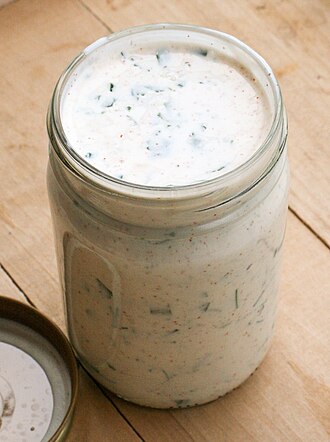
Photo: Wikipedia
Ranch dressing is a creamy, tangy, and herbaceous American salad dressing and dip, typically made from a base of buttermilk, mayonnaise, and a blend of herbs like dill, parsley, and chives. It has a rich, smooth texture and a distinct savory flavor profile with a slight garlic and onion kick. Nutritionally, it is very high in fat, contributing almost all of its 430 kcal per 100g, with minimal protein or carbohydrates.
Calorie split: 1% protein · 5% carbs · 93% fat
↓ Full nutrition💚 Why it's loved
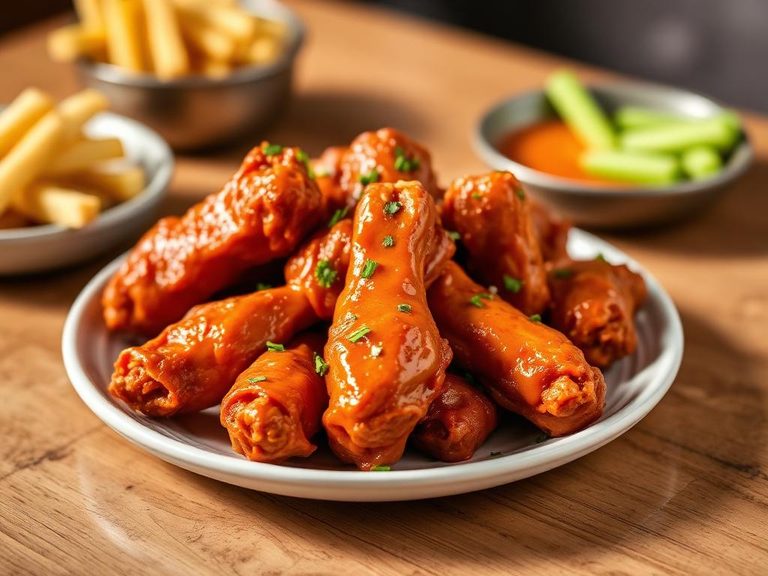
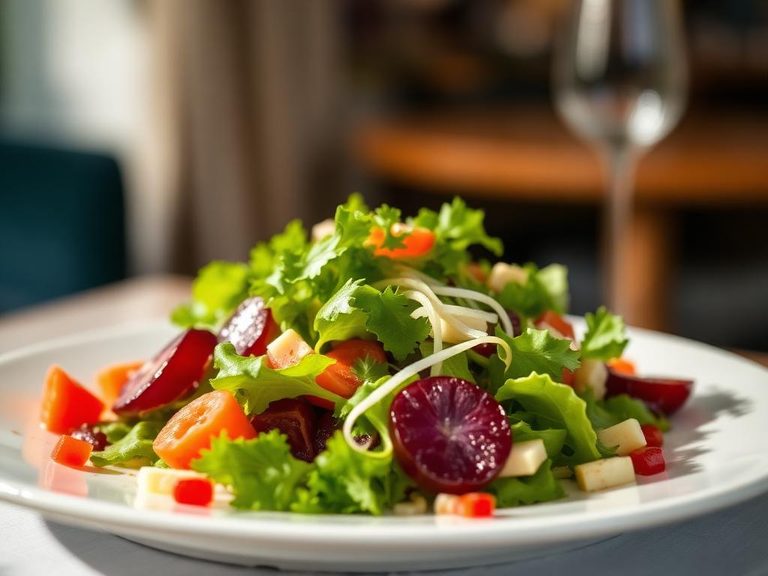
People love ranch for its perfectly balanced, craveable flavor that is simultaneously cool, tangy, and savory, making it a universal crowd-pleaser. Its incredible versatility as both a salad dressing and a dip for everything from pizza crusts to chicken wings has cemented its status as a staple in American casual dining and home kitchens.
⚠️ Watch-outs & how to enjoy it better
Its primary downside is its very high fat and calorie density, which can contribute to excess calorie intake if used liberally. It also often contains significant sodium and may include common allergens like dairy (buttermilk) and egg (mayonnaise). To counteract this, practice strict portion control (e.g., using a measured tablespoon), opt for a lighter or yogurt-based version, or pair it with a large volume of non-starchy vegetables to add volume and fiber to the meal.
Key benefits
- Provides a source of fat-soluble vitamins like Vitamin K from its herb content.
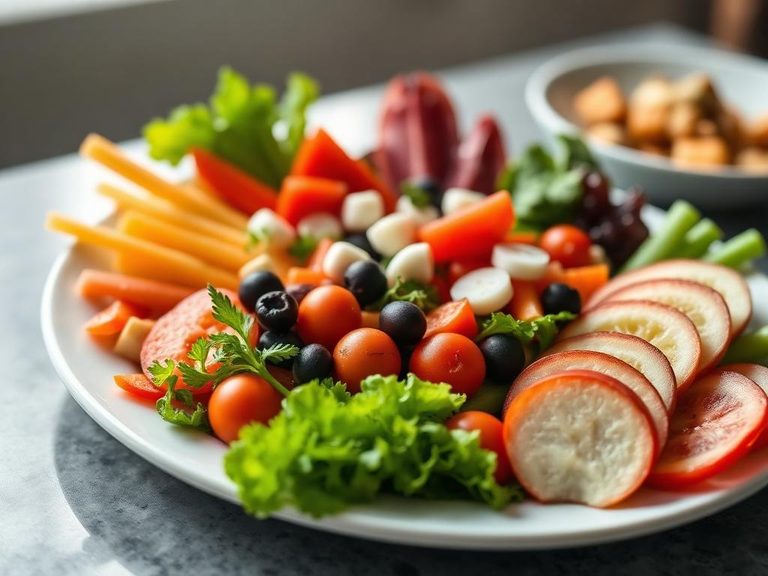
- Can make raw vegetables more palatable, encouraging vegetable consumption.
- Acts as a high-energy, calorie-dense condiment for those needing to increase intake.
- The fat content can help with the absorption of fat-soluble nutrients from other foods in a meal.
🍽️ Popular dishes


🌍 Where it's eaten
💡 Did you know?
Ranch dressing was invented not in a restaurant, but on a dude ranch in Alaska in the 1950s by plumbing contractor Steve Henson, who served it to guests at his Hidden Valley Ranch.
Full nutrition (USDA data · scales with serving)
| Water | 45.7 g |
| Energy | 430 kcal |
| Protein | 1.3 g |
| Total lipid (fat) | 44.5 g |
| Carbohydrate, by difference | 5.9 g |
| Fiber, total dietary | 0.00 g |
| Total Sugars | 4.7 g |
| Calcium, Ca | 28.0 mg |
| Iron, Fe | 0.30 mg |
| Magnesium, Mg | 5.0 mg |
| Phosphorus, P | 186 mg |
| Potassium, K | 64.0 mg |
| Sodium, Na | 810 mg |
| Zinc, Zn | 0.17 mg |
| Copper, Cu | 0.02 mg |
| Selenium, Se | 3.5 ug |
| Vitamin C, total ascorbic acid | 0.00 mg |
| Thiamin | 0.01 mg |
| Riboflavin | 0.09 mg |
| Niacin | 0.05 mg |
| Vitamin B-6 | 0.03 mg |
| Folate, total | 4.0 ug |
| Folic acid | 0.00 ug |
| Folate, food | 4.0 ug |
| Folate, DFE | 4.0 ug |
| Choline, total | 32.8 mg |
| Vitamin B-12 | 0.17 ug |
| Vitamin B-12, added | 0.00 ug |
| Vitamin A, RAE | 15.0 ug |
| Retinol | 13.0 ug |
| Carotene, beta | 14.0 ug |
| Carotene, alpha | 0.00 ug |
| Cryptoxanthin, beta | 1.0 ug |
| Lycopene | 0.00 ug |
| Lutein + zeaxanthin | 21.0 ug |
| Vitamin E (alpha-tocopherol) | 2.2 mg |
| Vitamin E, added | 0.00 mg |
| Vitamin D (D2 + D3) | 0.10 ug |
| Vitamin K (phylloquinone) | 134 ug |
| Alcohol, ethyl | 0.00 g |
| Caffeine | 0.00 mg |
| Theobromine | 0.00 mg |
Fat & fatty acid profile (per 100g)
| Fatty acids, total saturated | 7.0 g |
| SFA 4:0 | 0.01 g |
| SFA 6:0 | 0.00 g |
| SFA 8:0 | 0.04 g |
| SFA 10:0 | 0.04 g |
| SFA 12:0 | 0.01 g |
| SFA 14:0 | 0.07 g |
| SFA 16:0 | 4.6 g |
| SFA 18:0 | 1.8 g |
| Fatty acids, total monounsaturated | 9.2 g |
| MUFA 16:1 | 0.06 g |
| MUFA 18:1 | 8.9 g |
| MUFA 20:1 | 0.12 g |
| MUFA 22:1 | 0.05 g |
| Fatty acids, total polyunsaturated | 25.8 g |
| PUFA 18:2 | 22.3 g |
| PUFA 18:3 | 3.4 g |
| PUFA 18:4 | 0.00 g |
| PUFA 20:4 | 0.03 g |
| PUFA 20:5 n-3 (EPA) | 0.00 g |
| PUFA 22:5 n-3 (DPA) | 0.00 g |
| PUFA 22:6 n-3 (DHA) | 0.00 g |
| Cholesterol | 26.0 mg |
Amino acid profile (per 100g)
Estimated from Salad dressing, ranch dressing, regular — USDA does not publish this profile for Ranch dressing.
| Hydroxyproline | 0.00 g |
FAQ
Is ranch dressing gluten-free?
Many commercial brands are, but it's essential to check the label. Some may contain thickeners or additives derived from gluten-containing grains, or be produced in a facility that handles wheat.
What's the difference between ranch dressing and ranch dip?
Ranch dip is typically thicker and more concentrated, often made by mixing a seasoning packet with sour cream or mayonnaise, while ranch dressing is a thinner, pourable liquid made with a buttermilk or milk base.
Can I make a healthier version at home?
Yes. A common lighter swap is to use plain Greek yogurt or a blend of yogurt and buttermilk as the base instead of all mayonnaise, which significantly reduces fat and increases protein while maintaining creaminess.
Nutrient density (calculated · NRF9.3)
Nutrient Rich Foods index: beneficial nutrients (protein, fiber, vitamins, minerals) minus saturated fat, added sugar & sodium, per 100 kcal.
NRF9.3 index — Fulgoni, Keast & Drewnowski, 2009. Computed from USDA nutrients.
Weight-loss friendliness (composite index)
Energy density 4.30 kcal/g · 1% calories from protein · 0.0 g fiber · 4.7 g sugar per 100 g.
Composite of energy density (Rolls et al., 1999), protein & fiber satiety, minus sugar. A calculated heuristic — ranks satiety-per-calorie, not a clinical measure.
Dietary load (calculated from USDA values)
Potential renal acid load. Positive = acid-forming, negative = alkaline-forming.
Sodium-to-potassium ratio: 12.66 (lower is better — aim for ≤ 1)
Sodium:potassium per WHO potassium guidance. Computed from USDA nutrients.