

Puddings, lemon, dry mix, regular, with added oil, potassium, sodium
Whole food · Sweets
This is a powdered mix for making lemon pudding, a classic dessert known for its bright, tangy flavor and smooth, creamy texture when prepared. It's an intensely carbohydrate-rich base, delivering over 90g of carbs per 100g of dry mix, with negligible protein and fat. The preparation typically involves adding water and milk, which transforms the powder into a comforting, spoonable treat.
Calorie split: 0% protein · 96% carbs · 4% fat
↓ Full nutrition💚 Why it's loved
People love it for its nostalgic, comforting lemon flavor that's both sweet and tart, reminiscent of childhood treats. Its versatility makes it a beloved pantry staple, easily whipped up for a simple dessert or used as a filling in more elaborate bakes.
⚠️ Watch-outs & how to enjoy it better
The high carbohydrate content and very low protein/fat can lead to a rapid blood-sugar spike, making it a poor choice for those managing blood glucose. The added sodium and potassium salts are notable for those monitoring electrolyte intake. To enjoy it more balanced, pair a small portion with a source of protein or healthy fat, like a handful of nuts or a dollop of Greek yogurt, to slow digestion and provide satiety.
Key benefits
- Quick and convenient dessert preparation
- Provides a quick source of energy from carbohydrates
- Long shelf life as a dry mix
- Consistent flavor and texture every time
- Can be used as a base for other desserts
🍽️ Popular dishes
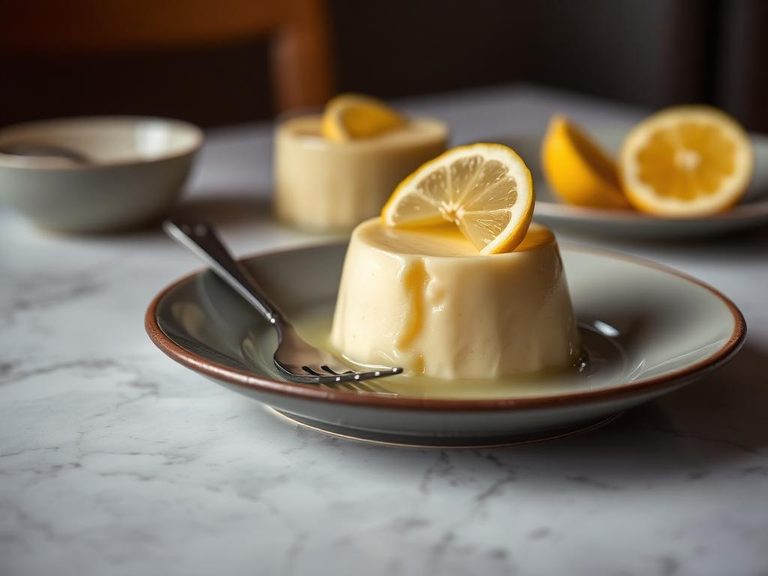
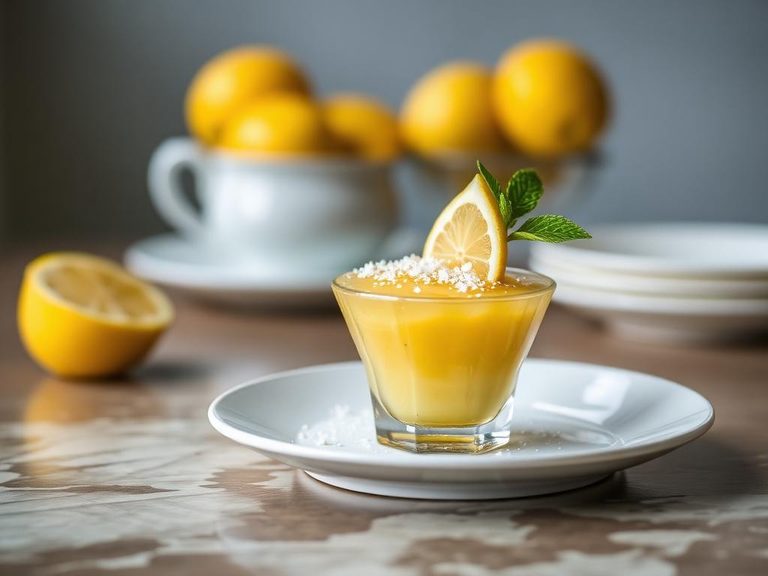


🌍 Where it's eaten
💡 Did you know?
The distinct yellow color of lemon pudding mix often comes from tartrazine (Yellow 5) or other food dyes, as the natural color of lemon juice would fade during processing and storage.
Full nutrition (USDA data · scales with serving)
| Water | 5.2 g |
| Energy | 366 kcal |
| Energy | 1531 kj |
| Protein | 0.10 g |
| Total lipid (fat) | 1.5 g |
| Ash | 2.4 g |
| Carbohydrate, by difference | 90.3 g |
| Fiber, total dietary | 0.10 g |
| Iron, Fe | 0.17 mg |
| Magnesium, Mg | 4.0 mg |
| Phosphorus, P | 3.0 mg |
| Potassium, K | 257 mg |
| Sodium, Na | 849 mg |
| Zinc, Zn | 0.02 mg |
| Copper, Cu | 0.02 mg |
| Manganese, Mn | 0.03 mg |
| Selenium, Se | 0.70 ug |
| Vitamin C, total ascorbic acid | 0.00 mg |
| Thiamin | 0.01 mg |
| Riboflavin | 0.02 mg |
| Niacin | 0.02 mg |
| Pantothenic acid | 0.03 mg |
| Vitamin B-6 | 0.01 mg |
| Folate, total | 0.00 ug |
| Folic acid | 0.00 ug |
| Folate, food | 0.00 ug |
| Folate, DFE | 0.00 ug |
| Vitamin B-12 | 0.00 ug |
| Vitamin A, RAE | 0.00 ug |
| Retinol | 0.00 ug |
| Vitamin A, IU | 0.00 iu |
| Caffeine | 0.00 mg |
| Theobromine | 0.00 mg |
Fat & fatty acid profile (per 100g)
| Fatty acids, total saturated | 0.27 g |
| SFA 14:0 | 0.00 g |
| SFA 16:0 | 0.21 g |
| SFA 18:0 | 0.05 g |
| Fatty acids, total monounsaturated | 0.44 g |
| MUFA 16:1 | 0.01 g |
| MUFA 18:1 | 0.44 g |
| Fatty acids, total polyunsaturated | 0.72 g |
| PUFA 18:2 | 0.68 g |
| PUFA 18:3 | 0.04 g |
| Cholesterol | 0.00 mg |
Amino acid profile (per 100g)
| Tryptophan | 0.00 g |
| Threonine | 0.00 g |
| Isoleucine | 0.00 g |
| Leucine | 0.01 g |
| Lysine | 0.00 g |
| Methionine | 0.00 g |
| Cystine | 0.00 g |
| Phenylalanine | 0.00 g |
| Tyrosine | 0.00 g |
| Valine | 0.00 g |
| Arginine | 0.00 g |
| Histidine | 0.00 g |
| Alanine | 0.00 g |
| Aspartic acid | 0.00 g |
| Glutamic acid | 0.01 g |
| Glycine | 0.00 g |
| Proline | 0.01 g |
| Serine | 0.00 g |
FAQ
Why does the dry mix have added potassium and sodium?
These are typically added as potassium citrate and sodium citrate, which act as acidity regulators. They help control the tartness and stabilize the pudding's texture during preparation and storage.
Can I make this pudding with just water?
Yes, you can use water, but the result will be less creamy and rich. Using milk (dairy or plant-based) adds fat and protein, improving both the mouthfeel and nutritional profile of the final pudding.
How is this different from instant lemon pudding mix?
This 'dry mix, regular' typically requires cooking on the stovetop to fully thicken and develop flavor. Instant mixes are pre-cooked and dried, thickening with just cold milk and no heat.
Nutrient density (calculated · NRF9.3)
Nutrient Rich Foods index: beneficial nutrients (protein, fiber, vitamins, minerals) minus saturated fat, added sugar & sodium, per 100 kcal.
NRF9.3 index — Fulgoni, Keast & Drewnowski, 2009. Computed from USDA nutrients.
Weight-loss friendliness (composite index)
Energy density 3.66 kcal/g · 0% calories from protein · 0.1 g fiber · 0.0 g sugar per 100 g.
Composite of energy density (Rolls et al., 1999), protein & fiber satiety, minus sugar. A calculated heuristic — ranks satiety-per-calorie, not a clinical measure.
Dietary load (calculated from USDA values)
Potential renal acid load. Positive = acid-forming, negative = alkaline-forming.
Sodium-to-potassium ratio: 3.30 (lower is better — aim for ≤ 1)
Sodium:potassium per WHO potassium guidance. Computed from USDA nutrients.