

Prunes, dehydrated (low-moisture), stewed
Whole food · Fruits and Fruit Juices

Photo: Wikipedia
Stewed dehydrated prunes are plums that have been dried to a low-moisture state and then gently simmered until they become plump, tender, and deeply sweet with a rich, jammy texture. They offer a concentrated source of carbohydrates (29.7g per 100g) and a modest 113 kcal, making them a naturally sweet, fiber-rich snack or ingredient. The stewing process rehydrates the prunes, intensifying their earthy, caramel-like flavor while softening their chewy bite.
Calorie split: 4% protein · 94% carbs · 2% fat
↓ Full nutrition💚 Why it's loved
People love stewed prunes for their deep, complex sweetness that balances tartness and earthiness, often compared to dates or figs. Their soft, melt-in-the-mouth texture makes them a comforting treat, and they hold cultural significance in traditional desserts and holiday dishes across many cuisines.
⚠️ Watch-outs & how to enjoy it better
The high carbohydrate and natural sugar content can cause blood-sugar spikes, so those with diabetes or insulin resistance should practice portion control (e.g., limit to 3-4 prunes per serving). To counteract this, pair them with protein or healthy fats like nuts or yogurt to slow glucose absorption. Additionally, some may experience digestive discomfort due to sorbitol, so starting with small amounts and drinking water can help.
Key benefits
- High in natural carbohydrates for quick energy.
- Rich in antioxidants like phenolic compounds.
- Supports digestive health due to natural sorbitol content.
- Provides essential minerals like potassium and copper.
- Versatile ingredient for both sweet and savory dishes.
🍽️ Popular dishes
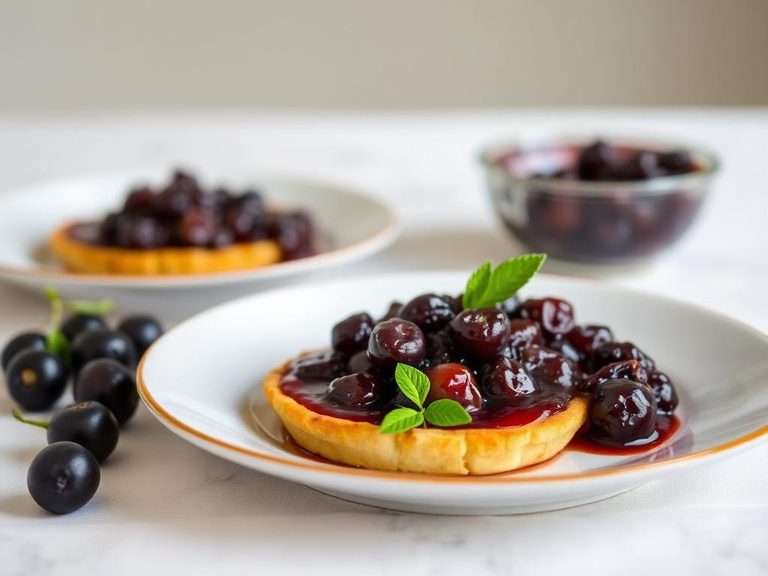


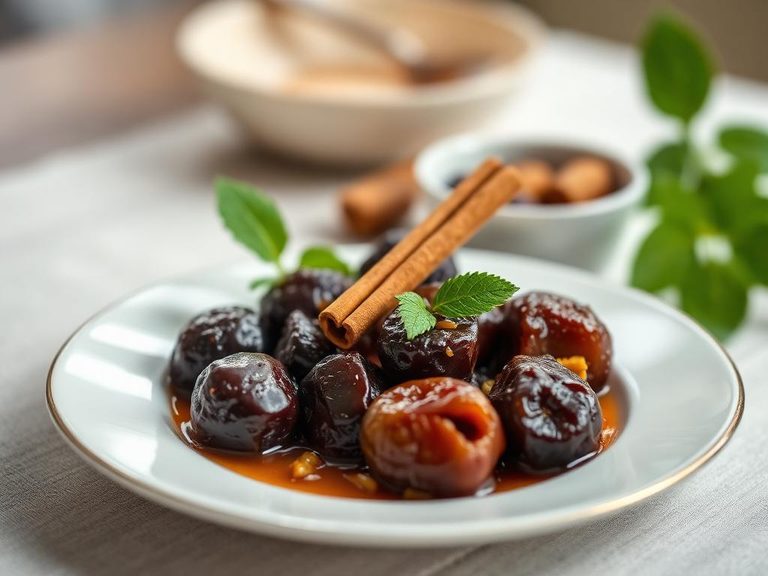
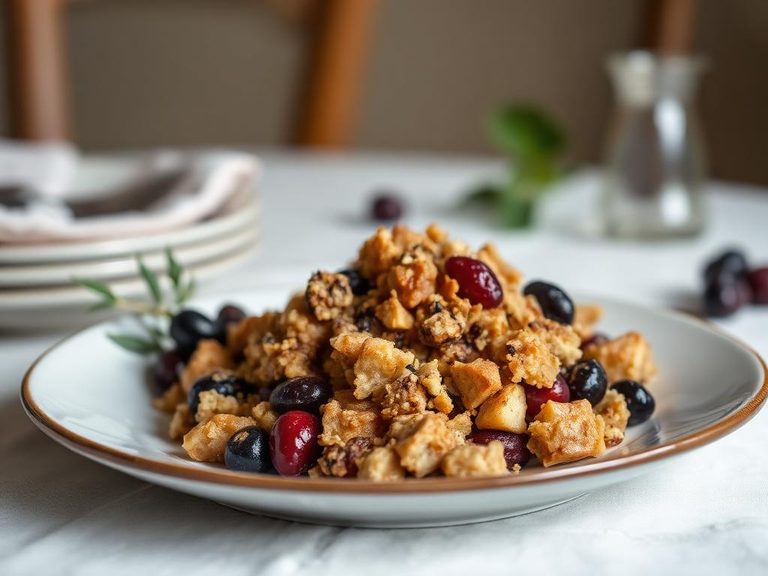
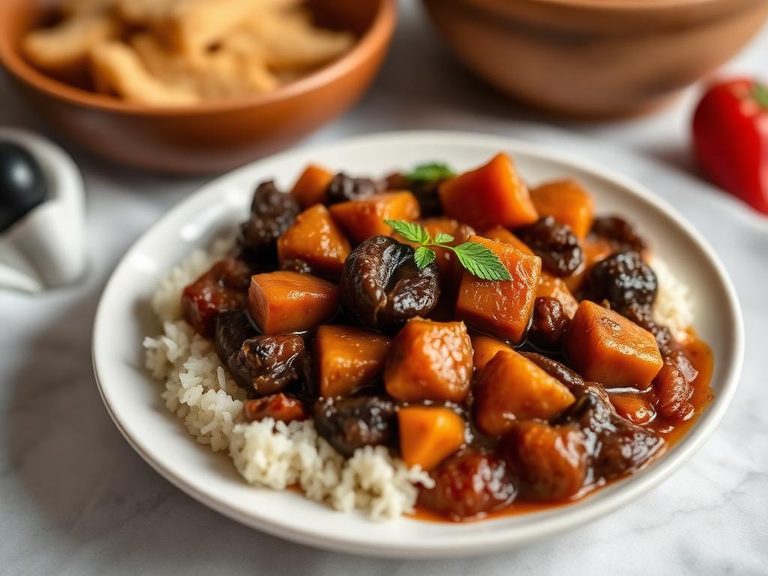
🌍 Where it's eaten
💡 Did you know?
Prunes were historically used as a natural laxative by ancient Romans, and the word 'prune' comes from the Latin 'prunum,' meaning plum.
Full nutrition (USDA data · scales with serving)
| Water | 68.0 g |
| Energy | 113 kcal |
| Energy | 473 kj |
| Protein | 1.2 g |
| Total lipid (fat) | 0.24 g |
| Ash | 0.83 g |
| Carbohydrate, by difference | 29.7 g |
| Calcium, Ca | 24.0 mg |
| Iron, Fe | 1.2 mg |
| Magnesium, Mg | 21.0 mg |
| Phosphorus, P | 37.0 mg |
| Potassium, K | 353 mg |
| Sodium, Na | 2.0 mg |
| Zinc, Zn | 0.25 mg |
| Copper, Cu | 0.20 mg |
| Manganese, Mn | 0.10 mg |
| Vitamin C, total ascorbic acid | 0.00 mg |
| Thiamin | 0.05 mg |
| Riboflavin | 0.03 mg |
| Niacin | 0.98 mg |
| Pantothenic acid | 0.11 mg |
| Vitamin B-6 | 0.19 mg |
| Folate, total | 0.00 ug |
| Folic acid | 0.00 ug |
| Folate, food | 0.00 ug |
| Folate, DFE | 0.00 ug |
| Vitamin B-12 | 0.00 ug |
| Vitamin A, RAE | 26.0 ug |
| Retinol | 0.00 ug |
| Vitamin A, IU | 523 iu |
| Vitamin D (D2 + D3), International Units | 0.00 iu |
| Vitamin D (D2 + D3) | 0.00 ug |
Fat & fatty acid profile (per 100g)
| Fatty acids, total saturated | 0.02 g |
| SFA 16:0 | 0.02 g |
| SFA 18:0 | 0.00 g |
| Fatty acids, total monounsaturated | 0.16 g |
| MUFA 16:1 | 0.00 g |
| MUFA 18:1 | 0.16 g |
| Fatty acids, total polyunsaturated | 0.05 g |
| PUFA 18:2 | 0.05 g |
| Cholesterol | 0.00 mg |
Amino acid profile (per 100g)
Estimated from Plums, dried (prunes), uncooked — USDA does not publish this profile for Prunes.
| Tryptophan | 0.03 g |
| Threonine | 0.05 g |
| Isoleucine | 0.04 g |
| Leucine | 0.07 g |
| Lysine | 0.05 g |
| Methionine | 0.02 g |
| Cystine | 0.01 g |
| Phenylalanine | 0.05 g |
| Tyrosine | 0.02 g |
| Valine | 0.06 g |
| Arginine | 0.04 g |
| Histidine | 0.03 g |
| Alanine | 0.07 g |
| Aspartic acid | 0.80 g |
| Glutamic acid | 0.11 g |
| Glycine | 0.05 g |
| Proline | 0.13 g |
| Serine | 0.06 g |
FAQ
Are stewed prunes the same as regular prunes?
Stewed prunes are dehydrated prunes that have been rehydrated by simmering in water or juice, making them softer and more plump than raw dried prunes.
Can I use stewed prunes in baking?
Yes, stewed prunes can be used in cakes, muffins, and breads to add moisture and natural sweetness, often replacing sugar or oil in recipes.
How should I store stewed prunes?
Store them in an airtight container in the refrigerator for up to a week, or freeze them for longer preservation.
Nutrient density (calculated · NRF9.3)
Nutrient Rich Foods index: beneficial nutrients (protein, fiber, vitamins, minerals) minus saturated fat, added sugar & sodium, per 100 kcal.
NRF9.3 index — Fulgoni, Keast & Drewnowski, 2009. Computed from USDA nutrients.
Weight-loss friendliness (composite index)
Energy density 1.13 kcal/g · 4% calories from protein · 0.0 g fiber · 0.0 g sugar per 100 g.
Composite of energy density (Rolls et al., 1999), protein & fiber satiety, minus sugar. A calculated heuristic — ranks satiety-per-calorie, not a clinical measure.
Dietary load (calculated from USDA values)
Potential renal acid load. Positive = acid-forming, negative = alkaline-forming.
Sodium-to-potassium ratio: 0.01 (lower is better — aim for ≤ 1)
Sodium:potassium per WHO potassium guidance. Computed from USDA nutrients.