

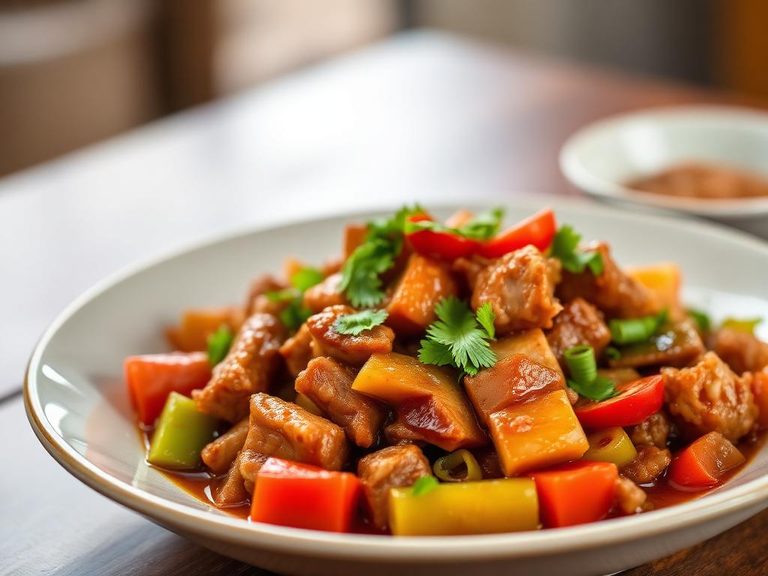
Pork with chili and tomatoes
Common food
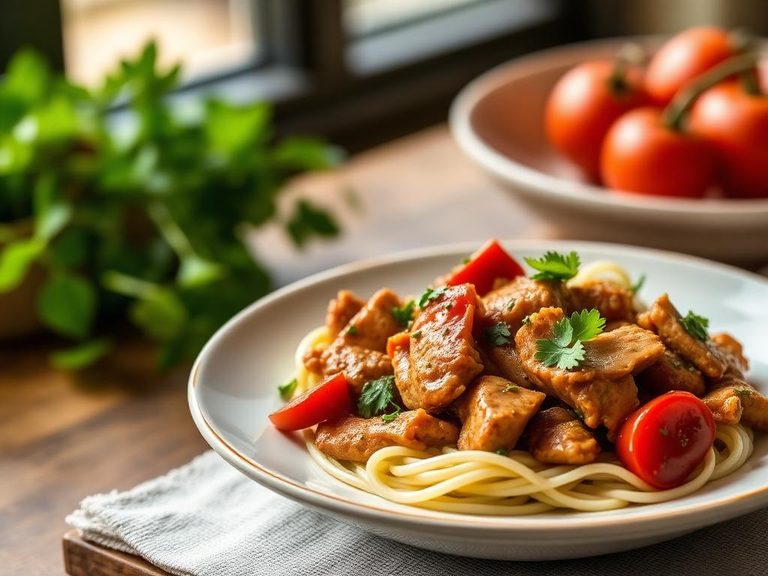
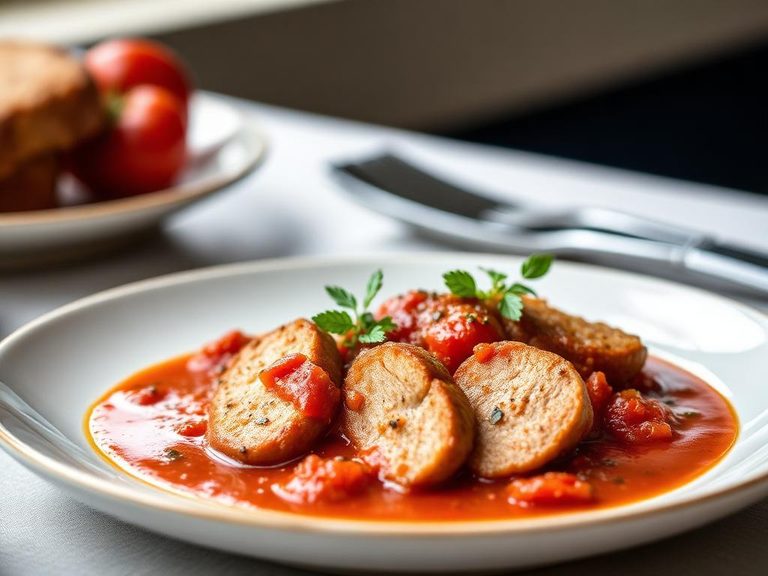
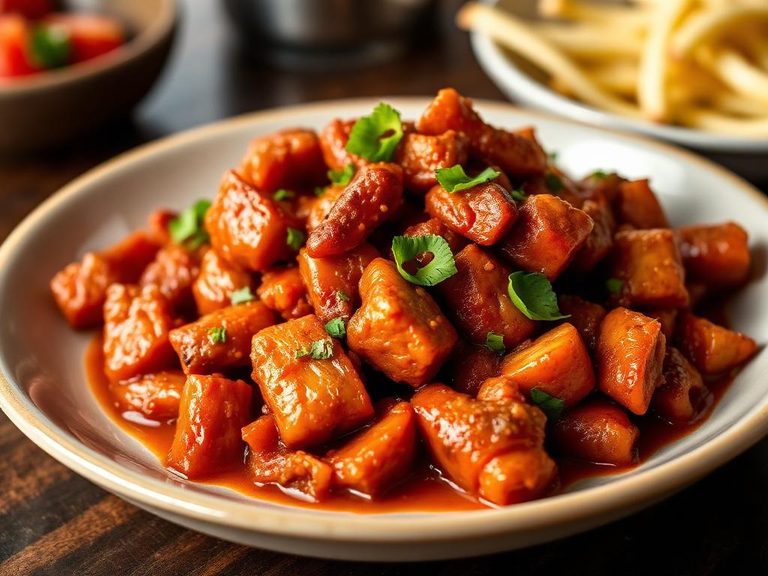
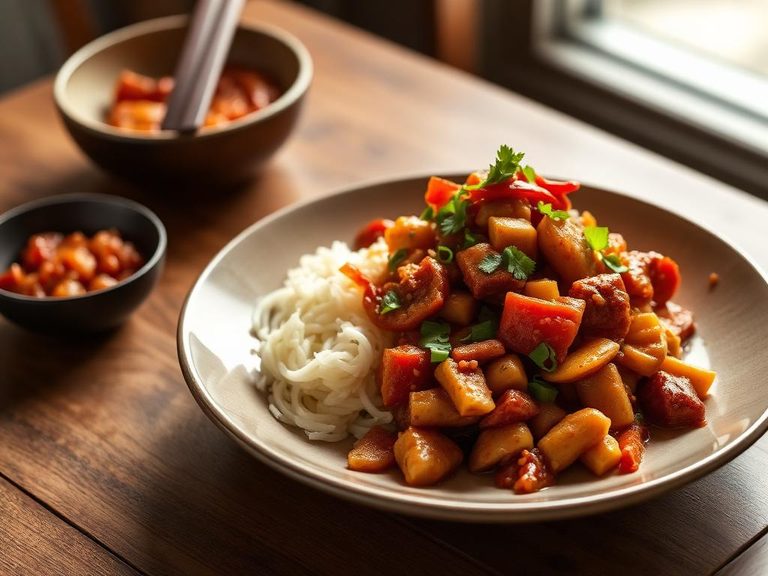
This is a vibrant, savory stir-fry of tender pork slices tossed with juicy tomatoes and a kick of chili, creating a glossy, saucy dish with a balance of sweet, tangy, and spicy notes. The texture is a satisfying contrast between the soft, yielding pork and the slight bite of the tomato skins. Nutritionally, it's a lean, high-protein option that's low in carbohydrates and calories.
Calorie split: 50% protein · 12% carbs · 39% fat
↓ Full nutrition💚 Why it's loved
People adore it for its dynamic flavor profile—the natural sweetness of tomatoes harmonizes with the savory pork and the fiery chili heat. It's a beloved, quick-cooking comfort food in many households, perfect for a satisfying weeknight meal.
⚠️ Watch-outs & how to enjoy it better
The dish can be high in sodium if made with soy sauce or pre-made stir-fry sauces, which is a consideration for those monitoring blood pressure. The chili heat may cause digestive discomfort for some; start with milder chilies like bell peppers or remove seeds to reduce capsaicin content.
Key benefits
- Excellent source of high-quality protein for muscle maintenance.
- Low in carbohydrates, making it suitable for low-carb diets.
- Rich in lycopene from cooked tomatoes, an antioxidant.
- Capsaicin from chilies may boost metabolism slightly.
- Provides vitamin C from both tomatoes and chilies.
🍽️ Popular dishes
🌍 Where it's eaten
💡 Did you know?
Cooking tomatoes in oil, as in this stir-fry, significantly increases the bioavailability of the antioxidant lycopene, making it easier for your body to absorb compared to raw tomatoes.
Full nutrition (USDA data · scales with serving)
| Water | 80.8 g |
| Energy | 95.0 kcal |
| Protein | 11.6 g |
| Total lipid (fat) | 4.0 g |
| Carbohydrate, by difference | 2.7 g |
| Fiber, total dietary | 0.90 g |
| Total Sugars | 1.6 g |
| Calcium, Ca | 15.0 mg |
| Iron, Fe | 0.58 mg |
| Magnesium, Mg | 18.0 mg |
| Phosphorus, P | 123 mg |
| Potassium, K | 323 mg |
| Sodium, Na | 118 mg |
| Zinc, Zn | 1.0 mg |
| Copper, Cu | 0.06 mg |
| Selenium, Se | 18.9 ug |
| Vitamin C, total ascorbic acid | 16.7 mg |
| Thiamin | 0.30 mg |
| Riboflavin | 0.14 mg |
| Niacin | 2.8 mg |
| Vitamin B-6 | 0.26 mg |
| Folate, total | 9.0 ug |
| Folic acid | 0.00 ug |
| Folate, food | 9.0 ug |
| Folate, DFE | 9.0 ug |
| Choline, total | 43.1 mg |
| Vitamin B-12 | 0.25 ug |
| Vitamin B-12, added | 0.00 ug |
| Vitamin A, RAE | 21.0 ug |
| Retinol | 1.0 ug |
| Carotene, beta | 210 ug |
| Carotene, alpha | 41.0 ug |
| Cryptoxanthin, beta | 11.0 ug |
| Lycopene | 849 ug |
| Lutein + zeaxanthin | 135 ug |
| Vitamin E (alpha-tocopherol) | 0.70 mg |
| Vitamin E, added | 0.00 mg |
| Vitamin D (D2 + D3) | 0.30 ug |
| Vitamin K (phylloquinone) | 5.0 ug |
| Alcohol, ethyl | 0.00 g |
| Caffeine | 0.00 mg |
| Theobromine | 0.00 mg |
Fat & fatty acid profile (per 100g)
| Fatty acids, total saturated | 1.4 g |
| SFA 4:0 | 0.00 g |
| SFA 6:0 | 0.00 g |
| SFA 8:0 | 0.00 g |
| SFA 10:0 | 0.01 g |
| SFA 12:0 | 0.01 g |
| SFA 14:0 | 0.05 g |
| SFA 16:0 | 0.89 g |
| SFA 18:0 | 0.45 g |
| Fatty acids, total monounsaturated | 1.8 g |
| MUFA 16:1 | 0.12 g |
| MUFA 18:1 | 1.6 g |
| MUFA 20:1 | 0.03 g |
| MUFA 22:1 | 0.00 g |
| Fatty acids, total polyunsaturated | 0.46 g |
| PUFA 18:2 | 0.39 g |
| PUFA 18:3 | 0.03 g |
| PUFA 18:4 | 0.00 g |
| PUFA 20:4 | 0.04 g |
| PUFA 20:5 n-3 (EPA) | 0.00 g |
| PUFA 22:5 n-3 (DPA) | 0.00 g |
| PUFA 22:6 n-3 (DHA) | 0.00 g |
| Cholesterol | 32.0 mg |
FAQ
Can I use chicken or beef instead of pork?
Yes, this recipe is very adaptable. Chicken breast or thigh works well, as does thinly sliced beef. Adjust cooking time accordingly—chicken and beef may cook slightly faster.
How can I make it less spicy?
Use fewer chilies, remove the seeds and membranes (where most heat resides), or substitute with milder varieties like jalapeños (with less seeds) or even red bell peppers for color without heat.
Is this dish good for meal prep?
It can be, but the pork may lose some tenderness upon reheating. Store in an airtight container for up to 3 days. Reheat gently in a pan or microwave to avoid overcooking the meat.
Nutrient density (calculated · NRF9.3)
Nutrient Rich Foods index: beneficial nutrients (protein, fiber, vitamins, minerals) minus saturated fat, added sugar & sodium, per 100 kcal.
NRF9.3 index — Fulgoni, Keast & Drewnowski, 2009. Computed from USDA nutrients.
Weight-loss friendliness (composite index)
Energy density 0.95 kcal/g · 49% calories from protein · 0.9 g fiber · 1.6 g sugar per 100 g.
Composite of energy density (Rolls et al., 1999), protein & fiber satiety, minus sugar. A calculated heuristic — ranks satiety-per-calorie, not a clinical measure.
Dietary load (calculated from USDA values)
Potential renal acid load. Positive = acid-forming, negative = alkaline-forming.
Sodium-to-potassium ratio: 0.37 (lower is better — aim for ≤ 1)
Sodium:potassium per WHO potassium guidance. Computed from USDA nutrients.