

Pomegranate juice beverage, 40-50% juice, light
Common food

Photo: Wikipedia
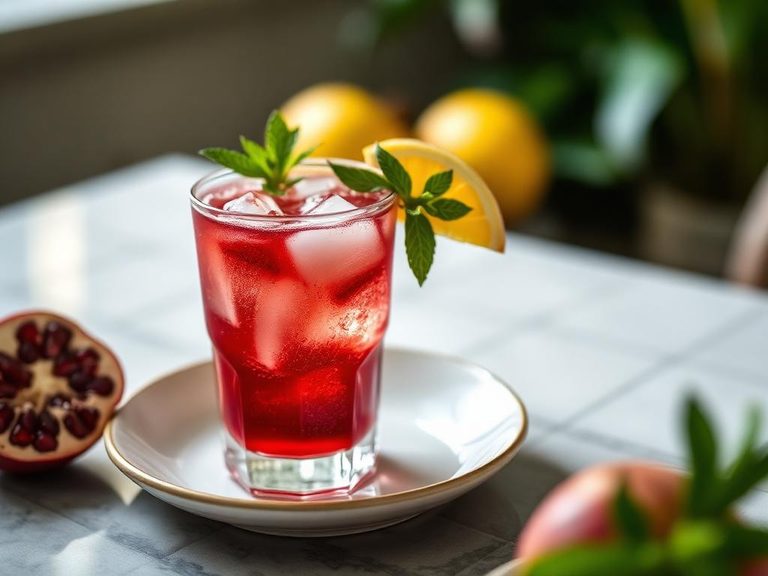
This is a light, refreshing pomegranate beverage made from a blend of juice and water, offering a tart-sweet flavor with a clean, slightly astringent finish. Its vibrant ruby color and fruity aroma make it a visually appealing thirst-quencher. Nutritionally, it's a low-calorie option primarily providing quick energy from its 6.56g of carbohydrates per 100g, mostly from natural sugars.
Calorie split: 1% protein · 94% carbs · 5% fat
↓ Full nutrition💚 Why it's loved
People love it for its distinctive sweet-tart balance that's more complex than plain water or soda, and its association with health and vitality in many cultures. It's a versatile base for cocktails, mocktails, and salad dressings, offering a burst of fruity flavor.
⚠️ Watch-outs & how to enjoy it better
The primary concern is its sugar content (6.32g per 100g), which can contribute to blood sugar spikes if consumed in large quantities. To counteract this, practice portion control and consider pairing it with a source of protein or healthy fat (like nuts or yogurt) to slow sugar absorption. Those monitoring sugar intake should check labels, as some blends may contain added sugars.
Key benefits
- Low in calories (27 kcal per 100g)
- Source of quick energy from natural fruit sugars
- Contains antioxidants from pomegranate juice
- Hydrating and refreshing
- No fat content
🍽️ Popular dishes
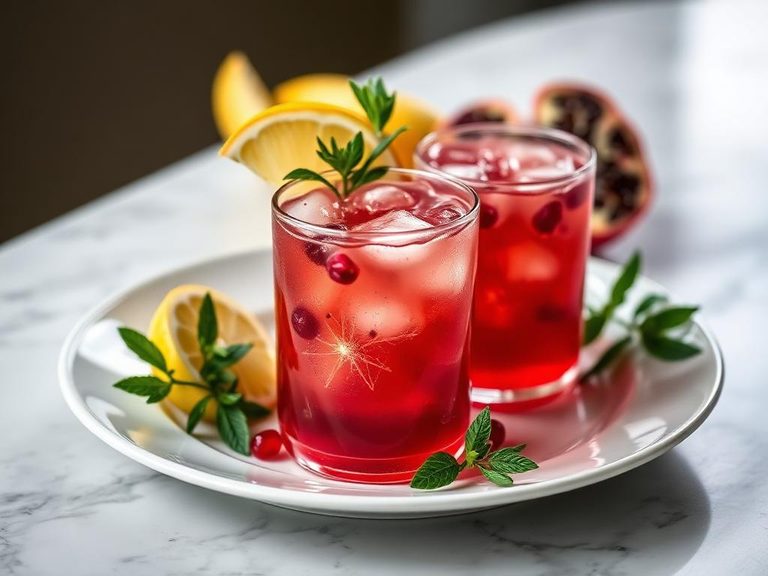
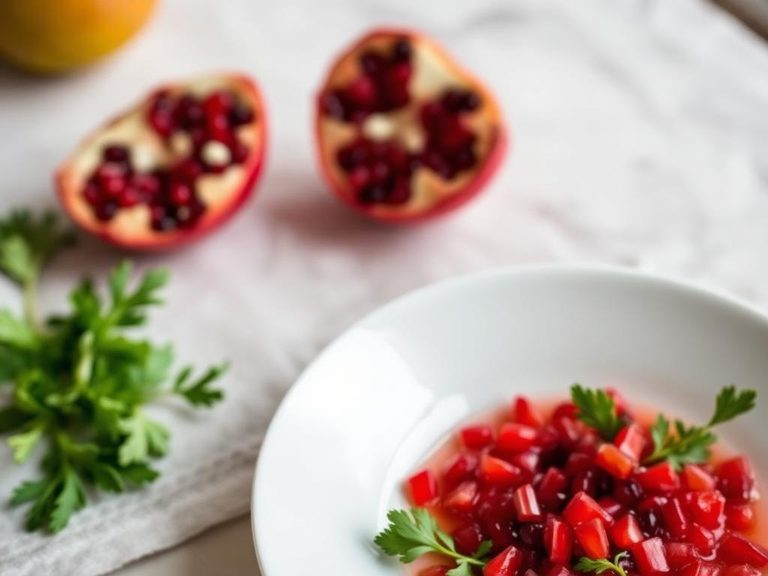
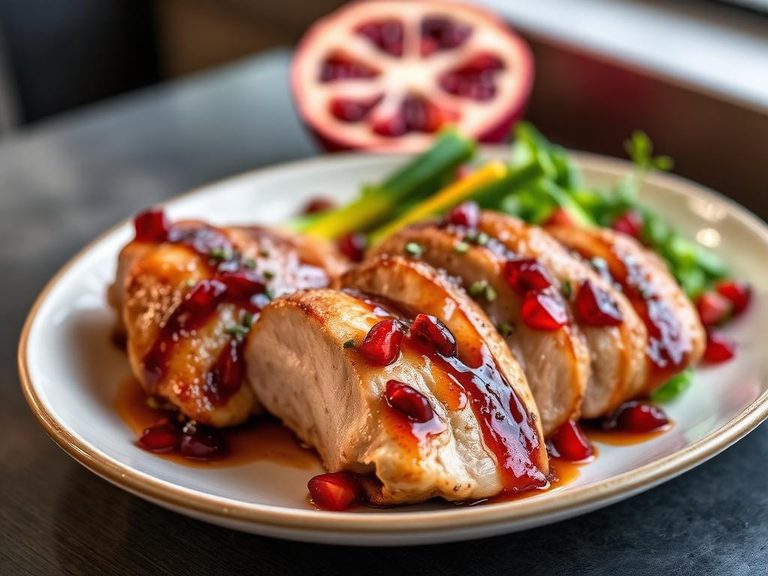
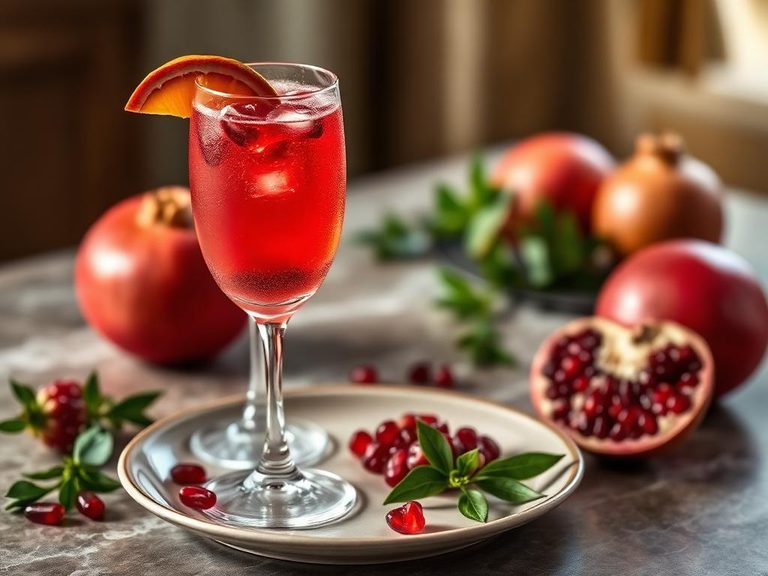
🌍 Where it's eaten
💡 Did you know?
Pomegranates are symbolically linked to abundance and fertility in many ancient cultures, and a single fruit can contain over 1,000 individual seeds (arils).
Full nutrition (USDA data · scales with serving)
| Water | 92.9 g |
| Energy | 27.0 kcal |
| Protein | 0.08 g |
| Total lipid (fat) | 0.14 g |
| Carbohydrate, by difference | 6.6 g |
| Fiber, total dietary | 0.00 g |
| Total Sugars | 6.3 g |
| Calcium, Ca | 7.0 mg |
| Iron, Fe | 0.05 mg |
| Magnesium, Mg | 4.0 mg |
| Phosphorus, P | 6.0 mg |
| Potassium, K | 108 mg |
| Sodium, Na | 6.0 mg |
| Zinc, Zn | 0.04 mg |
| Copper, Cu | 0.01 mg |
| Selenium, Se | 0.20 ug |
| Vitamin C, total ascorbic acid | 0.00 mg |
| Thiamin | 0.01 mg |
| Riboflavin | 0.01 mg |
| Niacin | 0.12 mg |
| Vitamin B-6 | 0.02 mg |
| Folate, total | 12.0 ug |
| Folic acid | 0.00 ug |
| Folate, food | 12.0 ug |
| Folate, DFE | 12.0 ug |
| Choline, total | 2.4 mg |
| Vitamin B-12 | 0.00 ug |
| Vitamin B-12, added | 0.00 ug |
| Vitamin A, RAE | 0.00 ug |
| Retinol | 0.00 ug |
| Carotene, beta | 0.00 ug |
| Carotene, alpha | 0.00 ug |
| Cryptoxanthin, beta | 0.00 ug |
| Lycopene | 0.00 ug |
| Lutein + zeaxanthin | 0.00 ug |
| Vitamin E (alpha-tocopherol) | 0.19 mg |
| Vitamin E, added | 0.00 mg |
| Vitamin D (D2 + D3) | 0.00 ug |
| Vitamin K (phylloquinone) | 5.2 ug |
| Alcohol, ethyl | 0.00 g |
| Caffeine | 0.00 mg |
| Theobromine | 0.00 mg |
Fat & fatty acid profile (per 100g)
| Fatty acids, total saturated | 0.04 g |
| SFA 4:0 | 0.00 g |
| SFA 6:0 | 0.00 g |
| SFA 8:0 | 0.00 g |
| SFA 10:0 | 0.00 g |
| SFA 12:0 | 0.00 g |
| SFA 14:0 | 0.00 g |
| SFA 16:0 | 0.02 g |
| SFA 18:0 | 0.01 g |
| Fatty acids, total monounsaturated | 0.03 g |
| MUFA 16:1 | 0.00 g |
| MUFA 18:1 | 0.02 g |
| MUFA 20:1 | 0.00 g |
| MUFA 22:1 | 0.00 g |
| Fatty acids, total polyunsaturated | 0.03 g |
| PUFA 18:2 | 0.03 g |
| PUFA 18:3 | 0.00 g |
| PUFA 18:4 | 0.00 g |
| PUFA 20:4 | 0.00 g |
| PUFA 20:5 n-3 (EPA) | 0.00 g |
| PUFA 22:5 n-3 (DPA) | 0.00 g |
| PUFA 22:6 n-3 (DHA) | 0.00 g |
| Cholesterol | 0.00 mg |
FAQ
Is pomegranate juice beverage the same as 100% pomegranate juice?
No. This beverage is a blend, typically containing 40-50% actual pomegranate juice diluted with water and often sweeteners. 100% juice is pure, undiluted pomegranate juice, which is more tart, higher in calories, and richer in nutrients.
Does it contain added sugar?
The nutrition label shows 6.32g of sugar per 100g. Given it's a 40-50% juice blend, some of this is natural fruit sugar, but it may also include added sugars like high-fructose corn syrup or cane sugar for palatability. Always check the ingredients list.
Is it a good source of vitamins?
While it contains some vitamins from the pomegranate juice, such as vitamin C, the dilution means it's not a significant source. For a major vitamin boost, 100% pomegranate juice or the whole fruit is preferable.
Nutrient density (calculated · NRF9.3)
Nutrient Rich Foods index: beneficial nutrients (protein, fiber, vitamins, minerals) minus saturated fat, added sugar & sodium, per 100 kcal.
NRF9.3 index — Fulgoni, Keast & Drewnowski, 2009. Computed from USDA nutrients.
Weight-loss friendliness (composite index)
Energy density 0.27 kcal/g · 1% calories from protein · 0.0 g fiber · 6.3 g sugar per 100 g.
Composite of energy density (Rolls et al., 1999), protein & fiber satiety, minus sugar. A calculated heuristic — ranks satiety-per-calorie, not a clinical measure.
Dietary load (calculated from USDA values)
Potential renal acid load. Positive = acid-forming, negative = alkaline-forming.
Sodium-to-potassium ratio: 0.06 (lower is better — aim for ≤ 1)
Sodium:potassium per WHO potassium guidance. Computed from USDA nutrients.