

Pears, canned, extra heavy syrup pack, solids and liquids
Whole food · Fruits and Fruit Juices

Photo: Wikipedia
These are pear halves or slices preserved in a thick, sugary syrup, offering a soft, melting texture and a concentrated, candy-like sweetness. Nutritionally, they are a quick source of energy, primarily from carbohydrates, with minimal protein or fat.
Calorie split: 1% protein · 98% carbs · 1% fat
↓ Full nutrition💚 Why it's loved
People love them for their intensely sweet, nostalgic flavor and soft, spoonable texture, making them a comforting dessert or a versatile ingredient in baking and cocktails.
⚠️ Watch-outs & how to enjoy it better
The extra heavy syrup pack means a very high sugar content, which can cause rapid blood-sugar spikes and contributes empty calories. To enjoy them more healthily, opt for pears canned in water or light syrup, limit the portion, and pair them with a source of protein or fat like yogurt or nuts to slow sugar absorption.
Key benefits
- Provides quick energy from simple carbohydrates.
- Offers some dietary fiber from the pear itself.
- Shelf-stable and requires no preparation.
- A familiar, sweet treat for desserts and snacks.
🍽️ Popular dishes
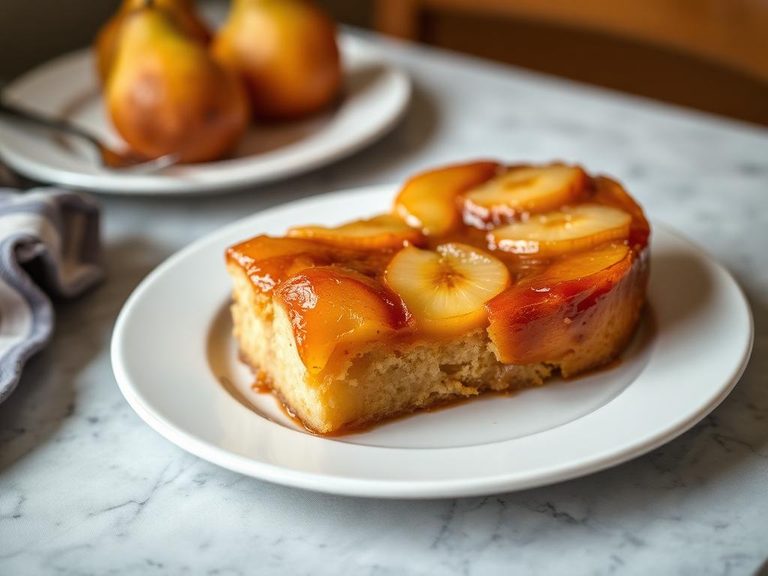
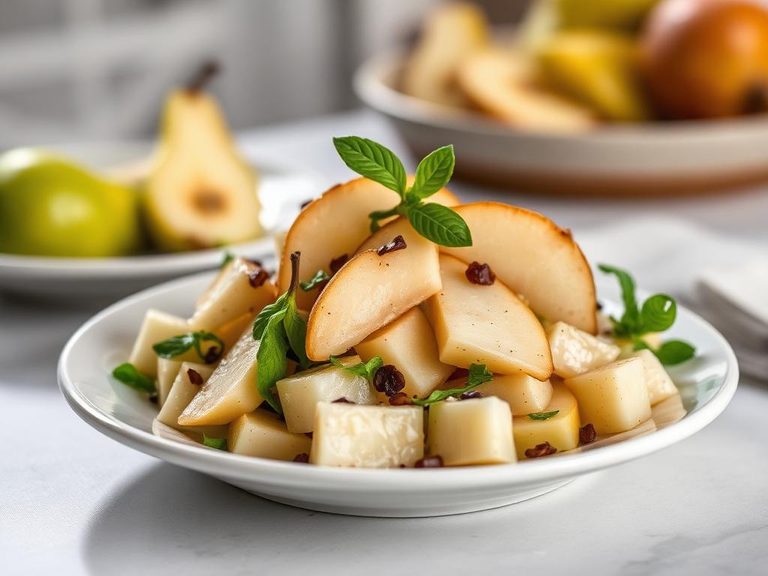
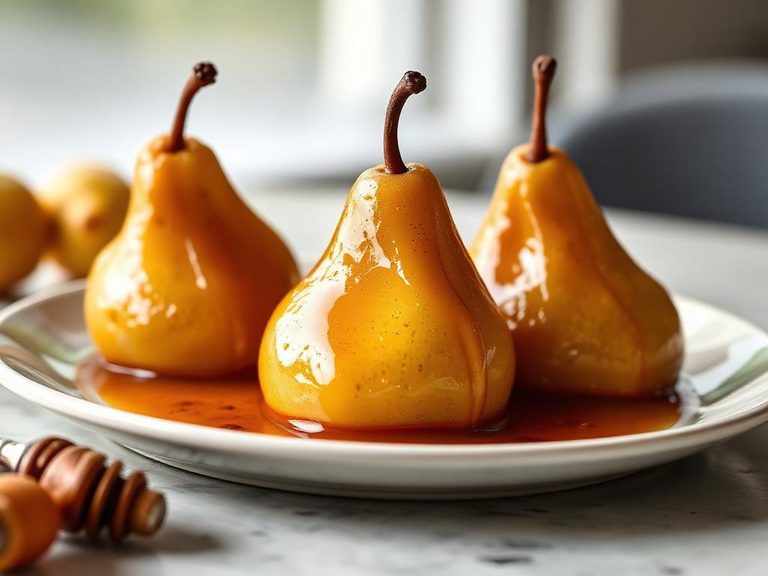
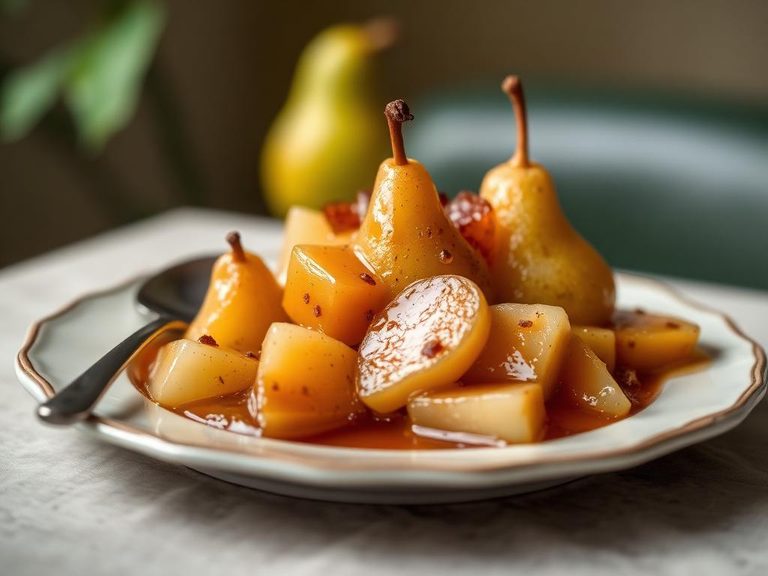

🌍 Where it's eaten
💡 Did you know?
The 'extra heavy syrup' pack is defined by the USDA as having a sugar concentration of about 40-42% by weight, making the syrup almost as thick as light corn syrup.
Full nutrition (USDA data · scales with serving)
| Water | 74.3 g |
| Energy | 97.0 kcal |
| Energy | 406 kj |
| Protein | 0.19 g |
| Total lipid (fat) | 0.13 g |
| Ash | 0.15 g |
| Carbohydrate, by difference | 25.3 g |
| Fiber, total dietary | 1.6 g |
| Calcium, Ca | 5.0 mg |
| Iron, Fe | 0.22 mg |
| Magnesium, Mg | 4.0 mg |
| Phosphorus, P | 7.0 mg |
| Potassium, K | 64.0 mg |
| Sodium, Na | 5.0 mg |
| Zinc, Zn | 0.08 mg |
| Copper, Cu | 0.05 mg |
| Manganese, Mn | 0.03 mg |
| Vitamin C, total ascorbic acid | 1.1 mg |
| Thiamin | 0.01 mg |
| Riboflavin | 0.02 mg |
| Niacin | 0.24 mg |
| Pantothenic acid | 0.02 mg |
| Vitamin B-6 | 0.01 mg |
| Folate, total | 1.0 ug |
| Folic acid | 0.00 ug |
| Folate, food | 1.0 ug |
| Folate, DFE | 1.0 ug |
| Vitamin B-12 | 0.00 ug |
| Vitamin A, RAE | 0.00 ug |
| Retinol | 0.00 ug |
| Vitamin A, IU | 0.00 iu |
| Vitamin D (D2 + D3), International Units | 0.00 iu |
| Vitamin D (D2 + D3) | 0.00 ug |
Fat & fatty acid profile (per 100g)
| Fatty acids, total saturated | 0.01 g |
| SFA 16:0 | 0.01 g |
| SFA 18:0 | 0.00 g |
| Fatty acids, total monounsaturated | 0.03 g |
| MUFA 16:1 | 0.00 g |
| MUFA 18:1 | 0.03 g |
| Fatty acids, total polyunsaturated | 0.03 g |
| PUFA 18:2 | 0.03 g |
| Fatty acids, total trans | 0.00 g |
| Cholesterol | 0.00 mg |
Amino acid profile (per 100g)
| Threonine | 0.01 g |
| Isoleucine | 0.01 g |
| Leucine | 0.01 g |
| Lysine | 0.01 g |
| Methionine | 0.00 g |
| Cystine | 0.00 g |
| Phenylalanine | 0.01 g |
| Tyrosine | 0.00 g |
| Valine | 0.01 g |
| Arginine | 0.00 g |
| Histidine | 0.00 g |
| Alanine | 0.01 g |
| Aspartic acid | 0.04 g |
| Glutamic acid | 0.01 g |
| Glycine | 0.01 g |
| Proline | 0.01 g |
| Serine | 0.01 g |
FAQ
Are the pears in the syrup cooked?
Yes, the pears are peeled, cored, and typically heated during the canning process to ensure safety and shelf stability before being packed into the syrup.
Can I reuse the syrup?
The syrup is very sweet and can be used as a simple syrup base for cocktails, to sweeten tea, or as a glaze for meats like ham or pork.
What's the difference between heavy and extra heavy syrup?
Extra heavy syrup has a higher sugar concentration (about 40-42%) compared to heavy syrup (about 35-40%), resulting in a thicker consistency and sweeter taste.
Nutrient density (calculated · NRF9.3)
Nutrient Rich Foods index: beneficial nutrients (protein, fiber, vitamins, minerals) minus saturated fat, added sugar & sodium, per 100 kcal.
NRF9.3 index — Fulgoni, Keast & Drewnowski, 2009. Computed from USDA nutrients.
Weight-loss friendliness (composite index)
Energy density 0.97 kcal/g · 1% calories from protein · 1.6 g fiber · 0.0 g sugar per 100 g.
Composite of energy density (Rolls et al., 1999), protein & fiber satiety, minus sugar. A calculated heuristic — ranks satiety-per-calorie, not a clinical measure.
Dietary load (calculated from USDA values)
Potential renal acid load. Positive = acid-forming, negative = alkaline-forming.
Sodium-to-potassium ratio: 0.08 (lower is better — aim for ≤ 1)
Sodium:potassium per WHO potassium guidance. Computed from USDA nutrients.