

Pastrami, beef, 98% fat-free
Whole food · Sausages and Luncheon Meats

Photo: Wikipedia
Pastrami, beef, 98% fat-free is a lean, intensely flavorful cured and smoked meat, typically made from the brisket or round. It boasts a deep, reddish-pink hue with a firm yet tender texture, offering a robust, peppery, and smoky taste profile. Nutritionally, it stands out as an exceptionally high-protein, very low-fat option, packing nearly 20 grams of protein per 100 grams with minimal fat and carbohydrates.
Calorie split: 83% protein · 6% carbs · 11% fat
↓ Full nutrition💚 Why it's loved
People love it for its bold, complex flavor—a perfect marriage of smoky, salty, and spiced notes that can elevate a simple sandwich. Its cultural significance, especially in Jewish delis and New York City cuisine, adds a layer of nostalgic comfort and tradition to every bite.
⚠️ Watch-outs & how to enjoy it better
The primary concern is its high sodium content from the curing process, which can be problematic for individuals monitoring blood pressure. To counteract this, pair it with potassium-rich foods like avocado or leafy greens, and ensure you drink plenty of water. Those with specific spice sensitivities should also be aware of the rub ingredients.
Key benefits
- Excellent source of high-quality protein for muscle maintenance and satiety.
- Very low in fat and carbohydrates, making it suitable for low-fat and high-protein diets.
- Provides essential minerals like iron and zinc.
- Offers a concentrated, savory flavor without added sugars.
- A convenient, ready-to-eat protein source.
🍽️ Popular dishes
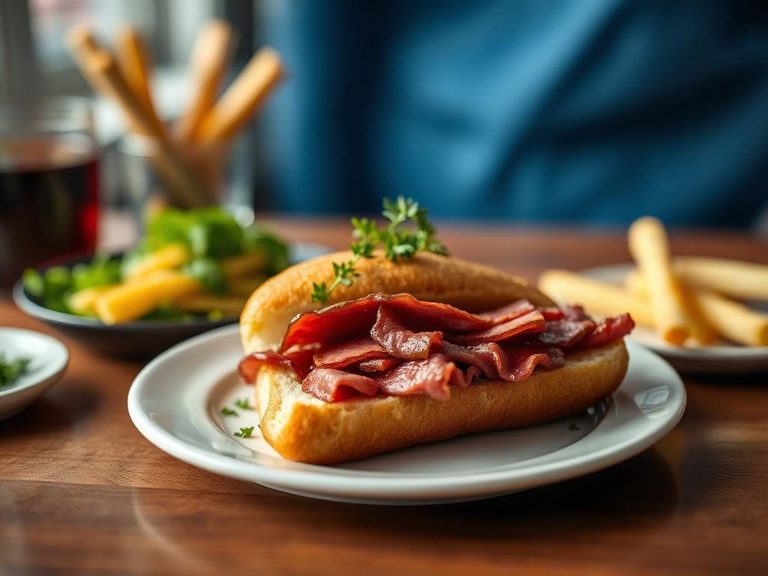
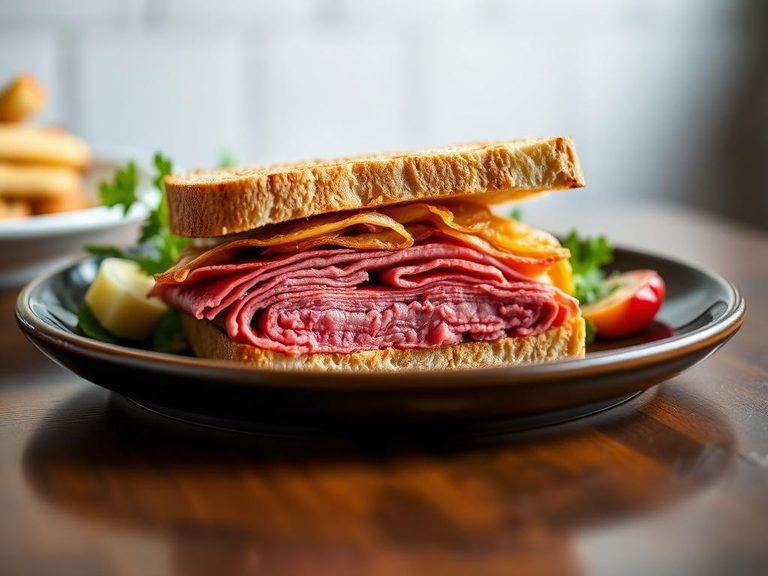
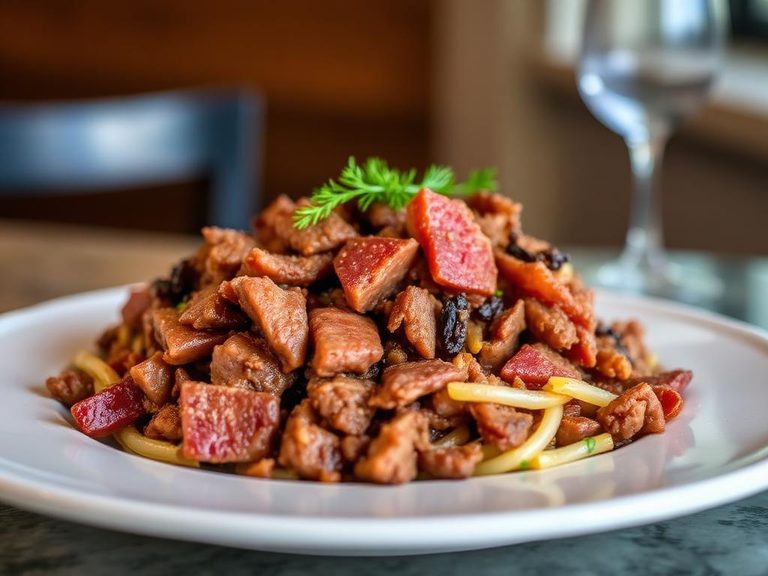
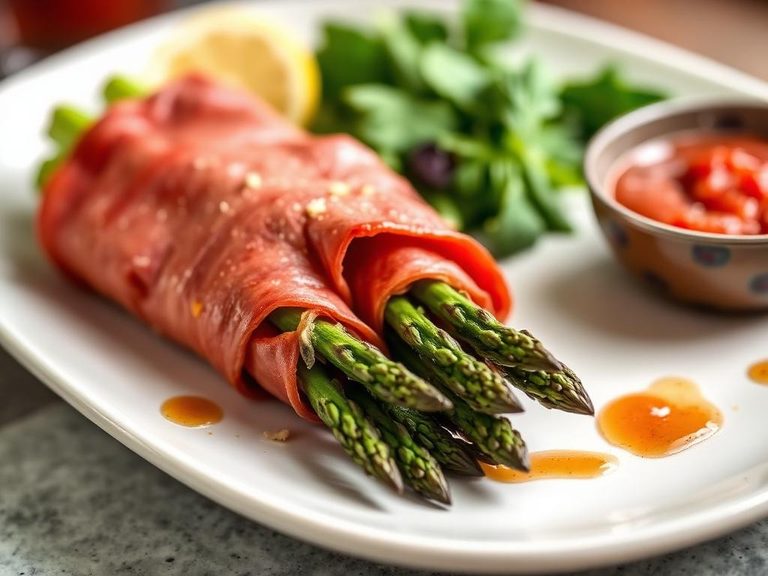
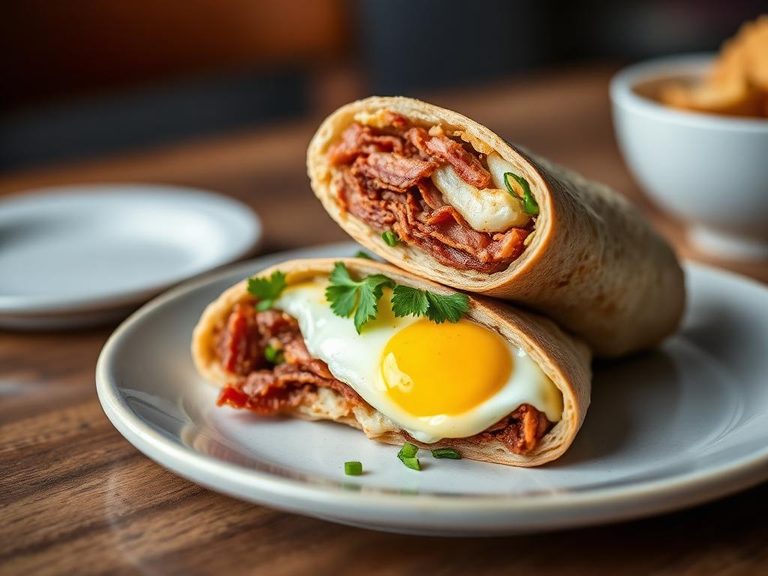
🌍 Where it's eaten
💡 Did you know?
The word 'pastrami' is believed to derive from the Romanian 'pastramă,' meaning 'preserved meat,' a technique originally used to keep meat edible during long journeys.
Full nutrition (USDA data · scales with serving)
| Water | 74.3 g |
| Energy | 95.0 kcal |
| Energy | 397 kj |
| Protein | 19.6 g |
| Total lipid (fat) | 1.2 g |
| Ash | 3.4 g |
| Carbohydrate, by difference | 1.5 g |
| Fiber, total dietary | 0.00 g |
| Total Sugars | 0.00 g |
| Calcium, Ca | 9.0 mg |
| Iron, Fe | 2.8 mg |
| Magnesium, Mg | 18.0 mg |
| Phosphorus, P | 150 mg |
| Potassium, K | 228 mg |
| Sodium, Na | 1010 mg |
| Zinc, Zn | 4.3 mg |
| Copper, Cu | 0.08 mg |
| Manganese, Mn | 0.01 mg |
| Selenium, Se | 10.4 ug |
| Vitamin C, total ascorbic acid | 34.6 mg |
| Thiamin | 0.10 mg |
| Riboflavin | 0.17 mg |
| Niacin | 5.1 mg |
| Pantothenic acid | 0.30 mg |
| Vitamin B-6 | 0.18 mg |
| Folate, total | 7.0 ug |
| Folic acid | 0.00 ug |
| Folate, food | 7.0 ug |
| Folate, DFE | 7.0 ug |
| Vitamin B-12 | 1.8 ug |
| Vitamin A, RAE | 0.00 ug |
| Retinol | 0.00 ug |
| Carotene, beta | 0.00 ug |
| Carotene, alpha | 0.00 ug |
| Cryptoxanthin, beta | 0.00 ug |
| Vitamin A, IU | 0.00 iu |
| Lycopene | 0.00 ug |
| Lutein + zeaxanthin | 0.00 ug |
| Alcohol, ethyl | 0.00 g |
| Caffeine | 0.00 mg |
| Theobromine | 0.00 mg |
Fat & fatty acid profile (per 100g)
| Fatty acids, total saturated | 0.00 g |
| Fatty acids, total monounsaturated | 0.56 g |
| Fatty acids, total polyunsaturated | 0.04 g |
| Cholesterol | 47.0 mg |
| Phytosterols | 0.00 mg |
Amino acid profile (per 100g)
| Tryptophan | 0.16 g |
| Threonine | 0.65 g |
| Isoleucine | 0.74 g |
| Leucine | 1.3 g |
| Lysine | 1.3 g |
| Methionine | 0.40 g |
| Cystine | 0.22 g |
| Phenylalanine | 0.62 g |
| Tyrosine | 0.56 g |
| Valine | 0.76 g |
| Arginine | 1.1 g |
| Histidine | 0.55 g |
| Alanine | 1.2 g |
| Aspartic acid | 1.7 g |
| Glutamic acid | 2.8 g |
| Glycine | 1.4 g |
| Proline | 1.2 g |
| Serine | 0.69 g |
FAQ
Is this pastrami the same as what's on a classic deli sandwich?
Yes, it is the same type of meat, but this 98% fat-free version is a leaner cut (often from the round) compared to the traditional, fattier brisket pastrami. The flavor is similar, but the texture is noticeably leaner.
How should I store and use this lean pastrami?
Keep it refrigerated and use within 3-5 days of opening. It's pre-cooked and ready to eat, perfect for sandwiches, salads, or charcuterie boards. You can also quickly pan-fry slices to warm them and enhance the smoky flavor.
Why is the sodium content high if it's so lean?
Sodium is a key component of the traditional curing brine used to preserve the meat and develop its signature flavor. The leanness doesn't affect the curing process, so the salt level remains a characteristic of the product.
Nutrient density (calculated · NRF9.3)
Nutrient Rich Foods index: beneficial nutrients (protein, fiber, vitamins, minerals) minus saturated fat, added sugar & sodium, per 100 kcal.
NRF9.3 index — Fulgoni, Keast & Drewnowski, 2009. Computed from USDA nutrients.
Weight-loss friendliness (composite index)
Energy density 0.95 kcal/g · 83% calories from protein · 0.0 g fiber · 0.0 g sugar per 100 g.
Composite of energy density (Rolls et al., 1999), protein & fiber satiety, minus sugar. A calculated heuristic — ranks satiety-per-calorie, not a clinical measure.
Dietary load (calculated from USDA values)
Potential renal acid load. Positive = acid-forming, negative = alkaline-forming.
Sodium-to-potassium ratio: 4.43 (lower is better — aim for ≤ 1)
Sodium:potassium per WHO potassium guidance. Computed from USDA nutrients.