

Pasta with cream sauce and seafood, home recipe
Common food
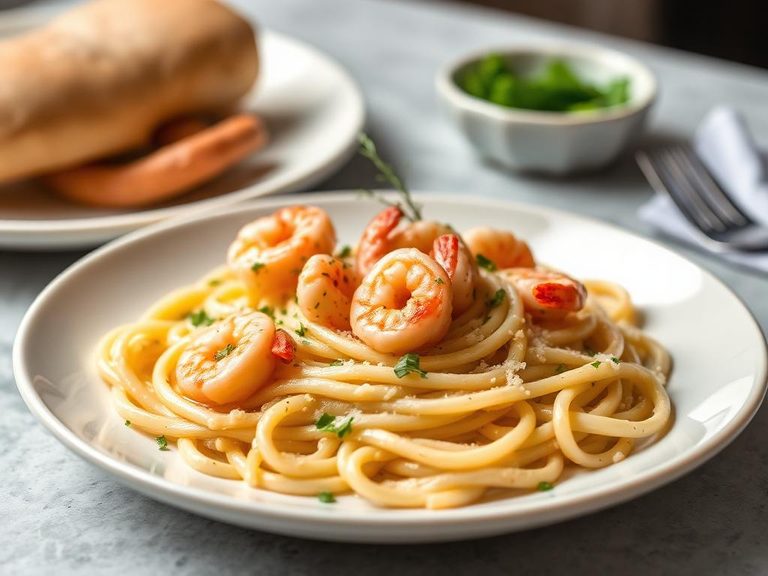
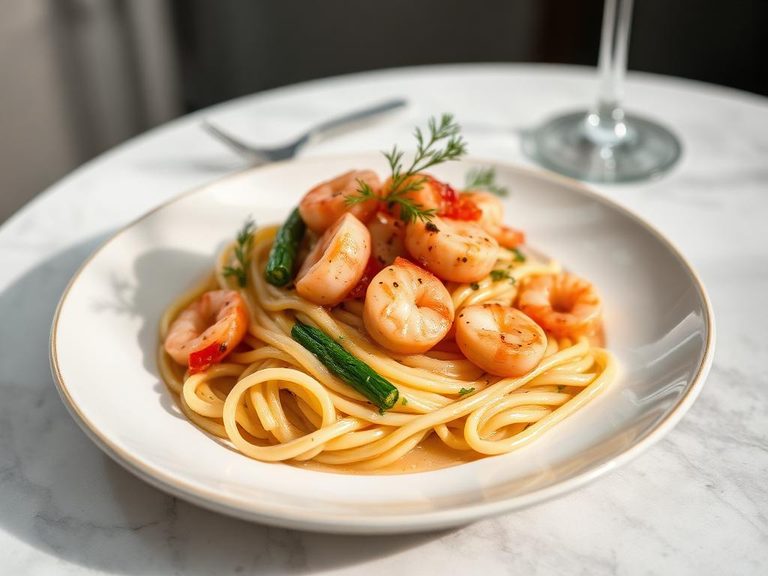
This dish is a rich, comforting pasta tossed in a velvety cream sauce, studded with tender morsels of seafood like shrimp, mussels, or clams. The texture is a delightful contrast between the al dente pasta and the soft, briny seafood, all coated in a luxurious, savory sauce. Nutritionally, it provides a balanced source of energy with a moderate fat content from the cream, making it a satisfying yet not overly heavy meal.
Calorie split: 16% protein · 45% carbs · 39% fat
↓ Full nutrition💚 Why it's loved
People love it for its indulgent, creamy texture and the sweet, savory flavor of the seafood, which pairs perfectly with the pasta. It's a versatile dish that can be adapted with various seafood types and is often associated with coastal and celebratory meals.
⚠️ Watch-outs & how to enjoy it better
The cream sauce can be high in saturated fat and calories, which might be a concern for those watching their intake. To counteract this, consider using lighter cream alternatives like half-and-half or adding more vegetables to increase fiber and volume, and practice portion control by serving it as a main course with a side salad.
Key benefits
- Provides a good source of protein from seafood for muscle maintenance.
- Contains healthy fats from seafood and cream for nutrient absorption.
- Offers a balanced energy source with carbohydrates and fats.
- Can be a source of essential minerals like iodine and selenium from seafood.
🍽️ Popular dishes
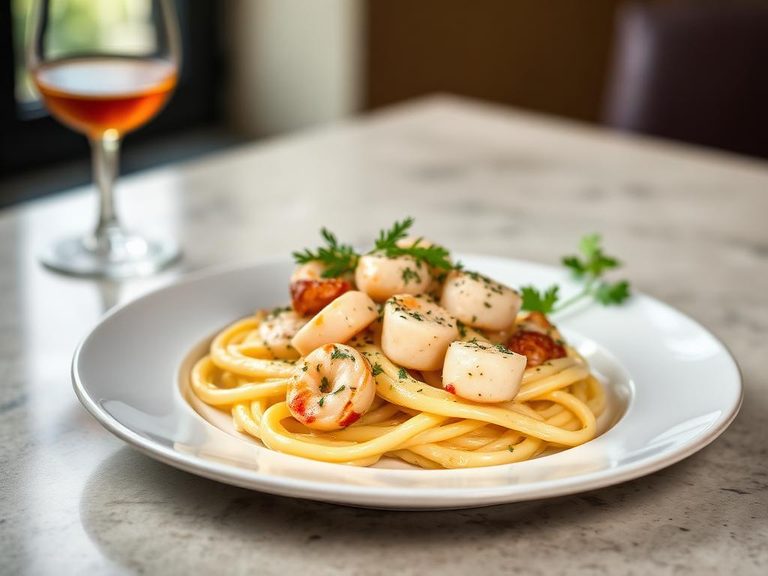
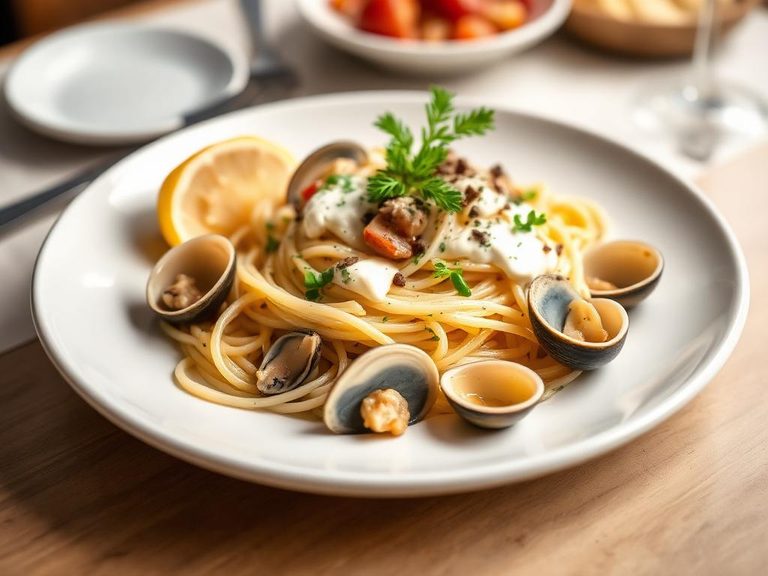
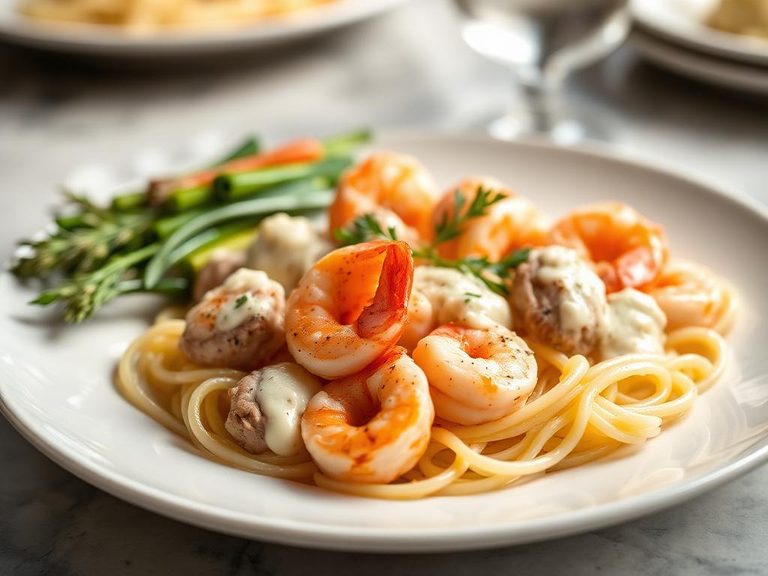
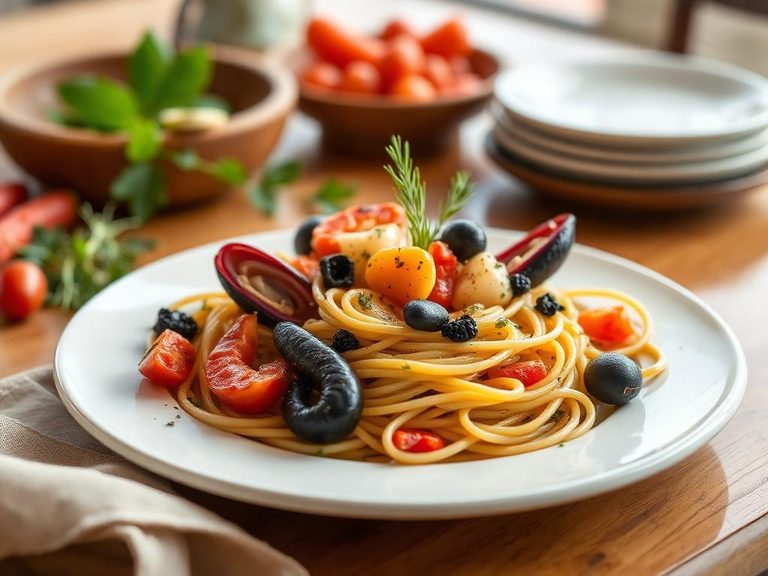
🌍 Where it's eaten
💡 Did you know?
The use of cream in pasta sauces, especially with seafood, became popular in the 20th century, particularly in American-Italian cuisine, as a way to create richer, more indulgent dishes.
Full nutrition (USDA data · scales with serving)
| Water | 69.6 g |
| Energy | 152 kcal |
| Protein | 5.9 g |
| Total lipid (fat) | 6.5 g |
| Carbohydrate, by difference | 17.0 g |
| Fiber, total dietary | 0.90 g |
| Total Sugars | 0.64 g |
| Calcium, Ca | 39.0 mg |
| Iron, Fe | 0.89 mg |
| Magnesium, Mg | 14.0 mg |
| Phosphorus, P | 73.0 mg |
| Potassium, K | 70.0 mg |
| Sodium, Na | 261 mg |
| Zinc, Zn | 0.50 mg |
| Copper, Cu | 0.07 mg |
| Selenium, Se | 19.2 ug |
| Vitamin C, total ascorbic acid | 0.30 mg |
| Thiamin | 0.15 mg |
| Riboflavin | 0.10 mg |
| Niacin | 0.94 mg |
| Vitamin B-6 | 0.03 mg |
| Folate, total | 39.0 ug |
| Folic acid | 34.0 ug |
| Folate, food | 5.0 ug |
| Folate, DFE | 63.0 ug |
| Choline, total | 14.3 mg |
| Vitamin B-12 | 0.90 ug |
| Vitamin B-12, added | 0.00 ug |
| Vitamin A, RAE | 60.0 ug |
| Retinol | 60.0 ug |
| Carotene, beta | 2.0 ug |
| Carotene, alpha | 0.00 ug |
| Cryptoxanthin, beta | 0.00 ug |
| Lycopene | 0.00 ug |
| Lutein + zeaxanthin | 4.0 ug |
| Vitamin E (alpha-tocopherol) | 0.25 mg |
| Vitamin E, added | 0.00 mg |
| Vitamin D (D2 + D3) | 0.20 ug |
| Vitamin K (phylloquinone) | 0.50 ug |
| Alcohol, ethyl | 0.00 g |
| Caffeine | 0.00 mg |
| Theobromine | 0.00 mg |
Fat & fatty acid profile (per 100g)
| Fatty acids, total saturated | 3.4 g |
| SFA 4:0 | 0.12 g |
| SFA 6:0 | 0.10 g |
| SFA 8:0 | 0.06 g |
| SFA 10:0 | 0.15 g |
| SFA 12:0 | 0.17 g |
| SFA 14:0 | 0.55 g |
| SFA 16:0 | 1.6 g |
| SFA 18:0 | 0.54 g |
| Fatty acids, total monounsaturated | 1.3 g |
| MUFA 16:1 | 0.10 g |
| MUFA 18:1 | 1.3 g |
| MUFA 20:1 | 0.01 g |
| MUFA 22:1 | 0.00 g |
| Fatty acids, total polyunsaturated | 0.46 g |
| PUFA 18:2 | 0.30 g |
| PUFA 18:3 | 0.04 g |
| PUFA 18:4 | 0.00 g |
| PUFA 20:4 | 0.01 g |
| PUFA 20:5 n-3 (EPA) | 0.02 g |
| PUFA 22:5 n-3 (DPA) | 0.01 g |
| PUFA 22:6 n-3 (DHA) | 0.02 g |
| Cholesterol | 31.0 mg |
FAQ
Is pasta with cream sauce and seafood healthy?
It can be part of a balanced diet when consumed in moderation. The seafood provides protein and healthy fats, but the cream sauce adds calories and saturated fat. Opting for lighter cream or adding vegetables can make it healthier.
Can I make this dish with different types of seafood?
Yes, it's highly versatile. You can use shrimp, scallops, mussels, clams, or a mix of seafood. Adjust cooking times based on the seafood to ensure it's cooked through but not overdone.
How can I reduce the calories in this dish?
Use lighter cream options like half-and-half or Greek yogurt, increase the proportion of vegetables, and serve smaller portions of pasta. Using whole-wheat pasta can also add fiber and make the dish more filling.
Nutrient density (calculated · NRF9.3)
Nutrient Rich Foods index: beneficial nutrients (protein, fiber, vitamins, minerals) minus saturated fat, added sugar & sodium, per 100 kcal.
NRF9.3 index — Fulgoni, Keast & Drewnowski, 2009. Computed from USDA nutrients.
Weight-loss friendliness (composite index)
Energy density 1.52 kcal/g · 15% calories from protein · 0.9 g fiber · 0.6 g sugar per 100 g.
Composite of energy density (Rolls et al., 1999), protein & fiber satiety, minus sugar. A calculated heuristic — ranks satiety-per-calorie, not a clinical measure.
Dietary load (calculated from USDA values)
Potential renal acid load. Positive = acid-forming, negative = alkaline-forming.
Sodium-to-potassium ratio: 3.73 (lower is better — aim for ≤ 1)
Sodium:potassium per WHO potassium guidance. Computed from USDA nutrients.