Seafood Carbonara
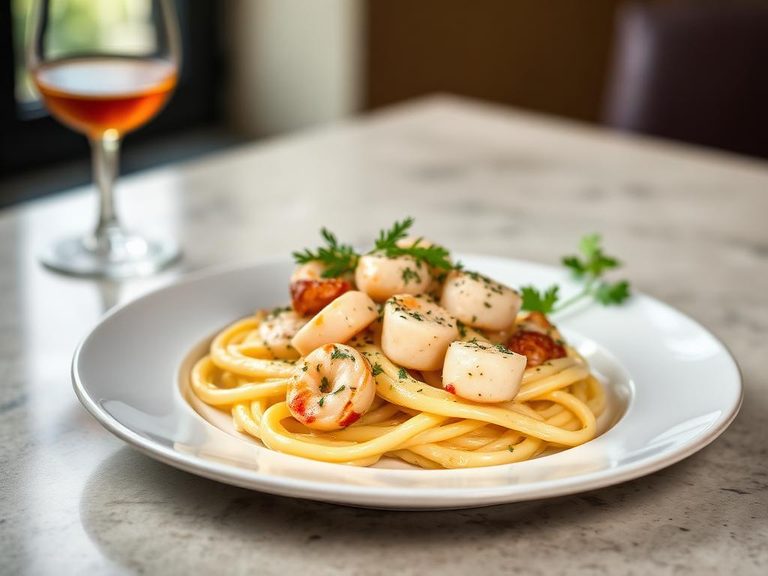
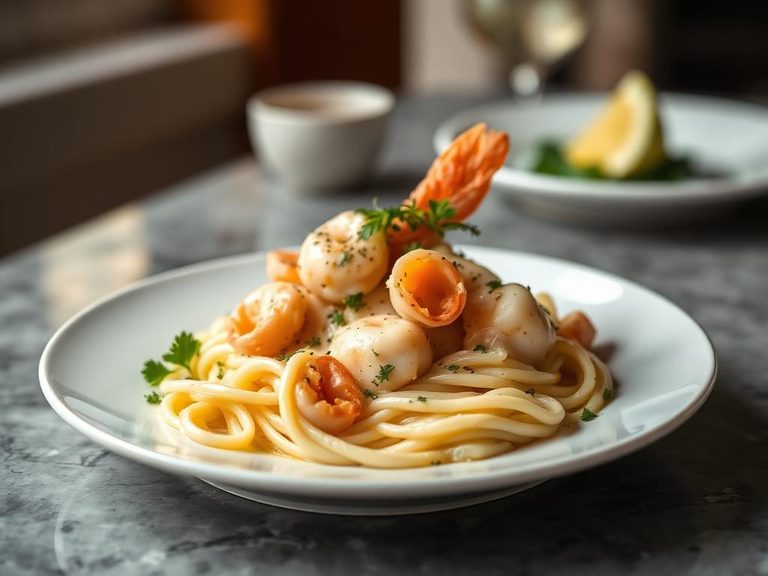
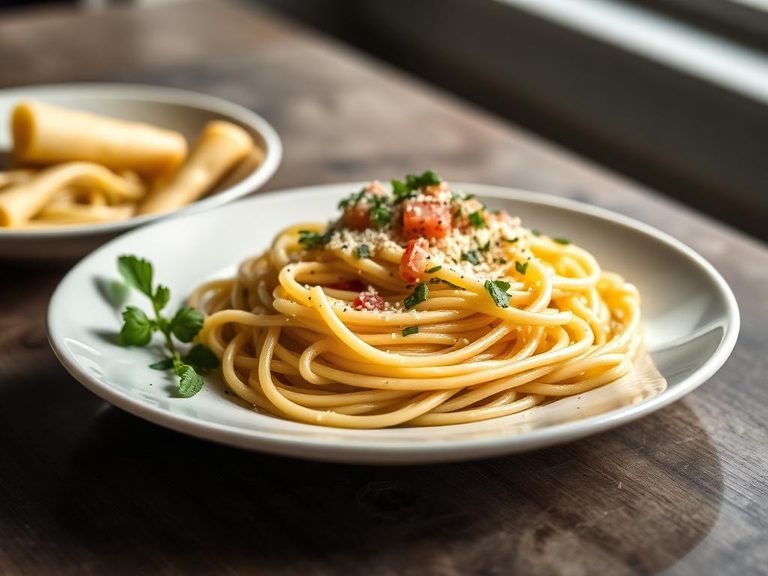
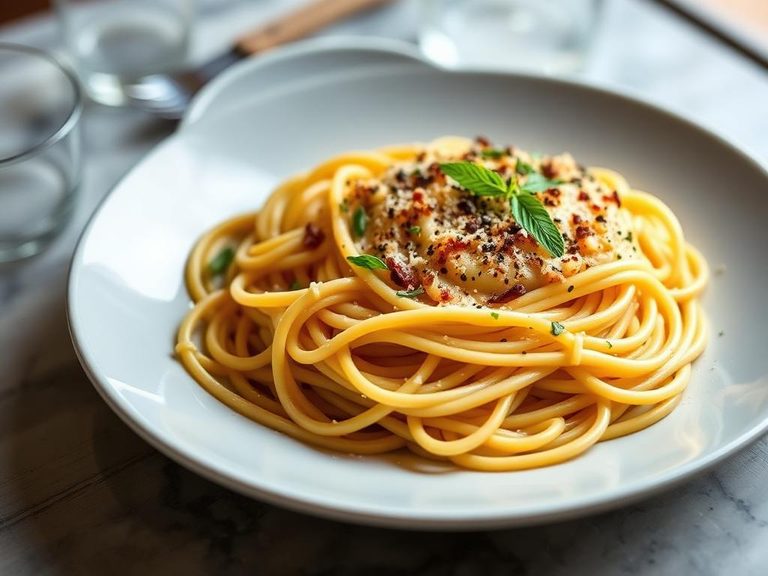
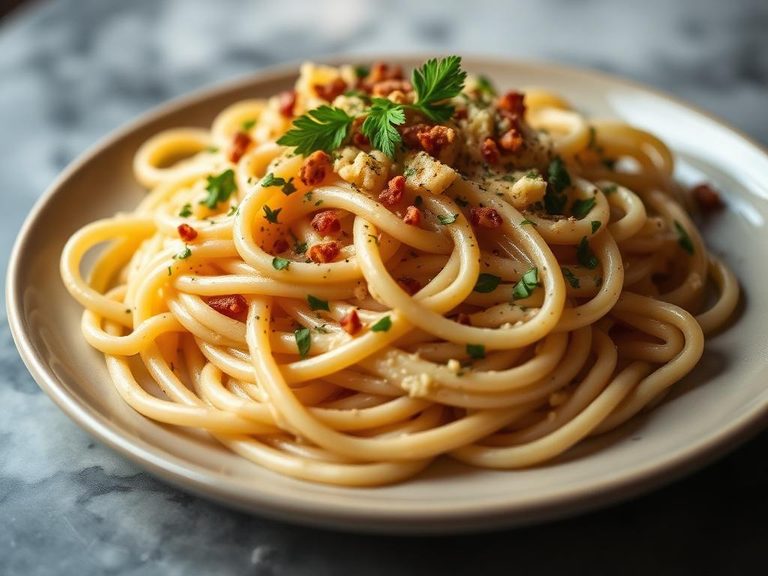
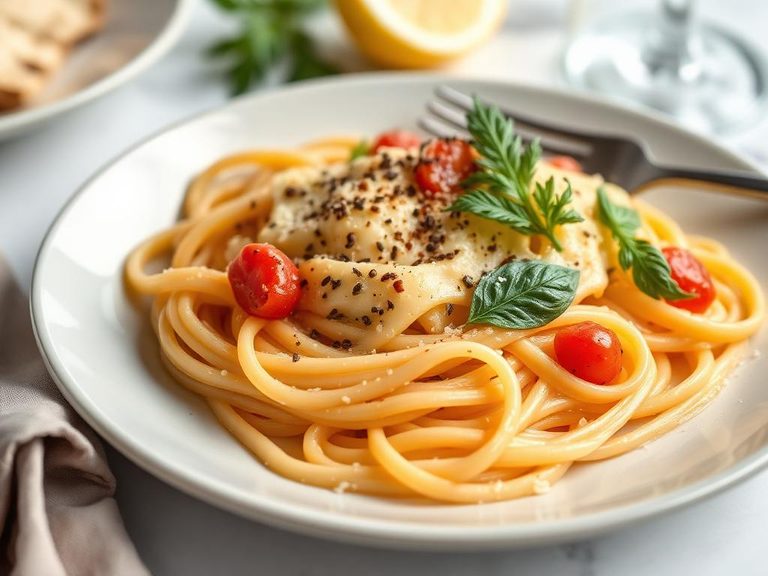
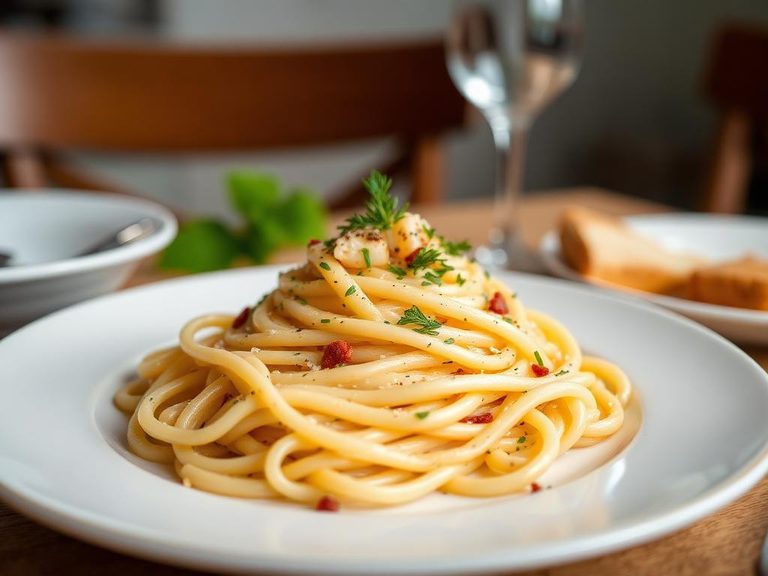
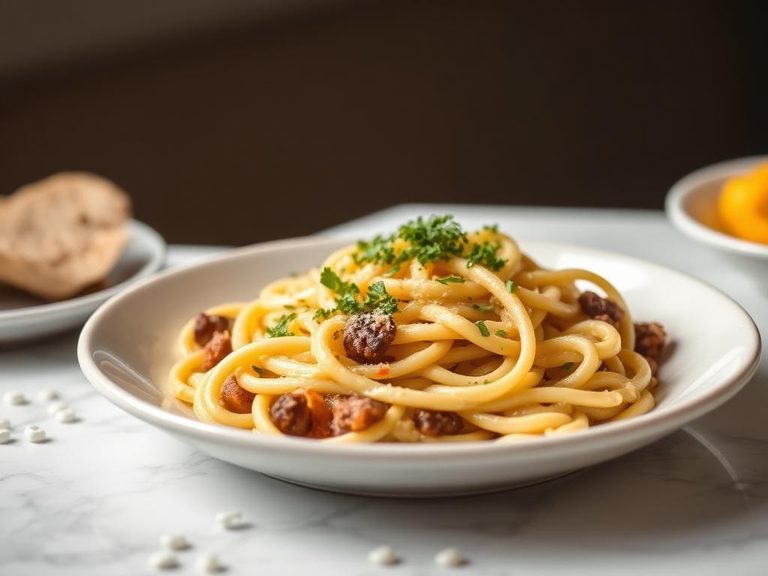
Seafood Carbonara is a modern Italian-inspired fusion dish that reimagines the classic Roman pasta by replacing cured pork with a mix of seafood like shrimp, clams, or squid. It typically features a rich, creamy sauce made from eggs, Pecorino Romano or Parmesan cheese, and often heavy cream, tossed with spaghetti or linguine. This variation is popular in coastal regions and contemporary Italian restaurants worldwide.
🍽️ Nutrition at a glance
This dish is high in protein from the seafood and eggs, but also rich in fat due to the cream and cheese, with moderate carbs from the pasta. A standard serving provides key nutrients like omega-3 fatty acids, calcium, and vitamins B12 and D, and generally ranges from 600 to 900 calories per portion.
Nutrition breakdown
| Calories | 750 kcal |
| Protein | 35 g |
| Carbs | 65 g |
| Fat | 38 g |
| Fiber | 3 g |
| Sugar | 4 g |
| Sodium | 950 mg |
| Potassium | 450 mg |
| Calcium | 180 mg |
| Iron | 3.5 mg |
| Magnesium | 55 mg |
| Phosphorus | 380 mg |
| Vitamin A | 320 mcg RAE |
| Vitamin B12 | 6.5 mcg |
| Selenium | 55 mcg |
Per 1 plate (350 g) · estimated, varies by recipe
💡 What's interesting
Culturally, it represents a creative twist on tradition, blending Italy's pasta heritage with global seafood influences, while nutritionally, the cream variation adds indulgence but can increase saturated fat compared to the classic egg-only sauce.