

Nuts, coconut milk, frozen (liquid expressed from grated meat and water)
Whole food · Nut and Seed Products
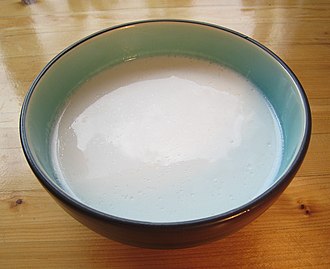
Photo: Wikipedia
This is the rich, creamy liquid expressed from grated coconut meat mixed with water, frozen into a solid block for preservation. It has a smooth, velvety texture when thawed and a sweet, nutty, tropical flavor. Nutritionally, it's a dense source of energy, primarily from healthy saturated fats, with minimal protein and carbohydrates.
Calorie split: 3% protein · 10% carbs · 87% fat
↓ Full nutrition💚 Why it's loved
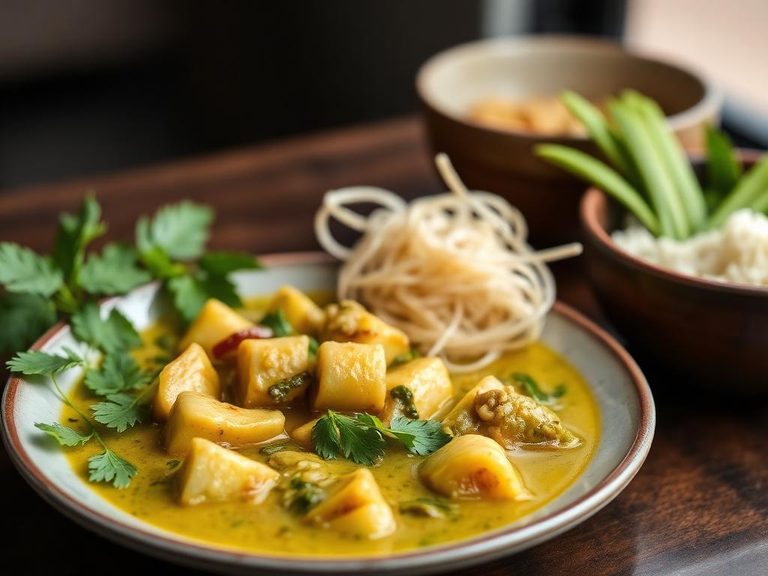
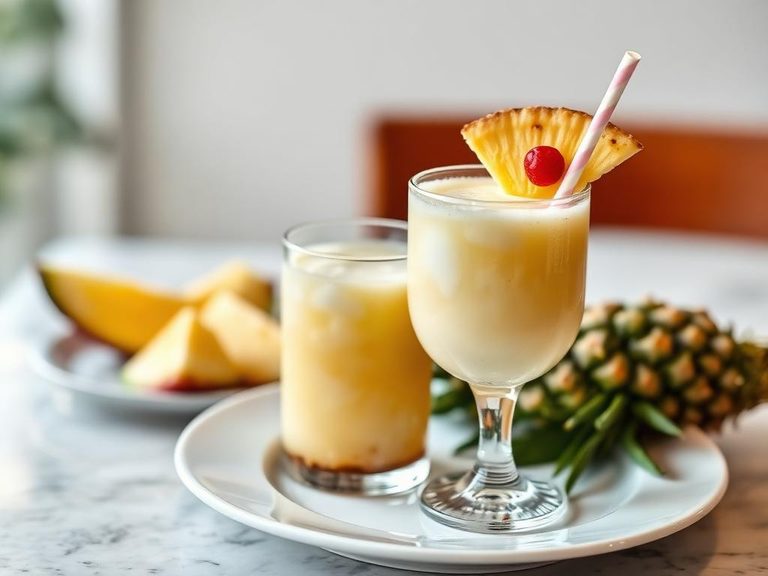
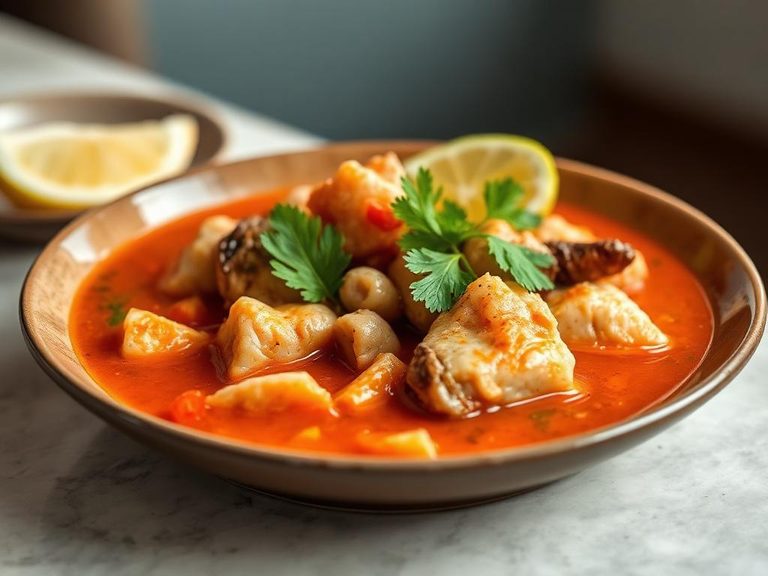
People love it for its luxurious, velvety mouthfeel and sweet, tropical aroma that instantly evokes Southeast Asian and Caribbean cuisines. It's a versatile staple that can be sweet or savory, forming the base of curries, desserts, and beverages.
⚠️ Watch-outs & how to enjoy it better
Its high saturated fat content (over 20g per 100g) means it's very calorie-dense, which can be a concern for heart health or weight management if consumed in large amounts. To enjoy it mindfully, practice strict portion control (e.g., 2-3 tablespoons per serving) and use it to replace, not add to, other fats in a dish. It is also a common tree nut allergen for some.
Key benefits
- Excellent source of medium-chain triglycerides (MCTs) for quick energy
- Provides essential minerals like manganese and copper
- Adds rich, dairy-free creaminess to recipes
- Lactose-free and vegan alternative to dairy cream
- Contains lauric acid, a fatty acid found in breast milk
🍽️ Popular dishes


🌍 Where it's eaten
💡 Did you know?
The fat in coconut milk is mostly saturated, but about 50% of it is lauric acid, which behaves differently in the body than other saturated fats and is also a primary component of human breast milk.
Full nutrition (USDA data · scales with serving)
| Water | 71.4 g |
| Energy | 202 kcal |
| Energy | 845 kj |
| Protein | 1.6 g |
| Total lipid (fat) | 20.8 g |
| Ash | 0.59 g |
| Carbohydrate, by difference | 5.6 g |
| Calcium, Ca | 4.0 mg |
| Iron, Fe | 0.81 mg |
| Magnesium, Mg | 32.0 mg |
| Phosphorus, P | 59.0 mg |
| Potassium, K | 232 mg |
| Sodium, Na | 12.0 mg |
| Zinc, Zn | 0.59 mg |
| Copper, Cu | 0.23 mg |
| Manganese, Mn | 0.81 mg |
| Vitamin C, total ascorbic acid | 1.1 mg |
| Thiamin | 0.02 mg |
| Riboflavin | 0.00 mg |
| Niacin | 0.67 mg |
| Pantothenic acid | 0.16 mg |
| Vitamin B-6 | 0.03 mg |
| Folate, total | 14.0 ug |
| Folic acid | 0.00 ug |
| Folate, food | 14.0 ug |
| Folate, DFE | 14.0 ug |
| Vitamin B-12 | 0.00 ug |
| Vitamin A, RAE | 0.00 ug |
| Retinol | 0.00 ug |
| Vitamin A, IU | 0.00 iu |
| Vitamin D (D2 + D3), International Units | 0.00 iu |
| Vitamin D (D2 + D3) | 0.00 ug |
Fat & fatty acid profile (per 100g)
| Fatty acids, total saturated | 18.4 g |
| SFA 6:0 | 0.12 g |
| SFA 8:0 | 1.5 g |
| SFA 10:0 | 1.2 g |
| SFA 12:0 | 9.2 g |
| SFA 14:0 | 3.6 g |
| SFA 16:0 | 1.8 g |
| SFA 18:0 | 1.1 g |
| Fatty acids, total monounsaturated | 0.89 g |
| MUFA 18:1 | 0.89 g |
| Fatty acids, total polyunsaturated | 0.23 g |
| PUFA 18:2 | 0.23 g |
| Cholesterol | 0.00 mg |
Amino acid profile (per 100g)
| Tryptophan | 0.02 g |
| Threonine | 0.06 g |
| Isoleucine | 0.06 g |
| Leucine | 0.12 g |
| Lysine | 0.07 g |
| Methionine | 0.03 g |
| Cystine | 0.03 g |
| Phenylalanine | 0.08 g |
| Tyrosine | 0.05 g |
| Valine | 0.10 g |
| Arginine | 0.26 g |
| Histidine | 0.04 g |
| Alanine | 0.08 g |
| Aspartic acid | 0.16 g |
| Glutamic acid | 0.37 g |
| Glycine | 0.08 g |
| Proline | 0.07 g |
| Serine | 0.08 g |
FAQ
What's the difference between 'coconut milk' and 'coconut cream'?
Coconut cream is the thicker, higher-fat product from the first pressing of grated coconut, while coconut milk is a thinner, more diluted version from subsequent pressings. This frozen product is typically the richer, cream-like consistency.
How do I use it from frozen?
Thaw it in the refrigerator overnight or in a bowl of warm water. Once liquid, shake or stir well as the fat and water may separate. It's ready to use in cooking or baking.
Is it healthy?
It's a source of beneficial MCTs and minerals, but is very high in calories and saturated fat. It's best used as a flavorful ingredient in moderation within a balanced diet, not as a primary beverage.
Nutrient density (calculated · NRF9.3)
Nutrient Rich Foods index: beneficial nutrients (protein, fiber, vitamins, minerals) minus saturated fat, added sugar & sodium, per 100 kcal.
NRF9.3 index — Fulgoni, Keast & Drewnowski, 2009. Computed from USDA nutrients.
Weight-loss friendliness (composite index)
Energy density 2.02 kcal/g · 3% calories from protein · 0.0 g fiber · 0.0 g sugar per 100 g.
Composite of energy density (Rolls et al., 1999), protein & fiber satiety, minus sugar. A calculated heuristic — ranks satiety-per-calorie, not a clinical measure.
Dietary load (calculated from USDA values)
Potential renal acid load. Positive = acid-forming, negative = alkaline-forming.
Sodium-to-potassium ratio: 0.05 (lower is better — aim for ≤ 1)
Sodium:potassium per WHO potassium guidance. Computed from USDA nutrients.