

Nuts, beechnuts, dried
Whole food · Nut and Seed Products
Dried beechnuts are the small, triangular nuts of the beech tree, prized for their rich, oily, and subtly sweet flavor reminiscent of hazelnuts. Their texture is firm yet tender when properly prepared, with a satisfying crunch. Nutritionally, they are exceptionally calorie-dense, packed with healthy fats and a modest amount of protein.
Calorie split: 4% protein · 22% carbs · 74% fat
↓ Full nutrition💚 Why it's loved
People cherish beechnuts for their unique, delicate nuttiness that elevates both sweet and savory dishes, and for their deep connection to foraging traditions and forest ecosystems in Europe and parts of Asia.
⚠️ Watch-outs & how to enjoy it better
Beechnuts contain saponins and tannins, which can cause digestive upset if eaten raw or in large quantities; they must be roasted or boiled to be palatable. Their high fat content means they are very calorie-dense, so portion control is key for those managing weight. Also, as a tree nut, they are a potential allergen for some.
Key benefits
- Excellent source of energy-dense healthy fats
- Contains essential minerals like magnesium and iron
- Provides plant-based protein
- Traditional foraged food with historical significance
- Naturally gluten-free
🍽️ Popular dishes
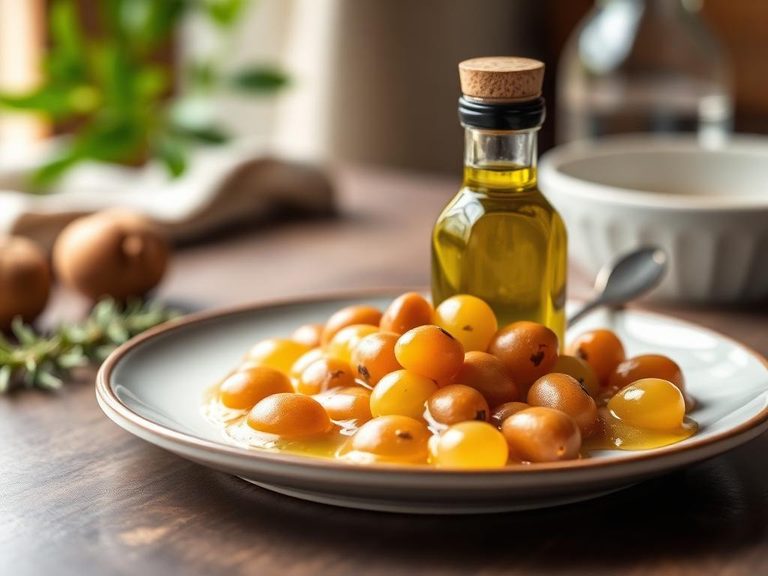

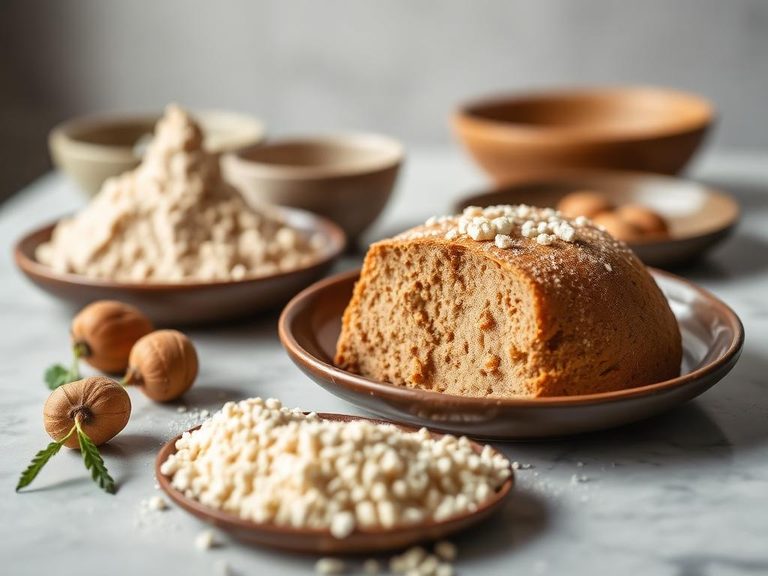
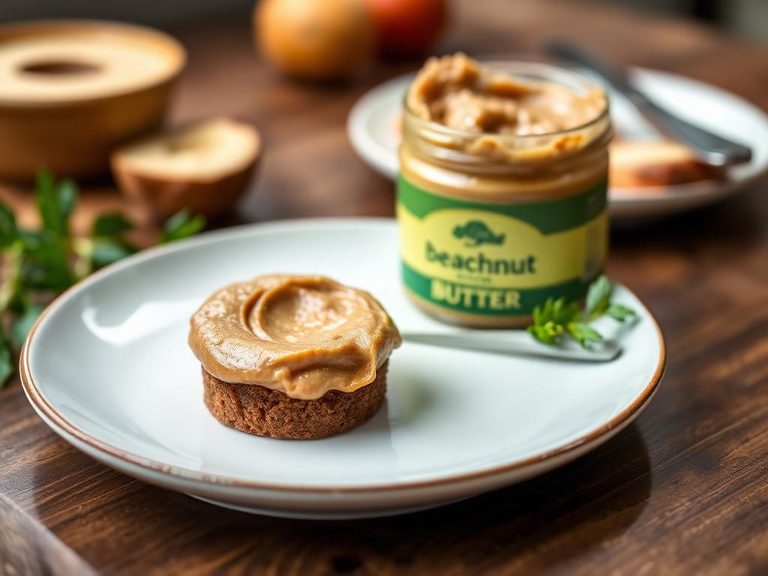
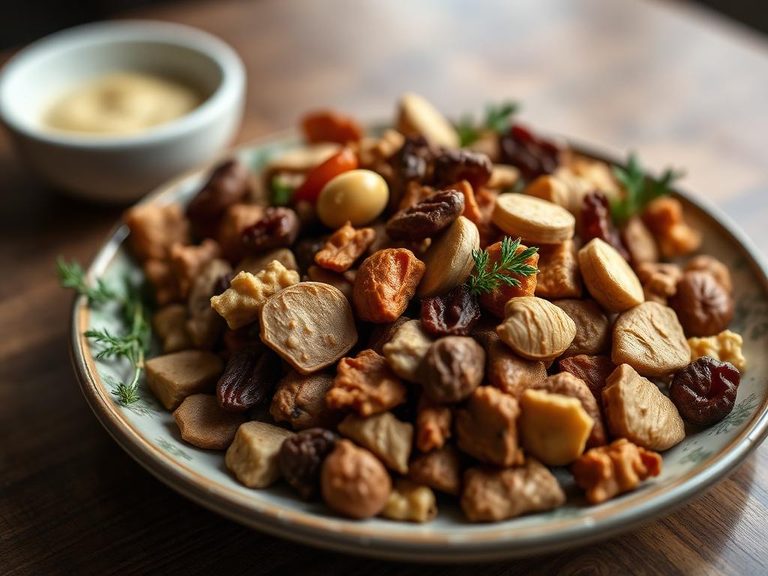
🌍 Where it's eaten
💡 Did you know?
In times of scarcity, like post-WWII, beechnuts were processed into a cooking oil in Europe, serving as a crucial, if not ideal, fat source when other supplies were cut off.
Full nutrition (USDA data · scales with serving)
| Water | 6.6 g |
| Energy | 576 kcal |
| Energy | 2410 kj |
| Protein | 6.2 g |
| Total lipid (fat) | 50.0 g |
| Ash | 3.7 g |
| Carbohydrate, by difference | 33.5 g |
| Calcium, Ca | 1.0 mg |
| Iron, Fe | 2.5 mg |
| Magnesium, Mg | 0.00 mg |
| Phosphorus, P | 0.00 mg |
| Potassium, K | 1017 mg |
| Sodium, Na | 38.0 mg |
| Zinc, Zn | 0.36 mg |
| Copper, Cu | 0.67 mg |
| Manganese, Mn | 1.3 mg |
| Vitamin C, total ascorbic acid | 15.5 mg |
| Thiamin | 0.30 mg |
| Riboflavin | 0.37 mg |
| Niacin | 0.88 mg |
| Pantothenic acid | 0.93 mg |
| Vitamin B-6 | 0.68 mg |
| Folate, total | 113 ug |
| Folic acid | 0.00 ug |
| Folate, food | 113 ug |
| Folate, DFE | 113 ug |
| Vitamin B-12 | 0.00 ug |
| Vitamin A, RAE | 0.00 ug |
| Retinol | 0.00 ug |
| Vitamin A, IU | 0.00 iu |
Fat & fatty acid profile (per 100g)
| Fatty acids, total saturated | 5.7 g |
| SFA 14:0 | 0.06 g |
| SFA 16:0 | 3.6 g |
| SFA 18:0 | 1.2 g |
| Fatty acids, total monounsaturated | 21.9 g |
| MUFA 16:1 | 0.29 g |
| MUFA 18:1 | 18.8 g |
| MUFA 20:1 | 2.8 g |
| Fatty acids, total polyunsaturated | 20.1 g |
| PUFA 18:2 | 18.4 g |
| PUFA 18:3 | 1.7 g |
| Cholesterol | 0.00 mg |
Amino acid profile (per 100g)
| Tryptophan | 0.07 g |
| Threonine | 0.22 g |
| Isoleucine | 0.24 g |
| Leucine | 0.37 g |
| Lysine | 0.37 g |
| Methionine | 0.15 g |
| Cystine | 0.20 g |
| Phenylalanine | 0.26 g |
| Tyrosine | 0.17 g |
| Valine | 0.35 g |
| Arginine | 0.44 g |
| Histidine | 0.17 g |
| Alanine | 0.41 g |
| Aspartic acid | 1.1 g |
| Glutamic acid | 0.80 g |
| Glycine | 0.32 g |
| Proline | 0.33 g |
| Serine | 0.31 g |
FAQ
Can I eat beechnuts straight from the tree?
No. Raw beechnuts contain bitter tannins and saponins that make them unpalatable and can cause stomach upset. They must be dried, then roasted or boiled to remove these compounds before eating.
What does beechnut taste like?
They have a rich, oily, and subtly sweet flavor often compared to a milder hazelnut or a cross between a walnut and a chestnut, with a pleasant, slightly resinous note.
How do I store dried beechnuts?
Store them in an airtight container in a cool, dark place. Due to their high oil content, they can go rancid; refrigeration or freezing is recommended for long-term storage.
Nutrient density (calculated · NRF9.3)
Nutrient Rich Foods index: beneficial nutrients (protein, fiber, vitamins, minerals) minus saturated fat, added sugar & sodium, per 100 kcal.
NRF9.3 index — Fulgoni, Keast & Drewnowski, 2009. Computed from USDA nutrients.
Weight-loss friendliness (composite index)
Energy density 5.76 kcal/g · 4% calories from protein · 0.0 g fiber · 0.0 g sugar per 100 g.
Composite of energy density (Rolls et al., 1999), protein & fiber satiety, minus sugar. A calculated heuristic — ranks satiety-per-calorie, not a clinical measure.
Dietary load (calculated from USDA values)
Potential renal acid load. Positive = acid-forming, negative = alkaline-forming.
Sodium-to-potassium ratio: 0.04 (lower is better — aim for ≤ 1)
Sodium:potassium per WHO potassium guidance. Computed from USDA nutrients.