

Noodles, japanese, soba, cooked
Whole food · Cereal Grains and Pasta

Photo: Wikipedia
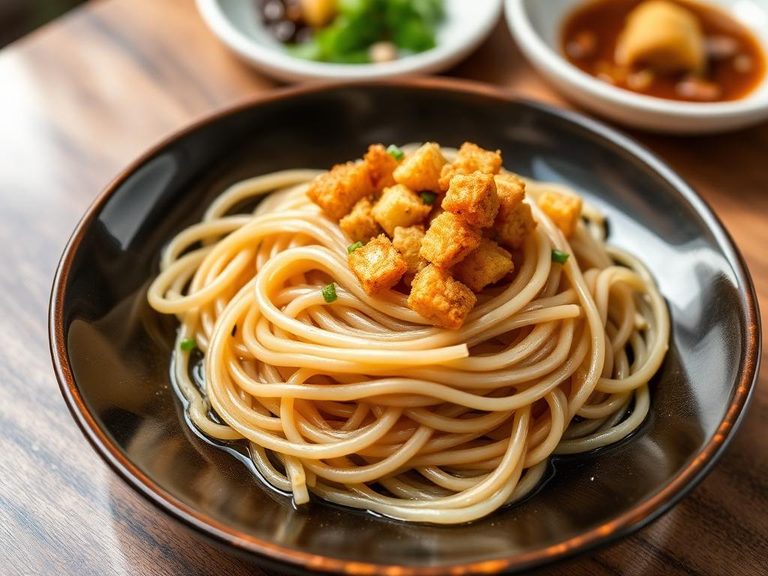
Soba are thin, earthy noodles made from buckwheat flour, prized for their firm, slightly chewy texture and nutty flavor. They are typically served chilled with a savory dipping sauce or in a hot broth, offering a light yet satisfying meal. Nutritionally, they are a low-fat, moderate-protein source of complex carbohydrates, providing sustained energy without heaviness.
Calorie split: 19% protein · 80% carbs · 1% fat
↓ Full nutrition💚 Why it's loved
People adore soba for its unique, rustic buckwheat flavor that pairs beautifully with both simple and complex broths. Its versatility shines in dishes served hot or cold, making it a year-round staple in Japanese cuisine.
⚠️ Watch-outs & how to enjoy it better
Many commercial soba blends contain wheat flour, which can be problematic for those with celiac disease or gluten sensitivity. The noodles have a high glycemic load when eaten alone, potentially causing blood sugar spikes. To counteract this, pair soba with protein (like tofu or shrimp) and vegetables, or choose 100% buckwheat varieties for a lower glycemic impact.
Key benefits
- Rich in manganese and thiamin for energy metabolism
- Contains all eight essential amino acids, making it a complete protein
- Lower glycemic index than many wheat pastas
- Gluten-free if made with 100% buckwheat (check label)
- Light and easy to digest, often served chilled
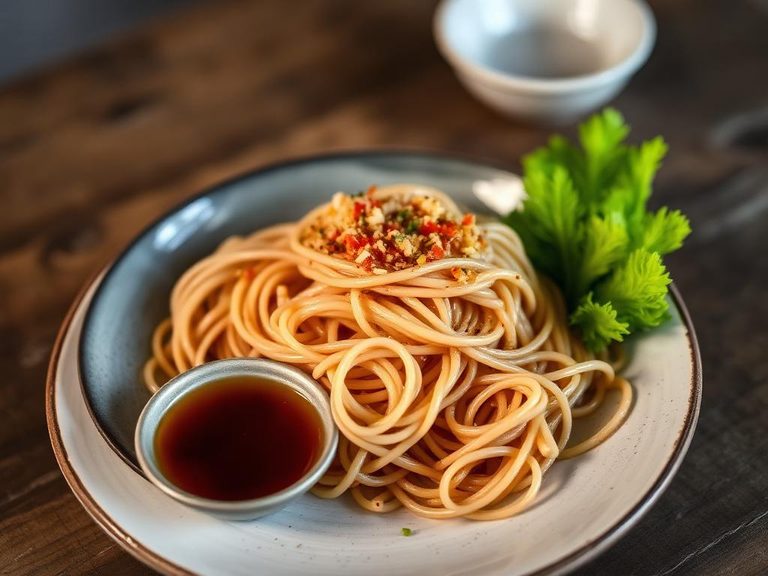
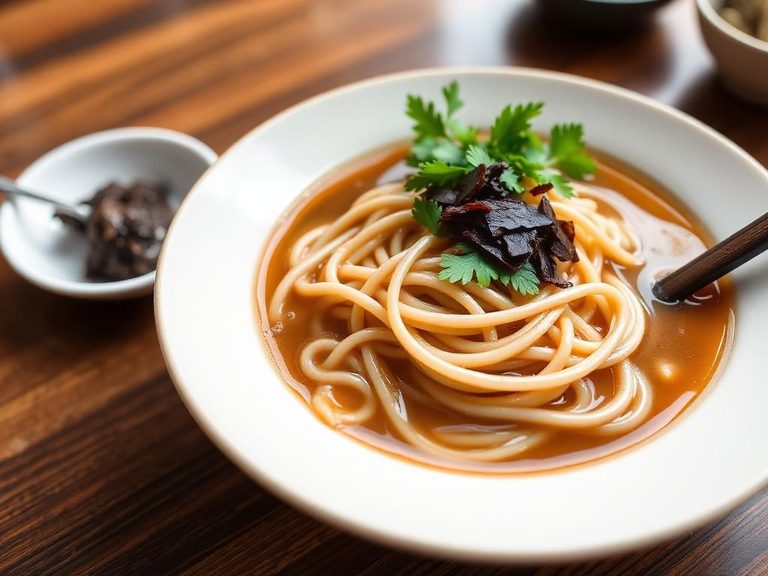
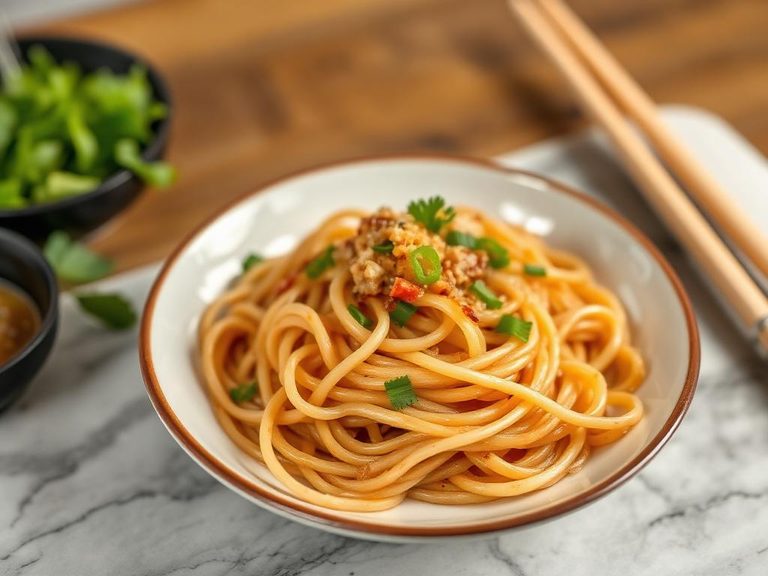
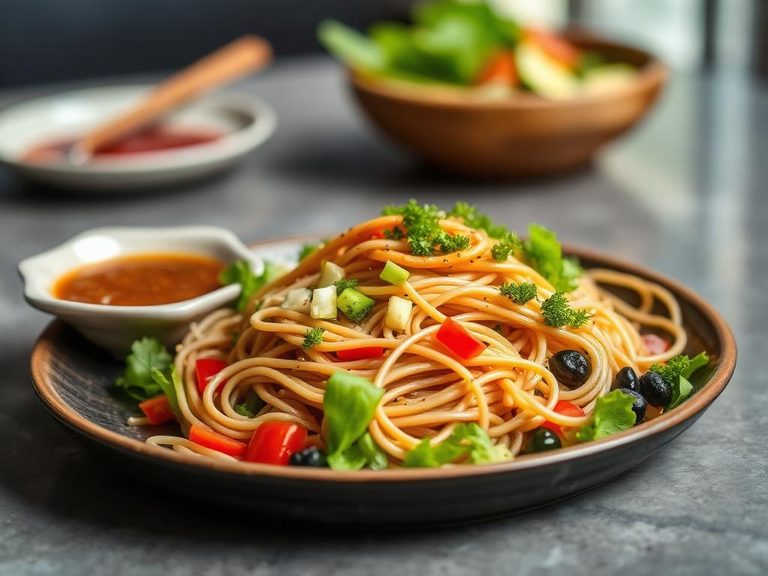
🍽️ Popular dishes
🌍 Where it's eaten
💡 Did you know?
The tradition of eating soba on New Year's Eve, called 'toshikoshi soba,' symbolizes cutting off the hardships of the past year and wishing for longevity.
Full nutrition (USDA data · scales with serving)
| Water | 73.0 g |
| Energy | 99.0 kcal |
| Energy | 414 kj |
| Protein | 5.1 g |
| Total lipid (fat) | 0.10 g |
| Ash | 0.39 g |
| Carbohydrate, by difference | 21.4 g |
| Calcium, Ca | 4.0 mg |
| Iron, Fe | 0.48 mg |
| Magnesium, Mg | 9.0 mg |
| Phosphorus, P | 25.0 mg |
| Potassium, K | 35.0 mg |
| Sodium, Na | 60.0 mg |
| Zinc, Zn | 0.12 mg |
| Copper, Cu | 0.01 mg |
| Manganese, Mn | 0.37 mg |
| Vitamin C, total ascorbic acid | 0.00 mg |
| Thiamin | 0.09 mg |
| Riboflavin | 0.03 mg |
| Niacin | 0.51 mg |
| Pantothenic acid | 0.23 mg |
| Vitamin B-6 | 0.04 mg |
| Folate, total | 7.0 ug |
| Folic acid | 0.00 ug |
| Folate, food | 7.0 ug |
| Folate, DFE | 7.0 ug |
| Vitamin B-12 | 0.00 ug |
| Vitamin A, RAE | 0.00 ug |
| Retinol | 0.00 ug |
| Vitamin A, IU | 0.00 iu |
| Vitamin D (D2 + D3), International Units | 0.00 iu |
| Vitamin D (D2 + D3) | 0.00 ug |
Fat & fatty acid profile (per 100g)
| Fatty acids, total saturated | 0.02 g |
| SFA 10:0 | 0.00 g |
| SFA 12:0 | 0.00 g |
| SFA 14:0 | 0.00 g |
| SFA 16:0 | 0.01 g |
| SFA 18:0 | 0.00 g |
| Fatty acids, total monounsaturated | 0.03 g |
| MUFA 16:1 | 0.00 g |
| MUFA 18:1 | 0.03 g |
| Fatty acids, total polyunsaturated | 0.03 g |
| PUFA 18:2 | 0.03 g |
| PUFA 18:3 | 0.00 g |
| Cholesterol | 0.00 mg |
Amino acid profile (per 100g)
| Tryptophan | 0.07 g |
| Threonine | 0.18 g |
| Isoleucine | 0.20 g |
| Leucine | 0.33 g |
| Lysine | 0.21 g |
| Methionine | 0.07 g |
| Cystine | 0.09 g |
| Phenylalanine | 0.22 g |
| Tyrosine | 0.10 g |
| Valine | 0.25 g |
| Arginine | 0.32 g |
| Histidine | 0.12 g |
| Alanine | 0.25 g |
| Aspartic acid | 0.37 g |
| Glutamic acid | 1.1 g |
| Glycine | 0.33 g |
| Proline | 0.31 g |
| Serine | 0.26 g |
FAQ
Is soba gluten-free?
Not always. Traditional soba is made from buckwheat, which is gluten-free, but many commercial brands mix it with wheat flour. Always check the ingredients for '100% buckwheat' to ensure it's gluten-free.
What's the difference between zaru soba and kake soba?
Zaru soba is served chilled on a bamboo mat with a concentrated dipping sauce (tsuyu), while kake soba is served hot in a lighter, savory broth.
Can I use soba noodles in stir-fries?
Yes, but use pre-cooked or fresh soba and add them near the end of cooking to prevent them from becoming mushy. They work well in cold noodle salads too.
Nutrient density (calculated · NRF9.3)
Nutrient Rich Foods index: beneficial nutrients (protein, fiber, vitamins, minerals) minus saturated fat, added sugar & sodium, per 100 kcal.
NRF9.3 index — Fulgoni, Keast & Drewnowski, 2009. Computed from USDA nutrients.
Weight-loss friendliness (composite index)
Energy density 0.99 kcal/g · 20% calories from protein · 0.0 g fiber · 0.0 g sugar per 100 g.
Composite of energy density (Rolls et al., 1999), protein & fiber satiety, minus sugar. A calculated heuristic — ranks satiety-per-calorie, not a clinical measure.
Dietary load (calculated from USDA values)
Potential renal acid load. Positive = acid-forming, negative = alkaline-forming.
Sodium-to-potassium ratio: 1.71 (lower is better — aim for ≤ 1)
Sodium:potassium per WHO potassium guidance. Computed from USDA nutrients.