

Kake Soba
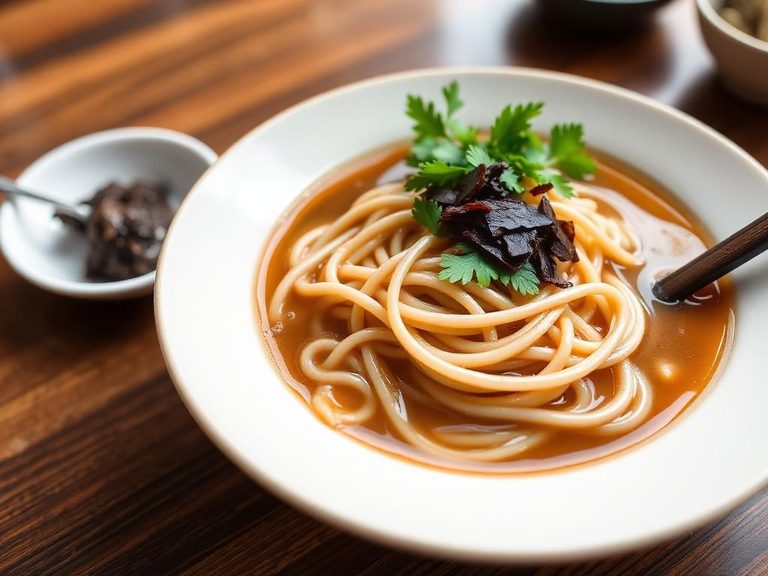
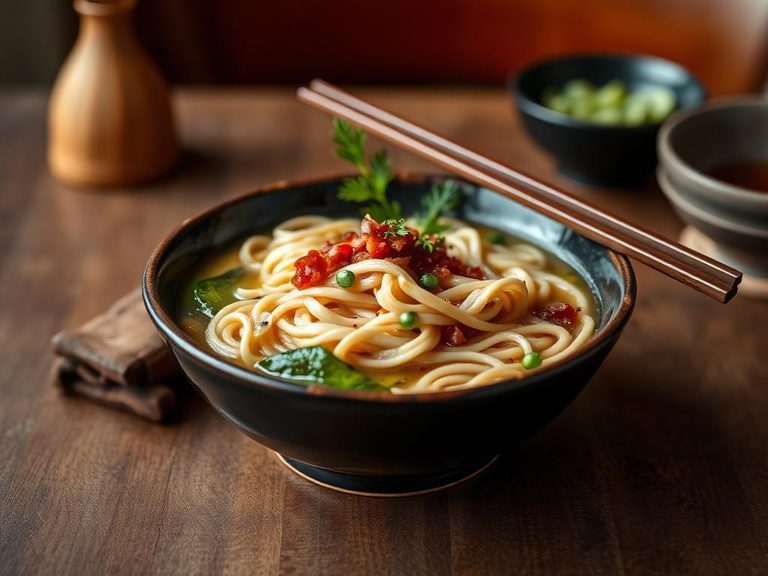
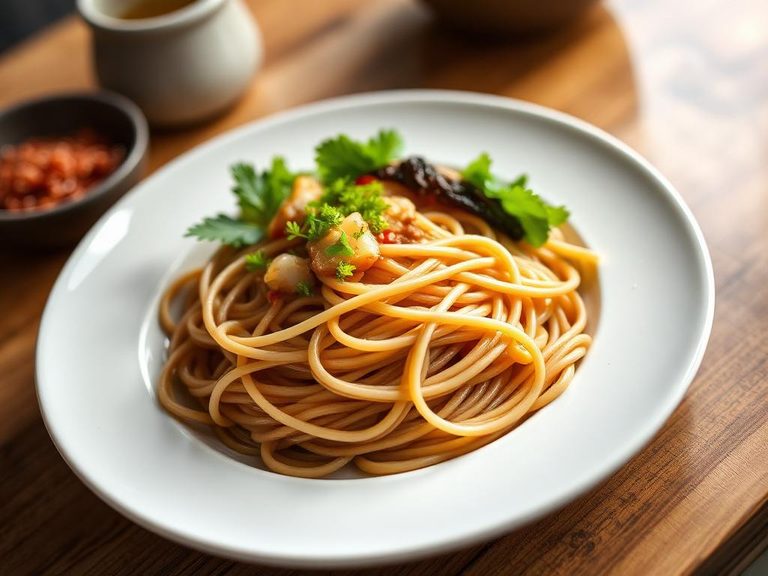
Kake Soba is a classic Japanese noodle dish consisting of buckwheat soba noodles served in a piping hot, savory broth, typically made from dashi, soy sauce, and mirin. It is a simple, comforting staple often enjoyed year-round, especially during colder months. The dish is a fundamental offering in soba shops and casual eateries across Japan.
🍳 View the full Kake Soba recipe →
🍽️ Nutrition at a glance
This dish is primarily a source of carbohydrates from the noodles, with a moderate amount of plant-based protein from the buckwheat. It is generally low in fat and provides key nutrients like manganese and thiamine from the buckwheat, with a typical serving containing around 300-400 calories.
Nutrition breakdown
| Calories | 350 kcal |
| Protein | 12 g |
| Carbs | 60 g |
| Fat | 5 g |
| Fiber | 3 g |
| Sugar | 4 g |
| Sodium | 1500 mg |
| Potassium | 300 mg |
| Phosphorus | 150 mg |
| Magnesium | 40 mg |
| Iron | 2.5 mg |
| Niacin (B3) | 4 mg |
| Thiamin (B1) | 0.3 mg |
| Folate | 80 mcg |
| Selenium | 15 mcg |
Per 1 bowl (approx. 500 g) · estimated, varies by recipe
💡 What's interesting
Culturally, kake soba is valued for its simplicity and is often eaten on New Year's Eve (Toshikoshi Soba) to symbolize crossing over from one year to the next and wishing for longevity. Nutritionally, buckwheat is a gluten-free grain (though soba noodles often contain some wheat flour) and is a good source of resistant starch, which can benefit gut health.
🍽️ Related dishes
AI estimate may be inaccurate · Terms