

Martini
Common food

Photo: Wikipedia
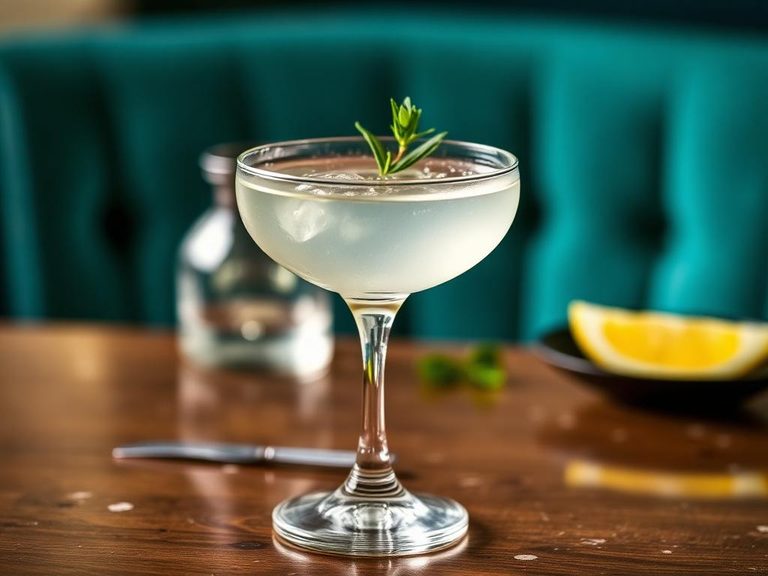
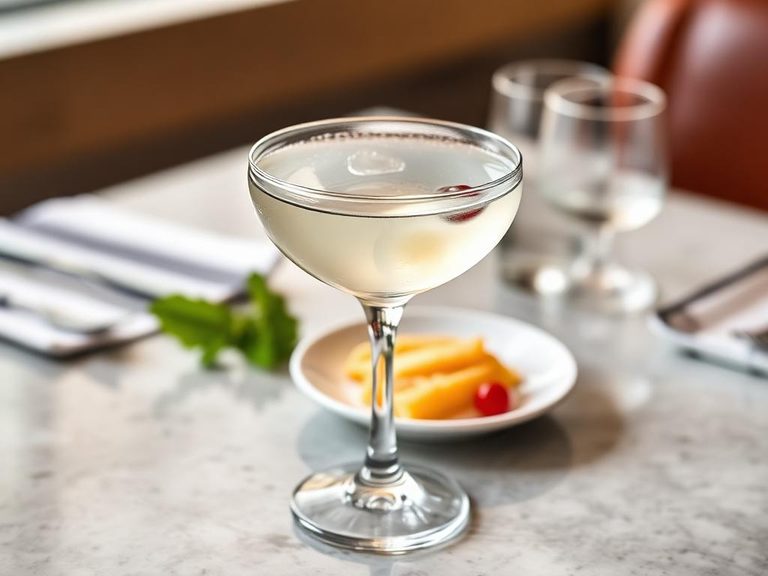
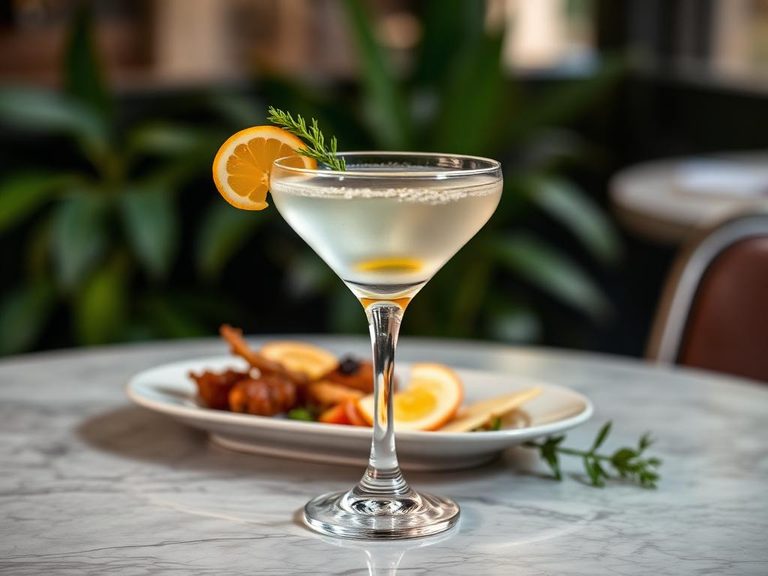
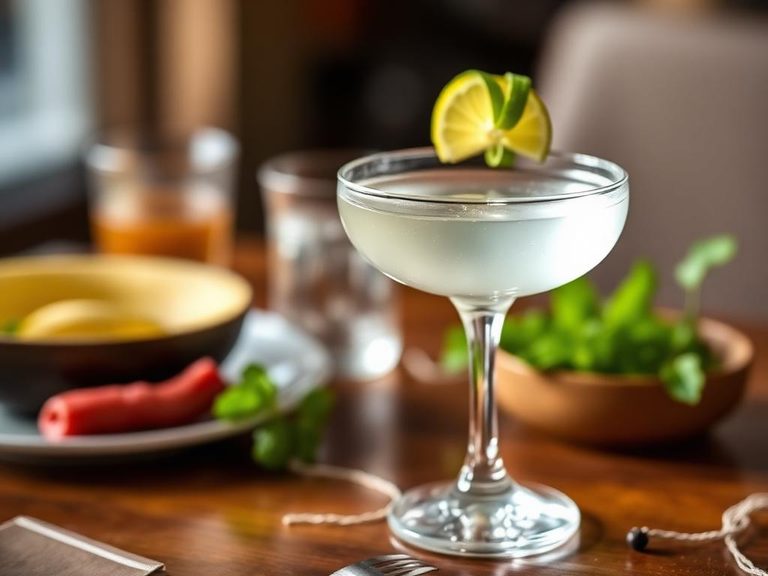
A Martini is a classic cocktail, typically a clear, crisp, and aromatic blend of gin or vodka with a splash of dry vermouth, garnished with an olive or lemon twist. Its nutrition profile is remarkably lean, offering almost no protein, carbohydrates, or fat, with its 201 kcal per 100g coming entirely from alcohol. It is a drink of pure, potent simplicity, defined by its clean, often slightly bitter or briny taste.
Calorie split: 32% protein · 68% carbs · 0% fat
↓ Full nutrition💚 Why it's loved
People love the Martini for its sophisticated, clean taste and its iconic status as a symbol of elegance and confidence. Its versatility allows for endless personalization—from the gin/vodka choice to the precise vermouth ratio and garnish—making it a deeply personal drink.
⚠️ Watch-outs & how to enjoy it better
The primary downside is its high alcohol content, which can lead to rapid intoxication and dehydration. Those monitoring blood sugar should note that while the drink itself has minimal sugar, alcohol can affect glucose regulation. To counteract this, sip slowly, alternate with water, and consider a meal with protein and fat before drinking to slow alcohol absorption.
Key benefits
- Very low in carbohydrates and sugar
- Contains zero fat and zero fiber
- A classic, low-calorie cocktail option compared to sugary mixed drinks
- Can be a simple, spirit-forward choice for those avoiding mixers
🍽️ Popular dishes
🌍 Where it's eaten
💡 Did you know?
The classic ratio for a 'dry' Martini is often cited as 5:1 or 6:1 (gin to vermouth), but the term 'dry' historically meant using less sweet (French) vermouth than the earlier, sweeter 'sweet' Martini style.
Full nutrition (USDA data · scales with serving)
| Water | 70.8 g |
| Energy | 201 kcal |
| Protein | 0.07 g |
| Total lipid (fat) | 0.00 g |
| Carbohydrate, by difference | 0.15 g |
| Fiber, total dietary | 0.00 g |
| Total Sugars | 0.15 g |
| Calcium, Ca | 1.0 mg |
| Iron, Fe | 0.09 mg |
| Magnesium, Mg | 1.0 mg |
| Phosphorus, P | 5.0 mg |
| Potassium, K | 13.0 mg |
| Sodium, Na | 2.0 mg |
| Zinc, Zn | 0.04 mg |
| Copper, Cu | 0.02 mg |
| Selenium, Se | 0.00 ug |
| Vitamin C, total ascorbic acid | 0.00 mg |
| Thiamin | 0.01 mg |
| Riboflavin | 0.01 mg |
| Niacin | 0.03 mg |
| Vitamin B-6 | 0.00 mg |
| Folate, total | 0.00 ug |
| Folic acid | 0.00 ug |
| Folate, food | 0.00 ug |
| Folate, DFE | 0.00 ug |
| Choline, total | 0.70 mg |
| Vitamin B-12 | 0.00 ug |
| Vitamin B-12, added | 0.00 ug |
| Vitamin A, RAE | 0.00 ug |
| Retinol | 0.00 ug |
| Carotene, beta | 0.00 ug |
| Carotene, alpha | 0.00 ug |
| Cryptoxanthin, beta | 0.00 ug |
| Lycopene | 0.00 ug |
| Lutein + zeaxanthin | 0.00 ug |
| Vitamin E (alpha-tocopherol) | 0.00 mg |
| Vitamin E, added | 0.00 mg |
| Vitamin D (D2 + D3) | 0.00 ug |
| Vitamin K (phylloquinone) | 0.00 ug |
| Alcohol, ethyl | 29.0 g |
| Caffeine | 0.00 mg |
| Theobromine | 0.00 mg |
Fat & fatty acid profile (per 100g)
| Fatty acids, total saturated | 0.00 g |
| SFA 4:0 | 0.00 g |
| SFA 6:0 | 0.00 g |
| SFA 8:0 | 0.00 g |
| SFA 10:0 | 0.00 g |
| SFA 12:0 | 0.00 g |
| SFA 14:0 | 0.00 g |
| SFA 16:0 | 0.00 g |
| SFA 18:0 | 0.00 g |
| Fatty acids, total monounsaturated | 0.00 g |
| MUFA 16:1 | 0.00 g |
| MUFA 18:1 | 0.00 g |
| MUFA 20:1 | 0.00 g |
| MUFA 22:1 | 0.00 g |
| Fatty acids, total polyunsaturated | 0.00 g |
| PUFA 18:2 | 0.00 g |
| PUFA 18:3 | 0.00 g |
| PUFA 18:4 | 0.00 g |
| PUFA 20:4 | 0.00 g |
| PUFA 20:5 n-3 (EPA) | 0.00 g |
| PUFA 22:5 n-3 (DPA) | 0.00 g |
| PUFA 22:6 n-3 (DHA) | 0.00 g |
| Cholesterol | 0.00 mg |
FAQ
What is the difference between a gin and a vodka Martini?
A gin Martini uses gin, which has a botanical, juniper-forward flavor, while a vodka Martini uses vodka for a cleaner, more neutral spirit base. The choice is purely about personal taste preference.
What does 'shaken, not stirred' mean?
It refers to the method of chilling the cocktail. Shaking with ice dilutes and aerates the drink slightly, making it colder and cloudier. Stirring provides a smoother, more diluted, and crystal-clear result, which is traditionally preferred for a Martini.
Why is an olive or lemon twist used as a garnish?
The garnish adds a final aromatic and flavor note. A briny olive adds a salty, savory touch (especially in a Dirty Martini), while a lemon twist expresses citrus oils over the drink, adding a bright, zesty aroma.
Nutrient density (calculated · NRF9.3)
Nutrient Rich Foods index: beneficial nutrients (protein, fiber, vitamins, minerals) minus saturated fat, added sugar & sodium, per 100 kcal.
NRF9.3 index — Fulgoni, Keast & Drewnowski, 2009. Computed from USDA nutrients.
Weight-loss friendliness (composite index)
Energy density 2.01 kcal/g · 0% calories from protein · 0.0 g fiber · 0.1 g sugar per 100 g.
Composite of energy density (Rolls et al., 1999), protein & fiber satiety, minus sugar. A calculated heuristic — ranks satiety-per-calorie, not a clinical measure.
Dietary load (calculated from USDA values)
Potential renal acid load. Positive = acid-forming, negative = alkaline-forming.
Sodium-to-potassium ratio: 0.15 (lower is better — aim for ≤ 1)
Sodium:potassium per WHO potassium guidance. Computed from USDA nutrients.