

Manhattan
Common food

Photo: Wikipedia
The Manhattan is a classic, spirit-forward cocktail, not a whole food. It's a sophisticated blend of whiskey, sweet vermouth, and bitters, offering a rich, smooth, and slightly sweet taste with a warm, spicy finish from the rye or bourbon. Its nutrition is negligible, coming almost entirely from the alcohol and sugar in the vermouth.
Calorie split: 2% protein · 98% carbs · 0% fat
↓ Full nutrition💚 Why it's loved
People love the Manhattan for its perfect balance of strong, sweet, and bitter flavors, representing timeless cocktail elegance. It's a versatile classic that can be customized with different whiskeys and vermouths, making it a staple in cocktail culture.
⚠️ Watch-outs & how to enjoy it better
The primary downside is the high alcohol content, which can lead to intoxication and impaired judgment if consumed excessively. Those watching their sugar intake or with alcohol sensitivities should be cautious. To counteract, enjoy it slowly, sip it with a meal (especially one containing protein and fat to slow absorption), and be mindful of total alcohol consumption.
Key benefits
- Contains antioxidants from the whiskey and vermouth botanicals
- May promote social bonding and relaxation in moderation
- Low in carbohydrates and contains no fat
- A traditional digestif believed to aid digestion after a meal
🍽️ Popular dishes

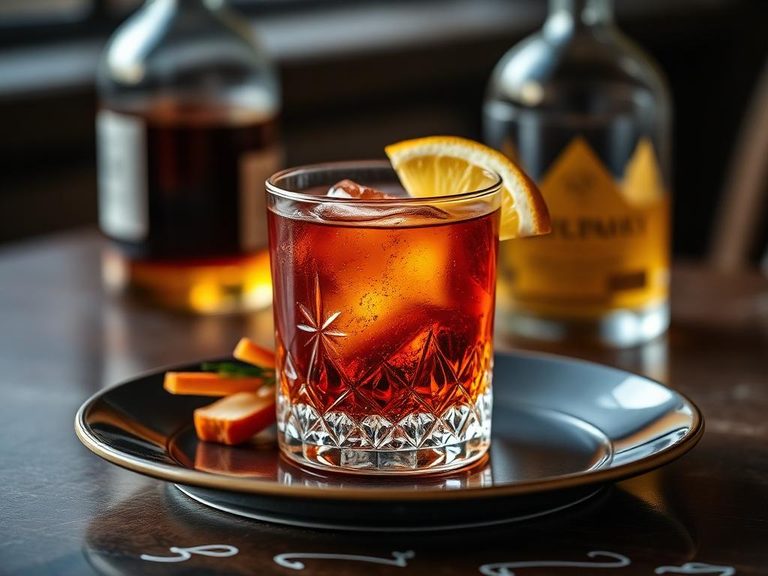
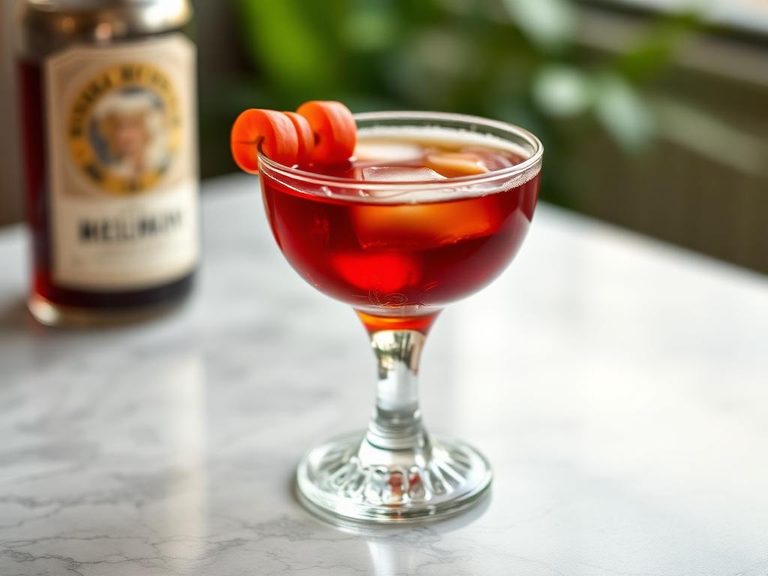
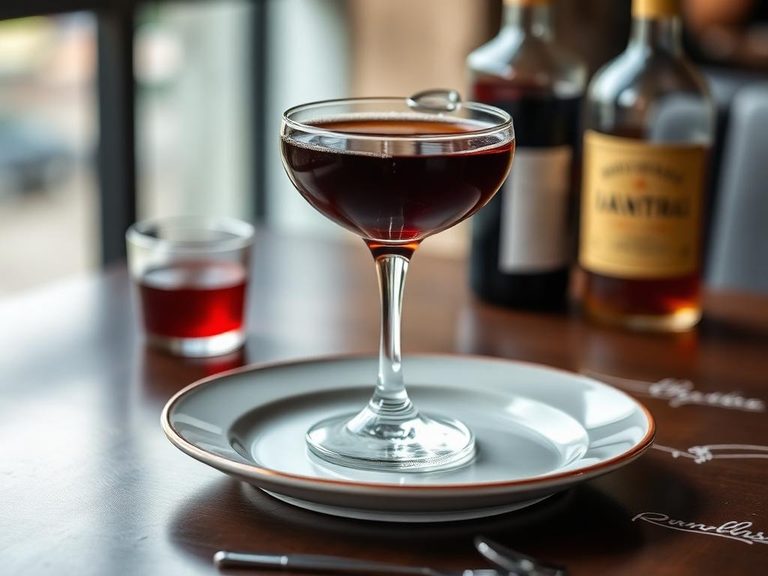

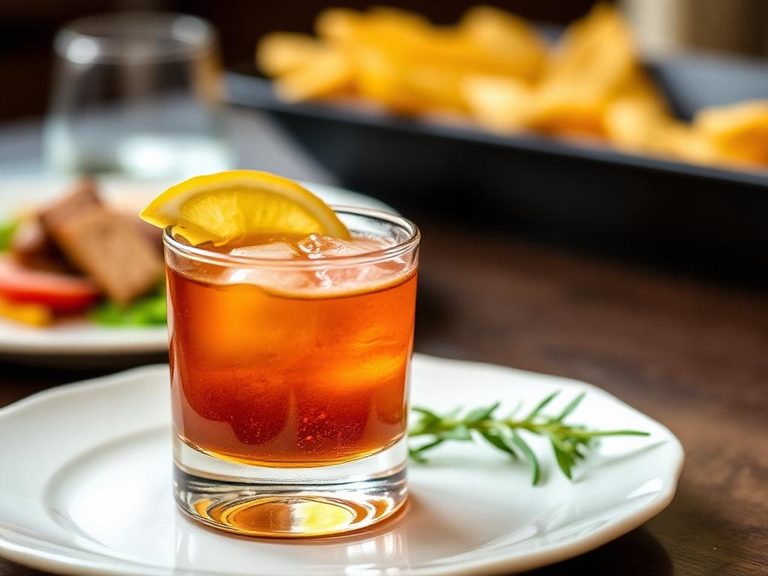
🌍 Where it's eaten
💡 Did you know?
The Manhattan cocktail is said to have been invented in the early 1870s at the Manhattan Club in New York City, possibly for a banquet hosted by Lady Randolph Churchill, though this origin story is widely debated by historians.
Full nutrition (USDA data · scales with serving)
| Water | 67.1 g |
| Energy | 222 kcal |
| Protein | 0.03 g |
| Total lipid (fat) | 0.00 g |
| Carbohydrate, by difference | 1.8 g |
| Fiber, total dietary | 0.00 g |
| Total Sugars | 1.0 g |
| Calcium, Ca | 1.0 mg |
| Iron, Fe | 0.07 mg |
| Magnesium, Mg | 1.0 mg |
| Phosphorus, P | 5.0 mg |
| Potassium, K | 14.0 mg |
| Sodium, Na | 2.0 mg |
| Zinc, Zn | 0.04 mg |
| Copper, Cu | 0.02 mg |
| Selenium, Se | 0.10 ug |
| Vitamin C, total ascorbic acid | 0.00 mg |
| Thiamin | 0.01 mg |
| Riboflavin | 0.01 mg |
| Niacin | 0.04 mg |
| Vitamin B-6 | 0.00 mg |
| Folate, total | 0.00 ug |
| Folic acid | 0.00 ug |
| Folate, food | 0.00 ug |
| Folate, DFE | 0.00 ug |
| Choline, total | 0.70 mg |
| Vitamin B-12 | 0.00 ug |
| Vitamin B-12, added | 0.00 ug |
| Vitamin A, RAE | 0.00 ug |
| Retinol | 0.00 ug |
| Carotene, beta | 0.00 ug |
| Carotene, alpha | 0.00 ug |
| Cryptoxanthin, beta | 0.00 ug |
| Lycopene | 0.00 ug |
| Lutein + zeaxanthin | 0.00 ug |
| Vitamin E (alpha-tocopherol) | 0.00 mg |
| Vitamin E, added | 0.00 mg |
| Vitamin D (D2 + D3) | 0.00 ug |
| Vitamin K (phylloquinone) | 0.00 ug |
| Alcohol, ethyl | 31.0 g |
| Caffeine | 0.00 mg |
| Theobromine | 0.00 mg |
Fat & fatty acid profile (per 100g)
| Fatty acids, total saturated | 0.00 g |
| SFA 4:0 | 0.00 g |
| SFA 6:0 | 0.00 g |
| SFA 8:0 | 0.00 g |
| SFA 10:0 | 0.00 g |
| SFA 12:0 | 0.00 g |
| SFA 14:0 | 0.00 g |
| SFA 16:0 | 0.00 g |
| SFA 18:0 | 0.00 g |
| Fatty acids, total monounsaturated | 0.00 g |
| MUFA 16:1 | 0.00 g |
| MUFA 18:1 | 0.00 g |
| MUFA 20:1 | 0.00 g |
| MUFA 22:1 | 0.00 g |
| Fatty acids, total polyunsaturated | 0.00 g |
| PUFA 18:2 | 0.00 g |
| PUFA 18:3 | 0.00 g |
| PUFA 18:4 | 0.00 g |
| PUFA 20:4 | 0.00 g |
| PUFA 20:5 n-3 (EPA) | 0.00 g |
| PUFA 22:5 n-3 (DPA) | 0.00 g |
| PUFA 22:6 n-3 (DHA) | 0.00 g |
| Cholesterol | 0.00 mg |
FAQ
What is the main spirit in a Manhattan?
The main spirit is American whiskey, typically rye whiskey for a spicier profile or bourbon for a sweeter, richer one.
How is a Manhattan different from an Old Fashioned?
A Manhattan uses sweet vermouth and is stirred with ice then strained, while an Old Fashioned is built in the glass with a sugar cube and bitters, and is typically served over a large ice cube.
Can I make a non-alcoholic version?
Yes, you can create a 'Mockhattan' using a non-alcoholic whiskey alternative and a non-alcoholic sweet vermouth, mixed with bitters (which are typically low-alcohol).
Nutrient density (calculated · NRF9.3)
Nutrient Rich Foods index: beneficial nutrients (protein, fiber, vitamins, minerals) minus saturated fat, added sugar & sodium, per 100 kcal.
NRF9.3 index — Fulgoni, Keast & Drewnowski, 2009. Computed from USDA nutrients.
Weight-loss friendliness (composite index)
Energy density 2.22 kcal/g · 0% calories from protein · 0.0 g fiber · 1.0 g sugar per 100 g.
Composite of energy density (Rolls et al., 1999), protein & fiber satiety, minus sugar. A calculated heuristic — ranks satiety-per-calorie, not a clinical measure.
Dietary load (calculated from USDA values)
Potential renal acid load. Positive = acid-forming, negative = alkaline-forming.
Sodium-to-potassium ratio: 0.14 (lower is better — aim for ≤ 1)
Sodium:potassium per WHO potassium guidance. Computed from USDA nutrients.